China polysilicon prices hold amid market standoff, spot-futures gap
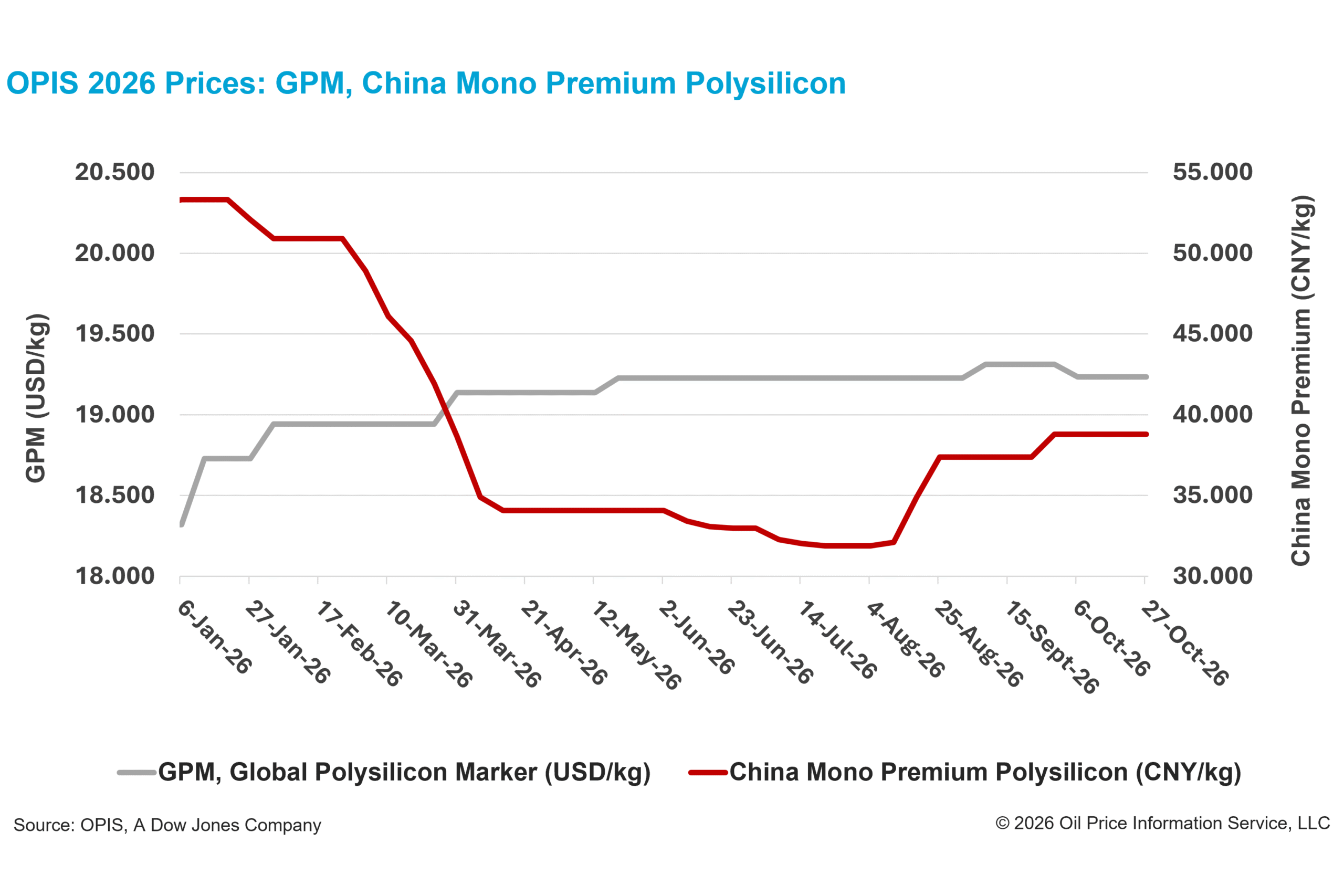
Chinese polysilicon spot prices held steady at around USD 5.82 per kilogram in late October as suppliers resisted buyer pressure by maintaining full-cost offers. A large surplus inventory of over 500,000 metric tons has prolonged the standoff. Futures contracts traded significantly cheaper, between 4% and 20% below spot prices, creating a gap that some buyers use to offset higher procurement costs. Industry participants said manufacturers bound by a self-discipline agreement were determined to hold prices above CNY 40/kg through the fourth quarter, with lower-priced supplies from futures traders expected to dwindle over time.
Where this fits
China controls polysilicon production at a global scale that makes solar supply-chain sovereignty a strategic question, not a commercial one. This price standoff, driven by Chinese industry coordination and inventory leverage, shows how opaque and cartel-like the market can be. Australia's ability to deploy solar at scale now depends on accepting whatever prices and terms Chinese suppliers impose, a structural vulnerability that extends to every intermediate step: cells, modules, inverters, and batteries all flow through the same supply chain.
What it means
Grid buildout costs are hostage to Chinese production decisions and geopolitical will. When polysilicon prices hold steady despite oversupply, or when they surge, Australian projects absorb the shock. That cost gets passed to consumers and taxpayers, or projects stall. A grid architecture that depends on firm, energy-dense generation, nuclear power, which Australia is legally banned from deploying, would break this dependency and lower whole-system costs over decades. Right now, Australia has no alternative.
Go deeper on the numbers
The bigger picture
Energy security is national security. This connects to the wider case at Unprepared: Australia's dependence on a strategic rival, and how ready it is for the world that is coming.

Xi Jinping and the Purge That Built an Army
The PLA that Xi Jinping inherited in 2012 was modernising, and the one he commands in 2026 is transformed. Part IV of the Unprepared series.
Reported by PV Magazine (intl). Read the original report ↗
Related coverage
How is Iluka Resources (ASX:ILU) building a rare earths supply chain after completing work at Eneabba? - Kalkine Media
Australia’s battery manufacturing strength lays in component supply
Australia and US target more critical minerals investment - Australian Mining
SolarEdge exits Australian market
The numbers, as they move
A short, sourced brief when the figures shift: a transmission blow-out, a supply-chain move, a milestone.