Commercial perovskite and tandem modules tested in outdoor field study: UNSW
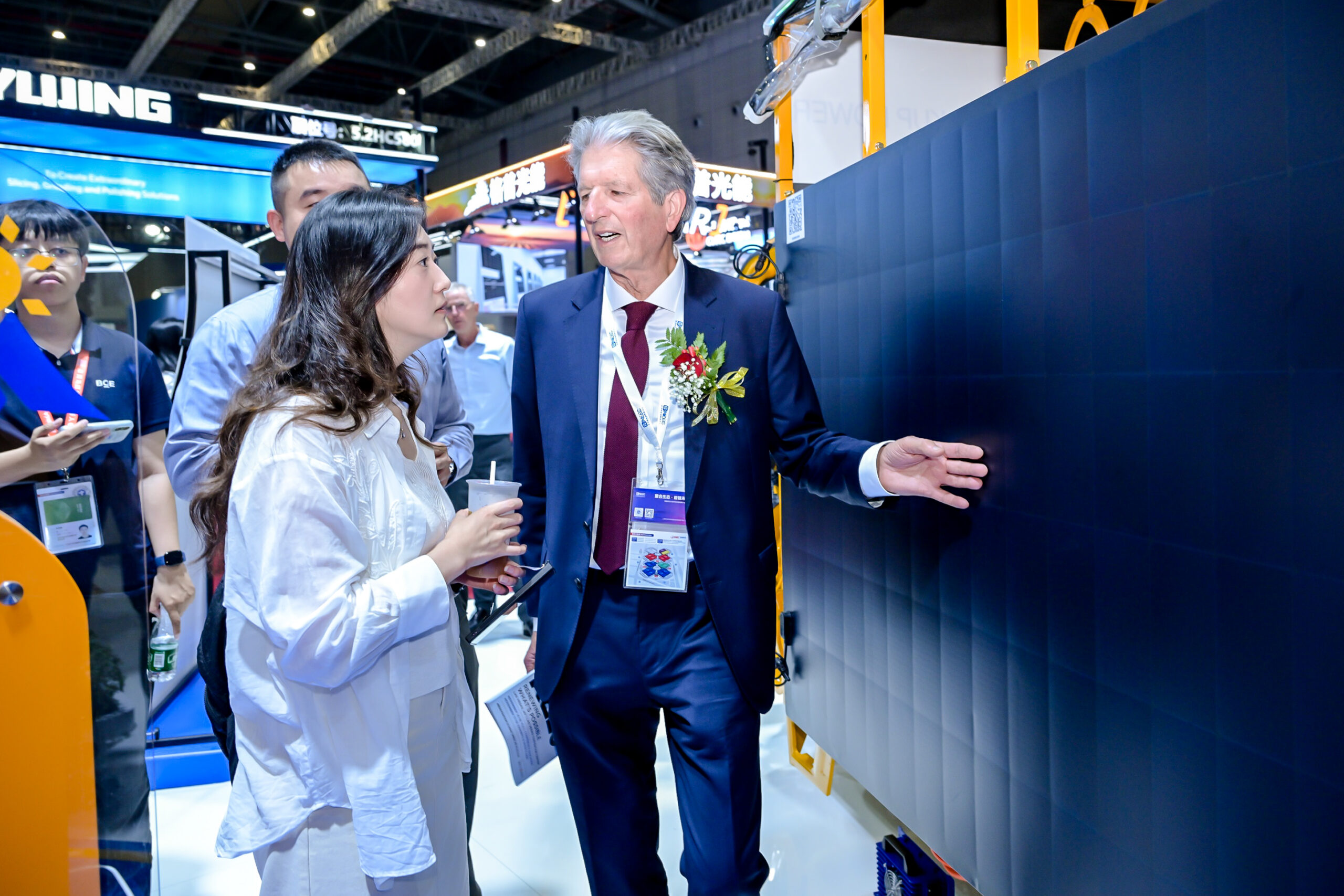
UNSW is running an A$18 million outdoor durability test on commercial perovskite and perovskite-silicon tandem solar modules, funded partly by ARENA. The trial, running at Manly Vale north of Sydney, will expose up to 160 modules to Australian weather, heat, humidity, salt air, UV and storms, over an undisclosed period. The partnership includes Chinese manufacturers Trina Solar and MicroQuanta, the University of Surrey and CSIRO. Early results show different failure modes across module types. The research aims to test whether these next-generation cells can reach expected lifespans and push silicon's theoretical efficiency ceiling beyond 29.4 per cent via tandem stacking that splits the solar spectrum.
Where this fits
This is a materials and supply-chain dependency story. Perovskite cells promise higher efficiency than silicon alone, but the research partnership is dominated by Chinese companies at the manufacturing level. The durability question, lifetime performance in harsh conditions, is critical because solar panel longevity directly affects whole-system cost. If these modules fail earlier than expected, the material intensity of the transition grows: more frequent replacement cycles mean more extraction, more processing, and more end-of-life waste.
What it means
Australia is betting on next-generation solar to lower the cost curve of renewable deployment, but the commercial pathway runs through Chinese manufacturers who control the production lines. The durability test is honest work, but it does not address a deeper question: even if perovskite modules prove reliable, Australia will remain dependent on China for the supply chain. A firm, domestically secure energy source, nuclear, sits legally off the table while the grid races toward a technology stack built in and controlled by a strategic rival.
Go deeper on the numbers
The bigger picture
Energy security is national security. This connects to the wider case at Unprepared: Australia's dependence on a strategic rival, and how ready it is for the world that is coming.

Xi Jinping and the Purge That Built an Army
The PLA that Xi Jinping inherited in 2012 was modernising, and the one he commands in 2026 is transformed. Part IV of the Unprepared series.
Reported by PV Magazine Australia. Read the original report ↗
Related coverage
Energy Minister Chris Bowen confirms EV and battery subsidies in firing line - AFR
Data centre giant lines up solar, wind and battery deal to power its plans for former smelter site - Renew Economy
Energy bills set to unleash hell on battling families - The Australian
Rio Tinto (ASX:RIO) Share Price: Bell Bay, Tomago and Boyne Power Deals Reset Australian Aluminium - Kalkine
The numbers, as they move
A short, sourced brief when the figures shift: a transmission blow-out, a supply-chain move, a milestone.