Czech SMR environmental impact assessment submitted
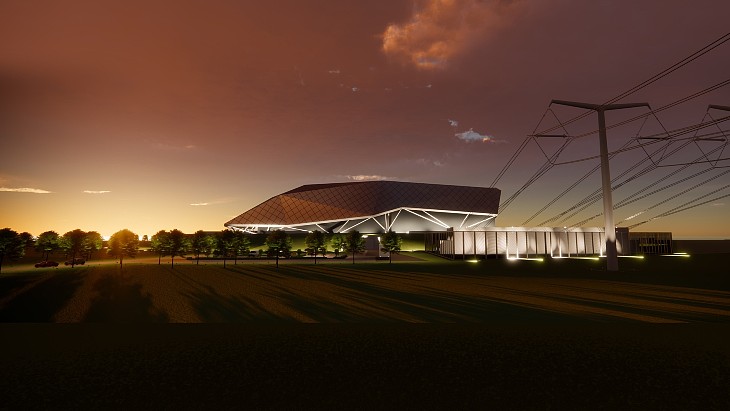
ČEZ, the Czech state utility, has submitted environmental impact assessment documentation to the Ministry of the Environment for a Rolls-Royce SMR project at Temelín. The 470 MWe unit will be factory-built to 90% completion, with on-site work reduced to assembly of pre-fabricated modules. ČEZ said water availability surveys confirmed no obstacle to deployment even under drought conditions. The ministry will assess the submission and solicit public comment, with the EIA process expected to conclude by end of 2027. ČEZ plans to deploy up to 3 GW of SMRs across Czech sites, including existing nuclear and former coal-fired locations, and has taken a 20% stake in Rolls-Royce SMR.
Where this fits
This is a firm power move. The Czech Republic is locking in dispatchable, low-emission generation at scale on existing industrial sites, avoiding the transmission overbuild and gas-firming trap that renewable-led grids fall into. Critically, it is also a sovereignty move: ČEZ is positioning Czech companies to enter the global SMR supply chain "at the very beginning," building manufacturing competence and long-term export potential rather than remaining dependent on Chinese battery and inverter exports. Nuclear generation is energy security; a domestic supply chain is strategic security.
What it means
Australia has no SMR programme and no pathway to one: the technology remains banned by federal law. While the Czech Republic locks in firm capacity and builds domestic industrial capability, Australia continues to pour capital into weather-dependent renewables on a supply chain owned by a strategic rival. The Temelín approval shows nuclear can slot into existing grid infrastructure and coal sites. Australia foregoes that option, and with it, the chance to compete in a technology the world is now building at scale.
Go deeper on the numbers
The bigger picture
Energy security is national security. This connects to the wider case at Unprepared: Australia's dependence on a strategic rival, and how ready it is for the world that is coming.

Xi Jinping and the Purge That Built an Army
The PLA that Xi Jinping inherited in 2012 was modernising, and the one he commands in 2026 is transformed. Part IV of the Unprepared series.
Reported by World Nuclear News. Read the original report ↗
Related coverage
Paladin targets 2031 uranium production with $525m raising - Australian Resources & Investment
$3.9b uranium player Paladin looks to raise $525m - AFR
Data centres revive Coalition passion for nuclear power, but this time more expensive and even less realistic - Renew Economy
Russia proposes carbon credits framework for SMRs
The numbers, as they move
A short, sourced brief when the figures shift: a transmission blow-out, a supply-chain move, a milestone.