Nuclear fuel delivered for Bangladesh's second unit
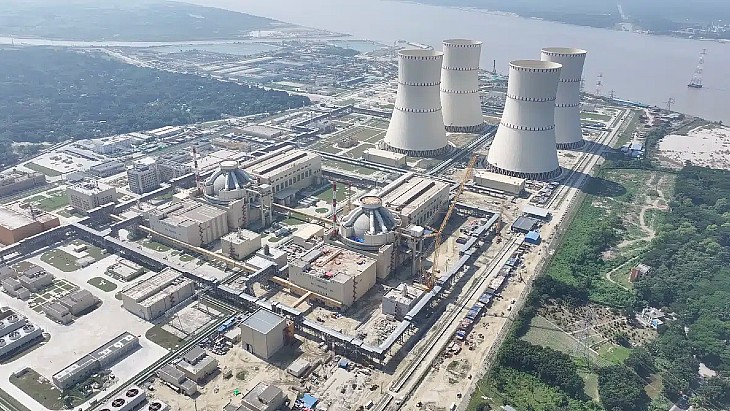
Russia's state nuclear corporation Rosatom has delivered the initial fuel load for the second unit of Bangladesh's Rooppur Nuclear Power Plant. The fuel assemblies, produced at Rosatom's facility in Novosibirsk, arrived by cargo plane and road to a specialised storage facility, where Bangladeshi experts and contractor representatives are conducting mandatory inspection. The delivery follows the plant's first unit achieving criticality in October 2026, after loading 163 fuel assemblies. Unit 2 is on track for operation after unit 1 completes its one-year fuel cycle and undergoes refuelling from a second shipment already delivered from Siberia.
Where this fits
This is a milestone in firm, dispatchable power generation coming online in a major developing economy. Bangladesh signed its initial agreement with Russia in 2011 and has sustained the project through two decades of planning, construction and regulatory process. The result is 80 years of operational life (60 years initial, plus 20-year extension) from two reactors with a single, predictable fuel supply. It underscores the durability and diplomatic depth of the nuclear pathway: once built, a nuclear plant runs on scheduled refuelling with no weather dependence, minimal land footprint and no need for transmission overbuild to smooth variable output.
What it means
Australia banned nuclear generation by law in 1999. Bangladesh, operating in a hotter climate and with less technical infrastructure, has built two reactors while Australia remains fossil-dependent for firm power or reliant on gas and battery backup for renewables. The Rooppur project cost USD12.65 billion for 2 GW of firm capacity over 80 years. That locked-in supply chain and sovereignty risk, fuel flows from Russia, is real. The Australian alternative is not coal: it is either gas or nuclear. Choosing neither leaves the grid vulnerable to the supply, cost and weather shocks now visible across the renewables transition.
By the numbers
enough for 11–18 TWh a year of firm, always-on power, generating for ~60 years. Source: CSIRO GenCost 2024-25 (A$8.5–13.2bn/GW), IAEA capacity factor.
Figures are indicative conversions from the article's stated quantity using published cost, material and capacity factors (CSIRO GenCost, BNEF, IEA, IAEA). Ranges, not precise forecasts.
Go deeper on the numbers
The bigger picture
Energy security is national security. This connects to the wider case at Unprepared: Australia's dependence on a strategic rival, and how ready it is for the world that is coming.
Reported by World Nuclear News. Read the original report ↗
Related coverage
Shock shift paving the way for SA nuclear power push - Adelaide Now
Doosan Enerbility stock gets NuScale SMR manufacturing deal - ad-hoc-news.de
DOE Loans $5B to Constellation for Reactor Uprates
Honeymoon Uranium Project, Australia - Mining Technology
The numbers, as they move
A short, sourced brief when the figures shift: a transmission blow-out, a supply-chain move, a milestone.