Lightsource bp seeks green light for 600 MW hybrid project in WA
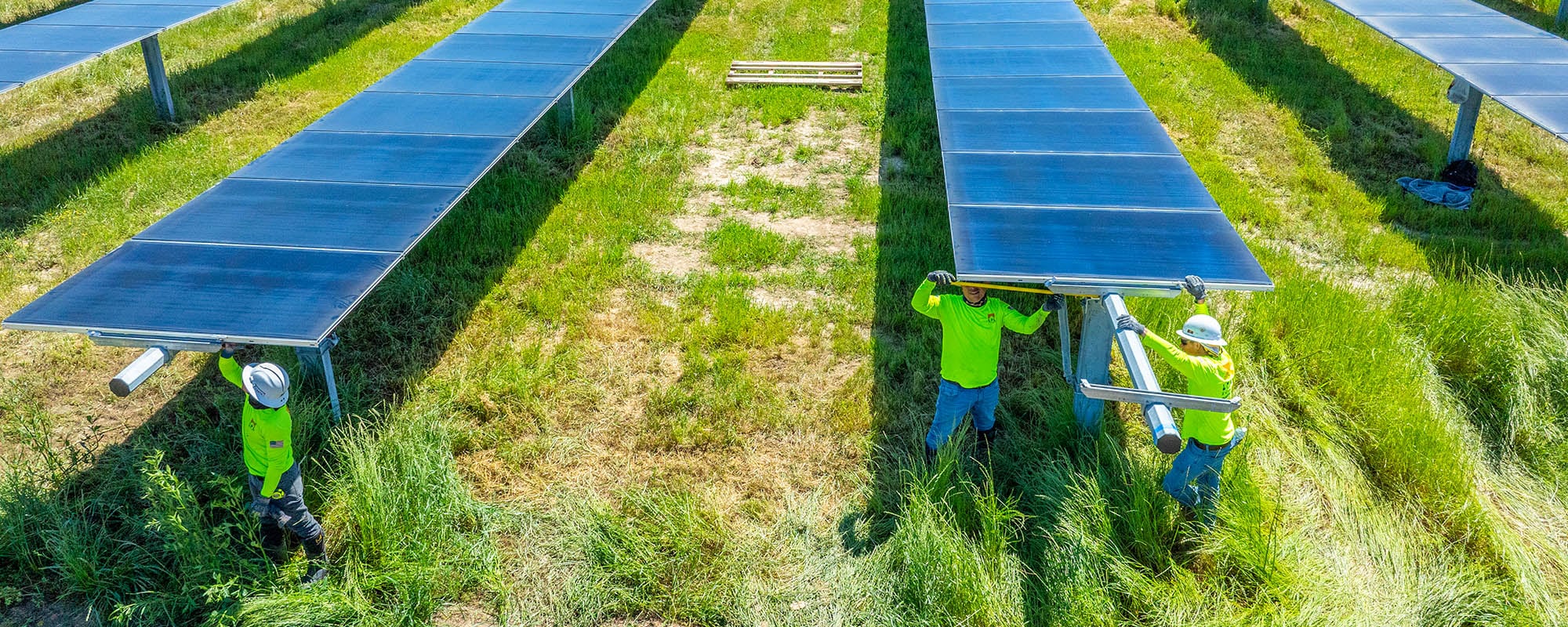
Lightsource BP has lodged a federal approval application for Narrogin East, a 600 MW hybrid project in Western Australia's Wheatbelt combining 150 MW solar, 250 MW wind, and 200 MW of battery storage (800 MWh). The $800 million facility will occupy 4,481 hectares and connect to an existing 220 kV transmission line. The developer frames the battery as enabling storage of "surplus energy during times of high renewable output" for release at peak demand, positioning it as a grid-stability tool. Approval is expected by mid-2027.
Where this fits
This project exemplifies the hidden cost of a renewables-only grid: the 800 MWh battery bank. At peak demand on a windless evening, this 200 MW battery will sustain output for four hours. Reliably firm power comes from fast-ramping gas (which Lightsource BP's parent company supplies) or nuclear. The battery is not an alternative to either. It is a cost layer on top, purchased because solar and wind are weather-dependent. Every renewables project that includes battery storage is an admission that renewables alone cannot meet dispatchable demand, and a submission to paying for firming hardware whose materials (lithium, cobalt, nickel) flow through Chinese supply chains.
What it means
A grid built on this model, renewables plus batteries plus gas backup, locks Australia into ongoing dependence on Chinese battery manufacturing and volatile commodity markets. It also defers the firm-power choice: a 600 MW nuclear plant would occupy a fraction of the land, produce full output in any weather, and require no battery layer. Instead, Australia is spending $800 million on a hybrid that will still need gas when the battery drains.
By the numbers
enough for 1–1 TWh a year of firm, always-on power, generating for ~60 years. Source: CSIRO GenCost 2024-25 (A$8.5–13.2bn/GW), IAEA capacity factor.
Figures are indicative conversions from the article's stated quantity using published cost, material and capacity factors (CSIRO GenCost, BNEF, IEA, IAEA). Ranges, not precise forecasts.
at ~A$600–1000/kWh installed. Source: BNEF, CSIRO GenCost 2024-25. Indicative.
of average national (NEM) demand if fully dischargeable, then it needs recharging. Storage shifts power, it does not generate it.
lithium, graphite, nickel, copper and cobalt (~80 t lithium content). Replaced roughly every 12 years. Source: IEA, Argonne GREET. Indicative.
~75% of cells are China-made. Source: IEA cell-manufacturing share.
enough for 0–1 TWh a year of firm, always-on power, generating for ~60 years. Source: CSIRO GenCost 2024-25 (A$8.5–13.2bn/GW), IAEA capacity factor.
Figures are indicative conversions from the article's stated quantity using published cost, material and capacity factors (CSIRO GenCost, BNEF, IEA, IAEA). Ranges, not precise forecasts.
Go deeper on the numbers
The bigger picture
Energy security is national security. This connects to the wider case at Unprepared: Australia's dependence on a strategic rival, and how ready it is for the world that is coming.
Reported by PV Magazine Australia. Read the original report ↗
Related coverage
More batteries, both big and small, mean solar farms don’t have to shut down so often - Renew Economy
Concrete foundations completed for all 18 turbines at first and smallest wind farm to begin construction this year
Australia’s gas generation falls to lowest level since 2000 — OilPrice - UA.NEWS
Renewables Boom Pushes Australia's Gas Power to Quarter-Century Low - Crude Oil Prices Today | OilPrice.com
The numbers, as they move
A short, sourced brief when the figures shift: a transmission blow-out, a supply-chain move, a milestone.