New 2-stage BESS for Victoria to provide 1.4 GWh of capacity
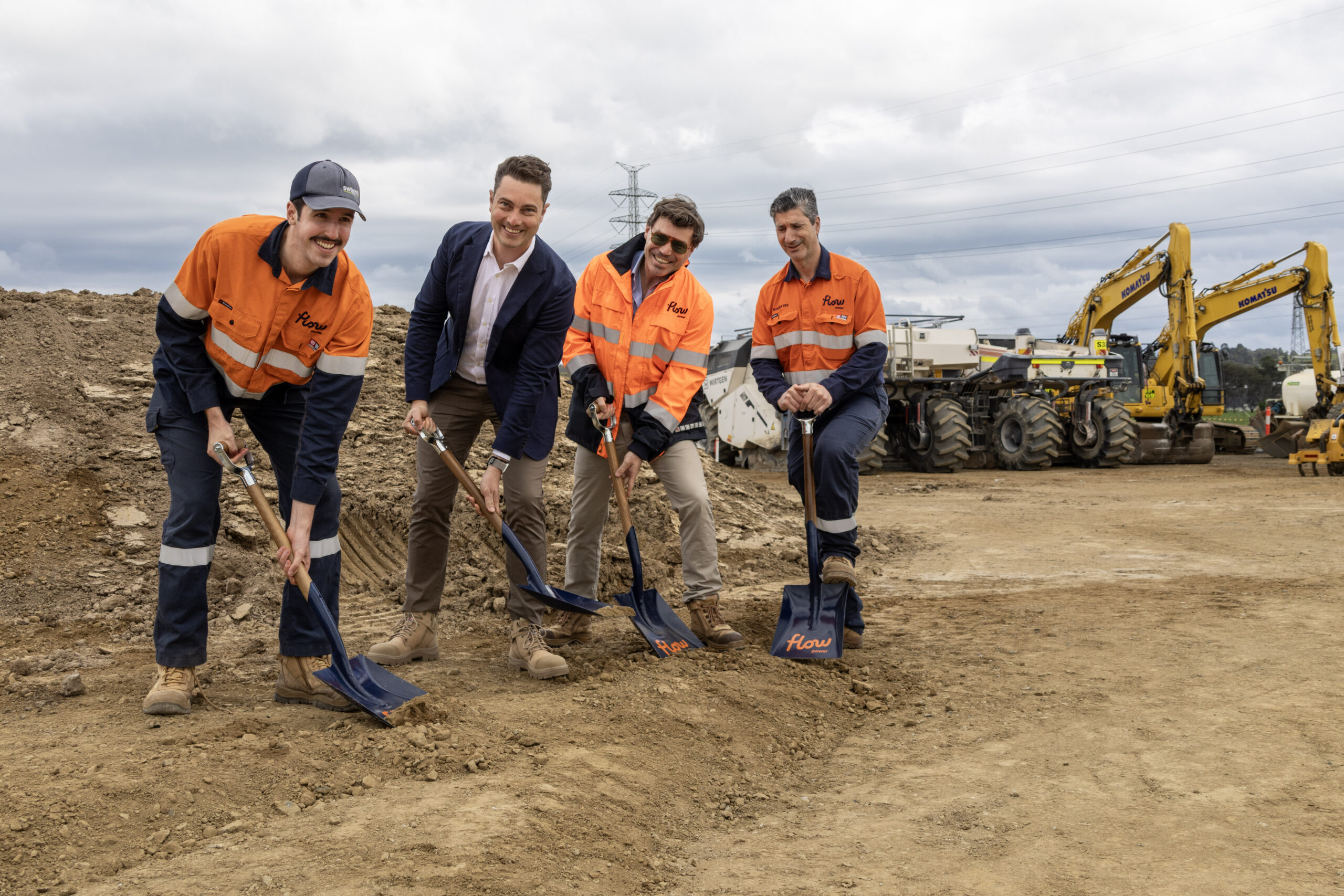
Flow Power has begun construction of the Bennetts Creek Battery project near Morwell in Victoria's Latrobe Valley: a 100 MW / 223 MWh first stage due operational by 2028, with a proposed 300 MW / 1.2 GWh second stage to follow. Finnish manufacturer Wärtsilä is supplying the battery hardware and control systems. The site is adjacent to Morwell Terminal Station on 2.3 hectares.
Where this fits
This is a data point on the cost and materials intensity of a renewables-heavy grid. A 1.4 GWh battery system to firm weather-dependent solar and wind output and arbitrage prices is now routine infrastructure, not headline news: Australia is already building the whole-system stack that renewables require. That stack includes imported, China-linked hardware (Wärtsilä systems use supply chains anchored in Asia), land, concrete, minerals, and a grid control layer that must be maintained and replaced. None of this reduces the speed of coal exit, but it does enlarge the real capital cost and material footprint of the transition beyond the per-megawatt-hour cost of the panels and turbines.
What it means
Each BESS project is a reminder that firm dispatchable power, whether provided by gas for a few hours, or a battery, or a nuclear plant, is not optional in a grid with high renewable penetration. The Bennetts Creek project will help absorb renewable spikes and firm supply, but it does not change the physics: a battery is firm only as long as it is charged, and it cannot sustain a grid through a week of low wind and cloud. That work still falls to gas. Victoria has no legal path to nuclear baseload, so the cost and material burden of the transition stays high, the supply chain stays Asian, and the resilience case for native firm power goes unexamined.
By the numbers
at ~A$600–1000/kWh installed. Source: BNEF, CSIRO GenCost 2024-25. Indicative.
of average national (NEM) demand if fully dischargeable, then it needs recharging. Storage shifts power, it does not generate it.
lithium, graphite, nickel, copper and cobalt (~140 t lithium content). Replaced roughly every 12 years. Source: IEA, Argonne GREET. Indicative.
~75% of cells are China-made. Source: IEA cell-manufacturing share.
enough for 1–1 TWh a year of firm, always-on power, generating for ~60 years. Source: CSIRO GenCost 2024-25 (A$8.5–13.2bn/GW), IAEA capacity factor.
Figures are indicative conversions from the article's stated quantity using published cost, material and capacity factors (CSIRO GenCost, BNEF, IEA, IAEA). Ranges, not precise forecasts.
Go deeper on the numbers
The bigger picture
Energy security is national security. This connects to the wider case at Unprepared: Australia's dependence on a strategic rival, and how ready it is for the world that is coming.
Reported by PV Magazine Australia. Read the original report ↗
Related coverage
AGL commissions 500-MW Liddell battery in New South Wales - Renewables Now
Templers BESS underway again, in a post-Zen world
Businesses “do the math” and want to go electric – right up until they try to connect to the grid
Renewables hit a new all-time high on Australia’s main grid, nearly half of it from rooftop solar - Renew Economy
The numbers, as they move
A short, sourced brief when the figures shift: a transmission blow-out, a supply-chain move, a milestone.