First new NSW wind farm in years completes construction and energisation of “beating heart” substation
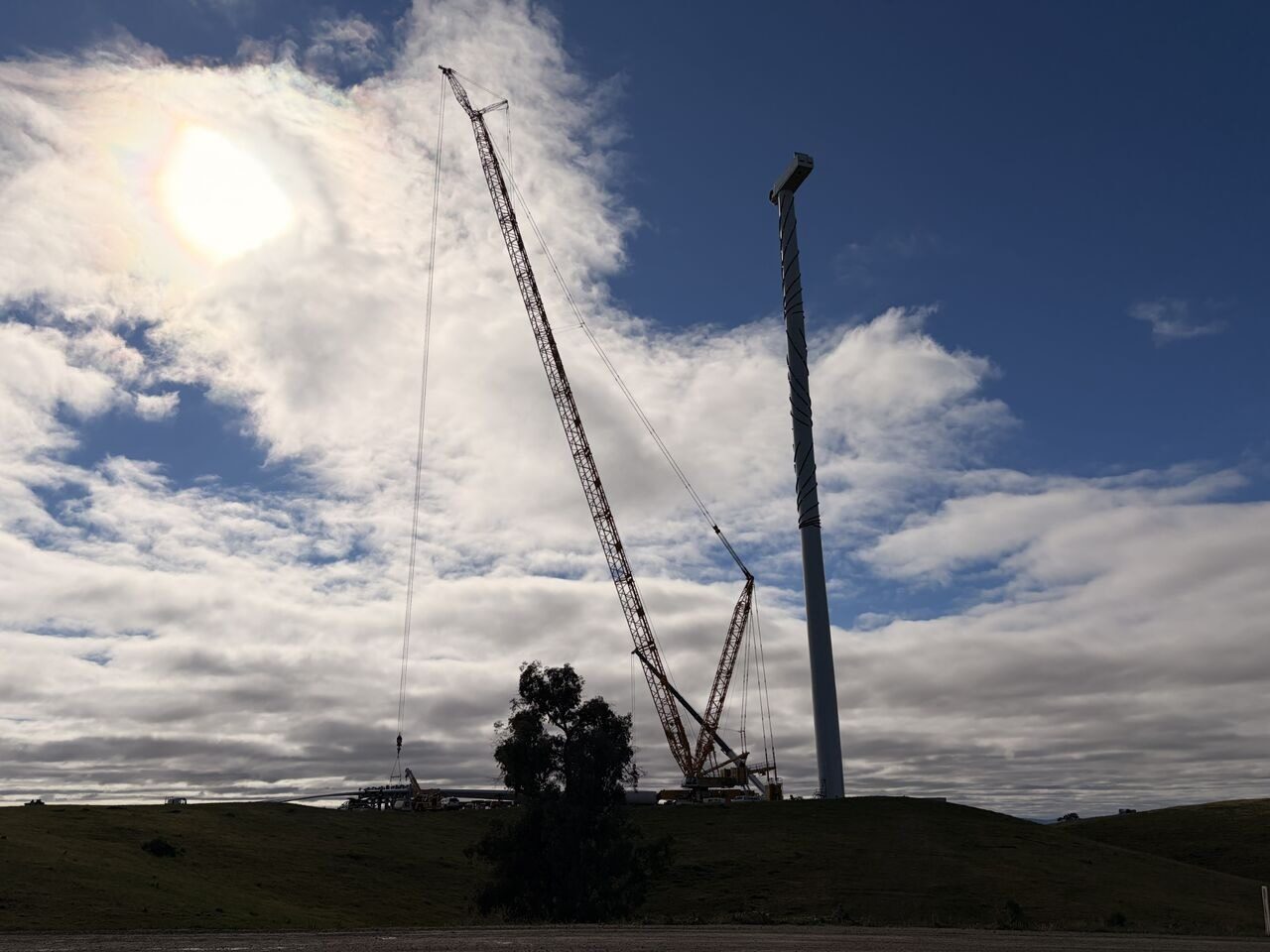
The Uungula wind farm in NSW's central west has energised its 330/33kV substation and connected to the grid, two weeks after registration. The 414 MW project comprises 69 turbines and required construction of a new substation, 28 transmission towers, and 12 kilometres of 330 kV line to connect it to the network. Squadron Energy says it will supply power to around 220,000 homes once turbine testing and commissioning are complete. The project is the first new wind farm to connect to the NSW grid in two and a half years.
Where this fits
Uungula is a genuine generation addition. What it also is: a single 414 MW project requiring dedicated transmission infrastructure, a substation, and years to construct and grid-connect. The gap between commissioning starts and grid connection, measured here in years, masks a systemic cost: renewable projects do not plug into spare capacity on a firm grid. Each one demands transmission build-out, with capital cost and land use that the headline "renewable energy" framing elides. The firm-power alternative, a reactor sited near demand and needing far less transmission surplus, remains banned by law.
What it means
NSW's three-year gap between new wind projects signals not abundance but constraint. The grid is filling with weather-dependent capacity that cannot firm itself. That substation and 12 kilometres of line will sit idle when wind does not blow, yet gas will still be needed for the hours it does not. Australia is building a system optimised for clear windy days, with weather-dependent output, Chinese-origin supply chains, and no firm domestic alternative lawfully available.
By the numbers
at ~A$2000–3200/kW installed. Source: CSIRO GenCost 2024-25. Indicative.
at a ~38% capacity factor, and only when the wind blows, so it still needs firming.
enough for 0–1 TWh a year of firm, always-on power, generating for ~60 years. Source: CSIRO GenCost 2024-25 (A$8.5–13.2bn/GW), IAEA capacity factor.
Figures are indicative conversions from the article's stated quantity using published cost, material and capacity factors (CSIRO GenCost, BNEF, IEA, IAEA). Ranges, not precise forecasts.
Go deeper on the numbers
The bigger picture
Energy security is national security. This connects to the wider case at Unprepared: Australia's dependence on a strategic rival, and how ready it is for the world that is coming.
Reported by RenewEconomy. Read the original report ↗
Related coverage
More batteries, both big and small, mean solar farms don’t have to shut down so often - Renew Economy
Concrete foundations completed for all 18 turbines at first and smallest wind farm to begin construction this year
Australia’s gas generation falls to lowest level since 2000 — OilPrice - UA.NEWS
Renewables Boom Pushes Australia's Gas Power to Quarter-Century Low - Crude Oil Prices Today | OilPrice.com
The numbers, as they move
A short, sourced brief when the figures shift: a transmission blow-out, a supply-chain move, a milestone.