Will AI Data Centres Drive Up Australian Electricity Bills?
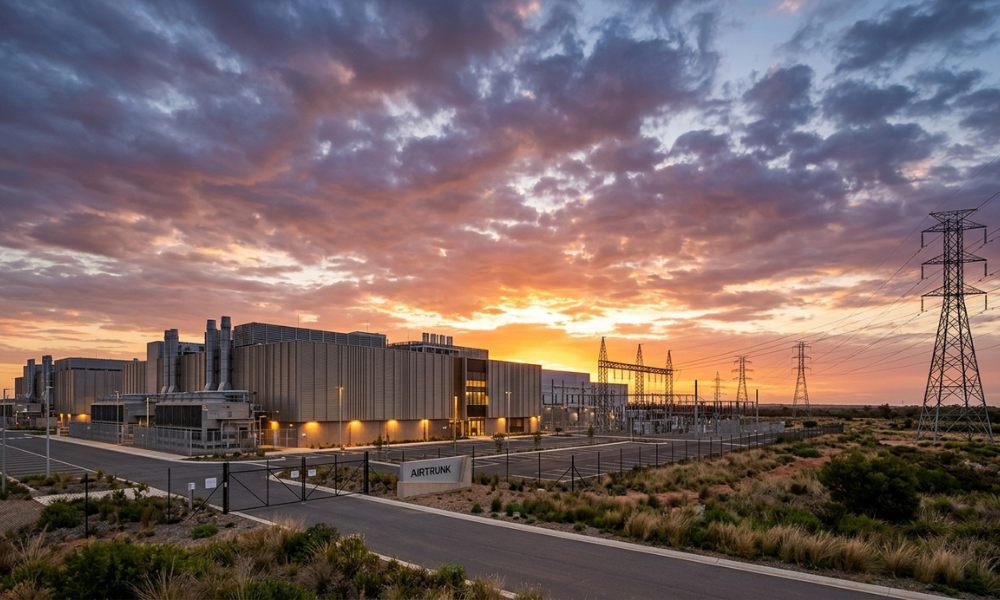
The analysis projects that AI data centres could consume 34 TWh of electricity annually in Australia by 2035, equivalent to a quarter of current national demand. The article examines whether this load will push up household power bills, what regulatory frameworks apply, and how consumers might be protected. No specific wholesale cost impact or bill forecast is offered in the article.
Where this fits
This demand spike is a direct stress test on Australia's renewables-only transition plan. A 34 TWh load arriving in 13 years must be met by new generation, and the grid will depend on what that generation is. If met by weather-dependent solar and wind, it will require proportional firming capacity (gas plants or batteries) and a transmission overbuild to handle intermittency and congestion. That entire stack, renewables plus firming plus storage plus transmission, costs more per unit of delivered power than firm generation. A nuclear plant of equivalent firm output would occupy a fraction of the land, require a fraction of the critical minerals (lithium, cobalt, nickel, processed rare earths from China), and produce power independent of weather. Instead, Australia is choosing the renewable-plus-gas path, which locks in higher whole-system costs and sustained reliance on gas. The data-centre load makes this choice visible in real time.
What it means
A 34 TWh AI load is a decarbonisation test case. Australia can meet it with renewable intermittency and gas firming, or with firm low-carbon generation. The cost difference is material. On grid resilience, weather-dependent supply of a strategic load (data centres serve international tech firms) introduces a new vulnerability: a renewable grid under drought or low-wind conditions must either shed AI load or import power at peak prices, or both. Sovereignty is the third pressure: the minerals, inverters, and battery cells to firm 34 TWh of renewable output will be sourced from China.
By the numbers
at ~A$600–1000/kWh installed. Source: BNEF, CSIRO GenCost 2024-25. Indicative.
of average national (NEM) demand if fully dischargeable, then it needs recharging. Storage shifts power, it does not generate it.
lithium, graphite, nickel, copper and cobalt (~3400000 t lithium content). Replaced roughly every 12 years. Source: IEA, Argonne GREET. Indicative.
~75% of cells are China-made. Source: IEA cell-manufacturing share.
enough for 12184–31536 TWh a year of firm, always-on power, generating for ~60 years. Source: CSIRO GenCost 2024-25 (A$8.5–13.2bn/GW), IAEA capacity factor.
Figures are indicative conversions from the article's stated quantity using published cost, material and capacity factors (CSIRO GenCost, BNEF, IEA, IAEA). Ranges, not precise forecasts.
Go deeper on the numbers
The bigger picture
Energy security is national security. This connects to the wider case at Unprepared: Australia's dependence on a strategic rival, and how ready it is for the world that is coming.
Reported by Energy Matters. Read the original report ↗
Related coverage
More batteries, both big and small, mean solar farms don’t have to shut down so often - Renew Economy
Concrete foundations completed for all 18 turbines at first and smallest wind farm to begin construction this year
Australia’s gas generation falls to lowest level since 2000 — OilPrice - UA.NEWS
Renewables Boom Pushes Australia's Gas Power to Quarter-Century Low - Crude Oil Prices Today | OilPrice.com
The numbers, as they move
A short, sourced brief when the figures shift: a transmission blow-out, a supply-chain move, a milestone.