Network bets its own money on filling commercial roofs with solar and storing it in community batteries
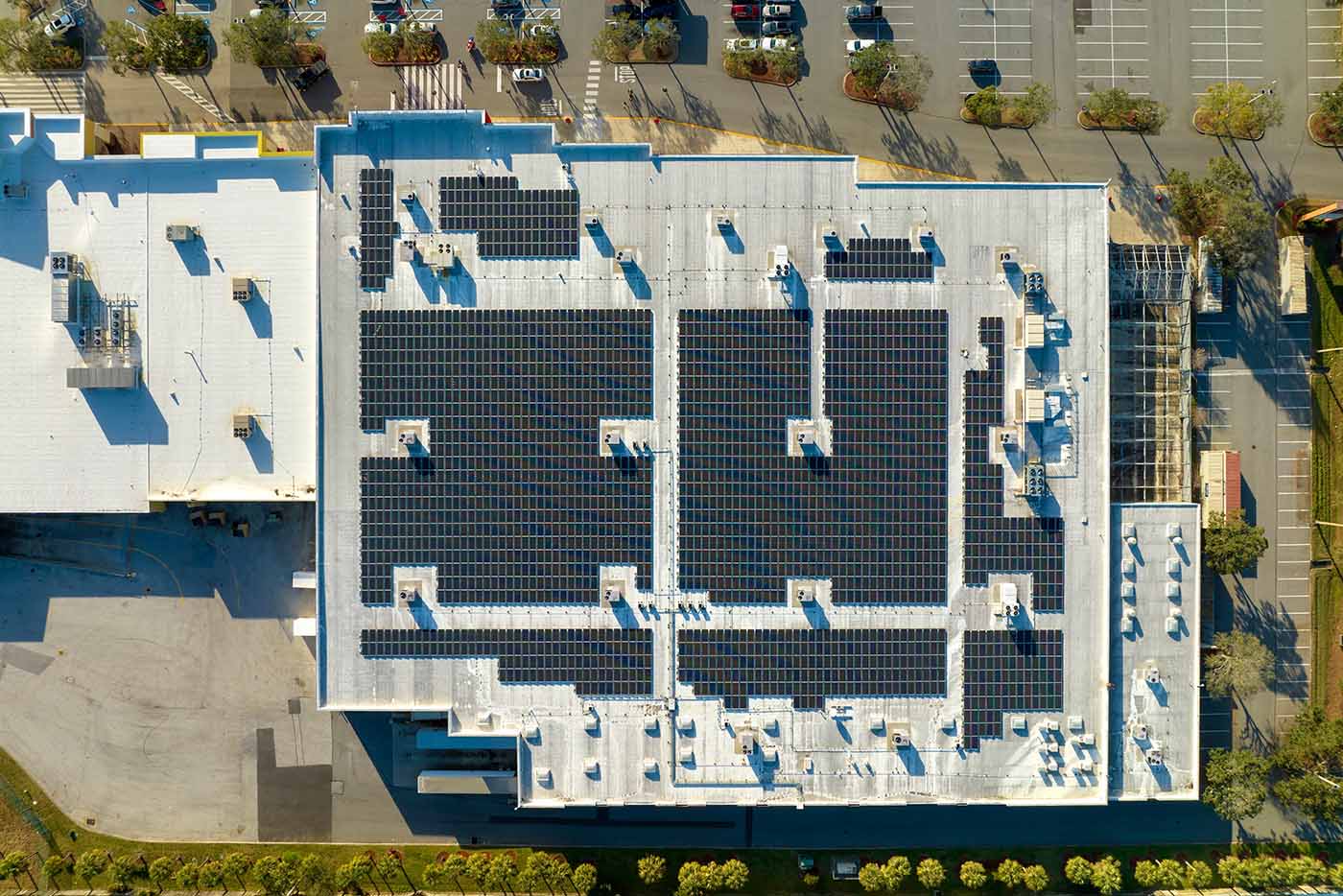
Ausgrid is funding a trial to install up to 70 MW of rooftop solar and 130 MWh of battery storage across two Sydney regions, betting shareholder capital on the project. The solar will sit mostly on commercial buildings. Batteries will store midday surplus and discharge during evening peak demand. The trial covers about 32,000 customers and aims to create a financial incentive for businesses to fill underused roof space by pooling the output into a local, coordinated network.
Where this fits
This trial addresses a real constraint: rooftop solar is cheap per megawatt but has no economic path to fill a commercial roof once the owner's own daytime load is met. The trial solves that by pooling output and adding battery storage. But it also reveals the brittleness of a renewables-led grid. Firms without on-site generation or storage cannot participate unless a network coordinator (here, a regulated utility) accepts the financial risk and invests in batteries to smooth supply. Ausgrid is essentially paying to engineer around the mismatch between when the sun shines and when demand peaks.
What it means
Australia's transition is betting heavily on distributed solar plus batteries as the path to reliability. But each neighbourhood now needs its own battery buffer, and a utility willing to finance it. That multiplies the total system cost: not just panels and inverters (made mostly in China), but batteries at scale, land use for that storage, and the engineering overhead to coordinate them. This is the hidden cost of weather-dependent supply. A firm, dispatchable alternative like nuclear would sidestep the need for neighbourhood-scale storage and the supply-chain dependency that comes with it. Instead, Australia is building distributed, China-reliant, battery-dependent infrastructure as its backbone.
By the numbers
at ~A$1100–1600/kW installed. Source: CSIRO GenCost 2024-25. Indicative.
at a ~24% capacity factor, and only when the sun shines, so it still needs firming.
~80% of modules are China-made. Source: IEA solar supply-chain data.
Figures are indicative conversions from the article's stated quantity using published cost, material and capacity factors (CSIRO GenCost, BNEF, IEA, IAEA). Ranges, not precise forecasts.
at ~A$600–1000/kWh installed. Source: BNEF, CSIRO GenCost 2024-25. Indicative.
of average national (NEM) demand if fully dischargeable, then it needs recharging. Storage shifts power, it does not generate it.
lithium, graphite, nickel, copper and cobalt (~13 t lithium content). Replaced roughly every 12 years. Source: IEA, Argonne GREET. Indicative.
~75% of cells are China-made. Source: IEA cell-manufacturing share.
Figures are indicative conversions from the article's stated quantity using published cost, material and capacity factors (CSIRO GenCost, BNEF, IEA, IAEA). Ranges, not precise forecasts.
Go deeper on the numbers
The bigger picture
Energy security is national security. This connects to the wider case at Unprepared: Australia's dependence on a strategic rival, and how ready it is for the world that is coming.
Reported by RenewEconomy. Read the original report ↗
Related coverage
More batteries, both big and small, mean solar farms don’t have to shut down so often - Renew Economy
Concrete foundations completed for all 18 turbines at first and smallest wind farm to begin construction this year
Australia’s gas generation falls to lowest level since 2000 — OilPrice - UA.NEWS
Renewables Boom Pushes Australia's Gas Power to Quarter-Century Low - Crude Oil Prices Today | OilPrice.com
The numbers, as they move
A short, sourced brief when the figures shift: a transmission blow-out, a supply-chain move, a milestone.