e-Storage to deliver 200 MWh BESS for OX2 in NSW
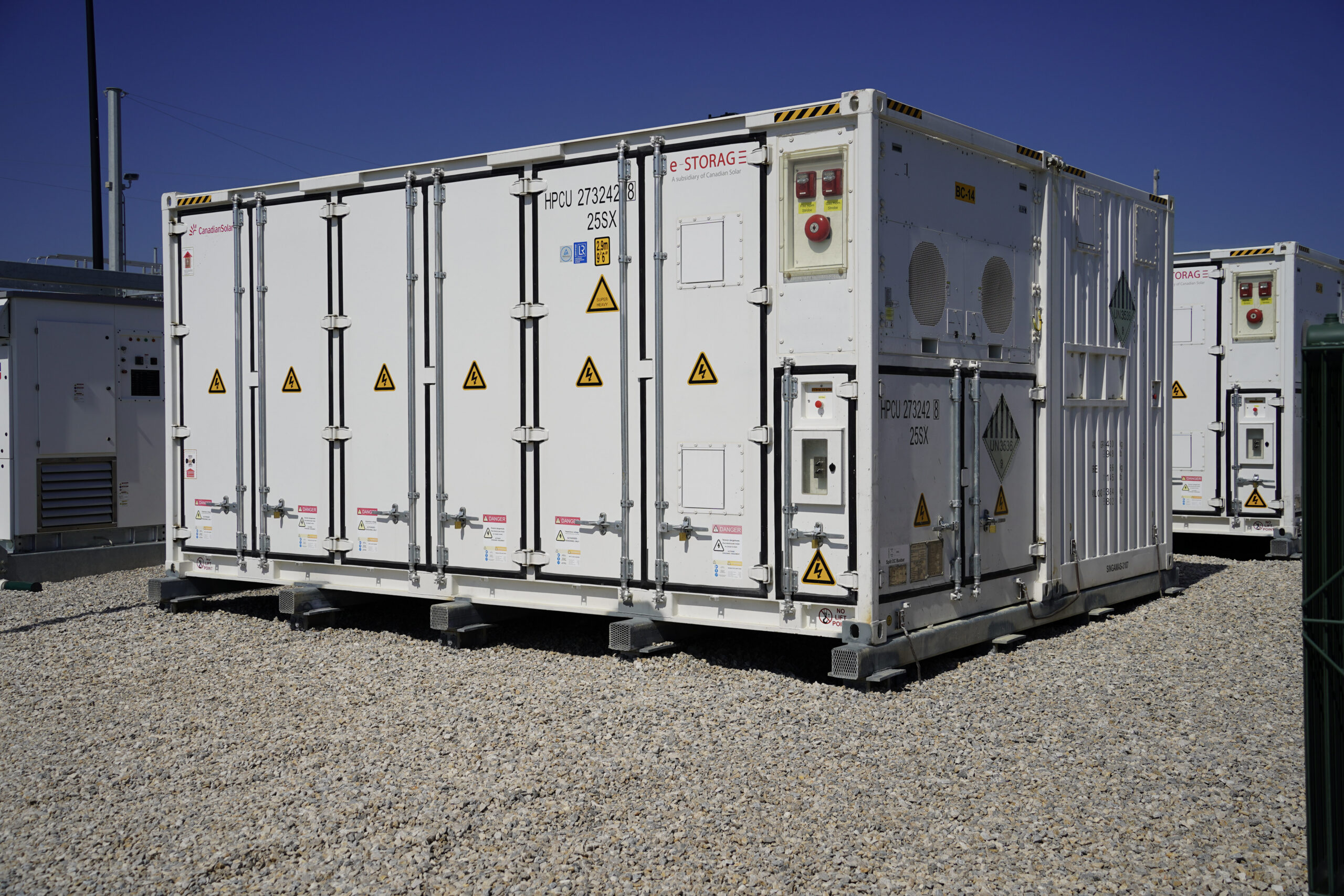
e-Storage, the battery subsidiary of Canadian Solar, will supply a 100 MW / 200 MWh lithium-iron phosphate battery system to OX2's Muswellbrook hybrid solar farm in NSW's Hunter Valley. The site occupies former coal-mine land. Construction is underway. The 135 MW solar component and battery will operate under a long-term power purchase agreement with Amazon, which has contracted 94.5 MW of solar and 70 MW of battery capacity from the project. e-Storage will deliver integrated SolBank 3.0 containers with power conversion systems and energy management software.
Where this fits
This is a firming solution, not a replacement for firm power. A 135 MW solar farm produces zero output at night and severely reduced output on cloudy days. The 200 MWh battery can supply 100 MW for two hours only. After that, the grid reverts to whatever firm generation backs it: presently, NSW gas. The battery allows OX2 to meet Amazon's contracted firm-power obligation, converting variable solar into a shaped supply curve. This is a cost and materials problem. The lithium cells, modules and management systems embed China's manufacturing footprint and coal-fired input costs. The materials intensity of lithium-iron phosphate batteries, cobalt-free but still energy-dense, means the Muswellbrook system's 200 MWh storage represents hundreds of tonnes of mined and processed minerals, mostly sourced through supply chains where China holds processing dominance.
What it means
Australia is building a renewables-plus-battery grid where each megawatt of solar requires battery capacity, transmission infrastructure and gas backup. Muswellbrook shows the model: 135 MW of solar, 100 MW of battery, bound to a long-term contract to deliver firm supply. This stacks costs. The alternative, firm, energy-dense nuclear generation, requires none of this layering and depends on no foreign supply chain. That option remains banned by law, leaving Australia locked into a materials-heavy, China-dependent, gas-backed transition path that is more expensive and less sovereign than the industrial alternative.
By the numbers
at ~A$600–1000/kWh installed. Source: BNEF, CSIRO GenCost 2024-25. Indicative.
of average national (NEM) demand if fully dischargeable, then it needs recharging. Storage shifts power, it does not generate it.
lithium, graphite, nickel, copper and cobalt (~20 t lithium content). Replaced roughly every 12 years. Source: IEA, Argonne GREET. Indicative.
~75% of cells are China-made. Source: IEA cell-manufacturing share.
Figures are indicative conversions from the article's stated quantity using published cost, material and capacity factors (CSIRO GenCost, BNEF, IEA, IAEA). Ranges, not precise forecasts.
at ~A$1100–1600/kW installed. Source: CSIRO GenCost 2024-25. Indicative.
at a ~24% capacity factor, and only when the sun shines, so it still needs firming.
~80% of modules are China-made. Source: IEA solar supply-chain data.
Figures are indicative conversions from the article's stated quantity using published cost, material and capacity factors (CSIRO GenCost, BNEF, IEA, IAEA). Ranges, not precise forecasts.
Go deeper on the numbers
The bigger picture
Energy security is national security. This connects to the wider case at Unprepared: Australia's dependence on a strategic rival, and how ready it is for the world that is coming.
Reported by PV Magazine Australia. Read the original report ↗
Related coverage
More batteries, both big and small, mean solar farms don’t have to shut down so often - Renew Economy
Concrete foundations completed for all 18 turbines at first and smallest wind farm to begin construction this year
Australia’s gas generation falls to lowest level since 2000 — OilPrice - UA.NEWS
Renewables Boom Pushes Australia's Gas Power to Quarter-Century Low - Crude Oil Prices Today | OilPrice.com
The numbers, as they move
A short, sourced brief when the figures shift: a transmission blow-out, a supply-chain move, a milestone.