Samsung C&T seeks approval for 800 MWh BESS in Victoria
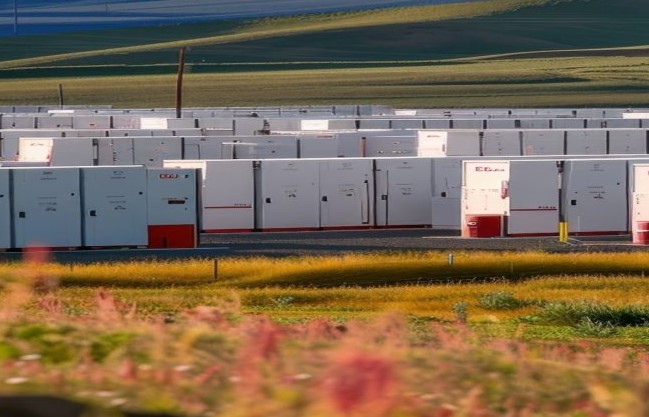
Samsung C&T Renewable Energy Australia has lodged an Environment Protection and Biodiversity Conservation Act application for an 800 MWh battery energy storage system near Warragul in Victoria's West Gippsland. The 200 MW / 800 MWh facility would occupy 52 hectares with seven hectares developed for 196 battery modules, substations and associated plant. Connection would run via existing AusNet 220 kV transmission to the National Electricity Market. Samsung targets construction start in 2027 with an 18-month build window. The company frames the project as essential to network stability and enabling further variable renewable energy integration without major new transmission.
Where this fits
This project exemplifies the firming cost embedded in a renewables-heavy grid. An 800 MWh battery is a massive capital requirement, typically 300 to 500 million dollars, deployed solely to absorb wind and solar volatility and to avoid transmission reinforcement that would otherwise be needed. The battery is not dispatchable firm power; it holds charge only as long as the weather permits prior charging, then depletes within hours. Australia is now building gigawatt-scale battery capacity to do the job that a single large nuclear plant would do continuously, with one-tenth the material footprint and carbon cost of manufacture.
What it means
Victoria is locking in a pattern of expensive, short-duration storage paired to weather-dependent generation. Each battery compounds the supply-chain dependence: cells, modules, inverters and control systems are largely sourced or manufactured in China, a strategic rival with growing leverage over Australia's grid stability. The honest trade-off is visible here: a 200 MW battery firming station versus the industrial capacity to site and operate a firm, long-lived, unmined-uranium alternative that Australia has legislated away.
By the numbers
at ~A$600–1000/kWh installed. Source: BNEF, CSIRO GenCost 2024-25. Indicative.
of average national (NEM) demand if fully dischargeable, then it needs recharging. Storage shifts power, it does not generate it.
lithium, graphite, nickel, copper and cobalt (~80 t lithium content). Replaced roughly every 12 years. Source: IEA, Argonne GREET. Indicative.
~75% of cells are China-made. Source: IEA cell-manufacturing share.
enough for 0–1 TWh a year of firm, always-on power, generating for ~60 years. Source: CSIRO GenCost 2024-25 (A$8.5–13.2bn/GW), IAEA capacity factor.
Figures are indicative conversions from the article's stated quantity using published cost, material and capacity factors (CSIRO GenCost, BNEF, IEA, IAEA). Ranges, not precise forecasts.
Go deeper on the numbers
The bigger picture
Energy security is national security. This connects to the wider case at Unprepared: Australia's dependence on a strategic rival, and how ready it is for the world that is coming.
Reported by PV Magazine Australia. Read the original report ↗
Related coverage
More batteries, both big and small, mean solar farms don’t have to shut down so often - Renew Economy
Concrete foundations completed for all 18 turbines at first and smallest wind farm to begin construction this year
Australia’s gas generation falls to lowest level since 2000 — OilPrice - UA.NEWS
Renewables Boom Pushes Australia's Gas Power to Quarter-Century Low - Crude Oil Prices Today | OilPrice.com
The numbers, as they move
A short, sourced brief when the figures shift: a transmission blow-out, a supply-chain move, a milestone.