First concrete poured for Bailong 2 nuclear power unit
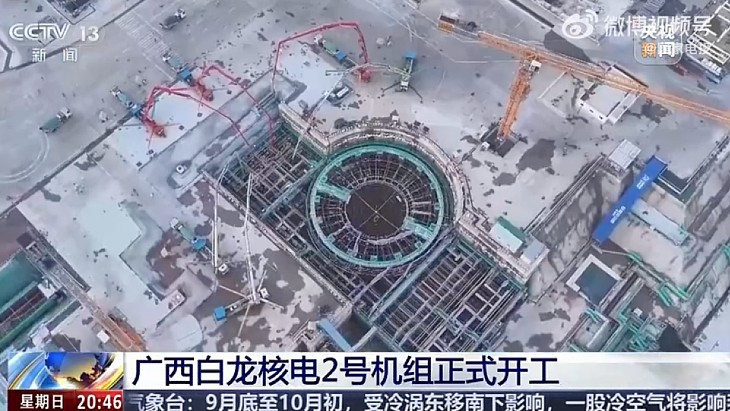
China poured first concrete for unit 2 of the Bailong Nuclear Power Plant on 27 September 2026. The State Power Investment Corporation facility in Guangxi will build two CAP1000 reactors (1.25 GW each) in phase one, expected to take 56 months and cost around CNY40 billion. Unit 1's concrete pour occurred in December 2025. The site is planned eventually to host six reactors totalling 8.62 GW. When complete, phase one is projected to generate 20 billion kilowatt-hours annually and avoid 16 million tonnes of CO2 emissions per year.
Where this fits
China is now executing firm, low-emission generation at pace while Australia bans nuclear by law. Bailong sits in a long pipeline of Chinese nuclear builds approved in August 2024, part of a strategy to pair renewables with dispatchable capacity. Australia's energy transition is instead premised on renewables firmed by gas and battery storage, a path that requires an overbuild of transmission, a material-intensive battery supply chain (dominated by China), and sustained gas burning through the 2030s. The firm-power alternative, the technology with the lowest lifecycle emissions of any generation source, remains legislatively off the table.
What it means
Australia is betting its grid and emissions trajectory on a weather-dependent, material-heavy, China-dependent supply chain, while the technology best suited to firm low-carbon power at scale remains prohibited. Bailong's concurrent construction of two units demonstrates execution capability and capital confidence. The contrast is not reassuring: a renewable-plus-gas transition is materially and cost-heavy, and Australia has no domestic command of the critical-mineral processing, battery manufacturing, or inverter supply chains it now depends on. Energy security and strategic autonomy are being traded for a construction timeline that, in the end, may not deliver lower emissions or lower cost.
By the numbers
enough for 5–8 TWh a year of firm, always-on power, generating for ~60 years. Source: CSIRO GenCost 2024-25 (A$8.5–13.2bn/GW), IAEA capacity factor.
Figures are indicative conversions from the article's stated quantity using published cost, material and capacity factors (CSIRO GenCost, BNEF, IEA, IAEA). Ranges, not precise forecasts.
Go deeper on the numbers
The bigger picture
Energy security is national security. This connects to the wider case at Unprepared: Australia's dependence on a strategic rival, and how ready it is for the world that is coming.
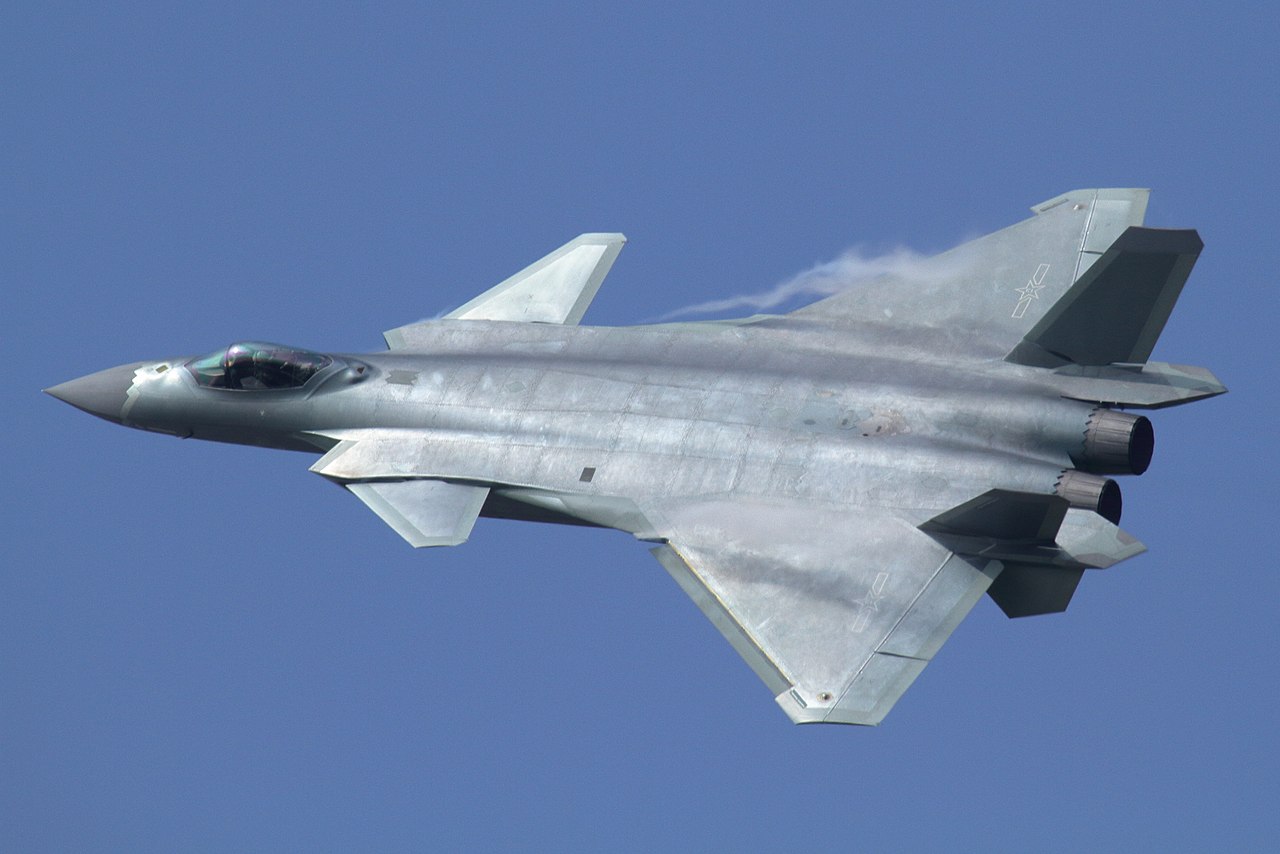
Xi Jinping and the Purge That Built an Army
The PLA that Xi Jinping inherited in 2012 was modernising, and the one he commands in 2026 is transformed. Part IV of the Unprepared series.
Reported by World Nuclear News. Read the original report ↗
Related coverage
Paladin targets 2031 uranium production with $525m raising - Australian Resources & Investment
$3.9b uranium player Paladin looks to raise $525m - AFR
Data centres revive Coalition passion for nuclear power, but this time more expensive and even less realistic - Renew Economy
Russia proposes carbon credits framework for SMRs
The numbers, as they move
A short, sourced brief when the figures shift: a transmission blow-out, a supply-chain move, a milestone.