Fortescue battery stabilises grid after 95MW outage
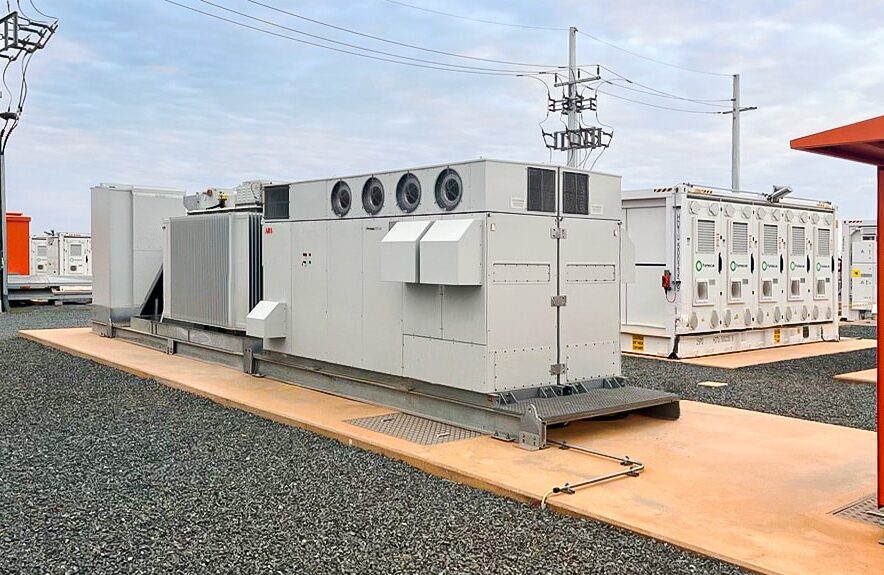
Fortescue's 250MWh battery at North Star Junction in Western Australia stabilised the grid after a 95MW power station outage. The battery responded quickly enough to maintain network stability during the event, the company reported.
Where this fits
This is a live demonstration of what battery storage can do within hours: provide inertia and frequency support when firm generation suddenly trips. It is also, implicitly, evidence of the reliability problem that batteries are being asked to solve. A 95MW outage in a regional grid is not marginal; the speed of the battery response was necessary precisely because the grid had lost dispatchable capacity.
The story lands on the cost-of-firming axis. Batteries excel at sub-hourly response. They are poor at sustained discharge. A 250MWh system can hold frequency for minutes to low single-digit hours depending on the load it carries. In a renewables-dominant grid, the Pilbara will face weather-dependent droughts lasting days. Batteries handle the volatility around the margins. Gas turbines or nuclear plants handle the structural shortfall.
What it means
Australia is building a grid that requires constant, fast-response firming. Each new solar and wind plant increases the volatility the grid must absorb. Batteries are part of the answer, but they are expensive capital that sits idle most of the time, and they depend on global supply chains (lithium, cobalt, processing) managed by China and its partners.
The alternative, firm, dispatchable, low-material nuclear generation, remains banned by law, even as the cost of the renewables-plus-battery stack grows and the window for emissions reductions narrows.
By the numbers
at ~A$600–1000/kWh installed. Source: BNEF, CSIRO GenCost 2024-25. Indicative.
of average national (NEM) demand if fully dischargeable, then it needs recharging. Storage shifts power, it does not generate it.
lithium, graphite, nickel, copper and cobalt (~25 t lithium content). Replaced roughly every 12 years. Source: IEA, Argonne GREET. Indicative.
~75% of cells are China-made. Source: IEA cell-manufacturing share.
Figures are indicative conversions from the article's stated quantity using published cost, material and capacity factors (CSIRO GenCost, BNEF, IEA, IAEA). Ranges, not precise forecasts.
Go deeper on the numbers
The bigger picture
Energy security is national security. This connects to the wider case at Unprepared: Australia's dependence on a strategic rival, and how ready it is for the world that is coming.

Xi Jinping and the Purge That Built an Army
The PLA that Xi Jinping inherited in 2012 was modernising, and the one he commands in 2026 is transformed. Part IV of the Unprepared series.
Reported by Utility Magazine. Read the original report ↗
Related coverage
What grid-forming kit are Australia’s largest solar–BESS hybrids using?
New four-hour battery storage proposal seeks federal green tick for Australia’s most renewable state grid
SA gives green light for gas to help power future data centres - ABC News & Headlines – Australian Broadcasting Corporation
Concentrated Solar Power (CSP) in Australia: Can It Work Alongside Rooftop Solar? - Energy Matters
The numbers, as they move
A short, sourced brief when the figures shift: a transmission blow-out, a supply-chain move, a milestone.