Four-hour BESS undercuts gas peakers in 43 global markets
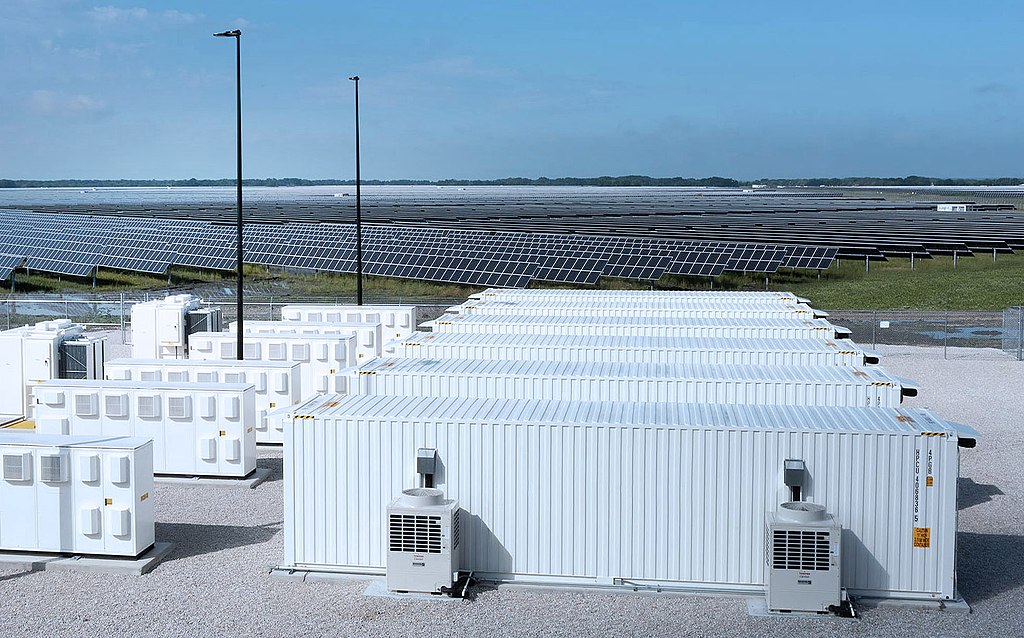
Battery storage at four-hour duration has become cheaper than open-cycle gas turbines in 43 of 48 global markets modelled by Wood Mackenzie. The shift reflects falling battery costs driven by manufacturing scale and rising gas volatility. In the Asia Pacific, however, Australia faces a cost penalty: Chinese grid-scale storage costs $192/MWh on average across the region, but Australia, Japan and the Philippines will remain well above that threshold through 2036 due to import duties, installation costs and domestic manufacturing policies. China's benchmark storage LCOE is more than 55 per cent below the rest of Asia Pacific average, a gap expected to persist and widen.
Where this fits
This is a sovereignty and materials story dressed as a cost story. Four-hour batteries can indeed replace gas for peaking in some markets, but it moves peaking cost from fuel (which is largely price-exposed and contestable) to hardware (which is supply-chain captured). The article names the real constraint: Australia will remain expensive and dependent on imported Chinese equipment, protected by tariffs that slow adoption but do not build domestic manufacturing. The cost of firming a renewables-heavy grid is being underestimated because it relies on Chinese supply chains and does not include the cost of transmission overbuild, interconnection, or the gas still needed for the weather hours batteries cannot cover.
What it means
Australia's peaking problem is not solved by cheaper batteries if those batteries come from a strategic rival and cost more here than elsewhere. The tariff protection signal is that no domestic manufacturing will emerge at scale. A four-hour battery is a symptom response to a weather-dependent grid that needs a decade of such devices; building that capacity offshore and importing it leaves Australia in a position of strategic dependence and cost disadvantage. A firm, domestically-available alternative, nuclear, remains prohibited by law.
Go deeper on the numbers
The bigger picture
Energy security is national security. This connects to the wider case at Unprepared: Australia's dependence on a strategic rival, and how ready it is for the world that is coming.

Xi Jinping and the Purge That Built an Army
The PLA that Xi Jinping inherited in 2012 was modernising, and the one he commands in 2026 is transformed. Part IV of the Unprepared series.
Reported by PV Magazine Australia. Read the original report ↗
Related coverage
Energy Minister Chris Bowen confirms EV and battery subsidies in firing line - AFR
Data centre giant lines up solar, wind and battery deal to power its plans for former smelter site - Renew Economy
Energy bills set to unleash hell on battling families - The Australian
Rio Tinto (ASX:RIO) Share Price: Bell Bay, Tomago and Boyne Power Deals Reset Australian Aluminium - Kalkine
The numbers, as they move
A short, sourced brief when the figures shift: a transmission blow-out, a supply-chain move, a milestone.