Global PV oversupply accelerates consolidation, regional price divergence

China's solar manufacturing sector is running at 900 GW of annual cell production capacity against global demand of around 590 GW, creating persistent oversupply and driving module makers' margins into negative territory. Price competition is intensifying across cells, modules and inverters, with trade barriers and local-content rules now reshaping the industry away from cost-minimisation toward market-access strategies. Battery storage is following the same path: still profitable but facing mounting price pressure as manufacturing capacity expands rapidly. Regional price divergence is widening as supply-chain resilience, not just unit cost, becomes the competitive driver.
Where this fits
This is a sovereignty story dressed as a commodity cycle. Australia's renewable grid depends entirely on imported solar panels, batteries and inverters, with China controlling the supply chain from raw material processing through to finished hardware. As Chinese overcapacity forces consolidation and trade barriers harden globally, the cost advantage of buying cheap panels evaporates, but so does Australia's negotiating power. The real risk is not price but access: when China's producers consolidate around export markets they deem strategically important, Australia's position as a price-taker in a buyer's market reverses.
What it means
Australia is locking in a renewable grid on supply lines it does not control, at a moment when global trade is fragmenting and China is using local-content rules to protect its own manufacturing. As margins collapse, fewer, larger Chinese producers will emerge; their pricing and allocation decisions will be geopolitical, not competitive. Firm dispatchable power, coal, gas, or nuclear, requires no imported hardware. Nuclear remains legally banned in Australia; coal is being retired. The renewable path deepens strategic dependence on a rival at the exact moment that dependence becomes a liability.
By the numbers
at ~A$1100–1600/kW installed. Source: CSIRO GenCost 2024-25. Indicative.
at a ~24% capacity factor, and only when the sun shines, so it still needs firming.
~80% of modules are China-made. Source: IEA solar supply-chain data.
enough for 591–1336 TWh a year of firm, always-on power, generating for ~60 years. Source: CSIRO GenCost 2024-25 (A$8.5–13.2bn/GW), IAEA capacity factor.
Figures are indicative conversions from the article's stated quantity using published cost, material and capacity factors (CSIRO GenCost, BNEF, IEA, IAEA). Ranges, not precise forecasts.
at ~A$1100–1600/kW installed. Source: CSIRO GenCost 2024-25. Indicative.
at a ~24% capacity factor, and only when the sun shines, so it still needs firming.
~80% of modules are China-made. Source: IEA solar supply-chain data.
enough for 388–876 TWh a year of firm, always-on power, generating for ~60 years. Source: CSIRO GenCost 2024-25 (A$8.5–13.2bn/GW), IAEA capacity factor.
Figures are indicative conversions from the article's stated quantity using published cost, material and capacity factors (CSIRO GenCost, BNEF, IEA, IAEA). Ranges, not precise forecasts.
Go deeper on the numbers
The bigger picture
Energy security is national security. This connects to the wider case at Unprepared: Australia's dependence on a strategic rival, and how ready it is for the world that is coming.
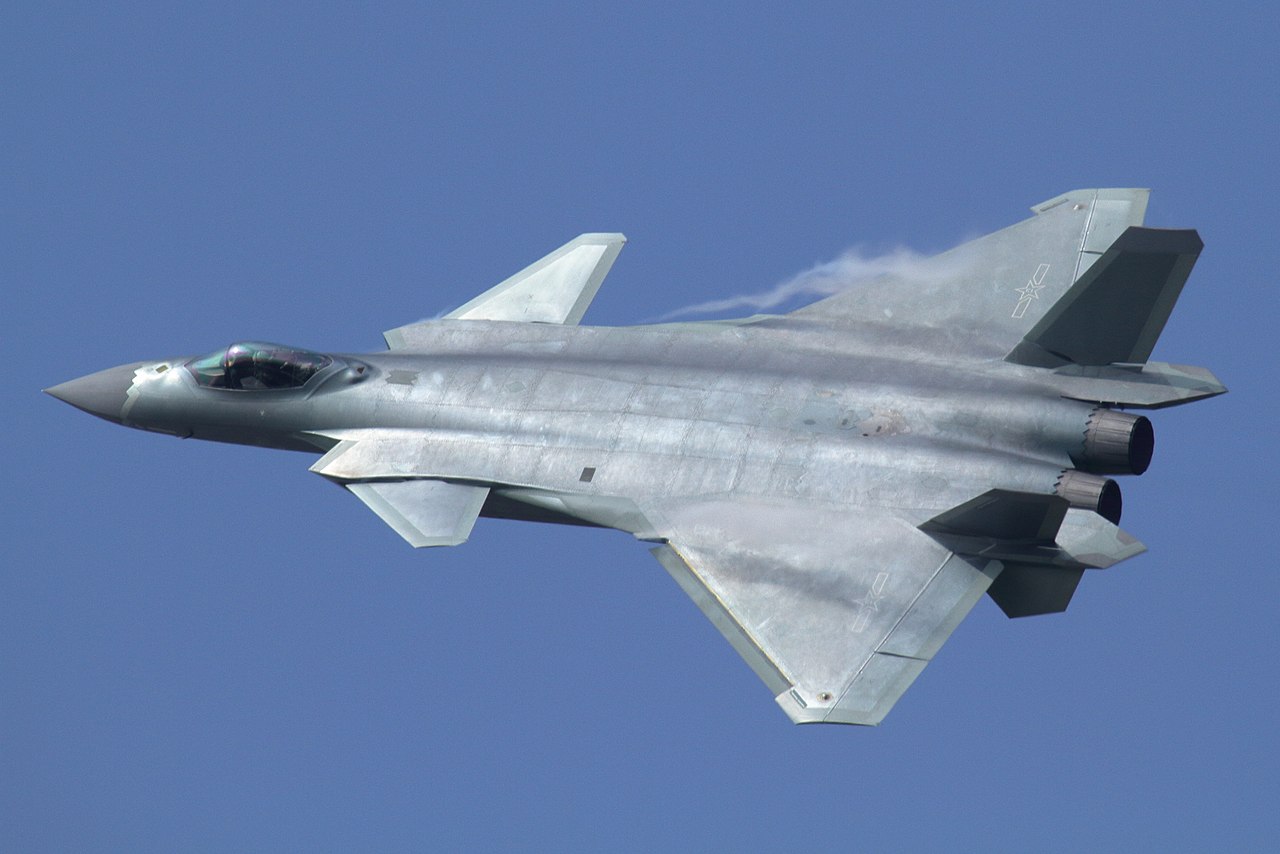
Xi Jinping and the Purge That Built an Army
The PLA that Xi Jinping inherited in 2012 was modernising, and the one he commands in 2026 is transformed. Part IV of the Unprepared series.
Reported by PV Magazine (intl). Read the original report ↗
Related coverage
How is Iluka Resources (ASX:ILU) building a rare earths supply chain after completing work at Eneabba? - Kalkine Media
Australia’s battery manufacturing strength lays in component supply
Australia and US target more critical minerals investment - Australian Mining
SolarEdge exits Australian market
The numbers, as they move
A short, sourced brief when the figures shift: a transmission blow-out, a supply-chain move, a milestone.