Home batteries outpace grid forecasts
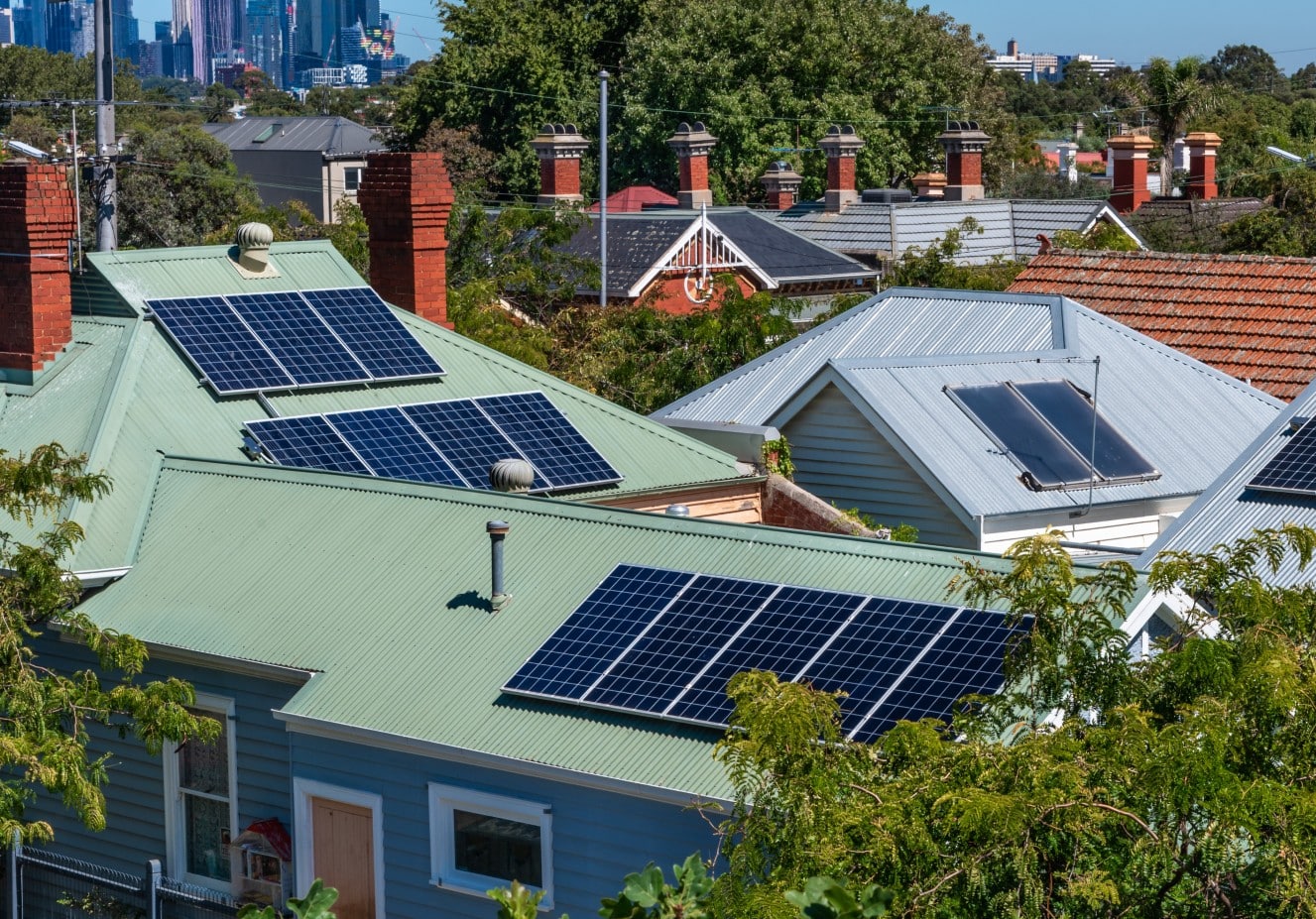
Australia installed 276,011 home batteries in a recent period, outpacing forecasts. The surge suggests distributed battery capacity will exceed national grid projections for 2029, 30. Rooftop solar and battery uptake is accelerating faster than energy planners anticipated.
Where this fits
This is a whole-system cost story dressed as good news. Home batteries are cheap per kilowatt-hour and absorb solar at the point of use, which looks efficient. But they do not solve the grid's core problem: weather-dependent supply still needs firming, and that firming has to happen somewhere. As residential batteries proliferate, the grid loses visibility and control over storage capacity, forcing network operators to overbuild transmission and lean harder on gas peaking plants to cover hours when neither sun nor home batteries supply power. The distributed model also deepens Australia's material and supply-chain dependence: every battery pack is lithium, cobalt, and nickel sourced and processed in China's coal-powered factories, embedding emissions and strategic vulnerability into what is marketed as clean energy.
What it means
A grid built on rooftop solar and home batteries is cheaper per installation but more expensive in total system cost. It requires larger transmission networks to move power between regions when distributed storage is empty, higher gas burn for firming, and accelerating demand for battery minerals that Australia does not control. The faster batteries roll out, the more acute these pressures become. Australia is trading direct control of generation and storage for dependence on Chinese supply chains and weather volatility managed by gas. A firm, domestically fueled alternative, nuclear, remains banned by law.
Go deeper on the numbers
The bigger picture
Energy security is national security. This connects to the wider case at Unprepared: Australia's dependence on a strategic rival, and how ready it is for the world that is coming.

Xi Jinping and the Purge That Built an Army
The PLA that Xi Jinping inherited in 2012 was modernising, and the one he commands in 2026 is transformed. Part IV of the Unprepared series.
Reported by Utility Magazine. Read the original report ↗
Related coverage
What grid-forming kit are Australia’s largest solar–BESS hybrids using?
New four-hour battery storage proposal seeks federal green tick for Australia’s most renewable state grid
SA gives green light for gas to help power future data centres - ABC News & Headlines – Australian Broadcasting Corporation
Concentrated Solar Power (CSP) in Australia: Can It Work Alongside Rooftop Solar? - Energy Matters
The numbers, as they move
A short, sourced brief when the figures shift: a transmission blow-out, a supply-chain move, a milestone.