Industry urges nuclear recognition in COP31's 35-by-35 pledge
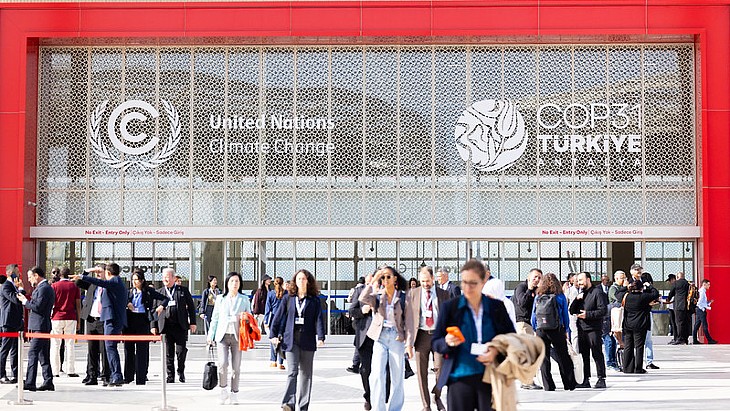
Industry leaders have called for nuclear energy to be explicitly recognised in COP31's pledge to raise electricity to 35% of final energy demand by 2035. The World Nuclear Association reports 423 GWe of nuclear capacity existed at end-2025, with 88 GWe under construction, and notes global nuclear construction is at a 40-year high. The association's director general said the conversation has shifted from whether to triple nuclear capacity by 2050 to how fast it can be delivered, and flagged that investment, supply-chain development and workforce planning must accelerate in coming years. Thirty-nine countries have now signed a declaration to triple nuclear capacity by 2050, up from 22 at COP28.
Where this fits
Nuclear is the lowest-emission firm power available, yet Australia bans it by law while building a grid dependent on weather-dependent renewables. COP31's electricity target can be met with nuclear at far lower whole-system cost than the renewables-plus-gas path now under way. The global supply chain for solar panels, batteries and inverters is China-owned and coal-powered; nuclear fuel supply is diversified and secure. This story shows the technology working at scale, globally, at the moment Australia forecloses it.
What it means
A grid that meets COP31-style ambitions via Australian solar and wind requires massive firming capacity, transmission overbuild, and critical-material imports controlled by Beijing. Nuclear delivers firm baseload at lower lifecycle emissions and material intensity, without weather risk or Chinese supply-chain dependence. The global fleet proves the engineering; the barrier is political. Australia's ban means accepting higher grid cost, greater gas-lock-in, and energy-security exposure that a competing industrial power could exploit.
By the numbers
at ~A$2000–3200/kW installed. Source: CSIRO GenCost 2024-25. Indicative.
at a ~38% capacity factor, and only when the wind blows, so it still needs firming.
enough for 105–261 TWh a year of firm, always-on power, generating for ~60 years. Source: CSIRO GenCost 2024-25 (A$8.5–13.2bn/GW), IAEA capacity factor.
Figures are indicative conversions from the article's stated quantity using published cost, material and capacity factors (CSIRO GenCost, BNEF, IEA, IAEA). Ranges, not precise forecasts.
Go deeper on the numbers
The bigger picture
Energy security is national security. This connects to the wider case at Unprepared: Australia's dependence on a strategic rival, and how ready it is for the world that is coming.

Xi Jinping and the Purge That Built an Army
The PLA that Xi Jinping inherited in 2012 was modernising, and the one he commands in 2026 is transformed. Part IV of the Unprepared series.
Reported by World Nuclear News. Read the original report ↗
Related coverage
ONR’s first-ever safeguards agreement strengthens UK-Australia nuclear cooperation - Office for Nuclear Regulation
Paladin targets 2031 uranium production with $525m raising - Australian Resources & Investment
$3.9b uranium player Paladin looks to raise $525m - AFR
Data centres revive Coalition passion for nuclear power, but this time more expensive and even less realistic - Renew Economy
The numbers, as they move
A short, sourced brief when the figures shift: a transmission blow-out, a supply-chain move, a milestone.