Initial fuel loading completed at second San'ao unit
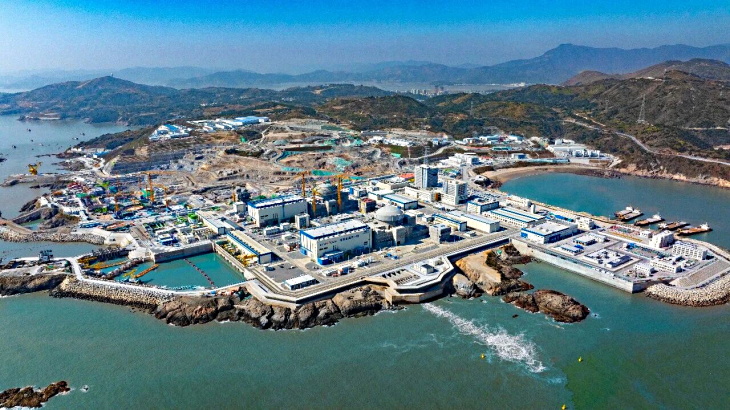
China General Nuclear completed fuel loading into unit 2 of the San'ao nuclear power plant in Zhejiang province on 2 November 2026. The HPR1000 reactor is the second of six planned at the site. CGN used semi-automated equipment to transfer 177 fuel assemblies into the core, including a custom-designed underwater lighting system the company developed in-house. Unit 2 is now entering its commissioning phase ahead of grid connection.
Where this fits
San'ao 2 is a data point in a pattern Australia is ignoring. China is deploying firm, energy-dense nuclear capacity on industrial timescales while Australian law bans the technology outright. The HPR1000 is a modern design with strong safety credentials. China will have multiple units of proven, dispatchable generation running while Australia remains locked into a renewables-only path that requires gas firming, transmission overbuild, and a supply chain for panels, batteries and inverters that runs through Chinese factories powered by coal. The technology and manufacturing competence now on display is not available to Australia.
What it means
Australia's energy security rests on a bet: that weather-dependent renewable capacity can be made reliable and affordable through storage and interconnection, and that China will remain a stable supplier of the hardware that bet depends on. San'ao 2's completion shows China is not betting on renewables alone. It is building firm power in parallel, securing energy sovereignty and industrial leverage. Australia's ban on nuclear means it cannot make the same choice. The grid will depend on gas as the swing resource for decades, and on China for the panels and batteries that make up 80 percent of new capacity. That is a structural vulnerability, not a bridge to decarbonisation.
Go deeper on the numbers
The bigger picture
Energy security is national security. This connects to the wider case at Unprepared: Australia's dependence on a strategic rival, and how ready it is for the world that is coming.

Xi Jinping and the Purge That Built an Army
The PLA that Xi Jinping inherited in 2012 was modernising, and the one he commands in 2026 is transformed. Part IV of the Unprepared series.
Reported by World Nuclear News. Read the original report ↗
Related coverage
Paladin targets 2031 uranium production with $525m raising - Australian Resources & Investment
$3.9b uranium player Paladin looks to raise $525m - AFR
Data centres revive Coalition passion for nuclear power, but this time more expensive and even less realistic - Renew Economy
Russia proposes carbon credits framework for SMRs
The numbers, as they move
A short, sourced brief when the figures shift: a transmission blow-out, a supply-chain move, a milestone.