It’s been 10 years since the blackout of South Australia – could it happen again?
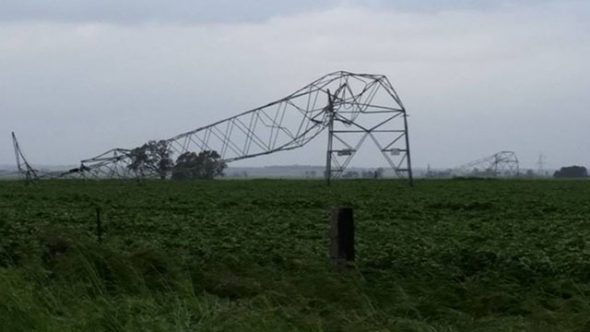
The 2016 South Australian blackout resulted from a storm that damaged transmission lines while the state was importing large quantities of power. Ten years on, the article asks whether similar conditions could trigger another system failure. A new interconnector (Project Energy Connect) now provides redundancy that did not exist then, though its second stage remains incomplete at the time of writing.
Where this fits
South Australia's path to a near-total renewable grid has made it dependent on interstate power flows for reliability. When weather damages local generation and transmission simultaneously, the "Swiss cheese" scenario, the state must draw on neighbours. That redundancy costs money and requires build-out of transmission that would not be needed with firm, dispatchable generation on-site. The 2016 event showed that a grid leaning on weather-dependent supply and physical interconnection is vulnerable to compound failures that coal or nuclear plant would have prevented.
What it means
Australia is betting that new transmission and interconnectors can substitute for firm power. Each blackout risk and each new redundant line represents a hidden cost of the renewables-only path: not just the panels and batteries themselves, but the overbuild of wires needed when generation is scattered and intermittent. Sovereignty compounds the problem. Australia controls neither the weather nor the supply chains for the panels, batteries and inverters that fill the reliability gap. A firm, domestic nuclear fleet would eliminate both the transmission overbuild and the dependence on weather and imports, but law prohibits it. Ten years after South Australia's blackout, the risk profile has shifted, not shrunk.
Go deeper on the numbers
The bigger picture
Energy security is national security. This connects to the wider case at Unprepared: Australia's dependence on a strategic rival, and how ready it is for the world that is coming.

Xi Jinping and the Purge That Built an Army
The PLA that Xi Jinping inherited in 2012 was modernising, and the one he commands in 2026 is transformed. Part IV of the Unprepared series.
Reported by RenewEconomy. Read the original report ↗
Related coverage
What grid-forming kit are Australia’s largest solar–BESS hybrids using?
New four-hour battery storage proposal seeks federal green tick for Australia’s most renewable state grid
SA gives green light for gas to help power future data centres - ABC News & Headlines – Australian Broadcasting Corporation
Concentrated Solar Power (CSP) in Australia: Can It Work Alongside Rooftop Solar? - Energy Matters
The numbers, as they move
A short, sourced brief when the figures shift: a transmission blow-out, a supply-chain move, a milestone.