Korean concern over proposed 'Made in EU' act's impact on nuclear power projects
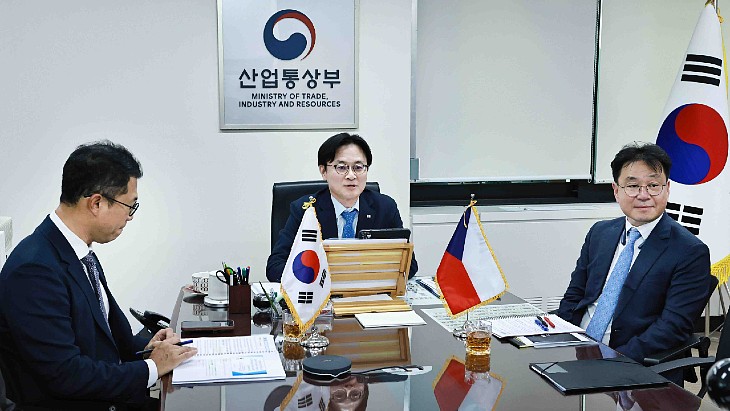
South Korea's trade minister has raised concerns that the EU's proposed Industrial Accelerator Act could restrict non-member countries from participating in European nuclear projects. The intervention came during a steering committee meeting on the Dukovany nuclear project in Czech Republic, where Seoul emphasised that EU supply chains for nuclear components are weakened and that Korean suppliers are essential for timely project delivery. Korea is also seeking to expand its role in Czech nuclear expansion, including potential involvement in two additional units at Temelin.
Where this fits
This is a sovereignty and supply-chain story masquerading as a trade dispute. The EU is attempting to build nuclear independence by tightening procurement rules, but doing so risks excluding the few non-Chinese suppliers of critical components that possess reliable, scalable production. Korea occupies the gap between a fragmented, under-capacity European supply base and Beijing's dominance in solar, batteries and processed minerals. If the EU erects barriers to Korean participation, it either slows nuclear build-out or pushes projects toward Chinese suppliers, the opposite of the security outcome Brussels intends.
What it means
Australia faces an identical dilemma at larger scale. Building a renewables-heavy grid locks in dependence on Chinese supply chains (panels, batteries, inverters, rare earths processing) for decades. A firm, low-carbon alternative, nuclear, requires international suppliers but offers genuine diversification away from a single strategic rival. Korea's push back against EU localism signals that even allied nations are struggling to secure non-Chinese supply chains for energy infrastructure. Australia, which has banned nuclear altogether, has ceded this problem entirely: it will source its grid-firming and storage from the one supplier with global scale, China's battery industry.
Go deeper on the numbers
The bigger picture
Energy security is national security. This connects to the wider case at Unprepared: Australia's dependence on a strategic rival, and how ready it is for the world that is coming.

Xi Jinping and the Purge That Built an Army
The PLA that Xi Jinping inherited in 2012 was modernising, and the one he commands in 2026 is transformed. Part IV of the Unprepared series.
Reported by World Nuclear News. Read the original report ↗
Related coverage
Paladin targets 2031 uranium production with $525m raising - Australian Resources & Investment
$3.9b uranium player Paladin looks to raise $525m - AFR
Data centres revive Coalition passion for nuclear power, but this time more expensive and even less realistic - Renew Economy
Russia proposes carbon credits framework for SMRs
The numbers, as they move
A short, sourced brief when the figures shift: a transmission blow-out, a supply-chain move, a milestone.