Preparations for advanced nuclear at ports should begin now, study concludes
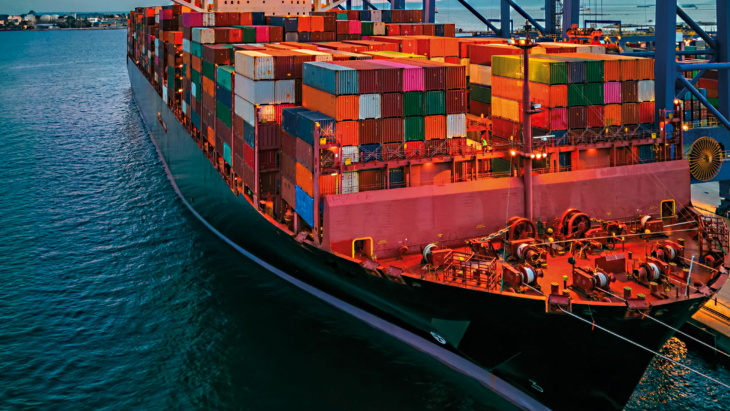
The British Ports Association and Lloyd's Register have published a joint paper recommending that ports begin structured planning now for advanced nuclear technology, including small modular reactors for port operations, shore power, industrial heat and vessel propulsion. The paper frames nuclear as a long-term infrastructure question rather than a fuel choice, and notes that ports face rising electrical demand from electrified cargo handling, cold storage, hydrogen production and data centres. It argues that small nuclear reactors can provide stable baseload power, reduce reliance on regional grids, and deliver reliable low-emission energy in a compact footprint.
Where this fits
This paper illustrates why firm, energy-dense power matters for industrial decarbonisation. Ports cannot run on weather-dependent solar and wind alone: they need stable baseload power to handle variable demand, maintain cold chains, and support electrified operations. Nuclear provides that reliability in a small physical footprint. By contrast, a renewables-plus-battery approach to port electrification would require oversized solar and wind capacity, large battery installations to bridge gaps between wind and sun, and transmission overbuild to route power from distant generation zones. The sovereignty angle is sharp: ports are strategic infrastructure, and relying on imported battery and panel supply chains (dominated by China) to power them is a resilience risk.
What it means
Australia's ports face identical pressures: rising electrification demand, grid constraints, and the need for reliable low-emission power. Yet Australia has banned nuclear generation by law. A port in Britain or the US can now plan for an SMR. An Australian port cannot. The consequence is that decarbonisation of port operations will depend on either oversized renewable capacity with storage, or on gas firming, both more costly and less reliable than the firm alternative being foregone.
Go deeper on the numbers
The bigger picture
Energy security is national security. This connects to the wider case at Unprepared: Australia's dependence on a strategic rival, and how ready it is for the world that is coming.

Xi Jinping and the Purge That Built an Army
The PLA that Xi Jinping inherited in 2012 was modernising, and the one he commands in 2026 is transformed. Part IV of the Unprepared series.
Reported by World Nuclear News. Read the original report ↗
Related coverage
Paladin targets 2031 uranium production with $525m raising - Australian Resources & Investment
$3.9b uranium player Paladin looks to raise $525m - AFR
Data centres revive Coalition passion for nuclear power, but this time more expensive and even less realistic - Renew Economy
Russia proposes carbon credits framework for SMRs
The numbers, as they move
A short, sourced brief when the figures shift: a transmission blow-out, a supply-chain move, a milestone.