Radiant microreactor selected for deployment by US Navy
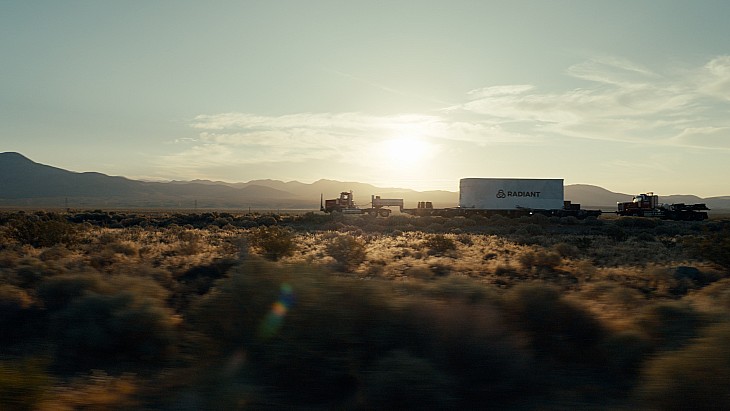
The US Navy has selected Radiant's Kaleidos microreactor for deployment at Naval Weapons Station Crane in Indiana. The microreactor is designed to provide power at remote or isolated military sites. This marks a validation of the microreactor concept by a major defence and industrial user in a context where grid reliability is a security prerequisite.
Where this fits
This is a data point in the firm-power case. Microreactors solve a problem that renewables cannot: providing dispatchable, weather-independent electricity at sites where grid outages translate to operational failure. Defence installations require power that responds to demand on demand, not to wind and sun. The Navy's choice shows that when energy security matters most, institutions turn to nuclear. Australia faces the same challenge, grid resilience and redundancy, yet has legislated nuclear generation out of reach while building a renewables-only system dependent on gas for firming and increasingly reliant on Chinese-manufactured panels, batteries and inverters for the transition itself.
What it means
Microreactors represent a pathway to firm, compact, low-material power that sidesteps the transmission and land-use burden of utility-scale renewables and the supply-chain exposure of battery storage. Australia's ban on nuclear generation forecloses this option entirely, even as the technology matures overseas and gains validation from end-users whose failure tolerance is near zero. The consequence is a grid locked into dependency on imported renewable hardware, gas for weather events, and a transmission system built to handle the intermittency renewables cannot smooth. Energy security is national security; this deployment illustrates what Australia is choosing not to pursue.
Go deeper on the numbers
The bigger picture
Energy security is national security. This connects to the wider case at Unprepared: Australia's dependence on a strategic rival, and how ready it is for the world that is coming.

Xi Jinping and the Purge That Built an Army
The PLA that Xi Jinping inherited in 2012 was modernising, and the one he commands in 2026 is transformed. Part IV of the Unprepared series.
Reported by World Nuclear News. Read the original report ↗
Related coverage
Paladin targets 2031 uranium production with $525m raising - Australian Resources & Investment
$3.9b uranium player Paladin looks to raise $525m - AFR
Data centres revive Coalition passion for nuclear power, but this time more expensive and even less realistic - Renew Economy
Russia proposes carbon credits framework for SMRs
The numbers, as they move
A short, sourced brief when the figures shift: a transmission blow-out, a supply-chain move, a milestone.