“Reset 3.0” doesn’t answer the biggest questions about Snowy’s $25 billion-plus pumped hydro gamble
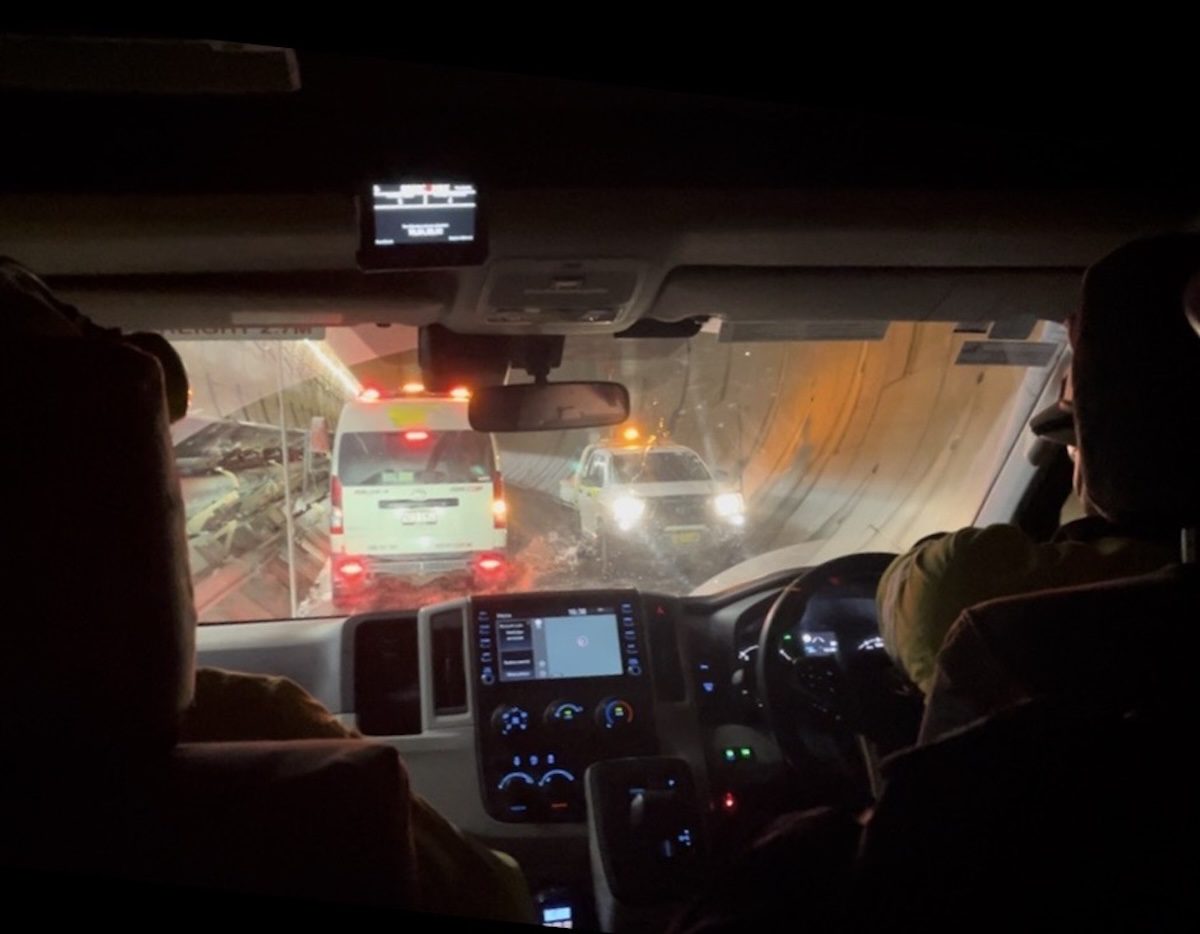
Snowy Hydro has reset Snowy 2.0's cost to as much as $25 billion, up from $12 billion at the 2023 reset and $2 billion when the project was announced in 2017. The latest review, released Thursday, omitted the net present value calculation that had shown $3 billion in 2024. Instead, Snowy's chief executive highlighted $18.3 billion in economic activity and a forecast $7 billion reduction in wholesale electricity prices to 2075. The choice of 2075 as the calculation horizon is unexplained. The project remains a 2.2 gigawatt pumped hydro scheme connecting two reservoirs through 27 kilometres of tunnels and building an underground power station.
Where this fits
Snowy 2.0 exemplifies the whole-system cost problem in a renewables-dependent grid. Pumped hydro is firm, dispatchable power. It is also capital-intensive and time-consuming to build. As cost blowouts compound and completion stretches, the economic case for the project weakens on its face, yet it is being funded because intermittent solar and wind cannot deliver firm power alone. The vanishing NPV and the resort to indirect economic measures (jobs, wholesale price savings) signal the project no longer justifies itself on energy economics. A nuclear plant would deliver the same firming role at lower whole-system cost and in a fraction of the time, but Australia's regulatory framework bans it.
What it means
Australia is locking in a grid design that is both expensive and dependent on storage infrastructure with uncertain economics. Snowy 2.0 is now a $25 billion-plus bet on a single site. If that bet fails to deliver the promised price reductions or reliability gains, there is no reserve capacity to backfill the system. Meanwhile, gas will remain the backup for the years Snowy remains incomplete, and the bill for firming infrastructure will keep climbing.
By the numbers
enough for 15–23 TWh a year of firm, always-on power, generating for ~60 years. Source: CSIRO GenCost 2024-25 (A$8.5–13.2bn/GW), IAEA capacity factor.
Figures are indicative conversions from the article's stated quantity using published cost, material and capacity factors (CSIRO GenCost, BNEF, IEA, IAEA). Ranges, not precise forecasts.
at ~A$600–1000/kWh installed. Source: BNEF, CSIRO GenCost 2024-25. Indicative.
of average national (NEM) demand if fully dischargeable, then it needs recharging. Storage shifts power, it does not generate it.
lithium, graphite, nickel, copper and cobalt (~220 t lithium content). Replaced roughly every 12 years. Source: IEA, Argonne GREET. Indicative.
~75% of cells are China-made. Source: IEA cell-manufacturing share.
enough for 1–2 TWh a year of firm, always-on power, generating for ~60 years. Source: CSIRO GenCost 2024-25 (A$8.5–13.2bn/GW), IAEA capacity factor.
Figures are indicative conversions from the article's stated quantity using published cost, material and capacity factors (CSIRO GenCost, BNEF, IEA, IAEA). Ranges, not precise forecasts.
Go deeper on the numbers
The bigger picture
Energy security is national security. This connects to the wider case at Unprepared: Australia's dependence on a strategic rival, and how ready it is for the world that is coming.

Xi Jinping and the Purge That Built an Army
The PLA that Xi Jinping inherited in 2012 was modernising, and the one he commands in 2026 is transformed. Part IV of the Unprepared series.
Reported by RenewEconomy. Read the original report ↗
Related coverage
Energy Minister Chris Bowen confirms EV and battery subsidies in firing line - AFR
Data centre giant lines up solar, wind and battery deal to power its plans for former smelter site - Renew Economy
Energy bills set to unleash hell on battling families - The Australian
Rio Tinto (ASX:RIO) Share Price: Bell Bay, Tomago and Boyne Power Deals Reset Australian Aluminium - Kalkine
The numbers, as they move
A short, sourced brief when the figures shift: a transmission blow-out, a supply-chain move, a milestone.