Singapore looks to develop nuclear energy expertise
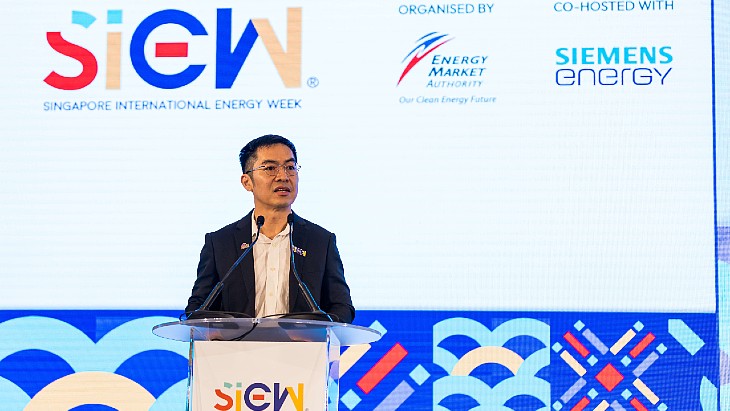
Singapore's energy regulator has launched three schemes to build domestic nuclear expertise: a manpower development programme starting 2027 to place public officials with nuclear companies for on-the-job training; a business-focused funding stream for personnel at selected companies to complete international attachments; and a fellowship programme to bring in international energy advisors. The schemes are designed to prepare Singapore for an International Atomic Energy Agency review next year and to assess whether advanced nuclear technologies suit the city-state's power generation needs. Initial partnership agreements have been signed with AtkinsRéalis, China National Nuclear Corporation Overseas, and X-energy.
Where this fits
Singapore is moving on nuclear because it sits at a crossroads that Australia ignores: a dense, wealthy city-state has no room for vast solar and wind farms, limited gas reserves, and faces a grid reliability problem that renewables-only solutions cannot solve. This is a sovereignty play dressed as capability-building. By investing in nuclear expertise now, Singapore is hedging against the whole-system cost of a renewables path, the transmission overbuild, the firming gas burden, the end-of-life waste, and the dependence on China's panel and battery supply chain. Australia has instead banned nuclear by law while doubling down on the very cost and supply-chain risks Singapore is trying to avoid.
What it means
Australia's energy security depends on choices made elsewhere. Singapore's pivot to nuclear signals that the developed world's serious energy planners are moving away from renewables-only grids toward firm, low-emission alternatives. As Australia locks in a path dependent on weather, gas, and Chinese manufacturing, a comparable nation with even tighter land and resource constraints is preparing to harness the generation source with the lowest lifecycle emissions and the smallest material footprint. The gap between Singapore's realism and Australia's legal prohibition on nuclear is widening.
Go deeper on the numbers
The bigger picture
Energy security is national security. This connects to the wider case at Unprepared: Australia's dependence on a strategic rival, and how ready it is for the world that is coming.

Xi Jinping and the Purge That Built an Army
The PLA that Xi Jinping inherited in 2012 was modernising, and the one he commands in 2026 is transformed. Part IV of the Unprepared series.
Reported by World Nuclear News. Read the original report ↗
Related coverage
Paladin targets 2031 uranium production with $525m raising - Australian Resources & Investment
$3.9b uranium player Paladin looks to raise $525m - AFR
Data centres revive Coalition passion for nuclear power, but this time more expensive and even less realistic - Renew Economy
Russia proposes carbon credits framework for SMRs
The numbers, as they move
A short, sourced brief when the figures shift: a transmission blow-out, a supply-chain move, a milestone.