Turkish oil refiner to consider SMR deployment
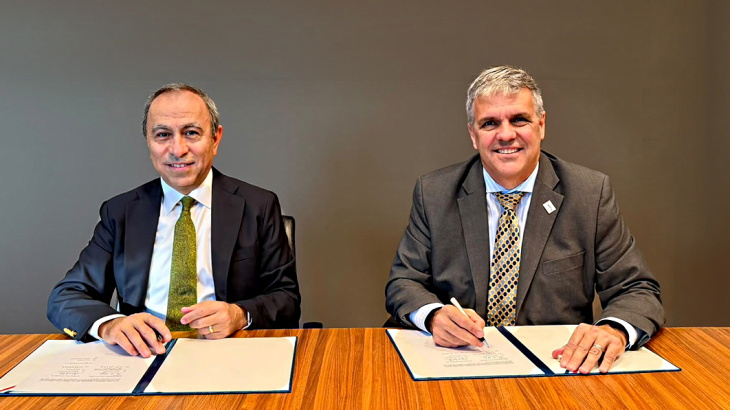
Turkey's state oil refiner TÜPRAŞ has signed a technical assistance agreement with the US Trade and Development Agency to study whether small modular reactors can supply electricity, heat and steam to its refining operations. The one-year study will examine US SMR technologies, their licensing status, economic viability, and deployment roadmap. TÜPRAŞ aims to reach carbon neutrality by 2050. The move complements parallel USTDA funding to Turkey's state nuclear company to build the regulatory and financial framework for private SMR deployment.
Where this fits
This is a sovereignty and firm-power story. Turkey is deliberately moving toward firm, dispatchable nuclear capacity to decarbonise heavy industry while reducing reliance on imported energy. The SMR deployment path bypasses the intermittency problem that renewables cannot solve in industrial heat applications: a refinery needs continuous, reliable thermal and electrical supply. Turkey's framing, energy security, carbon goals, energy independence, is the one Australia should adopt but has not. Instead, Australia is building a renewables-dependent grid that requires gas firming, offshore battery supply chains, and ongoing commodity imports while rejecting the one firm, low-emission technology that needs no Chinese supply-chain dependence.
What it means
Australia watches a middle-income country treat SMRs as infrastructure, not ideology, and move to secure both emissions reductions and energy sovereignty in a single move. Turkey's approach recognises that decarbonisation and energy security are not separate problems. Australia's ban on nuclear generation forecloses this path entirely, locking the country into either gas firming or weather-dependent supply chains that flow through Beijing. The refinery use case, industrial process heat, is also Australian: refining, mining, chemicals, steelmaking. We have the need. We have banned the tool.
Go deeper on the numbers
The bigger picture
Energy security is national security. This connects to the wider case at Unprepared: Australia's dependence on a strategic rival, and how ready it is for the world that is coming.

Xi Jinping and the Purge That Built an Army
The PLA that Xi Jinping inherited in 2012 was modernising, and the one he commands in 2026 is transformed. Part IV of the Unprepared series.
Reported by World Nuclear News. Read the original report ↗
Related coverage
Paladin targets 2031 uranium production with $525m raising - Australian Resources & Investment
$3.9b uranium player Paladin looks to raise $525m - AFR
Data centres revive Coalition passion for nuclear power, but this time more expensive and even less realistic - Renew Economy
Russia proposes carbon credits framework for SMRs
The numbers, as they move
A short, sourced brief when the figures shift: a transmission blow-out, a supply-chain move, a milestone.