Why a Business Installing Solar in 2029 Gets a Better Deal Than You

Australia's residential solar rebate declines each year, while commercial systems between 100 kW and 1 MW benefit from a fixed rebate level for five years. The article does not specify the rebate amounts or the precise timeline, only that this asymmetry exists and creates a cost advantage for businesses planning installations in 2029 compared to households installing sooner.
Where this fits
This reveals the hidden cost structure of Australia's solar-led transition. Residential rebates shrink as deployment rises, signalling that the capital-subsidy burden cannot sustain household-scale adoption indefinitely. Commercial systems get a five-year lock-in, which insulates businesses from the transition's true price discovery. The policy is driving capital toward distributed solar rather than firm, dispatchable alternatives. It also fragments incentive signals: households face accelerating cost, businesses face stability. Neither signal says "this renewable-heavy grid needs firming", gas plants or nuclear, to remain reliable when the sun is not shining.
What it means
Australia is hollowing out the rebate as solar penetration rises, which means either rebates will become negligible or the fiscal burden will force a reckoning on subsidy levels. Households installing solar now lock in no protection; businesses lock in five years of certainty. This unevenness will push solar deployment further toward commercial and industrial sites, concentrating the grid's weather-dependent generation among large users. The underlying problem persists: Australia is building a renewable system that depends on weather-variable output, requires dispatchable gas firming to fill the gaps, and has no firm alternative on offer. A household or business choosing solar today is not choosing based on total system cost, emissions or resilience; it is responding to a rebate cliff and a regulatory framework that excludes the only firm, low-emission source available.
By the numbers
at ~A$1100–1600/kW installed. Source: CSIRO GenCost 2024-25. Indicative.
at a ~24% capacity factor, and only when the sun shines, so it still needs firming.
~80% of modules are China-made. Source: IEA solar supply-chain data.
Figures are indicative conversions from the article's stated quantity using published cost, material and capacity factors (CSIRO GenCost, BNEF, IEA, IAEA). Ranges, not precise forecasts.
at ~A$1100–1600/kW installed. Source: CSIRO GenCost 2024-25. Indicative.
at a ~24% capacity factor, and only when the sun shines, so it still needs firming.
~80% of modules are China-made. Source: IEA solar supply-chain data.
enough for 1–1 TWh a year of firm, always-on power, generating for ~60 years. Source: CSIRO GenCost 2024-25 (A$8.5–13.2bn/GW), IAEA capacity factor.
Figures are indicative conversions from the article's stated quantity using published cost, material and capacity factors (CSIRO GenCost, BNEF, IEA, IAEA). Ranges, not precise forecasts.
Go deeper on the numbers
The bigger picture
Energy security is national security. This connects to the wider case at Unprepared: Australia's dependence on a strategic rival, and how ready it is for the world that is coming.
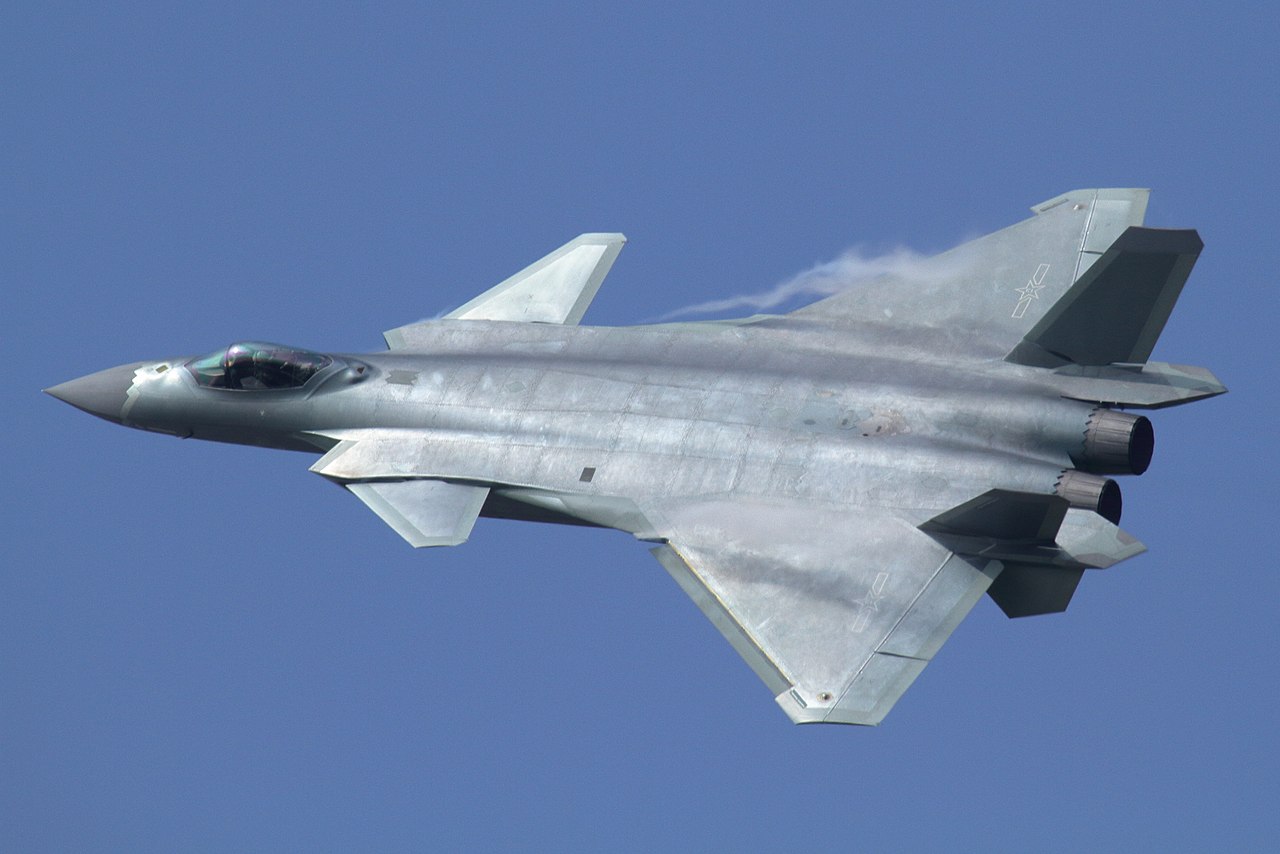
Xi Jinping and the Purge That Built an Army
The PLA that Xi Jinping inherited in 2012 was modernising, and the one he commands in 2026 is transformed. Part IV of the Unprepared series.
Reported by Energy Matters. Read the original report ↗
Related coverage
Energy Minister Chris Bowen confirms EV and battery subsidies in firing line - AFR
Data centre giant lines up solar, wind and battery deal to power its plans for former smelter site - Renew Economy
Energy bills set to unleash hell on battling families - The Australian
Rio Tinto (ASX:RIO) Share Price: Bell Bay, Tomago and Boyne Power Deals Reset Australian Aluminium - Kalkine
The numbers, as they move
A short, sourced brief when the figures shift: a transmission blow-out, a supply-chain move, a milestone.