All editions
The Dispatch·Weekly edition

21–27 September 2026

A curated edition of the week's classified intelligence — the stories that moved Australia's preparedness across the eight pillars, and why each mattered.

89 stories · classified & human-curated

China · Economy

China’s economy is changing rapidly. It’s no longer Australia’s easy export market - The Conversation

China · Economy
WiNG / Wikimedia Commons (CC BY-SA 3.0)

China's structural economic shift away from commodity-intensive manufacturing directly undermines Australia's primary revenue stream and fiscal stability. A sustained contraction in Chinese demand for Australian iron ore, coal, and LNG erodes Australia's sovereign wealth accumulation, fiscal headroom for defence spending, and strategic leverage over Beijing during Indo-Pacific competition.

GNews: The Conversation·2026-09-27P1P2P5Full story
Dispatch
Dispatch

Gina Rinehart’s Hancock Prospecting takes $680m loss on rare earths - AFR

Hancock Prospecting's $680m rare earths loss signals difficulty in establishing sovereign critical-mineral production outside China's supply chain. This constrains Australia's strategic decoupling capacity and undermines Resource Sovereignty (Pillar 1), a foundation for defence industrial self-sufficiency and supply-chain resilience.

GNews: critical minerals · 2026-09-27P1P5
Dispatch
Dispatch

Gina Rinehart’s Hancock Prospecting takes $680m hit on rare earths - AFR

A $680m loss at Hancock Prospecting signals contraction in Australia's rare-earths extraction and processing capacity, directly undermining Resource Sovereignty (Pillar 1) and strategic Decoupling from China (Pillar 5). Rare earths are critical for defence systems, renewable energy, and advanced manufacturing; reduced private-sector investment in sovereign production increases Australia's vulnerability to supply disruption and dependency on Chinese processing monopolies.

GNews: critical minerals · 2026-09-27P1P5
Alliance
U.S. Navy / MC2 Jeanette Mullinax (public domain)
Alliance

AUKUS at Five: Progress, Challenges, and the Way Forward Transcript - CSIS | Center for Strategic and International Studies

CSIS assessments of AUKUS carry credibility with US policymakers and Congress. This review's framing of progress versus challenges influences US confidence in the programme's viability and Australia's role as a priority ally. Direct bearing on Pillar 7 (Alliance) credibility and Pillar 6 (Maritime Defence) capability timelines.

GNews: AUKUS · 2026-09-27P6P7
China · Military
mailer_diablo / Wikimedia Commons (CC BY-SA 3.0)
China · Military

'Open your eyes': Why China's sixth Antarctic base is raising concerns - ABC News & Headlines – Australian Broadcasting Corporation

China's expansion of Antarctic military-adjacent infrastructure (sixth base) signals a long-term strategic commitment to polar operations and extended-reach power projection in a region Australia regards as strategically peripheral but economically and geopolitically linked to Indo-Pacific stability. This adds to China's capability to operate far from home waters and to contest Australian claims or interests in Antarctic resource/shipping zones, reinforcing Australia's need for greater resource sovereignty and decoupling in polar and maritime domains.

GNews: ABC News · 2026-09-27P1P5P6
Australia · Energy
Australia · Energy

The residents and wind farm on the frontline of Australia's energy wars

The Gawara Baya wind farm represents concrete progress toward Australia's 2030 renewables target and decoupling from fossil-fuel vulnerability. Renewable energy generation and battery storage in regional Australia strengthen energy sovereignty and reduce exposure to fuel-supply disruptions (e.g., Hormuz closure), bolstering Pillar 2 (Fiscal Engine) by reducing long-term energy costs and Pillar 8 (Northern Arc) resilience.

ABC News · 2026-09-26P2P8
Australia · Defence
Australia · Defence

Ghost Bats and Maven Smart: How AI is transforming Defence - ABC News & Headlines – Australian Broadcasting Corporation

The ADF's integration of AI-enabled decision-support and autonomous systems (Ghost Bats drone swarms, Maven Smart battlefield management) directly advances Industrial Base (Pillar 3) and Maritime Defence (Pillar 6) modernisation. This signals Australia is not passively vulnerable to AI-driven obsolescence but is actively acquiring and embedding AI capability, reducing a key existential risk to force structure.

GNews: ABC News · 2026-09-26P3P6
China · Military
Alexchris / Wikimedia Commons (Public domain)
China · Military

China’s risk calculus to use force on Taiwan - The Manila Times

Analysis of China's Taiwan calculus is strategically relevant to Australia because Taiwan conflict directly triggers AUKUS activation, regional destabilisation, and potential US commitment stress. However, this article appears to be interpretive commentary on Chinese decision-making rather than reporting a concrete change in capabilities, posture, or triggering conditions that would shift Australian preparedness metrics.

GNews: Taiwan conflict · 2026-09-26P6P7
Technology
Retro-Computing Society of Rhode Island / Wikimedia Commons (CC BY-SA 4.0)
Technology

Trump-Australia critical minerals push tops A$5B — but China still refines the world - Dealroom

Australia's A$5B critical-minerals investment with the Trump administration signals concrete progress on Pillar 1 (Resource Sovereignty) and Pillar 5 (Decoupling), reducing dependency on Chinese refining and processing. However, the article's emphasis that 'China still refines the world' highlights the persistence of structural vulnerability: capacity alone does not guarantee independence if downstream value-capture remains concentrated in China.

GNews: critical minerals · 2026-09-26P1P3P5
The rest of the week
Alliance· 35

Navy’s shipyard revamp could cost more than $200 billion: GAO

Breaking Defense · 2026-09-25source ↗P7P6

The US Navy's four public shipyards are the backbone of US submarine fleet maintenance and AUKUS submarine transfer logistics. A $200B, 50-year overhaul—nearly 10× initial estimates—indicates severe capacity constraints that directly threaten Australia's planned Virginia-class submarine arrivals, timely maintenance cycles, and the credibility of the US commitment to AUKUS delivery. This is Australia's most critical security partnership; shipyard collapse undermines the entire AUKUS foundation and signals deeper US industrial-base fragility in the Indo-Pacific race against China.

US looks to Australia to help solve its nuclear-powered submarine problem - Crikey

GNews: AUKUS · 2026-09-25source ↗P6P7

This article signals sustained US commitment to AUKUS submarine transfer and indicates Washington is actively engaging with Australia to overcome delivery obstacles. A credible US signal that it will solve logistical and scheduling problems with SSN/SSG transfers materially reduces the risk of AUKUS collapse and strengthens Maritime Defence and Alliance pillars.

To deter China, we need a global alliance of democracies

ASPI The Strategist · 2026-09-25source ↗P7P6

The article reinforces the strategic logic for AUKUS and Quad-like alliance-building as the primary deterrent to Chinese military action in the Indo-Pacific, directly supporting Pillar 7 (Alliance). Australia's role in such a coalition—alongside the US, Japan, and potentially Philippines—is named explicitly as a frontline contributor to Taiwan defence, making alliance credibility and ADF capability critical to the deterrent effect.

Has China received US F-35 parts by diverting an Australian shipment? - Al Jazeera

GNews: Australia defence · 2026-09-24source ↗P3P5P7

This article reports a potential breach in US F-35 supply-chain security via alleged diversion to China, directly implicating the integrity of allied defence procurement and technology security. For Australia, which is central to AUKUS and depends on US-UK technology transfer for SSN-AUKUS submarines, any evidence of Chinese penetration of allied defence supply chains undermines confidence in partnership security architecture and raises questions about Australian industrial-base vetting and counter-espionage effectiveness.

Delivered to the Wrong Address? F-35 Parts Re-routed to Hong Kong

The Diplomat · 2026-09-24source ↗P3P7

This incident directly threatens AUKUS viability and Australia's foundation air-defence posture. If F-35 proprietary technology can be diverted to China, confidence in the security architecture underpinning the AUKUS submarine transfer—Australia's most critical strategic bet—erodes sharply, potentially triggering US/UK recalibration of technology-sharing commitments and forcing Australia to reassess the credibility of its allied industrial-base strategy.

Australia calls for 'absolute consensus' on Pacific military group - ABC News & Headlines – Australian Broadcasting Corporation

GNews: Australia defence · 2026-09-24source ↗P7P8

Australia is actively building institutional consensus among Pacific partners on military cooperation, signalling a strategic pivot to consolidate Western influence in the region before China can deepen bilateral security arrangements with individual island nations. This reflects Australia's recognition that the Pacific is now a contested theatre where alliance coherence and coordination directly counter Chinese military penetration.

Xi Jinping to face Trump over Taiwan - The Australian

GNews: The Australian · 2026-09-24source ↗P6P7P8

A Trump–Xi confrontation over Taiwan directly threatens Australia's core alliance anchor (US commitment) and the stability of the Indo-Pacific. If Trump uses Taiwan as a bargaining chip or signals US withdrawal, Australia loses strategic depth and must accelerate sovereign defence capabilities and alternative partnerships.

Australia and Canada face similar northern logistics problems

ASPI The Strategist · 2026-09-24source ↗P3P7

Australia's export of advanced Jindalee-derived Over-the-Horizon Radar technology to Canada demonstrates industrial capability in remote-area defence systems and signals ongoing allied interoperability in high-latitude security. This reinforces Pillar 3 (Industrial Base) through technology transfer and Pillar 7 (Alliance) through tangible defence partnership deepening, supporting the broader Five Eyes–Quad coalition posture.

McCabe urges Crakanthorp to oppose Newcastle AUKUS base proposal - newy.com.au

GNews: AUKUS · 2026-09-24source ↗P6P7

AUKUS submarine operations require robust onshore infrastructure; domestic political opposition to proposed basing sites can obstruct or delay critical programme milestones and create scheduling uncertainty. This reflects a tension between AUKUS strategic necessity and local community acceptance—a recurring vulnerability if not resolved early.

PM set to warn China and US the Indo-Pacific not their 'chessboard' - ABC News & Headlines – Australian Broadcasting Corporation

GNews: ABC News · 2026-09-23source ↗P7P8

The PM's statement reframes Australia's strategic posture in the Indo-Pacific as independent arbiter rather than alignment pawn, signalling to both China and the US that Australia will pursue its own interests. This rhetoric affects alliance cohesion (Pillar 7) and Australia's positioning in the Northern Arc (Pillar 8), though the article contains no concrete policy, capability, or funding commitments that directly move preparedness metrics.

Where Are The Aircraft Carriers?: September 23, 2026

The War Zone · 2026-09-23source ↗P6P7

The article documents sustained US carrier strike group operations and explicit joint training with Royal Australian Navy frigates in contested waters, reinforcing the Alliance pillar and Australia's Maritime Defence posture. This demonstrates operational continuity of the forward-deployed US fleet architecture upon which Australia's Indo-Pacific security strategy depends.

On Taiwan, US ‘Strategic Ambiguity’ Is Not Dead Yet

The Diplomat · 2026-09-23source ↗P7P6

The erosion of US strategic ambiguity over Taiwan directly undermines the credibility of the US security umbrella on which Australia's defence strategy and alliance posture depend. If Taiwan is perceived as indefensible or US-abandoned, China's incentive to use force increases sharply, and Australia faces a potential great-power conflict with the US weakened or non-committed—a core pillar failure.

The trouble with Albanese calling China a hegemon

Lowy Institute · 2026-09-23source ↗P7P8

Albanese's public characterisation of China as a 'hegemon' signals a rhetorical hardening in Australian policy posture and may indicate shifting framing of China threat from regional rival to systemic hegemon—a reframing that underpins tighter Alliance cohesion and decoupling narratives. However, the article notes that the PM's 'frankness' does not yet clarify concrete policy responses, limiting immediate strategic bearing on defence spending, AUKUS timelines, or resource decoupling metrics.

Pentagon critics want to see AUKUS ‘stumble’, pact architect warns - The Australian

GNews: AUKUS · 2026-09-23source ↗P7

This article reveals internal Pentagon resistance to AUKUS, Australia's cornerstone alliance mechanism for acquiring nuclear submarines and advanced interoperability with the US and UK. If this opposition hardens into budget pressure or policy shifts, it threatens the timeline and scope of AUKUS Pillar II industrial cooperation and submarine delivery, undercutting Australia's Alliance pillar and nuclear-submarine posture.

Britain Invests £6 Billion to Double Nuclear Submarine Production Capacity - The Defense Watch

GNews: AUKUS UK Britain · 2026-09-23source ↗P7

The UK's expansion of nuclear submarine production directly supports AUKUS delivery timelines and allied submarine availability in the Indo-Pacific, strengthening Australia's access to SSN capability and the credibility of the Quad/Five Eyes alliance. This reinforces the feasibility of Australia's strategic reliance on AUKUS submarine transfers as a pillar of maritime defence and alliance deterrence.

Britain to double nuclear submarine output under £6 billion industrial plan, targeting one SSN-AUKUS boat every 18 months - Defence Industry Europe

GNews: AUKUS UK Britain · 2026-09-23source ↗P6P7

This article reports a concrete UK industrial commitment to AUKUS submarine delivery: doubling output to one SSN-AUKUS every 18 months under a £6 billion plan. This directly strengthens the AUKUS pillar and reduces the material risk that partner industrial capacity or political will would derail Australia's submarine acquisition timeline. The UK's production-acceleration pledge is a high-confidence signal that a core AUKUS partner is committed to meeting Australia's capability timeline.

Australia Has No Official 'Plan B' If AUKUS Submarines Run Late. Some Want the B-21 Raider or Maybe Even the F-47 NGAD - 19FortyFive

GNews: nuclear submarine · 2026-09-22source ↗P6P7

Australia's lack of an official contingency plan for late AUKUS submarines, coupled with exploration of alternative US platforms, signals erosion of confidence in the program's delivery timeline and raises the prospect of capability gaps in naval strike and strategic deterrence. This directly affects Pillar 6 (Maritime Defence) and Pillar 7 (Alliance), as it reflects both delayed underwater capability growth and potential brittleness in the AUKUS partnership model.

He nailed Trump’s big plan. Now he fears Australia’s China-US squeeze - AFR

GNews: AFR · 2026-09-22source ↗P5P7

The article captures Australia's core strategic dilemma: reliance on US security commitment (Pillar 7, Alliance) to counterbalance China, while Trump's unpredictability and economic nationalism threaten that alliance's durability. Australia's decoupling from China (Pillar 5) and regional role depend on sustained US partnership; weakening US commitment directly undermines Australia's preparedness posture.

Royal Australian Navy divers train at Pearl Harbor for U.S. Virginia-class submarine susta - cpf.navy.mil

GNews: nuclear submarine · 2026-09-22source ↗P6P7

Royal Australian Navy divers training on Virginia-class submarine maintenance at Pearl Harbor signals active preparation for AUKUS submarine integration and demonstrates US-Australia defence partnership momentum in the critical submarine domain. This hands-on capability-building reduces technical and interoperability risk to the AUKUS submarine schedule, a linchpin of Australia's Maritime Defence posture and Indo-Pacific deterrence.

U.S, U.K. Launch Torpedo from Royal Navy Unmanned Submarine

USNI News · 2026-09-22source ↗P6P7

This test validates a core AUKUS Pillar 2 capability—unmanned underwater warfare—and signals sustained US–UK technical and operational commitment to the submarine partnership framework that underpins Australia's Indo-Pacific deterrence posture. Successful proof-of-concept reduces programme risk and demonstrates the alliance is delivering on commitments that Australia depends on for maritime credibility against Chinese PLA Navy expansion.

Royal Navy successfully launches US Mk 48 torpedo from uncrewed submersible

Defense News · 2026-09-22source ↗P6P7

This article reports a concrete milestone in AUKUS Pillar 2—the trilateral (US–UK–Australia) uncrewed undersea vehicle integration framework. The successful launch of a US Mk 48 torpedo from a British UUV validates weapon interoperability and allied force integration, directly supporting Australia's access to advanced autonomous undersea warfare platforms and improving the technical credibility of AUKUS delivery. For Australian maritime defence, this reduces execution risk on a pillar central to maintaining undersea overmatch and distributed lethality in the Indo-Pacific.

Royal Australian Navy Divers Train at Pearl Harbor for U.S. Virginia-class Submarine Susta - navy.mil

GNews: nuclear submarine · 2026-09-22source ↗P6P7

This article reports practical RAN personnel training on US Virginia-class submarines at Pearl Harbor, signalling active preparation for the AUKUS Attack-class submarine sustainment and operation pipeline. The training demonstrates allied cooperation and knowledge transfer critical to Australia's maritime-defence modernisation and programme continuity.

Torpedo Fired From Uncrewed Submarine For The First Time By U.S., U.K.

The War Zone · 2026-09-22source ↗P6P7

This proof-of-concept marks a tangible AUKUS Pillar 2 milestone, validating the trilateral autonomy and uncrewed-platform workstream and demonstrating sustained US–UK commitment to advanced defence cooperation under the AUKUS umbrella. For Australia, it signals that Pillar 2 is operationally maturing alongside Pillar 1 submarine delivery, strengthening the credibility of Australia's broader alliance posture in the Indo-Pacific and reducing near-term collapse risk.

Britain will cut steel on the first SSN-AUKUS in 2027 to replace the Astute-class and the same BAE Barrow yards must still finish Astutes, build four Dreadnought SSBNs, and fix a fleet that has at times had all five Royal Navy attack boats unavailable - 19FortyFive

GNews: AUKUS UK Britain · 2026-09-22source ↗P6P7

The article documents a critical bottleneck in the AUKUS submarine supply chain: BAE Barrow yards must simultaneously complete Astute-class builds, manufacture four new Dreadnought SSBNs, and now initiate SSN-AUKUS construction—all while the Royal Navy has experienced catastrophic availability (all five operational attack boats offline at times). A 2027 first-steel date for Australia's first SSN-AUKUS submarine is now the public commitment, but the revealed industrial and maintenance crisis at Barrow threatens the credibility of this schedule and raises the probability of further delays that could push Australian submarine delivery beyond the 2040s deadline.

China and Britain clash over nuclear fuel for Australian submarines - National Security News

GNews: nuclear submarine · 2026-09-22source ↗P1P3P7

AUKUS submarine delivery depends critically on stable UK nuclear-fuel supply and China's non-interference in the fuel cycle. A public diplomatic clash between China and Britain over this specific fuel supply introduces regulatory, diplomatic, and supply-chain risk to Australia's core submarine modernisation pathway. This is a direct threat to Pillar 7 (Alliance stability) and Pillar 3 (Industrial base sovereignty), as it raises the prospect of fuel-supply delays, export-control complications, or forced Chinese leverage over the programme's timeline.

UK Confirms 2027 Steel Cut for First SSN-AUKUS Attack Submarine - ADS Advance

GNews: AUKUS UK Britain · 2026-09-22source ↗P6P7

This article confirms that the UK—a core AUKUS partner—has committed to a specific build milestone (2027 steel cut) for the first attack submarine, reducing schedule risk for the entire trilateral programme and underwriting Australia's near-term operational submarine gap. The confirmation of UK delivery schedules directly supports Pillar 6 (Maritime Defence) capability and Pillar 7 (Alliance) credibility.

US torpedo test-fired from UK sea drone for first time as part of AUKUS - abc.net.au

GNews: AUKUS · 2026-09-21source ↗P6P7

This article signals active AUKUS Pillar II momentum: the UK is advancing unmanned undersea warfare systems in concert with US partners, demonstrating the Alliance's capacity to deliver on expanded submarine and maritime technology commitments. For Australia, this reinforces the credibility of AUKUS as a multi-layered defence architecture and indicates that allied submarine and undersea-warfare capability development is proceeding on track, reducing near-term programme risk.

Australia and New Zealand strengthen naval partnership

Naval News · 2026-09-21source ↗P6P7

Plan Tasman formalises closer maritime coordination between Australia and New Zealand, two core Indo-Pacific allied navies. This bilateral reinforcement strengthens regional maritime deterrence and interoperability in a region where China's naval presence is expanding.

Australia’s 10,000-ton AUKUS nuclear attack submarines to get UK-built reactors - Interesting Engineering

GNews: AUKUS · 2026-09-21source ↗P3P6P7

This article confirms UK industrial capacity and political commitment to deliver a core AUKUS capability (nuclear reactor supply for Australian SSN-AUKUS submarines), removing a major programme risk. It directly strengthens Pillar 6 (Maritime Defence) by de-risking the delivery of 8–12 nuclear attack submarines, Australia's largest defence procurement.

Kevin Rudd on AUKUS, his past remarks and how to avoid war - Crikey

GNews: AUKUS · 2026-09-21source ↗P7P6

Kevin Rudd as a former prime minister and current ambassador to the US has direct influence on Australia–US strategic relations and AUKUS messaging. His public commentary on AUKUS, US–China tensions, and conflict avoidance reaches political and policy audiences and shapes framing around Australia's most critical alliance commitment. However, this article appears to be a commentary piece rather than reporting a concrete policy shift, procurement decision, or commitment change; absent specific new funding announcements, capability delivery delays, or partner-government signals about AUKUS capacity, the strategic bearing remains rhetorical rather than operational.

Labor doubles down on US military alliance - Red Flag

GNews: Australia defence · 2026-09-21source ↗P7

Labor's public reaffirmation of the US alliance strengthens the political foundation for AUKUS and sustained Indo-Pacific engagement, reducing the risk that US strategic attention will shift away from the region. This maintains Alliance pillar resilience and locks in bipartisan Australian commitment to the US partnership framework.

Australia · Defence· 21

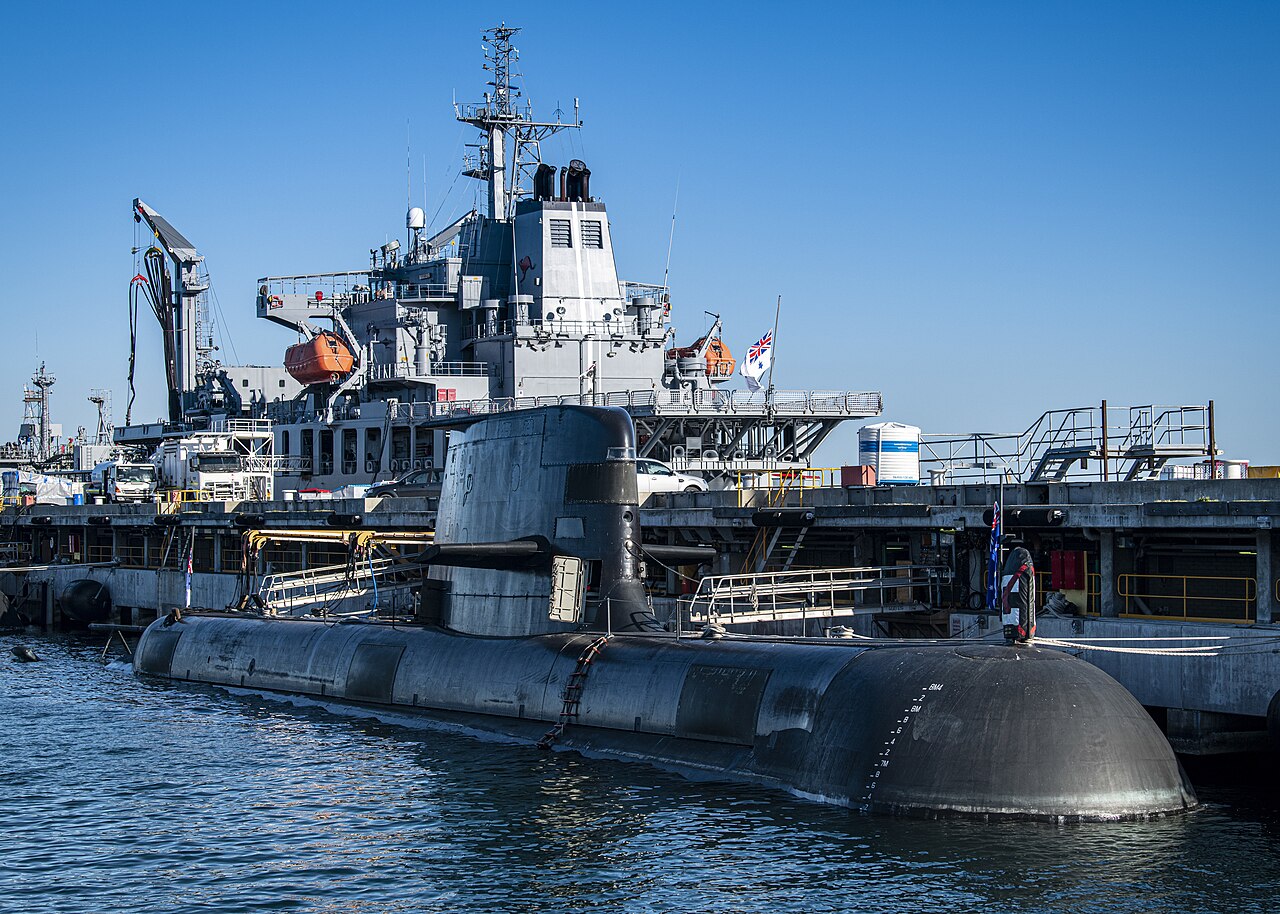
'It's an absolute Ferrari to fly on': ADF retires attack helicopters - ABC News & Headlines – Australian Broadcasting Corporation

GNews: ABC News · 2026-09-26source ↗P3P6

The retirement of ADF attack helicopters without explicit confirmation of timely replacement capability signals a near-term reduction in helicopter-based fire support and mobile anti-armour capacity during a period of rising Indo-Pacific tension and Chinese military modernisation. The delay in acquiring modern rotorcraft replacements creates a tactical and doctrinal gap that weakens Australia's ability to respond to kinetic scenarios in the region and reflects constrained defence-industrial readiness.

Panel | AKUS, ports, and Australia’s defence build-out - AFR Live

GNews: AFR · 2026-09-25source ↗P3P6P7

An AFR Live panel on AUKUS submarines, port infrastructure, and broader Australian defence modernisation directly addresses core pillars of Australia's Indo-Pacific strategy: industrial base development, maritime defence posture, and alliance deepening. Discussion of port readiness and defence build-out signals government and expert commitment to materialising AUKUS and related capability expansion on schedule.

Australian Army to Retire its Tiger Attack Helicopters - The Aviationist

GNews: Australia defence · 2026-09-25source ↗P3P6

Retirement of Tiger attack helicopters reduces Australian Army close-air-support capacity and reflects the accelerating obsolescence of legacy platforms in modern warfare, pressuring defence modernisation timelines. The capability gap created before replacement systems (likely crewed rotorcraft or autonomous alternatives) are operational weakens the Industrial Base pillar and indicates procurement scheduling pressure on a defence budget already strained by AUKUS submarine commitments.

F-35 Canopy And Weapons-Bay Door Loss To China: Separating Fact From Fiction

The War Zone · 2026-09-24source ↗P3P6P7

The diversion of classified F-35 stealth components (canopy and weapons-bay door) to Chinese authorities in Hong Kong represents a significant operational security breach affecting Australia's F-35 fleet integration and interoperability with allied air forces. This incident exposes gaps in Australia's defence logistics protocols and supply-chain security, undermining confidence in the RAAF's ability to maintain critical allied weapons systems and raising questions about Australian stewardship of sensitive US technology within the AUKUS framework.

Navy launches Robotics and Autonomous Systems Warfighting Development Center

Breaking Defense · 2026-09-24source ↗P3P8

The RAN's establishment of a dedicated Robotics and Autonomous Systems Warfighting Development Center signals institutional recognition that autonomous systems are central to future naval operations. This positions Australia to integrate autonomous capabilities coherently into doctrine, command structure, and platform design, reducing technological surprise and supporting the industrial base (Pillar 3) and Northern Arc presence (Pillar 8).

Australian F-35 parts in China’s hands after mystery diversion - The Australian

GNews: The Australian · 2026-09-24source ↗P3P5P7

Diversion of advanced F-35 fighter parts to China represents a direct breach of defence-industrial security and supply-chain integrity, exposing Australian and allied technology to Chinese reverse engineering and tactical intelligence. This incident undermines trust in Australia's counterintelligence and export controls, directly jeopardizing AUKUS commitments and Australia's credibility as a custodian of sensitive Allied technology.

F-35 freight provider partnered with blacklisted Chinese company - Australian Defence Magazine

GNews: Australia defence · 2026-09-24source ↗P3P7

This article exposes a critical vulnerability in Australia's defence industrial base: a key logistics partner for the F-35 program—central to AUKUS interoperability and Pillar II—has entangled itself with a Chinese-blacklisted entity. This suggests either inadequate vetting of Australian supply chains or the difficulty of achieving true decoupling in complex global defence logistics. The incident undermines confidence in Australian defence-procurement security, potentially damaging AUKUS partner trust and complicating future platform integration.

‘My job is to assume things get worse,’ says our new defence chief - AFR

GNews: Australia defence · 2026-09-23source ↗P6P7P8

The new defence chief's framing of strategic planning around worst-case scenarios signals institutional commitment to readiness across the Northern Arc and maritime defence posture, likely to support budget advocacy for capability modernisation and ADF expansion. This rhetorical positioning reflects serious assessment of China's military trajectory and regional instability, aligning with existing AUKUS and Indo-Pacific alliance commitments.

Albanese, AUKUS and the broken promise on nuclear weapons - johnmenadue.com

GNews: AUKUS · 2026-09-23source ↗P6P7

AUKUS submarine acquisition is Australia's centrepiece maritime defence modernisation and critical to Pillar 6 (Maritime Defence) and Pillar 7 (Alliance) credibility. Political or delivery setbacks erode deterrence posture against the PLA and weaken the UK–US–Australia partnership at the moment when China's submarine fleet is expanding rapidly.

'Sitting ducks': Labor MP breaks ranks over Port Kembla nuclear subs base - Illawarra Mercury

GNews: AUKUS · 2026-09-23source ↗P6P7

A Labor MP's public concern about Port Kembla's vulnerability as a nuclear submarine base highlights political and strategic fragility in the AUKUS submarine acquisition program—Australia's centrepiece maritime-defence capability. The airing of internal doubts about base security and operational feasibility can embolden critics and complicate budget/political support, though it does not directly alter the program's delivery timeline or partner commitment.

Australian MQ-4C Tritons, MC-55A Peregrines reach Initial Operational Capability

Breaking Defense · 2026-09-22source ↗P6

The RAAF's attainment of Initial Operational Capability for the MQ-4C Triton represents a concrete advancement in Australia's persistent surveillance and reconnaissance capability across the Indo-Pacific, directly enhancing Maritime Defence posture (Pillar 6). This capability strengthens Australia's ability to monitor strategic waterways and potential threats in the primary area of military interest, supporting regional situational awareness without dependence on allied ISR assets.

Aussie defense chief confirms missing F-35 parts, says none are ‘sensitive’

Breaking Defense · 2026-09-22source ↗P3P6

This incident directly impacts Australia's F-35 supply-chain resilience (Pillar 3: Industrial Base, Pillar 6: Maritime Defence), exposing vulnerabilities in defence-industrial controls and the risk of sensitive platform data/components leaking to China-aligned entities despite assurances of 'low risk.' While individual parts are reportedly unserviceable, the breach reveals process and security gaps in allied defence procurement that Australia depends on for platform availability and operational security.

RAAF Declares Initial Operational Capability for MQ-4C Triton and MC-55A Peregrine - The Aviationist

GNews: ADF capabilities · 2026-09-22source ↗P6P3

RAAF achievement of IOC for MQ-4C Triton and MC-55A Peregrine represents capability maturation in long-endurance ISR and electronic warfare assets, directly strengthening Australia's maritime domain awareness across the Indo-Pacific without dependence on allied platforms. This supports Pillar 6 (Maritime Defence) by extending Australia's ability to detect and track regional threats including PLA surface and subsurface activity at scale.

Boeing picks Lite Coms for Aussie BLOS SATCOM terminals

Breaking Defense · 2026-09-22source ↗P3P6

LAND 4140 modernizes the ADF's land command, control, communications, and intelligence (C4I) architecture, directly strengthening Australia's operational communications resilience and cross-domain coordination. The Boeing–Lite Coms partnership for beyond-line-of-sight satcom terminals enhances distributed operations in the Indo-Pacific theatre, supporting rapid force posture and inter-service integration.

Royal Australian Air Force platforms achieve IOC - Janes

GNews: Australia defence · 2026-09-22source ↗P3P6

The achievement of initial operational capability (IOC) by RAAF platforms represents progress in Australia's industrial base and defence modernisation. This concrete milestone strengthens the foundation for integrated air-defence operations and supports confidence in Australia's ability to execute major capability programs on schedule.

Former soldiers to face call-up obligations of 10 years - abc.net.au

GNews: Australia defence · 2026-09-22source ↗P1P4

Introduction of 10-year call-up obligations for former soldiers directly increases Australia's reserve personnel pool and surge capacity, supporting force-structure resilience during crisis or conflict. This modest institutional strengthening of personnel mobilisation aligns with broader ADF modernisation and meets a genuine gap in rapid-response depth, particularly relevant if Australia must sustain operations without immediate allied reinforcement.

Australia confirms jet parts went missing in Hong Kong, sparking China security fears - abc.net.au

GNews: ABC News · 2026-09-22source ↗P3P6P7

Loss of sensitive Australian military jet parts in Hong Kong—a Chinese territory with active signals-intelligence collection—directly exposes gaps in supply-chain security and foreign-military-technology protection. The incident reveals vulnerabilities in Australia's industrial-base security posture and suggests either inadequate export controls or operational breach, both of which undermine Pillar 3 (Industrial Base) resilience and confidence in defence-procurement integrity.

Major milestones for Australia’s air intelligence, surveillance and reconnaissance capabilities - The National Tribune

GNews: Australia defence · 2026-09-22source ↗P3P6

Enhanced Australian air intelligence, surveillance and reconnaissance (ISR) capabilities strengthen the ADF's real-time domain awareness in the Indo-Pacific, directly supporting Pillar 3 (Industrial Base) and Pillar 6 (Maritime Defence) by deepening Australia's independent operational picture and reducing reliance on allied ISR-sharing in contested scenarios. This contributes to strategic autonomy and faster decision-making in a kinetic contingency involving Taiwan or the South China Sea.

Bolstering ADF's Contingent Workforce - Mirage News

GNews: Australia defence · 2026-09-21source ↗P1P3

Bolstering the ADF's contingent workforce directly supports defence industrial capacity and operational readiness—two critical gaps in Australia's ability to execute AUKUS submarine integration and sustained Indo-Pacific operations. Enhanced workforce flexibility and scale improve Australia's baseline preparedness and reduce capability-delivery risk.

Bolstering the ADF's contingent workforce - defence.gov.au

GNews: Australia defence · 2026-09-21source ↗P1P2

Bolstering the ADF's contingent workforce (reserves, civilians, contractors) directly addresses one of Australia's critical defence-readiness constraints: personnel depth and surge capacity. This initiative strengthens Australia's ability to execute AUKUS submarine integration, maintain allied interoperability, and sustain operations in a prolonged contested environment, reducing structural risk to the defence programme.

China · Military· 8

Chinese Cutters, Warships Block Philippine Resupply Mission to Second Thomas Shoal - USNI News

GNews: PLA navy · 2026-09-25source ↗P6P7P8

China's operational blockade of Philippine resupply to Second Thomas Shoal demonstrates PLA Coast Guard and naval capability to enforce area denial and coerce allied logistics without formal conflict. This directly undermines the freedom-of-navigation and resupply precedents that Australia and AUKUS partners depend on for force projection and alliance credibility in the Indo-Pacific, signaling elevated risk to Australian logistics, alliance cohesion, and the viability of rules-based order.

Philippines accuses China of obstructing resupply mission in South China Sea - Reuters

GNews: PLA navy · 2026-09-25source ↗P6P7

China's coercive maritime tactics against a key US ally and potential AUKUS peripheral partner directly threaten the stability of the Indo-Pacific balance upon which Australia's defence posture and alliance architecture depend. The incident underscores the vulnerability of sea lines of communication and resupply routes that Australia itself would rely upon in a crisis, validating the case for enhanced maritime deterrence and alliance cohesion—both core to Pillar 6 (Maritime Defence) and Pillar 7 (Alliance).

New Evidence China Is Building A Mothership For Large Uncrewed Submarines

The War Zone · 2026-09-24source ↗P6P7

China's construction of a dedicated mothership for large uncrewed submarines signals advancement in autonomous underwater warfare capabilities that Australia and AUKUS must now account for in force structure planning. This capability compounds the timeline pressure on AUKUS submarine delivery and raises questions about whether conventionally-crewed submarines remain the optimal investment, directly challenging the strategic assumptions underpinning the Pillar II attack-submarine program.

More than a wolf warrior: China’s top diplomat begins Canberra charm offensive - SMH.com.au

GNews: China Australia · 2026-09-24source ↗P7P5

China's top diplomat conducting a charm offensive in Canberra reflects Beijing's effort to fracture the Australia–US–Japan–India strategic alignment and reduce Australian support for Taiwan containment. If successful, this undermines the Alliance pillar and increases Australia's vulnerability to Chinese coercion in the Taiwan strait without kinetic escalation.

China seizes sensitive F-35 parts diverted from Australia - AFR

GNews: AFR · 2026-09-23source ↗P3P6P7

China's seizure of F-35 components destined for Australia demonstrates both intelligence collection on allied procurement and the vulnerability of critical defence supply chains to interdiction. This directly weakens Australia's industrial base resilience (Pillar 3) and exposes gaps in allied security protocols that may delay or complicate AUKUS and broader ADF modernisation timelines.

China & Taiwan Update, September 22, 2026 - Institute for the Study of War

GNews: PLA navy · 2026-09-22source ↗P6P7P8

China–Taiwan military tension is a leading indicator of regional instability and directly affects Australia's strategic environment, alliance cohesion (particularly US commitment), and the probability of a major kinetic conflict that would disrupt trade, energy, and regional security. A Taiwan crisis would be the most likely trigger for AUKUS activation and could force Australia into a direct strategic choice between accommodation and confrontation with China.

The Battle for Taiwan’s East: Taipei’s Western Pacific Strategy

The Diplomat · 2026-09-22source ↗P6P7P8

PLA's shift to regularized operations east of Taiwan and expansion into previously secondary airspace vectors indicates a qualitative change in Chinese military posture—moving from strait-centric pressure to full-spectrum encirclement. This directly affects Australia's alliance credibility in the Indo-Pacific (Pillar 7) and maritime defence posture (Pillar 6), as Taiwan stability underpins regional deterrence architecture on which AUKUS and Quad commitments depend.

Chinese Next-Generation Submarine Developments Spotted In New Satellite Imagery

The War Zone · 2026-09-22source ↗P6P7

Type 095 development represents a material step forward in Chinese submarine quietness, speed, and manoeuvrability, reducing the underwater advantage Australia and allies currently hold in Indo-Pacific ASW and maritime denial. This strengthens PLA capability to coerce Taiwan and contest Australian operations in the region, narrowing the operational margin within which AUKUS SSNs (arriving 2035+) will operate and increasing the relative cost of Australian maritime deterrence.

Technology· 7

To secure frontier AI access, Australia’s best bet is a coalition of the dependent

ASPI The Strategist · 2026-09-25source ↗P5P7

The article directly addresses Australia's structural dependence on US frontier AI and proposes a strategic coalition approach to secure ongoing access—a critical technology underpinning future military capability and industrial competitiveness. By advocating managed dependence within the US orbit and supply-chain diversification with allied middle powers, the strategy aims to insulate Australia from unilateral US access restrictions and reduce vulnerability to tech decoupling, bearing on both Alliance resilience and Decoupling risk.

Hostile acts without intent: AI and the Medicare breach

Lowy Institute · 2026-09-25source ↗P8

The article reports an actual breach of Australian government health infrastructure by hostile actors using artificial intelligence—a concrete operational success against Australian cyber defences. This directly undermines Australian resilience to major cyber warfare scenarios and reveals gaps in critical-infrastructure security at a time when adversaries (particularly China) are known to conduct offensive cyber reconnaissance of Australian systems.

Deploy AI as defence against attacks like Medicare hack - AFR

GNews: AFR · 2026-09-24source ↗P3P7

The article addresses Australia's cyber-defence posture in the context of critical-infrastructure vulnerability (exemplified by the Medicare breach). Strengthening AI-based cyber-defence capabilities directly reduces exposure to coordinated state-level attacks and supports industrial-base resilience—both material to strategic preparedness in a contested Indo-Pacific environment.

Australia’s next interoperability challenge is military AI - The Strategist | ASPI's analysis and commentary site

GNews: Australia defence · 2026-09-23source ↗P7P3

Australia faces a real technical and doctrinal challenge in synchronising military AI systems with US and UK partners under AUKUS. Addressing interoperability gaps before they manifest as operational friction strengthens alliance cohesion and reduces risk of capability misalignment in the submarine transfer and advanced-platform domains.

Australia’s next interoperability challenge is military AI

ASPI The Strategist · 2026-09-23source ↗P3P7

Australia's ability to integrate AI into military operations and maintain seamless interoperability with Indo-Pacific partners is foundational to sustained coalition credibility. The article highlights a real governance and legal-framework gap that, if unaddressed, could undermine the effectiveness of Australian and allied AI-enabled warfare—a core defence modernisation priority.

How the US gave up its edge to China in processing vital rare earth minerals – and what that’s costing - The Conversation

GNews: The Conversation · 2026-09-23source ↗P1P5P3

Australia's strategic minerals (rare earths, lithium, cobalt) are only leverageable as a decoupling tool if processing capacity exists outside China. Loss of US processing edge signals that even allied raw-material production may funnel through China for value-addition, undermining Resource Sovereignty and Decoupling pillars. This directly weakens Australia's ability to use resource exports as a strategic hedge against Chinese coercion.

Chinese-made cameras banned from government buildings show up in EVs - ABC News & Headlines – Australian Broadcasting Corporation

GNews: ABC News · 2026-09-21source ↗P3P5

The penetration of Chinese surveillance hardware into Australian EV supply chains—despite prior government bans on such systems in sensitive facilities—reveals a critical decoupling gap: Australia's inability to enforce or verify supply-chain integrity in strategic sectors (transport, energy, communications). This suggests Industrial Base and Decoupling resilience remain compromised, and exposes Australia's critical infrastructure to embedded foreign espionage or sabotage vectors.

Australia · Energy· 3

Sky-high diesel prices keep climbing as US weighs export ban

Nikkei Asia · 2026-09-24source ↗P1P2P6

Australia's strategic fuel reserves and supply chains face tightening global availability and price volatility driven by Middle East conflict, Russian export loss, and potential US export restrictions. Diesel and jet-fuel shortages directly threaten ADF operational sustainability, critical infrastructure resilience, and the nation's ability to sustain defence operations during extended regional crisis.

NT Labor fracking stand-off emerges as caucus members voice opposition

ABC News · 2026-09-23source ↗P1P2

The Beetaloo Basin fracking project has begun commercial output, bolstering Australia's domestic energy sovereignty and reducing exposure to global energy-supply disruption. Despite Labor's internal political division, the resource is now flowing and contributes to Pillar 1 (Resource Sovereignty) and Pillar 2 (Fiscal Engine) by diversifying fuel supply and supporting Northern Territory economic activity.

Global oil and gas discoveries hit 40-year low on investment cutbacks

Nikkei Asia · 2026-09-21source ↗P1P5

Australia depends on diversified LNG imports and strategic fuel reserves for defence operations and grid stability. A 40-year low in new discoveries signals a tightening global energy market, reducing Australia's ability to source alternative fuels and sustain operational reserves in a contested Indo-Pacific, especially if Hormuz access is disrupted or regional supply chains fracture.

Trade· 3

Why US–China decoupling matters for Australian business - Capital Brief

GNews: critical minerals · 2026-09-24source ↗P1P5P3

The article addresses Australia's economic exposure to US–China decoupling and the implications for business strategy. This directly connects to Pillar 1 (Resource Sovereignty) and Pillar 5 (Decoupling) — decoupling from China economically strengthens Australia's strategic autonomy, though it may create short-term transition costs.

Rare Earths at the Trump-Xi Summit: Relief Without a Resolution

The Diplomat · 2026-09-23source ↗P1P5

Australia is heavily dependent on Chinese rare-earth exports for defence manufacturing, renewable energy, and critical-technology production. China's April 2025 export controls on medium and heavy rare earths—maintained as a negotiating tool even at the Trump-Xi summit—signal that Beijing will not voluntarily ease supply access through diplomacy, forcing Australia to accelerate sovereign rare-earth mining, processing, and strategic stockpiling or face supply coercion during future crises.

Don’t just secure critical minerals supply. Look for substitutes.

ASPI The Strategist · 2026-09-21source ↗P1P3P5

The article advocates for material substitution as a formal third pillar of Australia's critical minerals strategy, complementing extraction and processing. This directly supports Pillar 1 (Resource Sovereignty) and Pillar 3 (Industrial Base) by reducing Australia's exposure to concentrated foreign (particularly Chinese) supply chains and enabling domestic advanced manufacturing.

China · Economy· 2

Beijing picked 19,000 companies to win. Many are already in our supply chains

ASPI The Strategist · 2026-09-21source ↗P3P5

Australia's industrial base and decoupling strategy are directly compromised by the deep embedding of Chinese state-backed tech SMEs across domestic supply chains. The article documents a systematic strategic vulnerability: Beijing's intentional penetration of Western supply chains via dispersed 'Little Giants' makes Australia dependent on entities explicitly designed to further Chinese technological supremacy and reduce democratic-nation autonomy.

Australia · Fiscal· 1

Marles wants Defence out of $3 billion sites ‘as soon as possible’ - SMH.com.au

GNews: Australia defence · 2026-09-22source ↗P2P3

Defence Minister Marles' push to divest from $3 billion in property holdings signals internal budget pressure and potential reallocation of defence capital away from real estate toward operational capability or AUKUS investment. However, the article does not specify whether proceeds will strengthen or weaken ADF readiness, leaving the net strategic impact ambiguous pending implementation detail.

All editions