All editions
The Dispatch·Weekly edition

12–18 October 2026

A curated edition of the week's classified intelligence — the stories that moved Australia's preparedness across the eight pillars, and why each mattered.

77 stories · classified & human-curated

MajorChina · Military

Chinese naval carrier group enters western Pacific - Taipei Times

A PLA Navy carrier strike group transiting into the western Pacific extends Chinese power-projection beyond the first island chain and into waters relevant to Taiwan contingencies and allied sea lines of communication. For Australia, repeated carrier deployments of this kind compress warning times, stretch ISR and maritime patrol coverage across the northern approaches, and sharpen the case for the surveillance, long-range strike and submarine capabilities now in acquisition. The operational tempo also tests how quickly Canberra, Tokyo and Washington can share tracking data and coordinate responses.

GNews: PLA navy·2026-10-15P6P7P8Full story
China · Economy
Nicholas Hartmann / Wikimedia Commons (CC BY-SA 4.0)
China · Economy

Chinese EV giant BYD more than triples Australian revenue to $2.4b - AFR

BYD's market penetration in Australia accelerates Chinese economic and technological influence in a strategic commodity (transport/battery ecosystems) and signals deepening trade dependency on China despite decoupling rhetoric. The revenue surge reflects Australian consumer and commercial reliance on Chinese EV supply, constraining Australia's ability to pivot industrial capacity and resource sovereignty away from Chinese supply chains.

GNews: AFR · 2026-10-18P1P5
Alliance
U.S. Navy photo by Journalist 2nd Class Christina M. Shaw (RELEASED) / Wikimedia Commons (Public domain)
Alliance

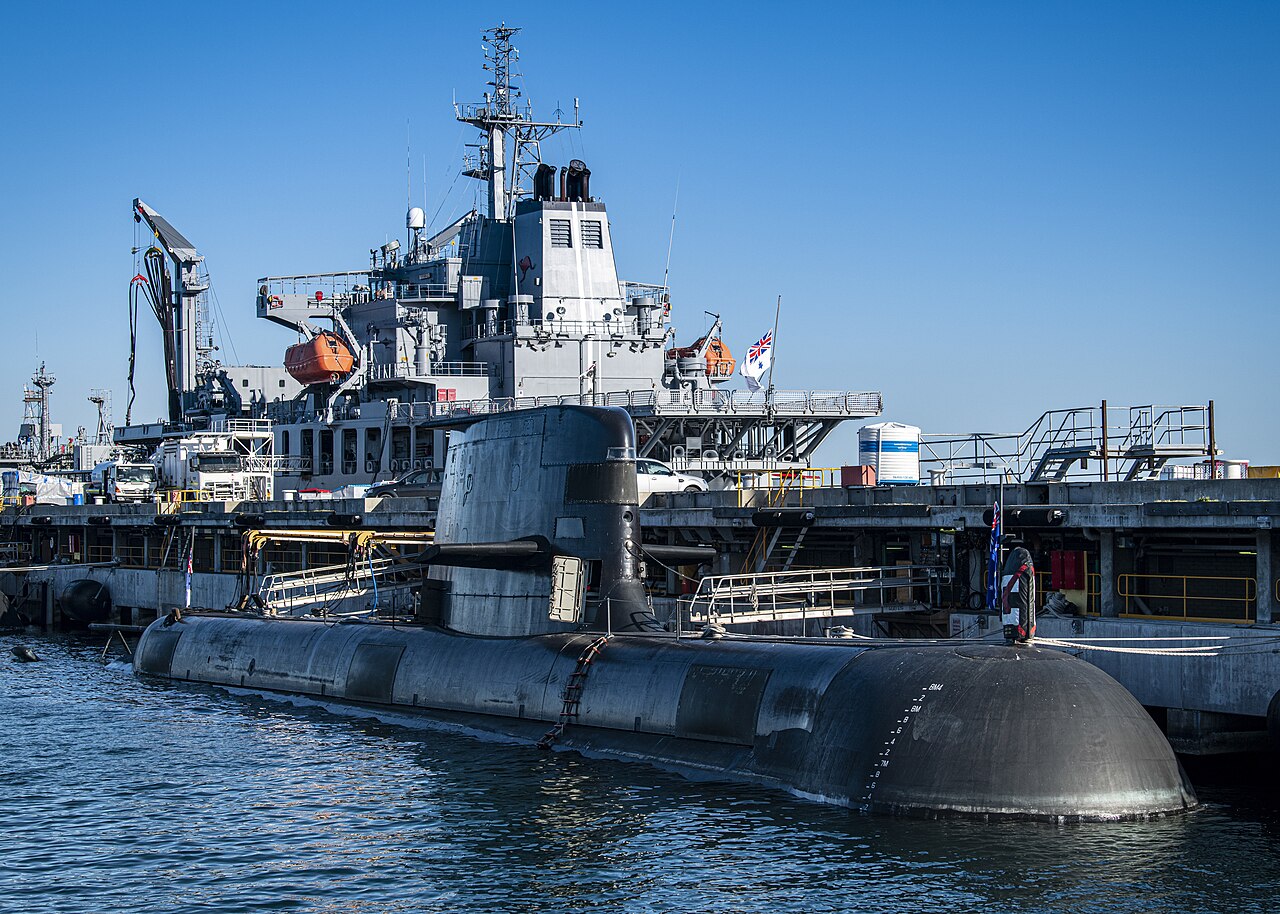
New US submarine shipyard may come too late for Australia's nuclear sub ambitions - PS News

This article directly addresses Australia's most critical capability gap in Pillar 6 (Maritime Defence). A delay or failure in AUKUS submarine delivery would leave Australia dependent on aging diesel-electric boats for decades, severely degrading Indo-Pacific deterrence and alliance credibility during a period of acute Chinese military expansion. The US shipyard bottleneck is a structural constraint on the alliance's ability to deliver Australia's promised nuclear-powered fleet, undermining both the Pillar 7 (Alliance) relationship and Australia's ability to maintain sovereign maritime strategy.

GNews: nuclear submarine · 2026-10-18P6P7
Australia · Defence
Marek Ślusarczyk (Tupungato) Photo gallery / Wikimedia Commons (CC BY 3.0)
Australia · Defence

Green steel can help Defence – which can help green steel

The article documents a concrete alignment of Australia's green-industrial agenda with AUKUS Pillar One submarine construction demand, creating a sustained domestic market for advanced Australian steelmakers. This strengthens Australia's sovereign defence-industrial capacity and reduces reliance on foreign specialty metallurgy, directly supporting the long-term viability and cost-efficiency of the AUKUS program.

ASPI The Strategist · 2026-10-18P3P6
China · Military
U.S. Navy / MC2 Jeanette Mullinax (public domain)
China · Military

Second Chinese Submarine Drone Mothership Emerges

China's construction of a second UUV mothership indicates systematic expansion of autonomous underwater vehicle capability, which directly enhances PLA capacity for subsurface denial, mine-laying, and strike in contested waters around Taiwan and the broader Indo-Pacific. This capability advance compresses Australia's strategic warning time and increases the credibility of Chinese military coercion scenarios, particularly if these platforms enter service before AUKUS submarines are operational.

The War Zone · 2026-10-18P6P7
Australia · Energy
Australia · Energy

East African oil could loosen Asia’s grip on Australia’s fuel supply

The Dangote Kenyan refinery represents a concrete diversification of Australia's fuel sourcing away from Asia-concentrated suppliers, directly supporting Pillar 1 (Resource Sovereignty) and Pillar 5 (Decoupling). While the article notes this is not a replacement for Asian suppliers, it incrementally reduces Australia's vulnerability to regional supply disruption or coercion, particularly in a Hormuz-closure scenario.

Lowy Institute · 2026-10-18P1P5
Alliance
U.S. Navy / Lt. j.g. Ever Garay (public domain)
Alliance

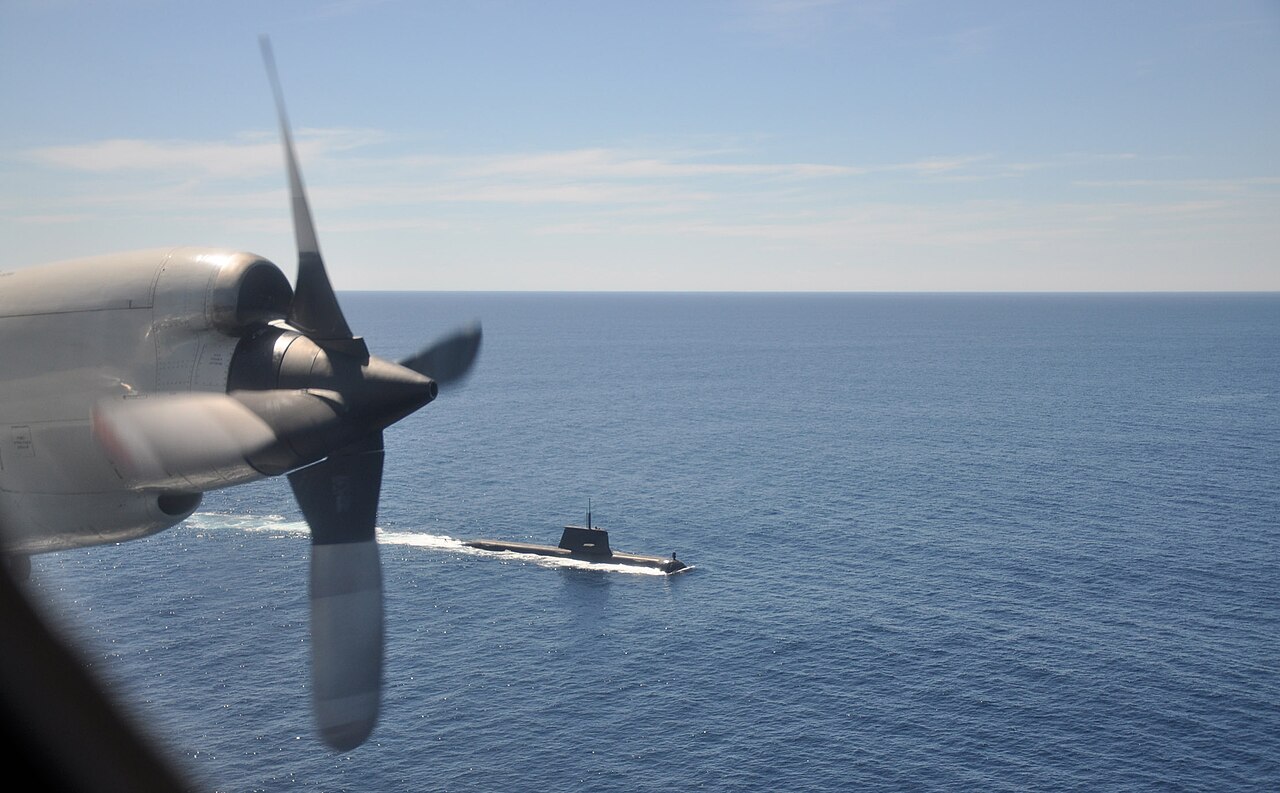
Secret undersea military tech unveiled in key AUKUS project - The West Australian

AUKUS submarine delivery is critical to Australia's Maritime Defence pillar and Indo-Pacific alliance posture. Unveiling of secret technology demonstrates technical progress and West's commitment to the programme, countering collapse risks.

GNews: AUKUS · 2026-10-18P6P7
Alliance
U.S. Navy photo by Photographer's Mate 3rd Class Jonathan Chandler / Wikimedia Commons (Public domain)
Alliance

The US Navy’s Aircraft Carriers Are Gone from the Western Pacific. Guess Whose Aren’t? - The National Interest

The reported absence of US carrier strike groups from the Western Pacific signals a potential gap in US forward presence and deterrence in Australia's strategic theatre. This directly undermines the Alliance pillar (Pillar 7) and Maritime Defence posture (Pillar 6), as Australia's security architecture relies on US naval dominance to deter Chinese military adventurism in the Indo-Pacific.

GNews: PLA navy · 2026-10-17P6P7
Alliance
Petty Officer 2nd Class Dartanon Delagarza / Wikimedia Commons (Public domain)
Alliance

In Forum FOIP: AUKUS in a Free and Open Indo-Pacific - 9DashLine

AUKUS remains central to Australia's maritime-defence pillar and Indo-Pacific alliance architecture. Forum-level restatement of AUKUS principles reinforces partner commitment and maintains political momentum for submarine delivery, though no new concrete capability metrics or timeline advances are evident from headline alone.

GNews: AUKUS · 2026-10-16P6P7
The rest of the week
Alliance· 20

AUKUS Pillar 1 is running on Australian cash and undeliverable promises - Pearls and Irritations

GNews: AUKUS · 2026-10-15source ↗P3P6P7

AUKUS Pillar 1 (conventional submarine transfer) is a cornerstone of Australia's Industrial Base modernisation and Maritime Defence capability. If the program is underfunded, undeliverable, and forcing Australia to carry costs its partners should bear, this undermines both the Alliance pillar and Australia's ability to close the submarine gap against the PLA, while also eroding fiscal capacity for other defence priorities.

In a contested Indo-Pacific, undersea power is critical. AUKUS is our strategy - The Strategist | ASPI's analysis and commentary site

GNews: AUKUS · 2026-10-15source ↗P6P7

This article reaffirms AUKUS—specifically Australia's submarine capability acquisition—as central to Australian Indo-Pacific strategy, signalling expert and strategic-community backing for the program at a time when cost, timeline, and political commitment face scrutiny. AUKUS submarine delivery directly underpins Australia's Maritime Defence pillar and Alliance cohesion; programme endorsement from a leading defence think-tank helps maintain political and budgetary momentum.

AUKUS: HII Awarded Contract for Engineering and Design Support - Naval News

GNews: AUKUS · 2026-10-15source ↗P3P7

This contract award represents tangible progress on the AUKUS Pillar I submarine technology transfer and design partnership. It affirms US industrial capacity and strategic commitment to deliver Australian submarine capability on schedule, directly supporting Australia's maritime defence posture and alliance resilience.

US industrial revival needs Australia, says energy chief - The Australian

GNews: critical minerals · 2026-10-15source ↗P1P5P7

A US energy chief's public statement that the American industrial revival depends on Australian energy and resource supply reinforces the strategic value of Australia's resource sovereignty and signals deepening US–Australia economic integration outside China. This bolsters Pillar 1 (Resource Sovereignty) and Pillar 5 (Decoupling), and strengthens the Alliance (Pillar 7) by embedding Australia in a Western industrial resilience strategy.

US Navy awards $56m contract for AUKUS submarine design work - Baird Maritime

GNews: AUKUS · 2026-10-14source ↗P6P7

This contract demonstrates continued US investment and engineering effort in the AUKUS submarine program, reinforcing the partnership's momentum beyond political rhetoric. For Australia, it materialises the pathway to attack-submarine capability and underscores US credibility in sustaining the Indo-Pacific alliance architecture against Chinese naval expansion.

Australia’s defense training initiatives foster Indo-Pacific intelligence interoperability - Indo-Pacific Defense FORUM

GNews: Australia defence · 2026-10-14source ↗P7P8

Intelligence interoperability is a force-multiplier for alliance cohesion and distributed deterrence in the Indo-Pacific. By leading regional training initiatives, Australia strengthens the institutional fabric of the Quad-plus framework and reduces strategic dependency on any single partner, reinforcing the credibility of collective defence against Chinese coercion.

HII wins US Navy contract for AUKUS submarine design support - Naval Technology

GNews: AUKUS · 2026-10-14source ↗P6P7

This contract award demonstrates sustained US industrial engagement in the AUKUS submarine programme, a critical pillar of Australian maritime defence and alliance credibility. Concrete design-phase progress reduces the risk of programme delay or abandonment, directly supporting Australia's submarine modernisation and Indo-Pacific deterrence posture.

By the numbers | AUKUS according to public opinion - United States Studies Centre

GNews: AUKUS · 2026-10-14source ↗P7

Public opinion on AUKUS is a political foundation for sustained government commitment to the submarine program and allied defence posture. Polling data that tracks Australian confidence in AUKUS is contextually relevant to alliance resilience, but does not itself change delivery timelines, capability metrics, or the material risk of program collapse.

Not there yet: Indonesia’s military has a space unit without a mandate or money

ASPI The Strategist · 2026-10-14source ↗P6P7

Indonesia's emerging space-based maritime surveillance capability directly strengthens Australia's northern maritime posture by enabling a capable partner to monitor the archipelagic waters between the two nations and detect PLA or proxy activity. The article signals Indonesia's commitment to operational sovereignty in the Indo-Pacific, reducing vulnerability to Chinese accommodation and supporting Australia's Alliance pillar through an informed, assertive neighbour.

HII wins $56M contract to support AUKUS submari... - Pluang

GNews: AUKUS · 2026-10-13source ↗P6P7

This contract signals continued US industrial investment in AUKUS submarine delivery and long-term sustainment, underpinning the pillar of alliance credibility and Maritime Defence capability. The award demonstrates a concrete financial commitment to support the submarines Australia will receive, closing a critical logistics gap and reducing programme risk.

HII is Awarded Contract to Support AUKUS Engineering and Design Work - GlobeNewswire

GNews: AUKUS · 2026-10-13source ↗P3P7

HII's contract award for AUKUS engineering and design work demonstrates sustained US industrial capacity and commitment to the submarine transfer program, a critical pillar of Australia's defence modernisation. This forward progress on design and engineering phases reduces delivery risk and reaffirms the alliance's capacity to execute the program on schedule.

The summer of submarines: Building the AUKUS generation from Williamsburg to Adelaide - W&M News

GNews: AUKUS · 2026-10-13source ↗P3P7

AUKUS submarine delivery depends critically on sustained industrial and human capital across three nations. A coordinated workforce-development initiative (Williamsburg to Adelaide) signals operational commitment and reduces execution risk on what remains Australia's most strategic defence procurement. This article demonstrates the alliance is moving beyond procurement timelines to lock in the human pipeline that makes delivery feasible.

Building military might with Indonesia - news.defence.gov.au

GNews: Australia defence · 2026-10-13source ↗P6P7

Australia's defence engagement with Indonesia—the largest nation in Southeast Asia and a critical chokepoint for Indo-Pacific maritime transit—directly strengthens Australia's regional alliance posture and maritime defence (Pillar 6). Closer military ties with Indonesia reduce the likelihood of Chinese strategic accommodation in the archipelago, a key vulnerability in Australia's northern approaches.

Will Indonesia’s New Foreign Minister Be Allowed to Do His Job?

The Diplomat · 2026-10-12source ↗P7P5

Indonesia's appointment of a veteran diplomat with no prior foreign policy experience replaced by Nasir suggests a course correction away from the erratic, China-accommodating decisions of the previous two years—including the Natuna endorsement that appeared to validate China's nine-dash line claim. This stabilization of Indonesian foreign policy reduces the likelihood of deeper Chinese military-strategic penetration of the archipelago and strengthens Australia's strategic position in the Indo-Pacific by improving predictability of Southeast Asia's largest nation.

Australia · Defence· 18

Non-military vessels to counter China - The Australian Naval Institute

GNews: PLA navy · 2026-10-16source ↗P3P6

This article signals Australian strategic thinking on maritime domain awareness and coastal defence through non-military assets, a pragmatic approach that could stretch constrained defence budgets and reduce dependency on delay-prone nuclear-submarine acquisition. The endorsement by a credible defence think-tank suggests institutional support for a layered maritime strategy, reinforcing industrial-base and alliance resilience without increasing fiscal pressure on AUKUS.

A hidden device was found on an Australian Navy ship. Fallout is being felt across the fleet - SBS

GNews: Australia defence · 2026-10-16source ↗P6P7

A covert surveillance device planted on an RAN ship reveals active penetration of Australian maritime defences and suggests Chinese intelligence access to Navy operations, crew movements, and communications. This directly undermines maritime defence posture (Pillar 6) and signals a security vulnerability that will ripple through allied interoperability and classified information-sharing protocols (Pillar 7), particularly affecting AUKUS submarine and intelligence partnerships.

In a contested Indo-Pacific, undersea power is critical. AUKUS is our strategy

ASPI The Strategist · 2026-10-15source ↗P6P7

The article articulates AUKUS as fundamental to Australia's undersea domain awareness, maritime deterrence, and protection of critical sea lines of communication in the Indo-Pacific. It emphasizes submarines as the apex capability for Australian defence, directly supporting Pillar 6 (Maritime Defence) and Pillar 7 (Alliance commitments to AUKUS delivery).

Thales Australia tackles heavy battlefield logistics with new big-rig robot

Defense News · 2026-10-15source ↗P3P6

Thales Australia's BladeHaul represents incremental advancement in Australian domestic military-industrial autonomous systems capability, leveraging local expertise (Bushmaster platform, hybrid-battery integration). This sustained investment in unmanned logistics systems strengthens Pillar 3 (Industrial Base) and contributes to self-reliant battlefield logistics, reducing dependence on crewed supply chains in contested environments.

Australia’s ageing tech at risk of AI attacks, top official warns - AFR

GNews: AFR · 2026-10-15source ↗P3P6

The warning signals a critical gap in Australian military and defence-industrial cyber resilience at a time when AI-enabled threats are accelerating. This directly affects Industrial Base (Pillar 3) and Maritime Defence (Pillar 6) capability—if Australia's ageing systems are compromised or degraded by cyber attack, AUKUS-related submarine integration, sensor networks, and allied interoperability are all at risk.

The cracks in Australia’s defence policy: For us, deterrence isn’t about waving a big stick - Crikey

GNews: Australia defence · 2026-10-14source ↗P6P7

The article critiques Australia's deterrence posture and defence policy framing, touching on the conceptual underpinnings of Australian strategy in the Indo-Pacific but not reporting concrete capability changes, procurement decisions, or AUKUS programme setbacks. Strategic doctrine debates are relevant to Australia's posture but do not directly alter the probability of specific triggering events unless coupled with capability loss or alliance fracture.

ADF boosts warfighting skills in Antarctic mission - The Mercury

GNews: ADF capabilities · 2026-10-14source ↗P6

Antarctic operations provide ADF personnel cold-weather and maritime combat training in an extreme environment, reinforcing Pillar 6 (Maritime Defence) readiness in the southern theatre. Sustained investment in operational proficiency across diverse geographic domains supports Australia's capacity to project force in contested waters, though this single exercise does not materially shift capability or procurement metrics.

Hidden video recording device found in cabin of Australian navy ship - BBC

GNews: Australia defence · 2026-10-14source ↗P6P7

The presence of a hidden recording device aboard an RAN vessel indicates a breach in operational security and potential compromise of naval communications and personnel movements, directly undermining Maritime Defence (Pillar 6) posture. This espionage success suggests Chinese or allied intelligence agencies have achieved physical access to Australian military infrastructure, eroding confidence in AUKUS alliance (Pillar 7) compartmentalization and raising questions about crew vetting and vessel hardening protocols.

Hidden video recording device found in cabin of Australian navy ship - BBC

GNews: Australia defence · 2026-10-14source ↗P6P7

A covert recording device planted aboard an RAN ship indicates adversary intelligence-collection operations against Australian defence assets and personnel, revealing a vulnerability in shipboard security protocols. This directly undermines operational security and demonstrates active targeting of Australia's maritime defence capability by a foreign power (implied but not explicitly named in BBC report).

ADF investigates after recording device found on navy ship - The Australian

GNews: The Australian · 2026-10-14source ↗P6P7

A recording device planted on an ADF ship signals successful espionage penetration of Australia's naval operations, raising immediate concerns about counterintelligence gaps and the security of sensitive defence platforms. The incident exposes vulnerabilities in personnel vetting, facility access controls, and operational security—critical weaknesses that could be exploited in a broader state-level cyber or kinetic conflict.

Video recording device found in cabin of HMAS Leeuwin navy ship in Cairns - The Guardian

GNews: Australia defence · 2026-10-14source ↗P6P7

Discovery of covert surveillance equipment aboard an ADF vessel in an Australian port indicates a serious breach of operational security and counter-intelligence vulnerability within the Royal Australian Navy. This suggests Chinese or hostile foreign intelligence services have achieved physical access to or surveillance of Australian naval assets, undermining the integrity of maritime defence operations and alliance trust.

Recording device discovered on navy ship, sparking investigation - SMH.com.au

GNews: Australia defence · 2026-10-14source ↗P6P7

A recording device discovered aboard an RAN vessel indicates a significant operational security breach affecting the Australian Defence Force's ability to maintain classified communications and operational planning integrity. The incident exposes vulnerabilities in maritime asset security and counter-intelligence protocols at a time when ADF vessels are central to AUKUS operations and Indo-Pacific deterrence posture.

COMMERCIAL NEGOTIATIONS PROGRESSING IN PROPOSED AUSTAL USA TRANSACTION - AFR

GNews: AFR · 2026-10-14source ↗P3P7

Austal USA is a critical industrial partner for AUKUS-adjacent naval vessel construction and maintenance, supporting Australia's industrial base and defence supply chain resilience. Commercial viability of Austal USA directly affects Australia's ability to sustain and expand its maritime industrial capacity, which underpins long-term capability delivery and decoupling from single-source dependence.

Australia considering nationalising critical minerals company to ward off Chinese influence - Nine.com.au

GNews: critical minerals · 2026-10-14source ↗P1P5

Nationalisation of critical minerals assets directly strengthens Pillar 1 (Resource Sovereignty) by removing Chinese or foreign acquisition risk and ensuring domestic control over inputs essential to defence manufacturing, renewable energy, and industrial base resilience. This is a concrete policy move to decouple from Chinese economic dependence in a strategically vital sector.

Australia’s defence establishment is incompetent and leading us to disaster - Crikey

GNews: allied defence · 2026-10-14source ↗P1P3P6P7

A high-profile critique of defence-establishment competence signals internal dysfunction in Australia's primary institution for strategic preparedness, potentially eroding political and allied confidence in procurement timelines, capability delivery, and force posture. If the article reflects genuine institutional failures in AUKUS execution, submarine operations, or force integration, it directly threatens Australia's ability to close strategic gaps during the critical 2025–2035 window.

Henderson defence project threatens WA’s $7.2b port plan - The West Australian

GNews: AUKUS · 2026-10-12source ↗P3P6

Henderson is a critical node in Australia's submarine industrial base and a cornerstone of AUKUS delivery. Competition with a $7.2b commercial port project for Western Australian resources, land, and political priority signals constraint on the sovereign submarine-building capacity Australia must develop to meet AUKUS commitments and maintain fleet readiness. This is a concrete friction point between defence and economic priorities that directly affects Pillar 3 (Industrial Base) and Pillar 6 (Maritime Defence).

UPDATE ON CONTRACT FOR NATION-WIDE COUNTER-DRONE DEFENCE - AFR

GNews: AFR · 2026-10-12source ↗P3P6

A nation-wide counter-drone contract signals Australian commitment to air-defence modernisation and critical-infrastructure hardening against emerging threats (drone swarms, loitering munitions). This supports Pillar 6 (Maritime Defence) capability and Pillar 3 (Industrial Base) deployment, though the headline alone does not confirm budget scale, deployment timeline, or specifics of the contract award.

Australia · Energy· 8

Victoria pledges 12-month approval limit for critical minerals projects - Proactive Investors Australia

GNews: critical minerals · 2026-10-16source ↗P1P3

Victoria's 12-month approval ceiling for critical minerals projects directly accelerates Australia's resource sovereignty and domestic industrial capacity in a strategic decoupling context. Faster project permitting translates to earlier mine development, higher capture rates, and reduced dependence on Chinese downstream processing of raw materials.

Clean Energy Must Avoid the Mistake of Overdependence

The Diplomat · 2026-10-15source ↗P1P5

The article directly addresses Australia's energy sovereignty risk (Pillar 1) and decoupling imperative (Pillar 5) by highlighting the strategic trap of swapping Middle Eastern oil dependence for Chinese clean-energy-supply dependence. Australia's transition to renewables and critical minerals processing must avoid recreating vulnerability under a different supplier; this framing supports strategic resource autonomy and industrial resilience.

The Houthi threat that Saudi Arabia couldn’t end

Lowy Institute · 2026-10-15source ↗P1P6

The article reports that despite Saudi military efforts, Houthis maintain operational control over Red Sea chokepoints critical to Australia's fuel imports and LNG exports. This directly exposes Australia's vulnerability to sustained energy-supply disruption via a proxy actor, reducing fuel-reserve confidence and increasing strategic pressure on Australia's maritime-denial resilience and energy sovereignty.

Coal prices up 40% this year on LNG replacement demand, supply uncertainty

Nikkei Asia · 2026-10-14source ↗P1P2P5

A 40% spike in coal prices driven by LNG replacement demand signals potential diversification of Australia's energy mix away from volatile LNG import dependence, which strengthens resource sovereignty (Pillar 1) and reduces exposure to Strait of Hormuz disruption. However, the article does not quantify Australia's domestic coal reserve additions, export volumes, or power-generation retooling, so the strategic gain remains indicative rather than confirmed.

Victoria gives final state approval for biggest wind farm in southern hemisphere

ABC News · 2026-10-14source ↗P2P8

Wind-farm expansion directly supports Australia's energy sovereignty and decoupling from fossil-fuel imports, a critical input to sustained defence-industrial capacity and fiscal resilience under extended crisis. Renewable-energy scaling reduces vulnerability to energy-supply shocks (including Hormuz-closure scenarios) that would constrain manufacturing, defence operations, and grid stability.

Fuel security can’t be left to global markets - AFR

GNews: AFR · 2026-10-13source ↗P1P2P6

Australia's strategic fuel reserves are critical to naval and air operations in any Indo-Pacific conflict; reliance on global markets leaves defence capability vulnerable to disruption. An AFR editorial arguing fuel security cannot be left to markets reflects growing policy consensus that Australia must build sovereign reserve capacity, directly supporting Pillar 1 (Resource Sovereignty) and Pillar 6 (Maritime Defence).

Australia is in an energy cold war, like it or not - AFR

GNews: AFR · 2026-10-13source ↗P1P2P5

An 'energy cold war' framing signals Australia's growing strategic focus on decoupling energy supply chains from Chinese leverage and securing sovereign fuel reserves and renewable capacity. This directly supports Pillar 1 (Resource Sovereignty) and Pillar 5 (Decoupling) by elevating energy independence as a contested geopolitical domain rather than a neutral commodity market.

Rinehart-backed Arafura expands US rare earths offtake deal - AFR

GNews: AFR · 2026-10-12source ↗P1P5

Arafura's expansion of US rare-earths offtake agreements directly advances Australia's Resource Sovereignty (Pillar 1) and Decoupling (Pillar 5) by diversifying critical-mineral supply away from Chinese markets and strengthening allied access to non-Chinese rare-earth sources. This supports Australia's long-term strategic autonomy in defence-industrial supply chains and reduces vulnerability to Chinese export restrictions on strategic materials.

China · Military· 8

Alleged spy used retired police cover to approach Australians - ABC News & Headlines – Australian Broadcasting Corporation

GNews: ABC News · 2026-10-15source ↗P7P8

This article documents an active Chinese intelligence operation targeting Australians using false credentials, revealing a persistent asymmetric threat vector against Australian citizens and institutions. The use of impersonation tactics and social engineering signals China's willingness to conduct low-intensity espionage operations within Australia, undercutting trust in institutional authority and exposing vulnerabilities in vetting and security protocols.

Alleged Chinese spies targeted former premier and AFP commander via LinkedIn - ABC News & Headlines – Australian Broadcasting Corporation

GNews: ABC News · 2026-10-14source ↗P7P8

This article documents a confirmed active Chinese espionage campaign specifically targeting former Australian state premier and AFP commander, revealing operational security gaps in how senior Australian defence and political leadership manage digital engagement. The targeting of critical decision-makers undermines Alliance cohesion (Pillar 7) and Northern Arc situational awareness (Pillar 8) by exposing vulnerabilities China can exploit for intelligence collection or influence operations.

UPDATED: Chinese Carrier Strike Group Heads to South China Sea After Philippine Sea Drills

USNI News · 2026-10-14source ↗P6P7

The Liaoning carrier strike group — with two Type 055 cruisers and a destroyer — ran fixed- and rotary-wing flight operations roughly 155 miles south of Ishigaki before transiting to the South China Sea, demonstrating sustained PLAN carrier aviation east of the first island chain. For Australia, it underlines that Chinese blue-water task groups now operate routinely in the waters linking Japan, the Philippines and the South China Sea, compressing warning times and raising the demands on ADF maritime surveillance, long-range strike and combined operations with Japan and the United States.

Chinese Carrier Liaoning Leads Large Strike Group Past Japan for Western Pacific Exercises - Military Watch Magazine

GNews: PLA navy · 2026-10-14source ↗P6P7P8

The Liaoning carrier strike group's transit through the Western Pacific demonstrates PLA operational capability and willingness to project force in waters adjacent to Australia's alliance partners and extended strategic interest. The exercise is a capability-demonstration rather than a kinetic escalation, but underscores the regional military balance Australia must consider in force-posture and AUKUS planning.

Expanding the military footprint: China’s new air base in Laos

ASPI The Strategist · 2026-10-14source ↗P5P6P7

China's first openly-acknowledged overseas military base in Laos expands its power-projection footprint in mainland Southeast Asia, narrowing Australia's strategic depth and complicating the Northern Arc. The facility enables sustained military presence within striking range of Thailand, Myanmar, and the Bay of Bengal, fragmenting the Indian Ocean perimeter Australia depends on for trade and energy security.

Chinese PLA Navy sends Liaoning carrier group to Western Pacific for training; move shows shift toward ‘far-sea blade’ - Global Times

GNews: PLA navy · 2026-10-14source ↗P6P7

The Liaoning deployment demonstrates PLA advancement in sustained carrier operations and far-sea power projection in the Western Pacific, a capability directly relevant to Taiwan scenarios and the regional military balance Australia depends on. Australia's maritime defence posture and alliance credibility rest partly on peer-near-peer deterrence; PLA normalisation of carrier presence near Australia's strategic partners narrows Australia's tactical and diplomatic options.

Firm linked to Hong Kong buying Australian military shipyard - Australian Defence Magazine

GNews: Australia defence · 2026-10-13source ↗P1P3P6

A company with Hong Kong links is acquiring an Australian shipyard that services military vessels, placing sovereign naval sustainment infrastructure under foreign ownership. Shipyards handling Navy and Border Force work carry sensitive access to vessel designs, maintenance schedules and personnel, making ownership a counter-intelligence and supply-chain resilience question rather than a purely commercial one. The case will test Foreign Investment Review Board screening of defence-adjacent assets, an area where the Darwin Port lease remains an unresolved precedent.

The price of crossing Beijing's political red lines over Taiwan - ABC News & Headlines – Australian Broadcasting Corporation

GNews: ABC News · 2026-10-12source ↗P5P7P8

The article explores China's coercive posture and political red lines around Taiwan, which bears on the Indo-Pacific strategic balance and Australia's alliance position. However, the headline and fragment provide no new quantitative intelligence on PLA capability, Australian defence readiness, or concrete policy shifts affecting AUKUS or resource security.

China · Economy· 6

Australian political, business leaders call for stronger economic ties with China - Xinhua

GNews: China Australia · 2026-10-16source ↗P5P7

This article signals fracturing political consensus in Australia on strategic decoupling from China. Senior Australian voices publicly backing stronger economic ties with Beijing weakens Australia's negotiating position, reduces credibility with Indo-Pacific partners, and creates political space for Beijing to pursue coercive rather than kinetic strategies, particularly toward Taiwan.

'Right track': new ambassador's view of China ties - Yahoo News Australia

GNews: China Australia · 2026-10-15source ↗P5P7

A new Chinese ambassador's framing of Sino-Australian relations as 'on the right track' reflects Beijing's diplomatic positioning toward Australia, signalling potential de-escalation or normalization rhetoric. However, diplomatic language alone does not alter Australia's strategic decoupling trajectory, military alliance commitments, or China's underlying strategic posture—it is a symbolic gesture that may reduce near-term political friction but does not address structural competition.

Australia key to breaking China’s hold on rare earth supply - The Australian

GNews: The Australian · 2026-10-14source ↗P1P5

Rare-earth supply chains are critical to modern defence systems, renewable energy, and telecommunications. Australia's role in breaking Chinese dominance directly strengthens Resource Sovereignty (Pillar 1) and Decoupling (Pillar 5), reducing strategic vulnerability to Chinese supply-chain weaponisation and increasing Australia's own leverage in the Indo-Pacific.

China heads for record trade surplus as exports surge - The Australian

GNews: The Australian · 2026-10-14source ↗P5P3

China's record trade surplus and surging exports reinforce Beijing's economic leverage and capacity to sustain military modernisation, prolonging the window in which Australia faces a rising-power adversary at peak relative strength. A sustained Chinese export boom also deepens Australia's economic exposure to Chinese demand cycles and reinforces decoupling urgency, particularly for iron ore and energy dependence.

Rare earths company could be nationalised as China-linked investors fail to divest - ABC News & Headlines – Australian Broadcasting Corporation

GNews: critical minerals · 2026-10-14source ↗P1P5

Rare earths are critical for defence electronics, renewable energy, and advanced manufacturing. Australian sovereign control over rare earths production—via nationalization rather than Chinese investor ownership—directly strengthens Resource Sovereignty (Pillar 1) and Decoupling (Pillar 5) by ensuring supply security independent of Chinese capital or political coercion.

Wolf Warriors in Sheep’s Clothing: China’s New Subnational Diplomacy in Australia - The Diplomat – Asia-Pacific Current Affairs Magazine

GNews: China Australia · 2026-10-13source ↗P5P7

China's pivot to subnational diplomacy—leveraging local councils, regional governments, and grassroots networks rather than traditional state-to-state channels—represents a strategic shift to circumvent Australia's national-level pushback and deepen political/economic penetration below the federal threshold. This erodes Australia's ability to maintain unified decoupling policy and fractures alliance cohesion by enabling Beijing to cultivate sympathetic sub-state actors who may resist federal strategic posture.

Technology· 3

Australian research needs to be protected like critical infrastructure

ASPI The Strategist · 2026-10-16source ↗P3P5

Australia's universities hold strategically sensitive technologies, data and IP whose compromise threatens national security and sovereign industrial capability. Adapting the SOCI framework to university research governance strengthens Australia's defensive posture against foreign espionage and cyber-enabled technology theft, supporting both Industrial Base and Decoupling pillars.

ASPI’s Critical Technology Tracker expands to include patent data

ASPI The Strategist · 2026-10-13source ↗P3P5

ASPI's Critical Technology Tracker reveals China leads in 69 of 74 tracked critical technologies as of June 2026, signalling a structural shift in global technological power that directly undermines Australia's industrial and decoupling posture. This metric indicates accelerating Chinese dominance across defence, AI, biotech, quantum and advanced materials—domains central to Australian sovereign capability and strategic autonomy.

Australia can import AI models, but they may bring their baggage

ASPI The Strategist · 2026-10-12source ↗P1P5

Australia's AI capability and strategic independence depend on layered foreign inputs (chips, cloud, data, talent, models) that cannot be fully indigenised without prohibitive cost. Political assumptions embedded in foreign open-source models—tested by the article to show pro-Beijing bias in Southeast Asian localisations—create subtle vulnerabilities in Australian decision-support systems, intelligence analysis, and defence applications that Australian operators may not detect.

Dispatch· 2

The Radioactive Ore That Could Break China’s Grip on Rare Earths

Foreign Policy · 2026-10-15source ↗P1P3P5

Rare-earth minerals are critical inputs for defence electronics, renewable-energy infrastructure, and advanced manufacturing. Australia's participation in Western-led rare-earth supply-chain diversification (e.g. Australasian processing partnerships) directly reduces strategic dependence on Chinese supply, strengthening Pillar 1 (Resource Sovereignty) and Pillar 5 (Decoupling) by enabling indigenous or allied-sourced supply of high-tech inputs. Monazite ore processing addresses a key vulnerability in the Indo-Pacific industrial base.

Australia's copper mines boom while coal struggles

Nikkei Asia · 2026-10-13source ↗P1P3P5

Australia's shift from coal to copper reflects global energy transition and EV growth, strengthening resource sovereignty and export diversity in the short term. However, copper processing and downstream integration with China remains deep, limiting strategic autonomy gains—Australia captures raw-material rents but not higher-value manufacturing or supply-chain control.

Australia · Fiscal· 2

Conroy targets 'rot' in Defence after $15.6m bungle unmasked - ABC News & Headlines – Australian Broadcasting Corporation

GNews: ABC News · 2026-10-15source ↗P2

Financial mismanagement and systemic 'rot' in Defence procurement erodes confidence in Australia's ability to execute large, complex acquisition projects like AUKUS submarines and other strategic capability delivery. While a single $15.6m bungle does not directly threaten AUKUS continuity, repeated governance failures compound capability delays and cost escalation risks that already plague Australian defence industrialisation.

BHP cuts 300 Pilbara jobs as costs surge - The Australian

GNews: The Australian · 2026-10-14source ↗P1P3

Job cuts at Australia's largest iron-ore producer signal cost pressures and reduced operational capacity in the Pilbara, directly weakening resource sovereignty (Pillar 1). Iron ore is Australia's largest export and primary hard-currency earner; deteriorating mining productivity constrains fiscal headroom and export revenue needed to fund defence spending and strategic decoupling initiatives.

Trade· 1

Australia to hit Chinese aluminium with big tariffs over dumping - AFR

GNews: AFR · 2026-10-15source ↗P5

Australia's imposition of tariffs on Chinese aluminium represents a concrete step in strategic decoupling (Pillar 5), signalling willingness to use trade policy to reduce economic dependence on Chinese commodity dumping and protect domestic manufacturing. This fits within the broader Australian policy arc of reducing China export-share concentration and building resilience in critical mineral supply chains.

All editions