All editions
The Dispatch·Weekly edition

19–25 October 2026

A curated edition of the week's classified intelligence — the stories that moved Australia's preparedness across the eight pillars, and why each mattered.

87 stories · classified & human-curated

MajorAlliance

Major expansion under way at secretive military base Pine Gap - AFR

Alliance
Schutz / Wikimedia Commons (CC BY-SA 3.0)

Construction work is expanding Pine Gap, the joint Australian-US facility near Alice Springs that underpins satellite-based missile launch detection, signals intelligence and targeting support. Any growth in its footprint signals deepening US reliance on Australian territory for Indo-Pacific surveillance and missile-warning tasks, which raises both Australia's intelligence yield and its exposure as a target in any US-China conflict. It also sharpens long-standing questions about the degree of Australian control and insight into operations conducted from its own soil.

GNews: Australia defence·2026-10-22P6P7Full story
China · Economy
Nicholas Hartmann / Wikimedia Commons (CC BY-SA 4.0)
China · Economy

Why China Can’t Fix Its Broken Economy

China's structural inability to sustain domestic consumption and shift its economic model forces it to export surplus production and accumulate debt — classic pre-crisis dynamics. This degradation of China's economic engine reduces its long-term capacity to underwrite military modernisation, infrastructure competition in the Indo-Pacific, and strategic leverage over resource-dependent economies including Australia's regional partners.

The Diplomat · 2026-10-25P5P3
Australia · Energy
kenhodge13 / Wikimedia Commons (CC BY 2.0)
Australia · Energy

Forget the grid. Northern Territory data centres could bring their own power

The article identifies a strategic opportunity to develop critical digital infrastructure (data centres) in Australia's north with autonomous power generation, reducing grid dependency and geographically diversifying digital sovereignty. This directly supports Resource Sovereignty (Pillar 1) by enabling infrastructure independence and Industrial Base (Pillar 3) by attracting investment to regional Australian economies, while also reducing exposure to systemic energy supply shocks that could undermine broader strategic resilience.

ASPI The Strategist · 2026-10-25P1P3P5
Alliance
U.S. Navy photo by Petty Officer 1st Class Vanessa White / Wikimedia Commons (Public domain)
Alliance

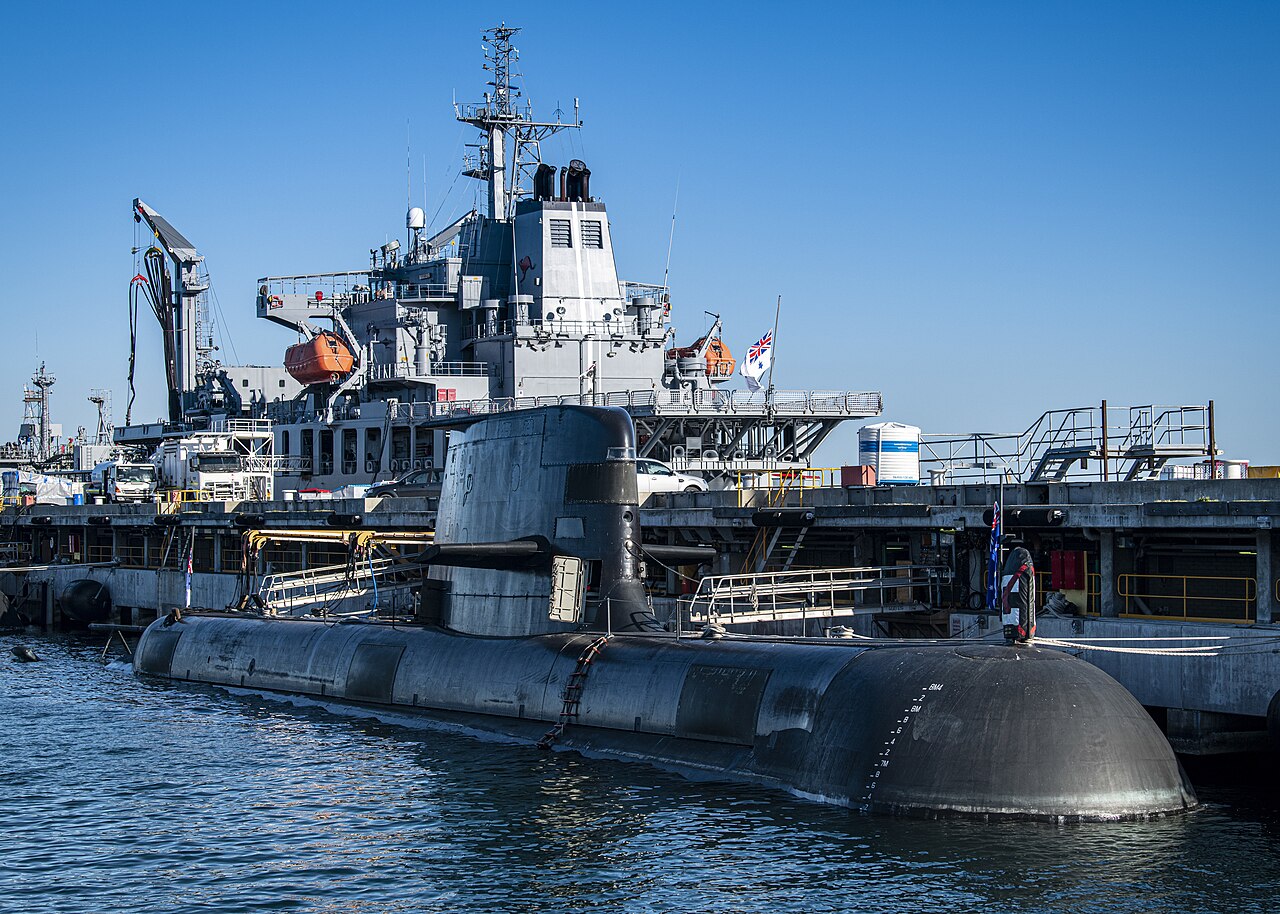
AUKUS has escaped proper scrutiny for five years. That is about to change - Pearls and Irritations

Parliamentary scrutiny of AUKUS—Australia's cornerstone Indo-Pacific alliance commitment and submarine modernisation program—signals a potential political vulnerability in the program's domestic consensus. Renewed examination of AUKUS delivery timelines, costs, and strategic rationale could expose the program to legislative challenge or budget pressure, directly threatening the alliance pillar and Australia's ability to field credible maritime deterrence.

GNews: AUKUS · 2026-10-25P7
Trade
Bahnfrend / Wikimedia Commons (CC BY-SA 3.0)
Trade

Australia’s green iron gamble needs more ambition to convince Asia

Australia's iron ore export strategy pivots toward green credentials to retain market relevance in East Asian decarbonisation, directly supporting resource sovereignty and strategic decoupling from Chinese economic coercion. Success in this gambit preserves Australia's largest export revenue stream ($60–$80bn annually) and reduces vulnerability to Chinese retaliatory import bans or ore-market manipulation.

Lowy Institute · 2026-10-25P1P5
Alliance
U.S. Navy Photo by Electronics Technician 3rd Class Michael Douglas / Wikimedia Commons (Public domain)
Alliance

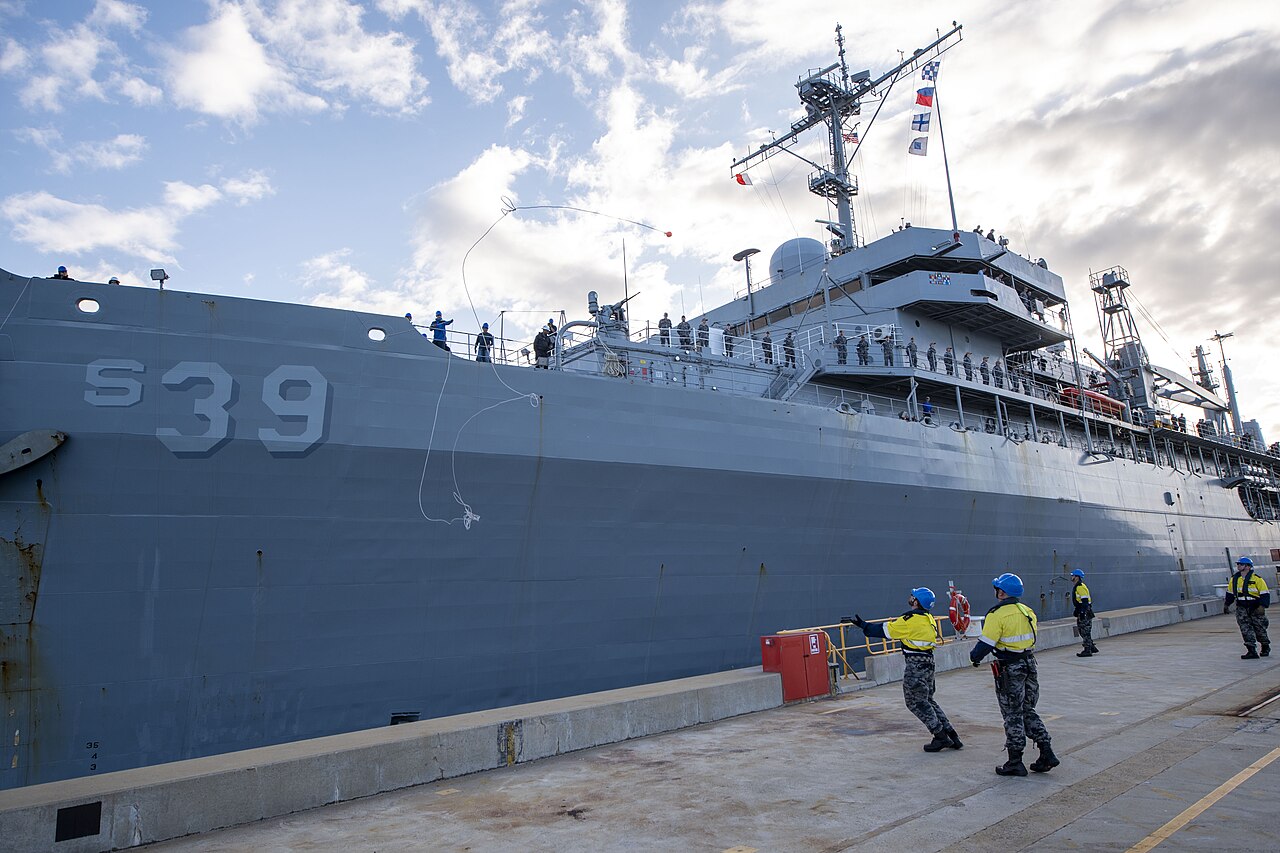
US Marines head home after six months in Top End - Asia Pacific Defence Reporter

The US Marines rotational deployment to Australia's Top End (Darwin/northern bases) is a concrete marker of US Indo-Pacific force posture and alliance commitment. Routine rotations demonstrate sustained operational presence in the critical northern arc, reinforcing Pillar 7 (Alliance) and Pillar 6 (Maritime Defence) readiness alongside Australian forces.

GNews: Australia defence · 2026-10-24P6P7
Australia · Defence
U.S. Army / Aliyah Harrison (public domain)
Australia · Defence

We want you! ADF recruitment rates are growing, even as the odds of conflict rise. Why are people signing up? - The Guardian

Growing ADF recruitment indicates public willingness to serve amid rising Indo-Pacific tensions, directly supporting personnel capacity on Pillar 4 (Demographics) and defence posture. However, recruitment trends alone do not measure force readiness, retention, or capability — the article's strategic weight depends on whether these recruits are directed toward operationally critical roles (submarines, maritime, air defence) or backfill.

GNews: AUKUS · 2026-10-24P1P4
Australia · Defence
U.S. Navy / MC2 Jeanette Mullinax (public domain)
Australia · Defence

Holden to AUKUS: Why SA must Back Australia’s next industrial era - Adelaide Now

The article signals Australian political-industrial alignment behind AUKUS and the submarine programme by positioning South Australia's manufacturing capacity as a strategic asset. Strengthening the domestic industrial base underpins Australia's ability to deliver on AUKUS Pillar I (attack submarines) and broader allied interoperability, reducing supply-chain and political fragility.

GNews: AUKUS · 2026-10-24P3P7
China · Military
Earth Science and Remote Sensing Unit, Lyndon B. Johnson Space Center / Wikimedia Commons (Public domain)
China · Military

China & Taiwan Update, October 23, 2026 - Institute for the Study of War

China–Taiwan kinetic risk is the single most disruptive scenario for Australian strategic preparedness, affecting alliance cohesion, supply-chain resilience, energy security, and defence industrial mobilisation. An ISW update documenting escalation in PLA posture or Taiwan coercion directly sharpens Australia's exposure to conflict in the Taiwan Strait and tests AUKUS credibility and US commitment to the Indo-Pacific.

GNews: PLA navy · 2026-10-23P6P7P8
The rest of the week
Alliance· 28

Collaboration on Autonomous Undersea Warfare is on Track, AUKUS Officials Say - USNI News

GNews: AUKUS · 2026-10-23source ↗P6P7

Autonomous undersea systems are a core AUKUS Pillar II priority that extends Australia's submarine and maritime strike capability without the timeline and production constraints of crewed platforms. Confirmed progress on this workstream provides credible evidence that the broader AUKUS initiative remains operationally viable despite public scepticism about SSN timelines.

USNI News Western Pacific Pulse: Oct. 23, 2026

USNI News · 2026-10-23source ↗P6P7

HMAS Stuart's participation in Keen Sword 27 with USS Theodore Roosevelt and Japanese MSDF assets demonstrates Australia's active integration into a US-led allied naval exercise architecture in the Western Pacific. This reinforces Alliance (Pillar 7) interoperability and signals continued US pivot commitment, offsetting any American withdrawal risk.

Australia’s geography has changed – in meaning, not location

Perth USAsia Centre · 2026-10-23source ↗P7P8

Smith's remarks (as Chair of Perth USAsia Centre, a respected strategic voice) reframe Australia's geography as central to integrated Western strategy across two oceans, rather than as a peripheral outpost. This intellectual repositioning supports alliance cohesion and Australian defence planning by anchoring Australia's role in both Euro-Atlantic and Indo-Pacific defence architecture, relevant to AUKUS and US commitment durability.

AUKUS: Strategic Imperative or Costly Mistake? - Defense.info

GNews: AUKUS · 2026-10-22source ↗P6P7

The article raises questions about AUKUS cost-effectiveness and strategic necessity, reflecting growing public and policy debate in allied nations. This intellectual contestation does not yet alter delivery timelines or budget allocations, but persistent cost concerns could eventually inform budget prioritization decisions affecting pillar 6 (Maritime Defence) and pillar 7 (Alliance) credibility.

Theodore Roosevelt Carrier Strike Group Sails in the Philippine Sea for Keen Sword Drills

USNI News · 2026-10-22source ↗P6P7

Keen Sword 27 demonstrates sustained US carrier strike group deployment and active four-way naval interoperability (US, Japan, Australia, Canada, France) in the Philippine Sea—a core Indo-Pacific chokepoint and Taiwan-adjacent waters. For Australia, this reinforces Pillar 7 (Alliance) credibility and Pillar 6 (Maritime Defence) partnership depth, underpinning AUKUS deterrence architecture and signalling to China that the US remains committed to contested waters despite domestic fiscal or political pressures.

AUKUS: Australians paying to defend the US homeland - Pearls and Irritations

GNews: nuclear submarine · 2026-10-22source ↗P2P7

The article challenges AUKUS's fiscal sustainability and strategic rationale from an Australian budget perspective, risking political backlash that could undermine the submarine delivery timeline or scope. If public and parliamentary confidence in AUKUS value erodes, Australia may face pressure to reduce commitments or redirect spending to other defence priorities, weakening the alliance pillar and delaying submarine-fleet modernization critical to Indo-Pacific deterrence.

Philippine Energy Security Could Determine the Outcome of a Taiwan Contingency

The Diplomat · 2026-10-22source ↗P5P6P7

The article identifies a critical structural vulnerability in the US–Australia–allied defence posture: Philippine energy insecurity directly threatens sustained operations in any Taiwan contingency, and Australia's alliance effectiveness and forward-basing options depend on reliable US operational tempo. Without Philippine fuel security (and by extension, secure regional supply chains), the entire First Island Chain deterrent architecture becomes brittle, reducing the credibility of the alliance and creating openings for Chinese coercion.

AUKUS a key to wide undersea power - The Australian Naval Institute

GNews: AUKUS · 2026-10-22source ↗P6P7

This piece represents strategic consensus among Australia's naval professional community that AUKUS undersea capability is essential to Indo-Pacific deterrence and Australia's defence posture. It bolsters the political and institutional case for AUKUS delivery and counters narratives of program fragility.

Ghost Shark, kamikaze drones: Inside AUKUS’s biggest sea exercise - The Australian

GNews: AUKUS · 2026-10-22source ↗P6P7

AUKUS Pillar II sea exercises signal real operational progress in the submarine-integration pipeline and allied interoperability, strengthening the credibility of the programme against collapse scenarios. The exercise demonstrates that AUKUS is moving from procurement announcements into live coordinated capability, reinforcing Australia's maritime-defence posture and alliance coordination in the Indo-Pacific.

Panel | AUKUS, ports, and Australia’s defence build-out - AFR Live

GNews: AFR · 2026-10-22source ↗P3P6P7

A panel discussion on AUKUS, Australian port infrastructure, and defence build-out is a forum for high-level strategic discourse but the headline alone provides no specific new commitment, capability delivery, policy decision, or partner-government signal. The article likely reinforces Australia's strategic intent but does not directly move programmatic or fiscal metrics without substantive new announcements.

What Does AUKUS Actually Represent for Australia and the UK? - Australian Institute of International Affairs

GNews: AUKUS · 2026-10-22source ↗P6P7

An AIIA analysis of AUKUS's strategic rationale for Australia and the UK is relevant to Australia's alliance pillar and maritime defence posture, but without access to the full article text, only a headline-level classification is possible. The relevance hinges on whether the piece addresses concrete AUKUS delivery commitments, UK/US commitment signals, or Australia's submarine acquisition timeline.

Australia joins Japan and United States as Exercise Keen Sword commences - Asia Pacific Defence Reporter

GNews: Australia defence · 2026-10-21source ↗P6P7

Exercise Keen Sword signals continuing US willingness to conduct high-end operations with Australia and Japan, reinforcing the Alliance pillar and reassuring Australia of US Indo-Pacific commitment. The trilateral format demonstrates the deepening of interoperability between Australian, Japanese, and US forces—critical for deterrence and coalition cohesion if Taiwan or Hormuz tensions escalate.

Critical Industrial Base Facility Breaks Ground Thanks to Australian Submarine Industrial Base Contribution - navy.mil

GNews: AUKUS · 2026-10-21source ↗P3P7

Construction has begun on a US submarine industrial base facility underwritten by Australia's financial contribution under AUKUS Pillar 1, converting Canberra's payments into physical capacity. Australia's acquisition of Virginia-class boats hinges on American yards lifting production above roughly two hulls a year while sustaining US Navy requirements, so visible expansion of supplier and workforce capacity is one of the few measurable indicators of whether the 2032 transfer timeline remains credible. It also strengthens Canberra's political case that its payments are buying tangible output rather than subsidising US shortfalls.

Australia marks missile, cyber ‘firsts’ in exercise with Indonesia - Breaking Defense

GNews: Australia defence · 2026-10-21source ↗P6P7

This exercise demonstrates Australia's ability to conduct advanced integrated operations (missiles + cyber) with a critical regional partner, strengthening the Western alliance posture in the Indonesian archipelago and the Sunda Strait—a key chokepoint. It signals Australian maritime-defence capability and alliance credibility at a moment when Indonesia's strategic alignment is contested.

Labor all in on Beijing as Coalition carries the flag for Taiwan - The Australian

GNews: The Australian · 2026-10-21source ↗P7P8

The article reveals domestic political division over China and Taiwan policy between Labor (government) and Coalition (opposition), which directly affects Australia's Alliance pillar credibility and Northern Arc geopolitical positioning. Domestic consensus fragmentation on the Taiwan question risks signalling weakness to both Beijing and Washington at a critical moment for Indo-Pacific stability and AUKUS cohesion.

Powerful joint live-fire caps off Keris Woomera | Army News - news.defence.gov.au

GNews: ADF capabilities · 2026-10-21source ↗P6P7

Keris Woomera is a bilateral Australia–Malaysia joint military exercise demonstrating operational interoperability and sustained regional maritime coordination. The live-fire component signals Australian and Malaysian commitment to maintaining high readiness and deterrent posture in the Indo-Pacific, reinforcing alliance cohesion and defence relationships outside the formal Quad/AUKUS framework.

Papua New Guineans cleared to join the Australian military under historic pact - News24

GNews: Australia defence · 2026-10-20source ↗P4P7

Under the Australia–PNG defence treaty, Papua New Guinean citizens will be able to enlist in the Australian Defence Force, an unusually deep form of military integration with a sovereign neighbour. For Australia it addresses chronic ADF recruitment shortfalls while binding PNG's security establishment more tightly to Canberra at a time when Beijing has been pursuing policing and security arrangements across the Pacific. The arrangement also raises practical questions of citizenship, vetting and reciprocal obligations that will shape how durable the alignment proves.

Australia to recruit Papua New Guinea students into ADF - UA.NEWS

GNews: Australia defence · 2026-10-20source ↗P4P7

PNG is a critical regional partner whose strategic orientation directly affects Australia's northern security posture and broader Indo-Pacific influence. Deepening ADF personnel ties and military socialization via student recruitment reinforces the alliance and reduces China's opportunity to establish competing military influence in the archipelago.

Australia propelling Virginia-class submarine production in United States - Australian Submarine Agency

GNews: nuclear submarine · 2026-10-20source ↗P6P7

Australia's active role in accelerating Virginia-class submarine production in the United States strengthens AUKUS Pillar II delivery and maritime defence posture. This signals sustained allied commitment and de-risks Australia's attack submarine capability acquisition, directly countering scenarios of AUKUS programme collapse or indefinite delay.

Australia and Indonesia conclude major exercise - Defence News

GNews: Australia defence · 2026-10-20source ↗P6P7

Joint exercises with Indonesia reinforce Australia's critical alliance in the maritime northern arc and demonstrate continuing interoperability with a strategically pivotal neighbour. Sustained defence cooperation with Jakarta reduces the risk of Indonesian strategic accommodation with China and strengthens Australia's forward posture in the Indo-Pacific.

India–Australia Military Exercise AUSTRAHIND 2026 Begins, Strengthening Defence Cooperation - www.nationpathindia.com

GNews: Australia defence · 2026-10-20source ↗P7

AUSTRAHIND 2026 demonstrates Australia's active deepening of defence partnerships within the Quad framework, reinforcing the Alliance pillar through concrete operational integration with India. This exercise operationalizes the Indo-Pacific security architecture and reduces Australia's dependency on any single partner, strengthening overall alliance resilience.

Australia participates in Exercise Keen Sword - Australian Defence Magazine

GNews: Australia defence · 2026-10-20source ↗P6P7

Exercise Keen Sword participation signals sustained Australian commitment to Indo-Pacific alliance integration with Japan and demonstrates real-time operational interoperability in a region facing increasing Chinese military pressure. This reinforces Pillar 7 (Alliance) and Pillar 6 (Maritime Defence) readiness, strengthening deterrence architecture and reducing space for miscalculation.

India, Australia commence AUSTAHIND 2026, coordinated operations in focus - ANI News

GNews: Australia defence · 2026-10-19source ↗P7

AUSTAHIND 2026 represents a concrete institutional deepening of the India–Australia defence partnership, operationalising coordinated military capability in the Indo-Pacific theatre. This expands Australia's allied network beyond the Five Eyes and AUKUS, reducing strategic vulnerability to US Indo-Pacific retrenchment and enhancing collective deterrence against Chinese coercion.

The case for AUKUS nations building floating submarine dry docks together - Navy Lookout

GNews: AUKUS · 2026-10-19source ↗P3P6P7

Shared floating submarine dry docks strengthen AUKUS industrial coordination and reduce single-point maintenance bottlenecks that could delay Australia's SSN-AUKUS delivery or operational availability. This addresses a critical enabler of the Attack-class and Virginia/SSN conversions, directly supporting Pillar 6 (Maritime Defence) and Pillar 7 (Alliance) resilience.

Government unveils AUKUS Pillar 2 payloads - Australian Defence Magazine

GNews: AUKUS · 2026-10-19source ↗P3P6P7

AUKUS Pillar 2 payloads represent a major step in operationalizing Australia's advanced maritime and cyber-warfare posture under the alliance framework. Concrete payload announcements reduce programme risk and underscore the three-nation commitment to closing capability gaps in the Indo-Pacific against the PLA.


Australia · Defence· 26

Australia’s antimony mines don’t yet guarantee reliable supply

ASPI The Strategist · 2026-10-22source ↗P1P5

Antimony is a defence-critical mineral used in ammunition, military alloys, and advanced electronics; China's 70–80% global monopoly creates acute supply vulnerability that China has weaponized via export restrictions. Australia's first commercial shipments (Nyrstar, Larvotto) and direct Western supply-chain integration directly advance Pillar 1 (Resource Sovereignty) and Pillar 5 (Decoupling) by reducing Beijing's coercive leverage over Australian defence-industrial capability.

Army unit experimenting with small drones for ‘tailored cyber effects’

Breaking Defense · 2026-10-22source ↗P3P7

Australia is developing integrated cyber-electronic warfare drone capabilities within its cyber battalions, strengthening asymmetric and defensive posture against peer-state cyber operations. This represents concrete progress in the industrial base and defence innovation pathway, supporting Pillar 3 (Industrial Base) and Pillar 7 (Alliance capability modernisation).

Magnesium problem growing in the West - The Australian

GNews: The Australian · 2026-10-22source ↗P1P3P5

Magnesium is critical for aerospace, defence systems, and light-alloy manufacturing. Australian defence capabilities depend on secure supply chains for platform construction and electronics; Western dependency on Chinese magnesium (>80% global capacity) directly undermines Pillar 1 (Resource Sovereignty) and Pillar 5 (Decoupling from China).

When thinking about national security, think about local businesses

ASPI The Strategist · 2026-10-21source ↗P3P6

The article identifies a critical gap in Australian strategic resilience: the collapse of local supply chains and labour forces that support defence operations and critical infrastructure in remote/regional areas. Loss of local business ecosystem capacity directly undermines ADF operational sustainability, particularly in northern Australia where defence facilities and maritime platforms depend on proximate skilled workforces and logistical support that cannot be quickly reconstituted after prolonged disruption.

Royal Australian Navy’s Ghost Shark UUVs Will Have Minelaying, UAV Payloads

USNI News · 2026-10-21source ↗P6P7

The Ghost Shark UUV payload integration—minelaying, UAV deployment, supply caches—represents concrete progress in Australian autonomous maritime warfare capability under AUKUS Pillar II, directly advancing the alliance's underwater and distributed-strike posture in the Indo-Pacific. Successful exercise participation in San Diego signals both technological maturity and US commitment to the AUKUS framework, shoring up one pillar of Australian deterrence against Chinese dominance in the littoral zone.

Australia’s foreign-investment gatekeeper needs defence expertise

ASPI The Strategist · 2026-10-21source ↗P3P1

The article advocates institutional reform of Australia's foreign investment screening to embed defence-acquisition expertise in FIRB decision-making. This directly addresses Pillar 3 (Industrial Base) resilience by reducing the risk that poorly scrutinised foreign capital inflows degrade sovereign defence manufacturing or critical supply chains essential to AUKUS SSN, PEM, and allied interoperability.

Ghost Shark Uncrewed Submarine Shown Launching Aerial Drones For The First Time

The War Zone · 2026-10-21source ↗P3P6

Ghost Shark's demonstrated autonomous drone-launch and integrated payload capacity (mines, ISR, strike effects) advances Australia's industrial base and maritime defence posture, directly supporting AUKUS Pillar II strategy. The capability enhancement reduces technical and political risk to the uncrewed submarine program, a cornerstone of Australia's future naval autonomy and Indo-Pacific deterrence against PLA expansion.

Veterans’ Affairs Minister Matt Keogh calls for greater ADF transparency, trust and cultural change - Defence Connect

GNews: ADF capabilities · 2026-10-21source ↗P6P7

ADF cultural health and institutional transparency directly affect partner trust and interoperability, both essential to AUKUS delivery and broader alliance cohesion. A reform signal from the Veterans' Affairs Minister indicates willingness to address personnel and cultural friction that could otherwise erode defence-force morale, retention, and operational effectiveness during the critical AUKUS build-out phase.

AUSTAL SECURES $245 MILLION TO BUILD LANDING CRAFT HEAVY INFRASTRUCTURE - AFR

GNews: AFR · 2026-10-21source ↗P3P6

This $245 million commitment to Austal for Landing Craft Heavy infrastructure directly advances Pillar 3 (Industrial Base) by securing sustainable domestic naval construction capacity. It also reinforces Pillar 6 (Maritime Defence) by enabling ADF amphibious projection capability—a core element of Northern Arc posture—and signals government commitment to Australian defence manufacturing continuity.

Labor’s huge loan to ship builder Austal for Perth defence project - AFR

GNews: AFR · 2026-10-21source ↗P3P2

A large Commonwealth loan to Austal underwrites expansion of its Henderson shipyard in Western Australia, the industrial hub for Australia's future general-purpose frigates, Landing Craft and planned nuclear submarine sustainment work. Sovereign build-and-sustain capacity is the binding constraint on Australia's naval expansion, so capital committed to yard infrastructure and workforce is a direct input to force-structure timelines. The arrangement also deepens the government's financial exposure to a single prime contractor at a moment when delivery schedules carry little slack.

Another model: Canada integrates defence acquisition and industry funding

ASPI The Strategist · 2026-10-21source ↗P2P3

The article examines whether Australia's forthcoming Defence Delivery Agency has sufficient commercial freedom and industrial tools to deliver military capability at pace, using Canada's defence investment corporation model as a benchmark. Institutional agility in defence procurement and industry coordination is a core enabler of the AUKUS submarine programme and broader industrial-base resilience under Pillar 3.

Australia is a regional maritime power. It should act like it

ASPI The Strategist · 2026-10-20source ↗P6P7

The article reframes Australian maritime strategy away from capability-deficit framing toward influence and relationship-building, directly addressing psychological and diplomatic dimensions of deterrence and alliance cohesion in the Indo-Pacific. This posture shift supports Australia's Pillar 6 (Maritime Defence) and Pillar 7 (Alliance) resilience by anchoring confidence in existing institutional and training advantages, which become more critical as surface-combatant and submarine fleets undergo long-lead modernisation.

Ghost Shark Extra-Large Uncrewed Underwater Vehicles’ Payload Bay Seen For First Time

The War Zone · 2026-10-20source ↗P3P6

Australia's Ghost Shark XL-AUV programme is advancing into concrete payload integration and operational design, demonstrating progress on a key autonomous undersea-warfare capability that complements the AUKUS submarine transition. This modular, persistent ISR-and-strike platform closes a gap in Australia's undersea dominance posture and reflects industrial-base growth in autonomous systems.

Ghost Shark with teeth: Australia unveils underwater drone payloads

Breaking Defense · 2026-10-20source ↗P3P6P7

Australia is accelerating undersea warfare capability through contracted autonomous platforms with modular payloads—a core asymmetric hedge against larger peer navies in denying sea control and protecting infrastructure. This concrete delivery on AUKUS Pillar II commitments demonstrates allied coordination and bolsters the advanced-technology decoupling narrative.

‘Best deterrence’: ADF stages major war games - The Australian

GNews: Australia defence · 2026-10-20source ↗P6P7

The ADF has run large-scale war games explicitly framed around deterrence, exercising the command, logistics and joint-force coordination Australia would need in a regional contingency. Exercises of this scale are both a readiness test and a signal to Beijing and to partners about Australia's willingness and capacity to operate at pace. Their value for preparedness lies in exposing gaps in sustainment, munitions stocks and interoperability that are difficult to identify outside full-scale activity.

Former senator fears SA roads could sink AUKUS - News - InDaily South Australia

GNews: AUKUS · 2026-10-20source ↗P6P7

AUKUS submarine delivery is Australia's single most critical allied defence commitment and a pillar of Indo-Pacific deterrence against China. Domestic logistical and infrastructure failures that impede this programme directly undermine Australian strategic credibility and risk leaving the nation without modern submarine capability during a period of acute regional tension.

Building Australia’s nuclear capable industrial future – the Australian way - Manufacturers' Monthly

GNews: nuclear submarine · 2026-10-20source ↗P3P1

Australia's explicit pivot toward nuclear-capable industrial self-sufficiency directly supports Pillar 3 (Industrial Base) and Pillar 1 (Resource Sovereignty), underpinning the AUKUS SSN program's domestic delivery chain. This reinforces strategic autonomy in defence manufacturing and reduces reliance on foreign nuclear know-how, critical to program resilience and schedule certainty.

ADF opens door to PNG recruits - The Australian

GNews: The Australian · 2026-10-19source ↗P4P6P7

Australia is opening ADF enlistment to Papua New Guinea citizens, a concrete step in the defence integration agenda underpinned by the Pukpuk treaty. It addresses two problems at once: chronic ADF recruitment and retention shortfalls, and the need to bind Port Moresby's security establishment to Canberra at a time when Beijing has been pursuing policing and security arrangements across the Pacific. The move also raises practical questions of vetting, citizenship pathways and command arrangements that will shape how far similar schemes can be extended to other Pacific partners.

Plant alone isn’t enough: a defence factory is not a defence capability

ASPI The Strategist · 2026-10-19source ↗P3P6

The article identifies Western Australia's substantial, transferable industrial base (resources processing, heavy engineering, advanced manufacturing) as a strategic asset for defence shipbuilding and sustainment. Successful integration of this civilian industrial capacity into defence supply chains is critical to Australia's ability to sustain the AUKUS submarine program at the scale and pace demanded by the strategic environment, reducing execution risk.

Australia war-gaming use of nuclear-powered subs in conflict with China - SMH.com.au

GNews: AUKUS · 2026-10-19source ↗P6P7

This article confirms Australia is actively integrating nuclear-powered submarines into warfighting doctrine against China, advancing AUKUS/Pillar II operational realism and maritime deterrence. The shift from acquisition planning to tactical war-gaming signals maturation of Australian Indo-Pacific defence posture and strengthens alliance signalling to the US and regional partners.

Why the Army can’t build its Pacific network like the one in Europe

Breaking Defense · 2026-10-19source ↗P6P7

The article highlights a critical capability gap in ADF command-and-control over the dispersed Pacific theater—the sparse infrastructure and contested comms environment that prevents replication of NATO's integrated network model. This gap directly undermines real-time tactical coordination, sensor fusion, and force-projection readiness precisely where Australian naval and air forces must operate in a potential China contingency.

Australia gets the ball rolling on medium-range air defense

Defense News · 2026-10-19source ↗P3P6

Project Land 6504 directly addresses a critical gap in Australia's integrated air defense posture against China's expanding and diverse missile arsenal. The formal tender and international vendor competition signal concrete capability development aligned with the 2026 Defence Strategy's prioritization of missile defense, strengthening Pillar 6 (Maritime Defence) and Pillar 3 (Industrial Base) through domestic integration.

Australia should turn critical minerals leverage into industrial capability - East Asia Forum

GNews: critical minerals · 2026-10-19source ↗P1P3P5

The article directly addresses Resource Sovereignty (Pillar 1) and Industrial Base (Pillar 3) by advocating domestic processing and manufacturing of critical minerals rather than export of raw ore. This improves decoupling (Pillar 5) from Chinese supply-chain control and increases the resilience and value-capture of Australia's primary strategic asset.

Australia advances undersea warfare capabilities - Naval News

GNews: AUKUS · 2026-10-19source ↗P6P3

Australia's advancement of undersea warfare capabilities directly strengthens Pillar 6 (Maritime Defence) and demonstrates progress in integrating AUKUS-derived submarine technology into operational force structure. This is a concrete signal of AUKUS momentum and Australia's ability to operationalise advanced naval systems, both critical to deterrence in the Indo-Pacific.

Ghost Sharks to be armed with aerial drones and advanced sea mines - ABC News & Headlines – Australian Broadcasting Corporation

GNews: ABC News · 2026-10-19source ↗P3P6

Ghost Shark armed with drones and sea mines represents advancement in Australia's indigenous autonomous underwater capability, strengthening the maritime defence pillar and reducing reliance on foreign platforms for anti-ship/anti-access roles. The upgrade signals continued investment in the ADF's industrial base for autonomous systems and coastal denial—key to northern-arc preparedness absent full AUKUS submarine arrival.

China · Military· 8

China’s first aircraft carrier forms ‘evolving pattern’ of voyages in disputed Asian seas - Defense News

GNews: PLA navy · 2026-10-23source ↗P6P7P8

China's carrier is operationally maturing as a sustained Indo-Pacific presence, tightening military pressure on Taiwan and contested sea lanes critical to Australian trade and energy security. Australia's maritime defence posture (Pillar 6) and alliance credibility (Pillar 7) face pressure if carrier operations become routine without offsetting allied deterrence.

Xi’s Military Purges Make US Deterrence More Urgent

The Diplomat · 2026-10-23source ↗P6P7

Xi's purge of 52% of senior PLA leadership removes institutional checks on unilateral military decision-making and consolidates his personal authority over the armed forces, materially raising the risk of sudden kinetic action against Taiwan without consensus or restraint from senior commanders. This shift in PLA governance directly affects Australia's core alliance dependence (Pillar 7) and maritime defence posture (Pillar 6), as it increases the probability of a Taiwan contingency that would demand Australian choice on AUKUS commitment and Indo-Pacific operations.

China’s first aircraft carrier forms ‘evolving pattern’ of voyages in disputed Asian seas

Defense News · 2026-10-23source ↗P6P7

China's Liaoning carrier group is establishing a persistent, predictable operational presence across the first and second island chains—areas of critical interest to Australia's maritime defence and alliance position. The normalization of frequent dual-carrier exercises and transits near Taiwan, Japan, and the Philippines signals growing PLA Navy capacity projection that Australia must factor into force-posture, alliance coordination (especially AUKUS), and Indo-Pacific strategic planning.

Solomon Islands tekem ownership long wanfala kago ship blong China - ABC News & Headlines – Australian Broadcasting Corporation

GNews: ABC News · 2026-10-23source ↗P5P7P8

The Solomon Islands' shift toward Chinese infrastructure integration (cargo shipping) signals continued accommodation of Chinese strategic presence in the immediate Pacific Arc, tightening China's logistics and influence network in Australia's maritime neighbourhood. This erodes Australia's traditional sphere of influence and alliance cohesion in the region, complementing larger patterns of Chinese strategic competition for Pacific alignment.

Four KJ-3000 Radar Jets At Chinese Factory Point To Serial Production

The War Zone · 2026-10-22source ↗P6P7

The KJ-3000 is a critical PLA air-defense and battle-management asset; serial production signals China is accelerating integrated air-combat capability against Taiwan and the US-led alliance. This elevates the military imbalance in the Indo-Pacific and narrows Australia's operational advantages in any regional conflict involving Taiwan, directly threatening Pillar 6 (Maritime Defence) and Pillar 7 (Alliance) cohesion.

China Coast Guard Says It Monitored Philippine Resupply Mission at Contested Shoal

The Diplomat · 2026-10-22source ↗P6P7P8

China's sustained harassment of Philippine resupply missions to Second Thomas Shoal directly undermines allied cohesion in the Indo-Pacific and signals Chinese willingness to enforce de facto exclusion zones through gray-zone coercion—a tactic that could be applied to Taiwan and Australian maritime interests. Australia's security architecture depends on allied freedom of navigation and US commitment to deter Chinese aggression; erosion of Philippine operational capacity and US credibility in defending allies directly threatens Australia's alliance pillar and increases the risk of China attempting similar coercion against Australian positions or Taiwan.

China built more than twice naval tonnage of US in 2024-25: Euronaval

Defense News · 2026-10-20source ↗P6P7

China's construction of 636,208 tons of combat vessels versus the US's 270,509 tons in 2024-25 signals a decisive shift in relative naval capacity. This disparity directly threatens the US–UK ability to meet AUKUS submarine commitments to Australia and raises the credibility of American sustained Indo-Pacific presence—Australia's foundational security assumption.

Expanding the Military Footprint: China’s New Air Base in Laos

The Diplomat · 2026-10-20source ↗P6P7P8

China's first openly acknowledged overseas military facility in Laos represents a strategic consolidation of power projection in mainland Southeast Asia and a direct challenge to US regional influence norms. For Australia, this base extends the PLA's logistical reach, shortens timelines for force deployment to the Taiwan Strait and surrounding waters, and signals Beijing's confidence that regional states will accommodate Chinese military presence—undermining the alliance architecture and maritime denial capabilities on which Australian security depends.

China · Economy· 6

China’s pressure on Fortescue will soon become self-harm - AFR

GNews: AFR · 2026-10-22source ↗P1P5

Fortescue is Australia's second-largest iron ore exporter and a critical revenue source for sovereign wealth, defence spending, and fiscal capacity. If China's coercive pressure on Fortescue succeeds in reducing shipments or forcing price concessions, it directly erodes Australia's Pillar 1 (Resource Sovereignty) and Pillar 2 (Fiscal Engine), constraining defence investment and strategic autonomy.

Fortescue warns of Pilbara cuts if China deadlock continues - AFR

GNews: AFR · 2026-10-22source ↗P1P2P5

Fortescue's threat to cut Pilbara production directly undermines Australia's resource-sovereignty pillar and fiscal-engine revenues, both critical to funding defence modernisation and strategic decoupling. A prolonged China–Australia trade deadlock that reduces iron-ore export volumes and prices weakens the fiscal base available for AUKUS, submarine operations, and northern-arc defence infrastructure.

‘Adjustments to production’: Fortescue warns on China - The Australian

GNews: The Australian · 2026-10-21source ↗P1P2P5

Fortescue's production warning signals weakening Chinese demand for Australian iron ore—Australia's largest export commodity and major fiscal revenue driver. Sustained iron ore price weakness erodes sovereign wealth accumulation, defence procurement budget headroom, and Australia's fiscal resilience (Pillar 2), while also accelerating decoupling incentives (Pillar 5) and reducing resource capture leverage (Pillar 1).

Is China exporting its economic problems? - ABC listen - ABC News & Headlines – Australian Broadcasting Corporation

GNews: ABC News · 2026-10-21source ↗P2P5

China's strategy to export its economic difficulties — likely via competitive pricing, export surges, or currency pressure — poses medium-term risk to Australia's fiscal stability and commodity export revenues. This undercuts Pillar 2 (Fiscal Engine) and Pillar 5 (Decoupling): Australia remains exposed to Chinese demand shocks and currency/pricing volatility, limiting fiscal buffers and reinforcing economic entanglement.

China shock 2.0: The resource winners, critical minerals and Asia's new industrial race - Livewire Markets

GNews: critical minerals · 2026-10-20source ↗P1P3P5

The article signals China's sustained dominance in critical minerals supply chains and manufacturing, directly undermining Australia's strategic decoupling efforts and resource sovereignty. If China controls the industrial-base transition across Asia, Australia faces constrained access to processing, supply-chain integration, and strategic autonomy in energy and defence-industrial sourcing.

Shanghai tops world in empty offices as overseas investment pulls away

Nikkei Asia · 2026-10-19source ↗P2P5

Rising office vacancies and capital flight from China's premier financial hub signal material economic contraction that erodes China's fiscal capacity to fund military modernisation and strategic competition in the Indo-Pacific. A weakening Chinese economy reduces both the tempo and scale of PLA capability expansion, easing pressure on Australian defence budgets and alliance burden-sharing, but also increases strategic unpredictability and desperation in Beijing's geopolitical calculus.

Pacific· 3

US, allies and China vie for influence through Pacific security deals

South China Morning Post · 2026-10-23source ↗P7P8

The CSIS mapping reveals China is systematically expanding security footholds across the Pacific island chain—Australia's immediate northern arc. This directly threatens Australia's alliance leverage, maritime chokepoint security, and strategic depth in its primary sphere of influence. Losing Pacific island partners to Chinese security pacts erodes Australia's ability to project power, maintain logistical networks, and deny adversary forward bases in the region.

Bougainville Needs a Credible Timetable for PNG’s Independence Vote. Australia Can Help.

The Diplomat · 2026-10-20source ↗P7P8

Bougainville's path to independence and Australia's quiet diplomatic role in facilitating a credible timeline for PNG parliamentary action is a stabilising force in the South Pacific. Successful democratic resolution of this long-standing autonomy dispute strengthens regional institutional legitimacy and reduces the narrative and operational space for Chinese state/proxy influence-capture of a fragile micro-state.

Vanuatu expects China police presence to fall after deal with Australia - ABC News & Headlines – Australian Broadcasting Corporation

GNews: ABC News · 2026-10-19source ↗P5P7P8

This represents a concrete Australian diplomatic and strategic win in the Pacific—a reversal of Chinese security encroachment in a key Indo-Pacific location. It demonstrates Australia's capacity to compete for influence in the region through partnership and reduces China's ability to establish forward security positions among Pacific island nations.

Trade· 3

The Race for Malaysia’s Rare Earths: An Indo-Pacific Strategy - CSIS | Center for Strategic and International Studies

GNews: critical minerals · 2026-10-20source ↗P1P5P3

Rare earths are critical for defence electronics, renewable energy, and advanced manufacturing. If Malaysia's resources flow preferentially to China rather than to Australia or Western partners, Australia's Resource Sovereignty (Pillar 1) and Decoupling (Pillar 5) strategies weaken, forcing costlier or longer-lead procurements and deepening reliance on contested supply chains during a period of rising geopolitical tension.

Australia–US critical minerals pact turns one: Five investor takeaways - Australian Resources & Investment

GNews: critical minerals · 2026-10-20source ↗P1P5P7

The critical minerals pact strengthens Australia's Resource Sovereignty (Pillar 1) by formalizing supply-chain partnerships with the US, reducing strategic dependence on China for processing and downstream manufacturing. It directly supports Decoupling (Pillar 5) and Alliance posture (Pillar 7) by embedding Australia into a US-led critical minerals ecosystem that underpins defence technology, renewable energy, and advanced manufacturing.

Australia–US critical minerals pact turns one: Five investor takeaways - Australian Resources & Investment

GNews: critical minerals · 2026-10-19source ↗P1P5P7

The Australia–US critical minerals pact directly supports Australia's strategic decoupling from Chinese supply chains and strengthens the US alliance through concrete resource cooperation. One-year progress on investor partnerships enhances Australia's capacity to secure and process critical minerals essential for defence, renewable energy, and advanced manufacturing — key inputs for long-term strategic autonomy.

Australia · Fiscal· 2

Cutting migration risks Australia’s middle-power clout

Lowy Institute · 2026-10-21source ↗P4P7

Australia's demographic and fiscal strength underpin its ability to sustain defence spending, industrial capacity, and regional diplomatic weight. A migration-driven shrinkage of the economic base and population erodes the resource base for middle-power competition in the Indo-Pacific, weakening Australia's standing with allies and resilience against Chinese pressure.

Manufacturing self-reliance sounds great for security. A weaker economy doesn’t

ASPI The Strategist · 2026-10-19source ↗P2P3P5

This article challenges the strategic policy consensus that Australia should pursue manufacturing self-reliance and domestic technology development for security. By arguing that global trade and imported innovation deliver greater economic resilience (and thus stronger security) than protectionist decoupling, it directly contests Pillar 3 (Industrial Base) and Pillar 5 (Decoupling) strategies that dominate Australian national security doctrine. The debate matters because if the economic case against manufacturing self-reliance is sound, Australia's planned industrial buildout may reduce fiscal capacity (Pillar 2) without delivering the intended security dividend, weakening the overall preparedness programme.

Australia · Energy· 1
Technology· 1

The Lithography Lever

China Talk · 2026-10-20source ↗P3P5

Cutting China off from deep-ultraviolet (DUV) lithography is a core decoupling lever that weakens China's semiconductor industrial base and constrains military modernisation, directly supporting Pillar 5 (Decoupling) and Pillar 3 (Industrial Base). Australia benefits indirectly by being part of allied export-control coalitions that constrain China's economic and military potential, reducing Beijing's capacity to coerce Australia or dominate the Indo-Pacific.

All editions