All editions
The Dispatch·Weekly edition

26 October – 1 November 2026

A curated edition of the week's classified intelligence — the stories that moved Australia's preparedness across the eight pillars, and why each mattered.

134 stories · classified & human-curated

MajorChina · Military

Stealthy GJ-21 Drone Has Launched And Recovered From Type 076 Amphibious Assault Ship, China Claims

China · Military
U.S. Marine Corps / Lance Cpl. J.J. Harper (public domain)

The PLA says a GJ-21 stealth combat drone has launched from and recovered aboard the Type 076 Sichuan, which would make China the first navy to operate fixed-wing stealth UCAVs from a large amphibious platform. If confirmed, it extends persistent strike and reconnaissance reach well beyond the first island chain from a ship class China can build in numbers, complicating Australian and allied maritime surveillance and air defence planning in the South China Sea and approaches to the Coral Sea. The claim is so far unverified by imagery, but preparations for catapult trials aboard Sichuan have been visible for months.

The War Zone·2026-10-30P6P7Full story
Technology
James St. John / Wikimedia Commons (CC BY 2.0)
Technology

The ASX explorers tackling rare earths’ next big hurdles - The Australian

Rare earths are critical to defence electronics, renewable energy, and high-tech manufacturing—all core to Australian strategic autonomy and decoupling from Chinese supply chains. Expansion of ASX-listed explorers tackling extraction and processing hurdles directly advances Resource Sovereignty (Pillar 1) and Industrial Base (Pillar 3), reducing Australia's vulnerability to Chinese export controls and supporting the broader decoupling agenda.

GNews: The Australian · 2026-11-01P1P3P5
Alliance
U.S. Navy / MC2 Jeanette Mullinax (public domain)
Alliance

Linda Dawson: AUKUS demands new ‘security mindset’ - The Mandarin

The article frames AUKUS not merely as a procurement program but as requiring deep shifts in Australian strategic culture and institutional priorities. This positioning suggests that successful AUKUS delivery depends on sustained political, fiscal, and cultural commitment beyond hardware—a vulnerability if that commitment wanes.

GNews: AUKUS · 2026-11-01P7P3
Alliance
U.S. Marine Corps photo by Cpl. Earik Barton / Wikimedia Commons (Public domain)
Alliance

Interoperability needs logistics: the next phase of US Marine rotations to Australia

This article demonstrates deepening Australia–US military integration and logistics interoperability, moving beyond training drills toward institutionalized operational capability. The certification of MRF-D as a SPMAGTF and planned pre-positioning of equipment and supplies in Australia directly strengthen Pillar 7 (Alliance) and Pillar 6 (Maritime Defence), signalling enduring US force posture commitment to the Indo-Pacific against rising Chinese power projection.

ASPI The Strategist · 2026-11-01P6P7
Alliance
U.S. Navy / Lt. j.g. Ever Garay (public domain)
Alliance

AUKUS and the delusion of progressive patriotism - Pearls and Irritations

AUKUS is Australia's most concrete strategic hedge against Chinese military dominance in the Indo-Pacific and a pillar of Alliance cohesion. Domestic political critique of the programme's messaging—if it erodes public support without changing government commitment—may complicate future budgetary or industrial mobilisation, but does not directly alter capability delivery or partner engagement. The article flags a domestic political vulnerability (framing/legitimacy) rather than a programme or strategic failure.

GNews: AUKUS · 2026-11-01P7P3
Alliance
Cabinet Secretariat / Wikimedia Commons (CC BY 4.0)
Alliance

India-Australia defence ties: Advancing a vital Indo-Pacific partnership - Lowy Institute

India-Australia defence partnership strengthens Australia's Pillar 7 (Alliance) posture and Pillar 5 (Decoupling) by diversifying and deepening security ties beyond the Five Eyes and AUKUS, reducing reliance on any single partner and embedding Australia in a coalition aligned against Chinese regional dominance. This partnership also operationalizes the Quad framework and reinforces Australian strategic positioning in the Indo-Pacific, critical as the US reassesses Indo-Pacific commitments and China seeks to isolate individual allies.

GNews: Australia defence · 2026-11-01P7P5
Trade
Trade

Quad to Build Recycling Supply Chain to Counter China's Critical Mineral Controls - 파이낸셜뉴스

A Quad critical-mineral recycling supply chain directly addresses Australia's dependence on China for processed minerals and rare earths—core vulnerabilities under Pillar 1 (Resource Sovereignty) and Pillar 5 (Decoupling). By developing closed-loop, allied recycling capacity, Australia gains pathways to reduce China export share and increase domestic resource capture, hardening the supply chain for defence, grid, and manufacturing sectors.

GNews: Quad security · 2026-11-01P1P5
Alliance
Alliance

US, Japan, Australia, India to Provide $85 Million for Indo-Pacific AI Support, Wary of Low-Cost Chinese Models - BigGo Finance

Australia is party to a Quad-led, US-backed $85M Indo-Pacific AI investment that explicitly counters Chinese low-cost AI models and positions the coalition as a technology-sovereign bloc. This signals alliance cohesion on technology decoupling and US commitment to regional partnerships, reinforcing Pillar 7 (Alliance) and Pillar 5 (Decoupling from China).

GNews: Quad security · 2026-10-31P5P7
Australia · Defence
J Bar / Wikimedia Commons (CC BY 3.0)
Australia · Defence

Sale of Victoria Barracks Sydney 'mind-boggling', says retired colonel - ABC News & Headlines – Australian Broadcasting Corporation

The sale of a historic defence estate in Sydney's CBD signals potential asset liquidation to meet budget pressures, undermining resource sovereignty (Pillar 1) and potentially constraining future defence infrastructure investment. A retired colonel's public concern indicates senior defence figures view the sale as strategically damaging, suggesting loss of operational footprint and forward basing capacity in Australia's primary strategic city.

GNews: ABC News · 2026-10-31P1P6
The rest of the week
Alliance· 57

Indo-Pacific Quad ministers work on supply chains, denounce arbitrary export restrictions - Reuters

GNews: Quad security · 2026-10-31source ↗P3P5P7

Quad ministerial work on supply-chain resilience and coordinated export-control policy directly reinforces Pillar 5 (Decoupling) and Pillar 7 (Alliance), strengthening Australia's industrial base diversification and reducing dependence on Chinese intermediaries. The article signals sustained US-led institutional commitment to Indo-Pacific strategic alignment, which underpins Australia's broader alliance architecture and reduces the risk of coalition fragmentation.

UK plans 3 advanced undersea sensor systems to detect threats for AUKUS submarine fleets - Interesting Engineering

GNews: AUKUS · 2026-10-31source ↗P6P7

UK development of three advanced undersea sensor systems tailored for AUKUS submarine operations signals sustained allied investment in the program's technical foundation and operational effectiveness. This reinforces the viability of the AUKUS submarine transfer pathway and demonstrates partner-nation commitment to closing capability gaps critical for Australian maritime deterrence in the Indo-Pacific.

Australia strengthens AUKUS submarine maintenance capability ahead of rotational force launch in 2027 - Defence Industry Europe

GNews: nuclear submarine · 2026-10-31source ↗P6P7

This article demonstrates Australia is actively building the industrial and personnel infrastructure required to operationalise the AUKUS submarine rotational force by 2027—a major milestone. Maintenance capability is a critical non-negotiable foundation for sustained submarine operations and interoperability with US and UK forces, directly reducing the risk of programmatic failure or delay.

Britain’s Submarine Delivery Agency says UK aims to double production for up to 12 SSN-AUKUS submarines - Defence Industry Europe

GNews: AUKUS UK Britain · 2026-10-30source ↗P6P7

The UK's announcement to double production capacity for SSN-AUKUS submarines is a concrete signal of partner commitment to the AUKUS pillar and Australia's submarine transition. This directly reduces the risk that the programme will slip, collapse, or be downsized—a central strategic vulnerability for Australian maritime defence and alliance credibility.

British firms test AUKUS underwater tech off San Diego - UK Defence Journal

GNews: AUKUS UK Britain · 2026-10-30source ↗P6P7

AUKUS Pillar II underpins Australia's undersea dominance and maritime deterrence in the Indo-Pacific. Demonstrable UK-US-Australia technical integration off San Diego signals alliance operational continuity and reduces delivery-risk signals that might otherwise weigh on the submarine program's credibility.

Exclusive | Australian PM to visit Beijing after China-hosted Apec summit as tensions simmer - South China Morning Post

GNews: China Australia · 2026-10-30source ↗P7P5

A direct bilateral diplomatic engagement between Australia and China at the leadership level signals willingness to manage tensions through dialogue rather than confrontation, which is a tactical posture shift. However, the article headline notes 'tensions simmer,' indicating underlying strategic competition remains unresolved; this visit alone does not shift preparedness metrics or alter the likelihood of major strategic scenarios.

U.S., Partner Nations to Hold Annual Malabar Naval Exercise Near Japan

USNI News · 2026-10-29source ↗P6P7

Malabar 2026 confirms Australia's deepened role in Quad naval integration and underscores sustained US commitment to regular, visible multilateral operations in the Indo-Pacific. This reinforces Alliance (Pillar 7) cohesion and Australian Maritime Defence (Pillar 6) interoperability at a moment when US withdrawal or scaling-back remains a strategic concern.

US Army outlines Pacific deployments for possible 2027 China-Taiwan conflict - Taipei Times

GNews: Taiwan conflict · 2026-10-29source ↗P6P7

US Army planning for a 2027 Taiwan kinetic scenario directly affects Australia's alliance credibility (Pillar 7) and defence posture assumptions (Pillar 6). If the US is publicly preparing for Taiwan conflict, Australia must assume Taiwan kinetic risk is material and likely, requiring acceleration of AUKUS, sovereign defence industrial capacity, and Indo-Pacific force positioning.

No One Has a Plan for American Decline

Foreign Policy · 2026-10-29source ↗P7P5P6

This Foreign Policy flagship article signals elite U.S. debate on managing or accepting decline, with zero consensus on consequences for allies. For Australia, a core assumption of post-WWII strategy—sustained U.S. Indo-Pacific primacy and AUKUS backing—faces rhetorical legitimacy erosion in Washington, directly threatening Pillar 7 (Alliance) and forcing accelerated decoupling (Pillar 5) and maritime capability build (Pillar 6) earlier than planned.

AUKUS public inquiry poised to answer some tough questions - The New Daily

GNews: AUKUS · 2026-10-29source ↗P6P7

Public inquiries into major defence procurement programmes can generate political pressure and expose vulnerabilities, but this article reports only the initiation of scrutiny, not its outcome or any concrete policy shift. AUKUS submarine acquisition remains Australia's primary pathway to regional maritime deterrence; unresolved inquiry findings could delay capability delivery or erode political consensus, but the headline and text do not indicate imminent program jeopardy.

‘Don’t be stinky’: recruitment a ‘huge issue’ facing Aukus submarine program - The Guardian

GNews: AUKUS · 2026-10-28source ↗P6P7

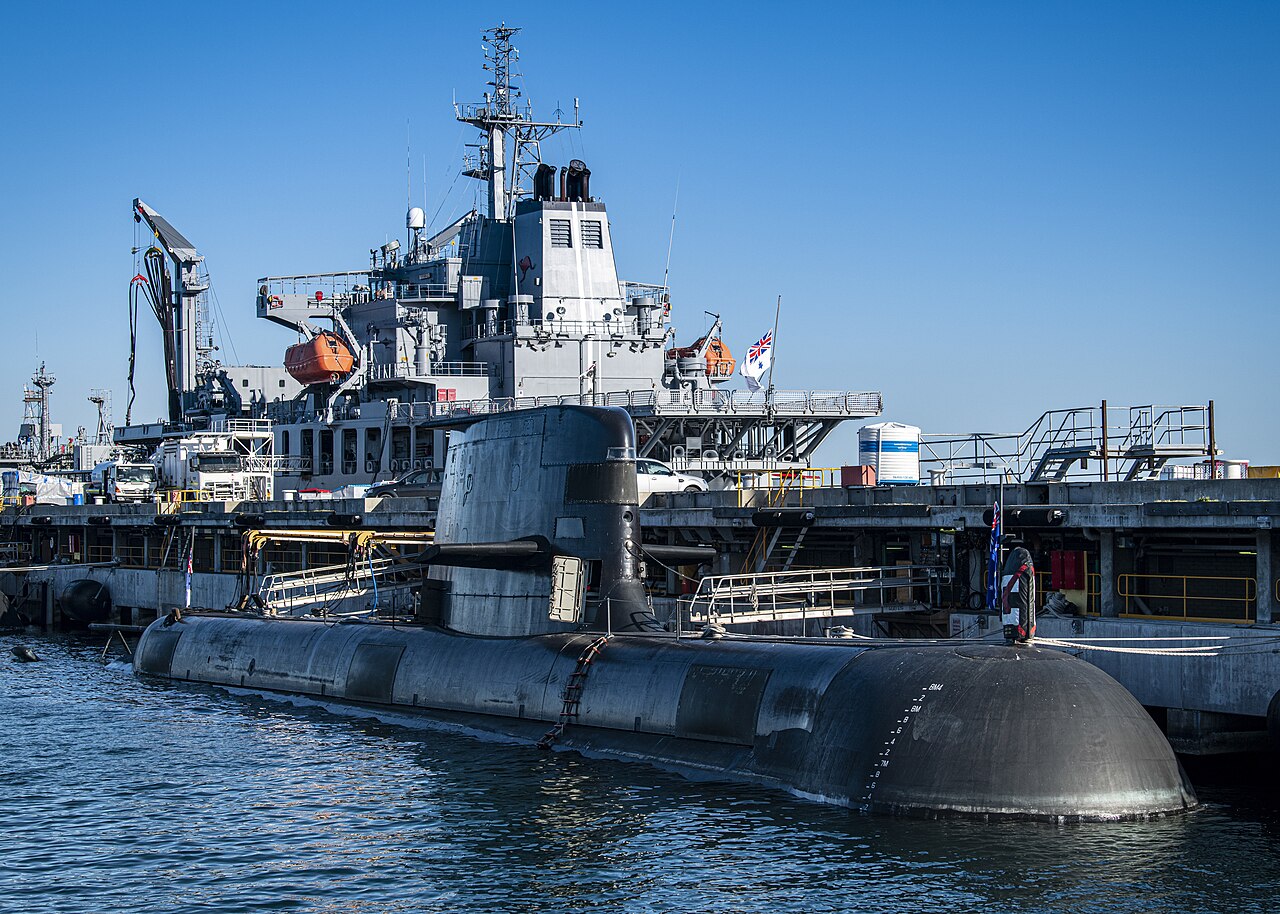
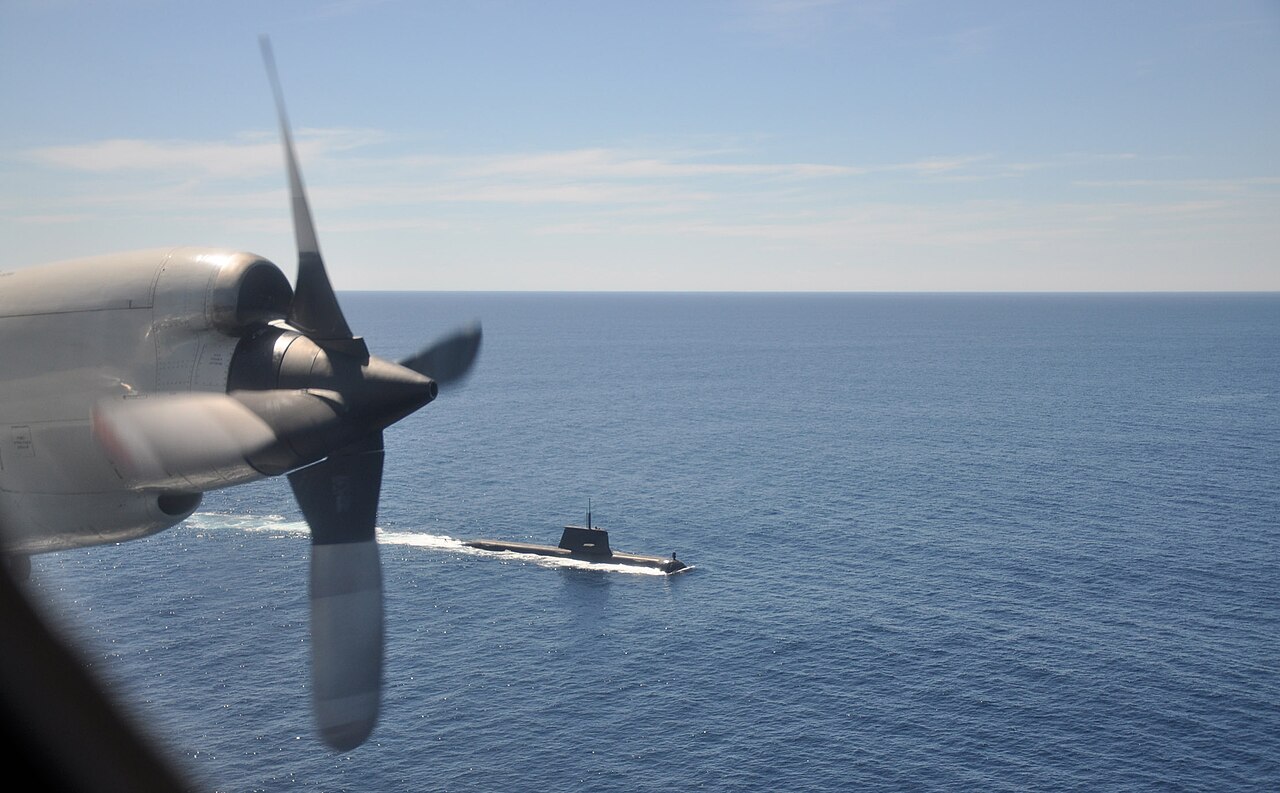
The USS Colorado's arrival at HMAS Stirling, and its designation as the first US boat assigned to the AUKUS rotational presence, converts Submarine Rotational Force-West from plan into physical reality ahead of the scheduled 2027 start. It brings forward the practical tests of the arrangement — nuclear stewardship, maintenance infrastructure at Henderson, and the sovereign workforce needed to sustain the boats — with recruitment shortfalls already flagged as a binding constraint. Australia's deterrence value from AUKUS will hinge less on hull numbers than on whether these support foundations mature on schedule.

US nuclear sub arrives aat HMAS Stirling for monh-long maintenance visit - Asia Pacific Defence Reporter

GNews: nuclear submarine · 2026-10-28source ↗P6P7

A US nuclear-powered submarine has begun a month-long maintenance period at HMAS Stirling in Western Australia, the kind of activity that underpins Submarine Rotational Force-West from 2027. These visits test Australian industry's ability to sustain nuclear boats, the adequacy of wharf and support infrastructure, and the regulatory and workforce arrangements that must be in place before rotational basing becomes routine. Each successful maintenance period also hardens Stirling's role as a forward hub for allied undersea operations in the Indian Ocean approaches.

US nuclear submarine arrives in Perth under AUKUS - 7NEWS

GNews: AUKUS · 2026-10-28source ↗P6P7

A US nuclear-powered submarine's arrival at Western Australia marks a further step in operationalising AUKUS Pillar One, under which American and British boats are to rotate through HMAS Stirling ahead of Australia acquiring its own Virginia-class vessels. Each visit tests the maintenance infrastructure, workforce and nuclear-stewardship arrangements Australia must master before Submarine Rotational Force-West begins, and it deepens the US submarine presence in the Indian Ocean within range of key Southeast Asian chokepoints. It also entrenches Australia's exposure to American force posture decisions and strengthens Perth's status as a strategic target in any regional contingency.

First boat identified for deployment for AUKUS' Submarine Rotational Force-West - PS News

GNews: AUKUS · 2026-10-28source ↗P6P7

Naming the first boat for Submarine Rotational Force-West moves AUKUS Pillar One from agreement to execution, with a US nuclear-powered attack submarine slated to rotate through HMAS Stirling in Western Australia from 2027. It commits Australia to delivering the infrastructure, maintenance workforce and nuclear-stewardship arrangements at Henderson and Stirling on a fixed timetable, and establishes a persistent allied submarine presence on Australia's Indian Ocean approaches. It also deepens Australia's exposure to US force-posture decisions and to Beijing's response to sustained SSN operations from the west coast.

Federal government open to recruiting Pacific Islanders into Australian Defence Force - National Indigenous Times

GNews: Australia defence · 2026-10-28source ↗P4P7

Recruiting Pacific Islanders into the ADF strengthens Australia's demographic and military linkages with the Pacific, offsetting marginal ADF manning shortfalls and embedding cultural/institutional ties that reinforce regional allegiance. This is part of Australia's broader strategy to contest Chinese influence in the Pacific via soft security measures and people-to-people connection.

AUKUS: the view from Washington - The Australian

GNews: The Australian · 2026-10-28source ↗P6P7

A Washington-focused analysis of AUKUS signals US commitment perspective and potential friction points, but without explicit new policy commitments, funding decisions, or delivery setbacks, it reflects strategic thinking rather than concrete capability movement. For Australia, understanding US domestic political and military opinion on AUKUS is important to gauge partner reliability, but this article alone does not shift the core delivery timeline or funding outlook.

‘Rock solid’: Top British adviser backs AUKUS deal - The Australian

GNews: AUKUS · 2026-10-28source ↗P6P7

UK senior-level reaffirmation of AUKUS commitment is significant reassurance against the collapse scenario, which has gained traction due to submarine-transfer delays and cost escalation. This represents high-level political buy-in from a core AUKUS partner, which stabilizes Australia's maritime defence roadmap and alliance credibility.

US sub signals AUKUS has arrived - The Australian

GNews: The Australian · 2026-10-28source ↗P6P7

A US submarine arrival signals active AUKUS engagement and validates the partnership's operational credibility at a critical moment when the program faces cost, schedule, and technical scrutiny. This strengthens Australian maritime defence posture (Pillar 6) and reinforces the US alliance commitment (Pillar 7), directly countering collapse risk.

AUKUS on track for Australia subs in early 2030s, Marles says - The Jakarta Post

GNews: AUKUS · 2026-10-28source ↗P6P7

Confirmation by Australia's Defence Minister that AUKUS submarine delivery remains on schedule for the early 2030s is a concrete reassurance on Australia's largest strategic-capability acquisition. This development shores up a critical pillar of Australia's maritime-denial capability and alliance credibility, directly mitigating the risk of programme failure that would leave Australia facing the 2035–2040 gap with inadequate undersea defence.

Inside the US nuclear-powered sub setting a milestone in WA - AFR

GNews: AFR · 2026-10-28source ↗P6P7

US nuclear submarine port visits to Western Australia demonstrate sustained American Indo-Pacific operational commitment and deepen interoperability infrastructure essential to AUKUS credibility. Such milestone operations signal alliance resolve at a time when the AUKUS submarine program faces technical and schedule risks.

US nuclear submarine docks ahead of AUKUS rotations - SMH.com.au

GNews: nuclear submarine · 2026-10-28source ↗P6P7

A US nuclear-powered submarine has docked in Australia as preparation advances for the rotational presence of American and British boats at HMAS Stirling from 2027 under AUKUS Pillar One. Each visit tests the maintenance, security, nuclear-stewardship and workforce arrangements Australia must have in place before hosting Submarine Rotational Force-West, and demonstrates incremental progress on the pillar of AUKUS most exposed to US production constraints and political uncertainty. For Western Australia it also signals the infrastructure and personnel build-up that will make Stirling a central node in allied undersea operations in the Indian Ocean.

US nuclear submarine docks at HMAS Stirling near Rockingham, Western Australia ahead of AUKUS rotations - The Age

GNews: nuclear submarine · 2026-10-28source ↗P6P7

A US nuclear-powered submarine berthing at HMAS Stirling marks another step toward Submarine Rotational Force-West, under which US and UK boats are to operate from Western Australia from 2027. The visits test maintenance infrastructure, nuclear safety and regulatory arrangements, and Australian workforce readiness — the practical prerequisites for hosting rotational submarines. It also deepens Australia's entanglement in US force posture in the Indian Ocean, raising both deterrence value and the political costs of any future AUKUS slippage.

Nuclear-powered sub arrives at Perth naval base - ABC listen - ABC News & Headlines – Australian Broadcasting Corporation

GNews: ABC News · 2026-10-28source ↗P6P7

This marks concrete progress on AUKUS Pillar II—the cornerstone of Australia's submarine modernisation and Indo-Pacific deterrence posture. Successful integration of a nuclear submarine into Australian operations strengthens alliance credibility and deepens Australia's Maritime Defence capability (Pillar 6) and Alliance resilience (Pillar 7).

US nuclear sub sparks security blitz at WA naval base - The West Australian

GNews: nuclear submarine · 2026-10-28source ↗P6P7

US nuclear submarine operations at an Australian naval base exemplify deepening military integration between core AUKUS partners and signal sustained US commitment to the Indo-Pacific, directly supporting Australia's alliance pillar and maritime defence posture. The security measures and operational activity reinforce the institutional and tactical foundation on which AUKUS submarine cooperation and broader Australian-US defence coordination depend.

An American Nuclear Submarine Is Dropping Anchor in Australia - The National Interest

GNews: nuclear submarine · 2026-10-27source ↗P6P7

A US nuclear submarine port call in Australia reinforces the operational reality of the US–Australia alliance and demonstrates US willingness to project power in the Indo-Pacific despite strategic pressures. This visibility of interoperability and forward presence helps anchor AUKUS credibility and signals to Beijing that the US–Australia–UK partnership remains functionally integrated.

Japan, Australia, US should build a second-island-chain air bridge

ASPI The Strategist · 2026-10-27source ↗P6P7

The article proposes a concrete capability—a peacetime air bridge with overflight rights, refuelling stations, and dispersed supply nodes—that directly enhances Australia's role in allied defence of the second island chain and Taiwan contingency. This amplifies Pillar 7 (Alliance) integration and Pillar 6 (Maritime Defence) by embedding Australia in a US–Japan logistics network that deters Chinese power projection.

UK Leads AUKUS Undersea Sensor Tests in San Diego - Mirage News

GNews: AUKUS · 2026-10-27source ↗P6P7

UK leadership of AUKUS undersea-sensor testing in San Diego confirms active, advanced collaboration within the alliance on maritime-domain awareness—a core enabler for AUKUS SSN operations. Demonstrated partner technical engagement and US facility access signal sustained commitment to the submarine-transfer program's success, offsetting recent delays and political uncertainty.

Marine Rotational Force Concludes Deployment to the Outback

USNI News · 2026-10-27source ↗P6P7

The MRF-D rotation is a cornerstone of US forward presence in the Indo-Pacific and a direct expression of alliance commitment to Australian defence. Certification as a Special Purpose MAGTF signals capability maturation and deepens interoperability with ADF, supporting Pillar 7 (Alliance) resilience and Pillar 6 (Maritime Defence) readiness in the Indo-Pacific.

AUKUS cannot build submarines with public relations - Pearls and Irritations

GNews: AUKUS · 2026-10-27source ↗P6P7

The AUKUS submarine programme is Australia's core pillar for maritime defence and alliance credibility in the Indo-Pacific. If delivery slips or the programme falters, Australia's operational submarine numbers remain dangerously low (currently 6 ageing Collins-class boats with limited availability), leaving a critical capability gap during the period of maximum China strategic competition.

Aukus continues at pace with announcement of first US sub assigned to rotational force - Forces News

GNews: AUKUS · 2026-10-27source ↗P6P7

Naming the first US submarine assigned to Submarine Rotational Force-West moves AUKUS Pillar One from agreement to implementation, with rotational basing at HMAS Stirling near Perth from 2027. For Australia, it brings forward the practical work — infrastructure, maintenance capacity, sustainment workforce and nuclear stewardship arrangements — that must be in place before sovereign Virginia-class boats arrive in the 2030s. It also deepens the operational entanglement of Australian and US undersea forces in the Indian Ocean approaches, a commitment that carries both deterrent value and escalation exposure.

US Navy names USS Colorado as first AUKUS submarine based in Australia - Navy Lookout

GNews: nuclear submarine · 2026-10-27source ↗P6P7

Naming USS Colorado as the first US Virginia-class boat to be based in Australia converts the Submarine Rotational Force-West concept into a specific, scheduled presence at HMAS Stirling, and with it the infrastructure, maintenance and workforce obligations Australia has committed to. It brings forward the practical test of whether Henderson and Western Australian support facilities can sustain nuclear-powered submarine operations years before Australia owns its own boats. It also deepens the US operational footprint in the Indian Ocean approaches, with the attendant questions of basing access, command arrangements and strategic signalling to Beijing.

Early arrival for first AUKUS nuclear sub to Australia - Michael West Media

GNews: AUKUS · 2026-10-27source ↗P6P7

The first AUKUS-related nuclear-powered submarine presence in Australia is set to begin earlier than previously scheduled, bringing forward the timeline for rotational operations centred on HMAS Stirling in Western Australia. An earlier start compresses the window for completing wharf, maintenance and nuclear-stewardship infrastructure, and for building the regulatory and skilled-workforce base Australia needs to host and eventually operate such boats. It also brings forward the strategic signalling effect — a persistent allied undersea presence on Australia's west coast — and the associated political and sovereignty questions about control and basing.

Australia advances readiness for Submarine Rotational Force - West in 2027 - Australian Submarine Agency

GNews: nuclear submarine · 2026-10-27source ↗P6P7

This article signals concrete progress on Australia's AUKUS Pillar II commitments, with the Submarine Rotational Force–West achieving operational readiness by 2027. This directly strengthens Maritime Defence (Pillar 6) and Alliance cohesion (Pillar 7), demonstrating that Australia is locking in a sustained Indo-Pacific submarine presence and reinforcing deterrence against both Chinese expansion and scenarios of ally withdrawal.

USS Colorado to Sail into AUKUS History as 1st U.S. Nuclear Submarine for Australia. Will Arrive Late 2027 - EurAsian Times

GNews: nuclear submarine · 2026-10-27source ↗P6P7

The USS Colorado delivery represents the first concrete materialization of AUKUS Pillar I submarine commitments, a foundational capability for Australia's maritime defence posture and Indo-Pacific deterrence. A confirmed late-2027 arrival date reduces political and programme risk, anchoring Australia's nuclear submarine transition and strengthening alliance credibility in a contested Indo-Pacific.

First US sub bound for Australia named; Trump dangles $1m reward - The Daily Telegraph

GNews: nuclear submarine · 2026-10-27source ↗P6P7

Naming the first US submarine slated for rotational basing in Australia moves AUKUS Pillar One from agreement to execution, with Submarine Rotational Force-West at HMAS Stirling the vehicle for building Australian sustainment skills ahead of any Virginia-class sale. The practical test now shifts to infrastructure, maintenance workforce and berthing readiness at Garden Island, and to whether US boat availability holds given American production shortfalls. For Canberra, each confirmed deployment step reduces, but does not remove, the risk that the interim capability bridge to a sovereign submarine fleet slips.

Five years after AUKUS was signed, the first submarine has been named - SBS

GNews: nuclear submarine · 2026-10-27source ↗P6P7

The naming of the first AUKUS submarine is a symbolic and programmatic milestone confirming the UK–US–Australia trilateral is advancing the attack-submarine transfer, reinforcing allied commitment to Australian maritime capability. This demonstrates forward momentum on a cornerstone Indo-Pacific deterrent platform, improving Australia's ability to contest Chinese PLA naval dominance and sustain the alliance pillar.

US picks first nuclear submarine for AUKUS base in Australia - Nine.com.au

GNews: nuclear submarine · 2026-10-27source ↗P6P7

The United States has identified the first nuclear-powered attack submarine to be stationed at HMAS Stirling in Western Australia, converting the AUKUS Submarine Rotational Force-West concept into a scheduled force-posture commitment. It brings forward the practical demands on Australia — reactor-safety regulation, berthing and maintenance infrastructure, and the trained workforce needed to sustain visiting boats — well ahead of any sovereign Virginia-class purchase. It also deepens the operational integration of Australian and US undersea forces in the Indian Ocean approaches, with the attendant questions of basing access and escalation exposure.

US assigns first nuclear-powered sub to Australian base - AFP.com

GNews: nuclear submarine · 2026-10-27source ↗P6P7

The United States has assigned a nuclear-powered attack submarine to an Australian base, marking the first such permanent allocation and a tangible step in Submarine Rotational Force-West at HMAS Stirling. It commits Australia to hosting and sustaining nuclear-powered boats well before any Virginia-class sale, accelerating demands on Western Australian infrastructure, skilled maintenance workforces and nuclear stewardship arrangements. It also deepens the operational entanglement of Australian basing with US undersea capability in the Indo-Pacific, with consequences for both deterrence and sovereign control of access.

First AUKUS nuclear sub to come to Australia revealed - The Canberra Times

GNews: AUKUS · 2026-10-26source ↗P6P7

Naming the first nuclear-powered submarine slated to come to Australia converts an AUKUS commitment into a scheduled, trackable force-posture step, with HMAS Stirling in Western Australia as the intended host for rotational presence. The practical test now shifts to Australian readiness — berthing, maintenance infrastructure, nuclear stewardship regulation and trained crews — which must be in place before any sustained operations. It also signals to the region that allied submarine activity in the Indian Ocean and approaches to Southeast Asia will increase well before Australia owns its own boats.

First US nuclear sub bound for Australia; Trump unleashes brutal spray on TV host - Toowoomba Chronicle

GNews: nuclear submarine · 2026-10-26source ↗P6P7

The first US nuclear-powered submarine heading to Australia marks the shift of AUKUS Pillar One from agreement to physical presence, laying the groundwork for rotational deployments at HMAS Stirling and the associated infrastructure, nuclear stewardship and workforce requirements. It commits Australia to hosting and sustaining nuclear propulsion well before any Virginia-class transfer, and signals to Beijing a deepening US submarine footprint in the Indian Ocean approaches. Delivery timelines, host-nation support and local crew training now become the practical measures of whether the capability pathway holds.

First US submarine assigned to SRF-West - Australian Submarine Agency

GNews: nuclear submarine · 2026-10-26source ↗P6P7

The assignment of the first US nuclear-powered submarine to Submarine Rotational Force-West marks the shift of AUKUS Pillar 1 from planning to practice at HMAS Stirling in Western Australia. It commits Australia to hosting, sustaining and crewing arrangements years ahead of any Virginia-class sale, testing whether local infrastructure, nuclear stewardship and workforce can meet the 2027 rotational schedule. It also deepens the operational presence of US submarines in the Indian Ocean approaches, with the strategic exposure and alliance obligations that entails.

AUKUS: USS Colorado Announced as First Submarine for SRF – West - Naval News

GNews: AUKUS · 2026-10-26source ↗P6P7

USS Colorado has been identified as the first US Navy submarine to be assigned to Submarine Rotational Force – West, the rotational presence of American and British boats at HMAS Stirling in Western Australia from 2027. Naming a specific hull moves SRF-West from agreement to execution, and places the onus on Australia to deliver the infrastructure, maintenance workforce and nuclear-stewardship arrangements at Henderson and Stirling on schedule. It also deepens the practical US submarine presence in the Indian Ocean approaches well before any Virginia-class transfer to Australia.

AUKUS: USS Colorado Announced as First Submarine for SRF – West

Naval News · 2026-10-26source ↗P6P7

The designation of USS Colorado as the first Virginia-class boat assigned to Submarine Rotational Force-West puts a specific hull and date against AUKUS Pillar One, with rotations from HMAS Stirling due to begin in late 2027. It converts a framework commitment into a scheduled US submarine presence in Western Australia, driving infrastructure, maintenance and workforce milestones at Henderson and Garden Island that Australia must meet. It also signals continued US follow-through on AUKUS at a time when the pace of Virginia-class production and the eventual sale of boats to Australia remain the central uncertainties.

Pentagon picks USS Colorado as first nuclear-powered submarine for joint Australia base - Washington Times

GNews: nuclear submarine · 2026-10-26source ↗P6P7

The Pentagon has named USS Colorado as the first US nuclear-powered attack submarine to be based with Australian forces, giving concrete form to Submarine Rotational Force-West at HMAS Stirling. It accelerates Australian crew training, maintenance and infrastructure readiness ahead of the planned Virginia-class purchase, and embeds a persistent US undersea presence on Australia's west coast. It also deepens Australia's operational and political entanglement with US force posture in the Indian Ocean and beyond.

Australia news LIVE: US names first submarine to deploy to WA under AUKUS; Plibersek asked to reassure young women public life is still safe after Haines attack - SMH.com.au

GNews: AUKUS · 2026-10-26source ↗P6P7

This article signals concrete forward movement on AUKUS Pillar II, with the US navy publicly committing and naming a submarine for deployment to Australian waters. The announcement reinforces alliance cohesion on the Indo-Pacific strategic architecture, reducing uncertainty about whether the submarine-transfer commitment will slip or collapse.

U.S. Navy Taps Attack Boat for 2027 Australian AUKUS Assignment - USNI News

GNews: AUKUS · 2026-10-26source ↗P6P7

The U.S. Navy has identified a specific Virginia-class attack submarine for the 2027 start of Submarine Rotational Force-West at HMAS Stirling, moving AUKUS Pillar One from commitment to scheduled force posture. It anchors the timeline for Western Australia's infrastructure, maintenance and workforce build-up, which Australia must deliver to sustain rotational U.S. and UK boats before its own Virginia-class purchases arrive in the early 2030s. It also deepens the forward presence of allied undersea capability in the Indian Ocean approaches, a visible signal to Beijing and a commitment that will be read as a test of U.S. follow-through on the agreement.

The US has selected the first nuclear-powered submarine for rotation in Australia - UA.NEWS

GNews: nuclear submarine · 2026-10-26source ↗P6P7

Washington has named the first US nuclear-powered attack submarine to rotate through Australia, operationalising the Submarine Rotational Force-West arrangement at HMAS Stirling that underpins AUKUS Pillar One. It converts an in-principle commitment into a scheduled presence, driving near-term demands on Western Australian infrastructure, nuclear stewardship regulation and the Australian crews and technicians who must learn to sustain the boats. It also establishes a persistent allied undersea capability in Australia's west well before any Virginia-class transfer, with attendant signalling to Beijing about allied access and posture in the Indian Ocean approaches.

US designates first nuclear-powered submarine for rotational deployment to Australia - Anadolu Ajansı

GNews: nuclear submarine · 2026-10-26source ↗P6P7

The United States has named the first nuclear-powered attack submarine earmarked for rotational deployment to Australia, converting the AUKUS Submarine Rotational Force-West concept into a specific force assignment. It brings forward the practical demands on HMAS Stirling — infrastructure, nuclear stewardship, maintenance workforce and host-nation support — and gives Australian crews earlier hands-on exposure ahead of any Virginia-class sale. It also signals continued US commitment to the Pillar One timeline despite periodic doubts in Washington about submarine production rates.

Pentagon announces first US submarine joining Submarine Rotational Force-West

Defense News · 2026-10-26source ↗P6P7

The Pentagon has named USS Colorado as the first US Virginia-class boat assigned to Submarine Rotational Force-West, the rotational presence of four US and one UK fast-attack submarines at HMAS Stirling near Perth, with initial operating capability targeted for 2027. It converts AUKUS Pillar One from schedule commitments into a physical US submarine presence on Australian soil, accelerating the sustainment infrastructure, workforce and regulatory experience Australia needs before it owns its own boats. It also deepens Australia's operational entanglement with US undersea warfare posture in the Indo-Pacific, raising both the deterrence value and the exposure of Western Australia as a strategi

USS Colorado to become first U.S. submarine assigned to AUKUS rotational force in Australia - Defence Industry Europe

GNews: nuclear submarine · 2026-10-26source ↗P6P7

The USS Colorado has been designated the first US attack submarine assigned to the rotational force at HMAS Stirling in Western Australia, converting AUKUS Pillar One from agreement to physical presence. It brings forward the practical tasks Australia must master — nuclear-qualified maintenance crews, reactor-safety regulation, and berthing and logistics infrastructure at Henderson — well before any Virginia-class sale. It also establishes an enduring US undersea presence on Australia's west coast, with the deterrence benefits and alliance-entanglement questions that follow.

Britain Plans 12 SSN-AUKUS Attack Submarines From a BAE Systems Yard Already Over Capacity, Plus 5 for Australia, at One Boat Every 18 Months - 19FortyFive

GNews: AUKUS UK Britain · 2026-10-26source ↗P6P7

The article reports a concrete industrial constraint—BAE's shipyard is already over capacity—that directly threatens AUKUS submarine delivery timelines to Australia. This is the critical path for Australian maritime defence modernisation; delays or collapse of the program materially degrade Pillar 6 (Maritime Defence) and undermine Pillar 7 (Alliance credibility) by signalling partner inability to execute.

Beyond the Pukpuk Treaty, Australia’s Strategic Footprint in PNG Grows

The Diplomat · 2026-10-26source ↗P6P7

Australia will station a 130-strong ADF combat group in Papua New Guinea on rolling three-month rotations, fund $77 million in PNG Defence Force infrastructure, and open ADF recruitment to Papua New Guinean citizens from November 16 ahead of a 2027 pilot intake. This converts the Pukpuk Treaty from a signed alliance into a persistent Australian military presence on the approaches to Australia's north, with the recruitment pathway creating personnel ties that are harder for a future PNG government to unwind. It also raises the cost and complexity of any Chinese attempt to secure security access in PNG, while modestly easing ADF recruitment shortfalls.

Protecting shared prosperity: WA’s role in maritime security, AUKUS, and Indo-Pacific stability

Perth USAsia Centre · 2026-10-26source ↗P6P7

This roundtable reaffirms Australia's strategic engagement with AUKUS partners and regional stakeholders on maritime security, signalling alliance commitment at a senior diplomatic level. The Perth USAsia Centre's role in convening Southeast and South Asian officials on AUKUS demonstrates sustained institutional backing for the programme and regional alliance architecture.

Australia · Defence· 31

AI may help, but it’s no substitute for sturdy cyber defence

ASPI The Strategist · 2026-10-30source ↗P1P3

The Australian Signal Directorate's 2025–26 Annual Cyber Threat Report reveals a 20% year-on-year increase in cyber incidents (1,500+), with attackers exploiting known weaknesses faster than organisations patch them. This signals a maturation of state-sponsored and automated cyber exploitation, directly eroding Australia's digital resilience across critical infrastructure, defence systems, and resource-sector networks—core pillars of strategic sovereignty and industrial-base integrity.

‘Uncontrolled warrior culture’: Australia’s special forces under fire in new inquiry - Murdoch University

GNews: Australia defence · 2026-10-30source ↗P2P3

This inquiry into ADF special forces culture and discipline directly affects Australian military institutional health and interoperability with AUKUS partners (UK/US). Reputational damage to elite ADF units undermines confidence in the professionalism and operational integrity that underpin deep defence partnerships, particularly critical as AUKUS submarine integration accelerates.

‘Uncontrolled warrior culture’: Australia’s special forces under fire in new inquiry - The Conversation

GNews: The Conversation · 2026-10-30source ↗P6

An inquiry into ADF special forces culture and warrior-ethos misconduct directly affects force cohesion, command discipline, and international partner confidence in Australian military professionalism—critical for AUKUS submarine crew integration and Indo-Pacific alliance credibility. Sustained cultural issues could erode US/UK confidence in ADF institutional maturity and readiness for advanced capability transfer.

Australian Defence Force admits quarter of troops not medically fit for deployment - 7NEWS

GNews: Australia defence · 2026-10-29source ↗P1P6

A quarter of ADF personnel assessed as medically unfit for deployment directly erodes operational readiness and effective force strength, reducing deployable capability below reported establishment numbers. This structural personnel-health deficit undermines Australia's ability to sustain sustained maritime or expeditionary operations in a high-intensity scenario, particularly affecting Pillar 6 (Maritime Defence) and Pillar 1 (Resource Sovereignty) by reducing the force available for forward positioning or supply-line protection.

Mines, drones, supplies: Australia lets adversaries know what Ghost Shark can do - The Strategist | ASPI's analysis and commentary site

GNews: AUKUS · 2026-10-29source ↗P3P6P8

Ghost Shark demonstrates Australia's amphibious and littoral warfare capability—critical for Northern Arc defence and contested-island scenarios. Public disclosure of exercise scope, drone integration, mine-laying tactics, and supply-chain operations signals ADF readiness but also reveals operational doctrine to potential adversaries including China.

Mines, drones, supplies: Australia lets adversaries know what Ghost Shark can do

ASPI The Strategist · 2026-10-29source ↗P3P7

Ghost Shark represents an autonomous submarine capability that is jointly developed and deployable, demonstrating progress on AUKUS Pillar II collaboration and technological maturation. The public disclosure serves both as deterrence messaging to China and as reassurance to AUKUS partners that Australia is advancing sovereign and allied defence technology, supporting the industrial base (Pillar 3) and alliance cohesion (Pillar 7).

Nuclear subs a millstone around the Hunter's neck: union submission - Newcastle Herald

GNews: AUKUS · 2026-10-29source ↗P3P6P7

The AUKUS nuclear submarine program is Australia's primary means of closing the submarine capability gap and underpinning maritime defence posture in the Indo-Pacific. Union and regional opposition to Hunter-based infrastructure introduces domestic political friction and construction delays that directly threaten delivery schedules and cost overruns, compounding existing supply-chain and partner-capacity constraints.

Missile defence: Australia’s military’s $10 billion plan to protect itself but leave the rest of us exposed - Strategic Analysis Australia

GNews: Australia defence · 2026-10-29source ↗P3P6

Australia is committing $10 billion to missile defence infrastructure, signalling sustained investment in defensive military capability against regional peer threats (primarily China). The article's critical framing—that the system protects military assets but leaves civilian infrastructure exposed—highlights a gap in whole-of-nation preparedness, but the procurement itself advances Industrial Base (Pillar 3) and Maritime Defence (Pillar 6) readiness.

Defence launches leak probe after The West’s ADF cuts report - The West Australian

GNews: Australia defence · 2026-10-29source ↗P1P6

A leak about ADF personnel or capability cuts signals potential force-structure reductions that could degrade Australia's operational readiness and defence posture during a period of heightened Indo-Pacific tension. The leak probe itself indicates internal policy friction around defence resourcing, but the underlying cuts (if confirmed) would directly reduce Pillar 6 (Maritime Defence) and Pillar 1 (Resource Sovereignty) metrics by shrinking available personnel and combat units.

Iron Dome-type missile shield would help nation’s defences - The Australian

GNews: The Australian · 2026-10-29source ↗P6

An Iron Dome-equivalent system would substantially strengthen Australia's air and maritime defence posture, closing a critical gap in layered air defence against aircraft, cruise missiles, and drones. This directly supports Pillar 6 (Maritime Defence) capability and reduces vulnerability to kinetic attack from the north, though the article does not report an actual commitment or funding decision.

‘Case closed’: ADF chief rules out action on SAS command failures - The Australian

GNews: The Australian · 2026-10-29source ↗P6

The ADF Chief's decision to close accountability proceedings on SAS command failures signals a permissive institutional culture toward leadership lapses in special operations. For an alliance-dependent maritime-defence posture, eroded internal discipline and external partner confidence in command standards directly weakens the cohesion and credibility required to execute AUKUS submarine integration and broader Indo-Pacific alliance operations.

Port Kembla 'still a top pick' of sites for nuclear subs base ahead of inquiry report - Illawarra Mercury

GNews: AUKUS · 2026-10-29source ↗P3P6

Port Kembla's endorsement as a leading site for nuclear submarine basing is a concrete step in AUKUS Pillar I implementation, directly supporting Australia's maritime defence capability and industrial-base readiness. Site selection and infrastructure planning are critical gating items for the 2030s–2040s attack submarine acquisition; progress here signals institutional momentum and reduces delivery-risk uncertainty.

Inquiry slams culture and command of Australia's SAS during Afghanistan war - ABC News & Headlines – Australian Broadcasting Corporation

GNews: Australia defence · 2026-10-28source ↗P6

An inquiry into SAS culture and command failures during Afghanistan reveals institutional weaknesses in Australia's elite special forces—a cornerstone of Maritime Defence and rapid-response capability. While the article does not directly affect force numbers or procurement, documented leadership and cultural dysfunction could degrade operational readiness and interoperability with AUKUS allies, undermining confidence in Australian defence command structures at a critical moment of Indo-Pacific tension.

National resilience starts with sovereign industrial capability - The Australian

GNews: AUKUS · 2026-10-28source ↗P1P3

The article directly addresses Australia's strategic vulnerability through lack of sovereign industrial capability, a foundational pillar for resource sovereignty and domestic industrial base resilience. Investment in domestically controlled manufacturing and resource processing strengthens Australia's strategic autonomy and reduces dependency on hostile or unstable external sources for critical inputs.

Iron Dome Down Under: Defence seeks anti-Chinese missile shield - The Australian

GNews: The Australian · 2026-10-28source ↗P3P6

Australia's pursuit of an advanced air-defence missile system addresses a critical capability gap in home-island and regional air defence, directly strengthening Pillar 6 (Maritime Defence) and industrial base integration. This capability development increases Australia's resistance to Chinese air/missile threats and raises the cost of any PLA power-projection strategy in the Indo-Pacific.

Australia’s $30 billion base boom needs scrutiny too

Lowy Institute · 2026-10-28source ↗P6P7

Australia is committing substantial capital to permanent military infrastructure optimised for AUKUS and US/UK force presence in the Indo-Pacific. This signals sustained commitment to allied integration and forward-basing in the face of Chinese power, while simultaneously raising fiscal and strategic exposure to US policy shifts or alliance fracture.

Navy faces ‘years-long’ maintenance crunch amid record-breaking, extended deployments

Breaking Defense · 2026-10-28source ↗P6

The article reveals a structural constraint on Australian Maritime Defence (Pillar 6): extended deployments abroad create maintenance trade-offs that reduce operational submarine and surface-ship availability. This directly undermines the foundation upon which AUKUS SSN-AUKUS must be built—if shore-based shipyard capacity is already strained, adding new-build submarine construction will force harder choices between operational support and modernization, risking AUKUS schedule or capability slips.

Navy autonomous fleet gets $12.5m upgrade under national strategy - The Australian

GNews: The Australian · 2026-10-28source ↗P3P6

The $12.5m upgrade to Australia's autonomous naval fleet signals investment in next-generation maritime capabilities and operational tempo innovation, directly supporting Maritime Defence (Pillar 6) modernisation. This development strengthens Australia's capacity to operate in contested Indo-Pacific waters and reduce crewing costs, supporting industrial-base and defence-posture resilience.

New innovation strategy to fast-track autonomous, undersea and quantum tech - The Australian

GNews: The Australian · 2026-10-28source ↗P3P6P8

Australia's fast-track innovation strategy in autonomous undersea and quantum technologies directly supports Pillar 3 (Industrial Base) and Pillar 6 (Maritime Defence) by strengthening sovereign capability in critical domains central to AUKUS submarine integration and Indo-Pacific superiority. Investment in these technologies reduces Australia's vulnerability to supply-chain disruption and accelerates the ADF's transition to next-generation warfare, though concrete capability timelines and budget allocations are not disclosed in the headline.

ADF needs to think of plentiful, not bespoke - The Australian

GNews: Australia defence · 2026-10-28source ↗P3P6

The article signals ADF strategic thinking toward industrial-base resilience and faster delivery cycles, moving away from sole reliance on bespoke AUKUS platforms. This directly supports Pillar 3 (Industrial Base) and Pillar 6 (Maritime Defence) by positioning Australia to hedge procurement risk and accelerate capability deployment.

Aurora Labs fuels defence propulsion expansion - The Australian

GNews: The Australian · 2026-10-28source ↗P3P6

Aurora Labs' propulsion expansion signals growth in Australia's sovereign defence-industrial capacity, particularly relevant to AUKUS submarine integration and reducing technological dependency. Strengthening domestic advanced-manufacturing capability in propulsion systems supports both Industrial Base (Pillar 3) and Maritime Defence (Pillar 6) resilience.

Where Bluebottles’ long watch pays off

ASPI The Strategist · 2026-10-28source ↗P6

Australia is operationalising indigenous uncrewed maritime surveillance capability (Bluebottle) with demonstrated 6+ month endurance and proven vessel-identification performance, extending persistent monitoring across archipelago and strategic sea lanes without crewed platform risk. This advances Pillar 6 (Maritime Defence) by providing low-cost, low-signature maritime domain awareness suited to distributed surveillance of approaches and choke points in the Indo-Pacific.

Australia appoints Kellie Parker as National Armaments Director - Defensehere

GNews: Australia defence · 2026-10-27source ↗P3P6

Kellie Parker's appointment as National Armaments Director represents a structural upgrade to Australia's defence industrial governance, particularly relevant to AUKUS delivery and domestic armaments strategy. The role consolidates procurement authority and industrial coordination in a period when Australia faces sustained pressure to accelerate submarine, missile, and advanced-capability production.

Defence recruits former Rio Tinto chief to spearhead military manufacturing push - The Mandarin

GNews: Australia defence · 2026-10-27source ↗P3P2

Recruiting an experienced resource-sector executive to lead military manufacturing reform suggests Defence is serious about building sovereign industrial capacity for AUKUS submarines and broader capability. This addresses a known vulnerability in Australia's ability to deliver the attack-submarine program and critical defence platforms without foreign delays.

Australia revamps critical minerals strategy, targeting refining edge over China - Mining Weekly

GNews: critical minerals · 2026-10-27source ↗P1P3P5

Australia's pivot toward critical-minerals refining capability directly advances Resource Sovereignty (Pillar 1) and Industrial Base (Pillar 3) by reducing dependency on Chinese processing and capturing value-add domestically. Strategic decoupling from China's refining monopoly strengthens Pillar 5 (Decoupling) and bolsters Australia's resilience in a contested Indo-Pacific, though execution timelines and capital requirements remain uncertain.

Australia introduces new legislation to protect Defence bases, personnel from drones - Defence Connect

GNews: Australia defence · 2026-10-27source ↗P6

This legislation directly addresses a growing asymmetric threat vector against ADF bases and personnel — drone intrusion and swarm attacks. By hardening Defence infrastructure against unmanned systems, Australia is closing a tactical capability gap that adversaries (particularly China's PLA, which has invested heavily in drone swarms) could exploit in a regional conflict.

Australia revamps critical minerals strategy, targeting refining edge over China - TradingView

GNews: critical minerals · 2026-10-27source ↗P1P3P5

Canberra has reoriented its critical minerals strategy from extraction toward domestic refining and processing, the segment of the supply chain where China holds near-monopoly control and has repeatedly demonstrated willingness to impose export restrictions. Building sovereign and allied refining capacity bears directly on the inputs for AUKUS submarine construction, guided weapons manufacturing and allied defence industrial bases. Delivery remains the open question: refining projects are capital-intensive and face Chinese price suppression, so the strategy's strategic value depends on sustained funding and offtake arrangements with the United States, Japan and Europe.

Former Rio chief takes on Canberra’s billion-dollar defence blob - The Australian

GNews: The Australian · 2026-10-26source ↗P2P3

Australia's defence industrial base and acquisition processes have been a critical bottleneck in AUKUS submarine delivery. A high-profile executive appointment to slash inefficiency in the 'defence blob' signals intent to compress timelines and improve industrial productivity — directly supporting Pillar 3 (Industrial Base) and the viability of the AUKUS program.

Former Rio Tinto executive tapped for major Defence role - AFR

GNews: AFR · 2026-10-26source ↗P1P3

Cross-sector movement of a major mining executive into Defence signals institutional integration of resource-security expertise into military strategy—particularly relevant for Pillar 1 (Resource Sovereignty) and industrial-base resilience. This reflects growing recognition that commodity supply, mining logistics, and strategic materials must align with Defence posture in a contested Indo-Pacific.

Ghost Sharks’ mines won’t be much use if Australia can’t act fast enough

ASPI The Strategist · 2026-10-26source ↗P6P7

Ghost Shark's confirmed mine-laying capability (12 covert mines per sortie, 3,200+ km range) strengthens Australia's maritime denial and archipelago defence without crew exposure, directly advancing Pillar 6 (Maritime Defence) autonomous capability. However, the article highlights a critical gap: Australia's political and operational decision-making speed may not match the tactical window required, raising questions about integration into force doctrine and readiness protocols.

The cracks in Australia’s defence policy: The Navy is being set up for failure - Crikey

GNews: Australia defence · 2026-10-26source ↗P6P3

The article exposes critical gaps in Australian Maritime Defence (Pillar 6) — personnel shortages, maintenance backlogs, and capability delays — that directly threaten operational submarine availability and naval deterrence. These systemic deficiencies compound the risk that AUKUS submarine transfers will not be matched by Australian capacity to crew, sustain, and deploy them, jeopardizing the alliance's credibility in the Indo-Pacific.

China · Military· 17

China & Taiwan Update, October 30, 2026 - Institute for the Study of War

GNews: PLA navy · 2026-10-31source ↗P6P7P8

Taiwan dynamics directly affect the Indo-Pacific balance and Australia's alliance security posture under AUKUS and Quad frameworks. However, a generic ISW update on China–Taiwan military activity without specific new escalations, capability thresholds, or Australian defence-policy responses does not move Australia's preparedness metrics or scenario probabilities materially.

China Expands Construction Of Type 071 Amphibious Warfare Ships To Guangzhou

Naval News · 2026-10-30source ↗P6P7

Type 071 ships are core platforms for amphibious-assault operations against Taiwan, and their serial expansion demonstrates sustained PLA investment in cross-strait power-projection capability. This concrete addition to the PLA's transport and landing-craft fleet narrows Australia's Indo-Pacific security margin and reinforces the military asymmetry driving Australian Defence and AUKUS strategy.

China’s Military Build-up Has Created ‘Pressure’ in Southeast Asia, Australian Defense Chief Says - The Diplomat – Asia-Pacific Current Affairs Magazine

GNews: Australia defence · 2026-10-30source ↗P6P7P8

The article documents PLA military expansion in Southeast Asia, which directly affects Australia's strategic depth, allied posture, and regional stability upon which the Indo-Pacific balance depends. Australian Defence Chief commentary on Chinese pressure signals that regional military competition is intensifying, raising the salience of Australia's own maritime defence capabilities and alliance commitments.

Army commander: China invasion of Taiwan by April remains real threat - Washington Times

GNews: China military · 2026-10-29source ↗P6P7

A serving US Army commander's public statement elevating Taiwan invasion risk raises the probability of the triggering event for Australia's most severe security scenario. Taiwan's fall or a US-China kinetic conflict would directly rupture Australia's alliance architecture, degrade the Indo-Pacific balance, and force immediate rearmament and strategic pivoting.

Taiwan 2027 conflict window remains valid, Army Pacific commander says - Breaking Defense

GNews: Taiwan conflict · 2026-10-29source ↗P6P7P8

A senior US military commander's reiteration of a 2027 Taiwan conflict window directly informs Australia's maritime defence posture, AUKUS submarine timing, and Northern Arc preparedness. If the 2027 window is treated as valid by US strategic planning, Australian defence investment, procurement cycles, and alliance coordination must calibrate to that threat timeline.

Taiwan flags 'obvious' threat from 50 Chinese vessels in wide sweep of waters - Reuters

GNews: PLA navy · 2026-10-29source ↗P6P7P8

Taiwan's defence ministry reported roughly 50 Chinese navy and coast guard vessels operating across waters spanning the first island chain, one of the largest regional maritime deployments in years and conducted without Beijing announcing a formal exercise. The scale and the refusal to label it an exercise signal a shift toward normalising large-scale pressure operations that compress warning time for Taiwan and its partners. For Australia, it raises the prospect of short-notice contingencies in the East Asian littoral, tests ADF and allied intelligence, surveillance and reconnaissance coverage, and underlines the sea lines of communication exposure that drives force posture and northern bas

ANALYSIS China's naval moves beyond first island chain show reach: Analysts - Focus Taiwan

GNews: PLA navy · 2026-10-29source ↗P6P7P8

China's demonstrated naval reach beyond the first island chain directly erodes Australia's strategic buffer in the Indo-Pacific and complicates AUKUS force-posture planning, which assumes allied naval dominance in contested waters. This capability expansion is the core enabler for coercive scenarios against Taiwan and neighbouring democracies, and signals to Australia's alliance partners that the military balance is shifting toward Beijing faster than anticipated.

Taiwan says vast Chinese armada of 50 vessels spotted near island - The Independent

GNews: PLA navy · 2026-10-29source ↗P6P7P8

Taiwan reports around 50 Chinese naval and coast guard vessels operating in waters near the island, one of the larger concentrations observed outside a declared exercise window. Large-scale deployments of this kind compress warning time and blur the line between pressure operations and preparation for blockade-style action, which is the contingency most likely to draw Australia into a regional crisis. For Canberra, it reinforces the premium on maritime domain awareness, long-range strike and sustainment capacity, and on clarity about what support the US would expect from Australian forces and northern bases.

Aus flags China's military buildup, warns of pressure on Southeast Asia | 'There's not an explanation from China' | Inshorts - Inshorts

GNews: China military · 2026-10-29source ↗P6P7P8

Australia's public flagging of China's military buildup and pressure on Southeast Asia reinforces Australian strategic concern over the Northern Arc and validates alliance coordination messaging, but the article provides no concrete new capability data, procurement decision, or policy pivot that directly alters Australia's preparedness posture. The statement underscores the rationale for Pillar 7 (Alliance) and Pillar 8 (Northern Arc) readiness, yet without quantified Australian defence responses or AUKUS/partner commitment signals, impact remains rhetorical.

Aus flags China's military buildup, warns of pressure on Southeast Asia | 'There's not an explanation from China' | Inshorts - Inshorts

GNews: China military · 2026-10-29source ↗P6P7P8

Australia's public flagging of China's military buildup and pressure on Southeast Asia reinforces alignment with Indo-Pacific partners and signals Australian strategic awareness, but the article does not report new Australian defence investments, capability changes, or concrete policy responses that would shift preparedness metrics. The warning is a messaging/diplomatic act, not a capability or commitment development.

China’s military creating ‘pressure’ in region, Australian defense chief says - The Japan Times

GNews: China military · 2026-10-29source ↗P6P7

An Australian defence chief's statement about China's military pressure in the region signals Australia's strategic assessment of the threat environment and reinforces the rationale for AUKUS and regional alliance posturing. However, the article is reported secondhand through a Japanese outlet and contains no new quantitative data on PLA capabilities, Australian spending, or concrete policy shifts that would move preparedness metrics.

Australian defence chief says China military buildup creating 'pressure' in Southeast Asia - CNA

GNews: China military · 2026-10-29source ↗P5P6P7

An Australian defence chief's public assessment of Chinese military pressure in Southeast Asia reflects Australia's monitoring of regional destabilization and the narrowing strategic space for allied maneuver. The statement underscores Australia's Indo-Pacific security dilemma: rising PLA capability directly constrains Australian alliance options and increases urgency for accelerated defence posture and AUKUS delivery.

Australian defence chief says China military build-up creating ‘pressure’ in South-east Asia - The Straits Times

GNews: Australia defence · 2026-10-29source ↗P6P7P8

The Australian defence chief's public statement on China's military build-up in South-east Asia reinforces Australia's strategic focus on the Indo-Pacific balance and alliance coordination, but the statement itself does not report a concrete change in Australian capability, AUKUS delivery, alliance commitments, or external actor behaviour that would shift preparedness metrics. This is positioning and threat assessment rhetoric rather than a strategic event.

'You can draw the inference': Australia reveals concerns about Chinese ballistic missile test from nuclear sub - Crikey

GNews: nuclear submarine · 2026-10-29source ↗P6P7P8

Australia's public acknowledgment of Chinese SSBN ballistic-missile capability development underscores an expanding PLA nuclear threat, narrowing Australia's conventional-defence margin in the Indo-Pacific. This motivates greater investment in AUKUS submarine acquisition and allied interoperability to maintain deterrence, but also signals to Canberra that the strategic environment is hardening faster than platform deliveries may mature.

China’s New Trimaran Submarine: 16 Missiles And An Unconventional Design

Naval News · 2026-10-28source ↗P6P7

China's serial production of multiple submarine classes, including an unconventional trimaran design with extended missile payload, represents a material expansion of PLA underwater strike capacity in the Indo-Pacific. This directly threatens Australian maritime defence posture and raises the credible coercive/kinetic capability available to Beijing in a Taiwan contingency, which would draw Australia into an alliance test and degrade the regional balance on which Australian security depends.

How Would China Actually Govern Taiwan?

The Diplomat · 2026-10-27source ↗P6P7P8

China's scholarly consensus on Taiwan governance—explicit PLA stationing, armed-forces disbandment, and three-to-five-year quasi-military rule post-unification—reveals a maturing coercive-reunification strategy that could lower kinetic escalation risk but increase pressure on Taiwan via institutional/political means. This directly affects Australia's alliance calculus with the US and Taiwan, the regional security architecture, and the probability of a Taiwan crisis requiring AUKUS response.

AI-enabled emergency management: a hint at PLA’s future AI integration

ASPI The Strategist · 2026-10-26source ↗P6P7

The PLA's systematic deployment of AI-enabled command-and-control systems via its Ministry of Emergency Management signals rapid operationalisation of intelligentised warfare capabilities. Australia's maritime and air defence platforms, designed for adversaries with slower C2 integration, face accelerating obsolescence if the PLA achieves real-time, AI-driven targeting and coordination across its fleet and air force.

Trade· 9

Japan's Sojitz to import rare earth yttrium from Malaysia

Nikkei Asia · 2026-10-30source ↗P1P5

This article signals accelerating decoupling of rare-earth supply chains from Chinese control, with Japan (a key AUKUS ally and Indo-Pacific partner) securing yttrium from Malaysia rather than China. For Australia, this demonstrates that alternative supply chains for critical minerals are maturing, reducing the economic coercion risk China can exert over allied nations and supporting the broader strategic goal of resource sovereignty and industrial resilience across the Quad.

Australia's Rare Earths Need Signed Contracts as Chinese Prices Slide - Crux Investor

GNews: critical minerals · 2026-10-29source ↗P1P5

Securing long-term rare-earth contracts protects Australia's Resource Sovereignty (Pillar 1) and advances strategic Decoupling (Pillar 5) from Chinese supply-chain dependence. Rare earths are critical for defence electronics, renewable energy, and advanced manufacturing; locking in offtake agreements reduces Australia's exposure to Chinese price manipulation and supply coercion.

Andrew Forrest digs in over iron ore talks with ‘best mate’ China - AFR

GNews: AFR · 2026-10-28source ↗P1P5

Forrest's resumption of high-level dialogue with Chinese partners on iron ore—Australia's largest export commodity and fiscal pillar—indicates pragmatic decoupling limits and points to ongoing commercial interdependence despite geopolitical tension. The engagement may stabilise export demand and prices, supporting Australia's fiscal engine and resource-sovereignty revenue, but underscores Australia's continued economic exposure to China and limited structural diversification.

EU investment plans could accelerate Australia’s critical minerals development - Oil & Gas 360

GNews: critical minerals · 2026-10-27source ↗P1P5

EU investment in Australian critical minerals development directly strengthens Australia's Resource Sovereignty pillar and Decoupling agenda by diversifying capital flows away from China-dependent financing and expanding Australia's capture rate for minerals essential to energy transition. This reduces Australia's structural dependence on Chinese downstream processing and creates alternative revenue streams and geopolitical leverage in a contested Indo-Pacific.

EU plans massive investment in Australia’s critical minerals to cut dependence on China - EUobserver

GNews: critical minerals · 2026-10-27source ↗P1P5

EU investment in Australian critical minerals directly strengthens Australia's Resource Sovereignty (Pillar 1) and Decoupling (Pillar 5) by creating alternative buyers and reducing dependence on China-controlled supply chains. This diversifies Australia's critical-mineral export base and reinforces the Western alliance's collective effort to de-risk rare-earth and battery-metal supply chains from Chinese control.

EU readying for major Australian resources investment, ambassador says - Reuters

GNews: critical minerals · 2026-10-27source ↗P1P5

EU resource investment in Australia signals Western diversification away from China-dependent supply chains and strengthens Australia's resource sovereignty and strategic decoupling. This concrete commitment from a major economic bloc to secure Australian resources reduces China's leverage over critical-mineral exports and builds Western resilience in the Indo-Pacific.

To secure supply, Australia needs to engage with Africa’s mineral sovereignty - The Strategist | ASPI's analysis and commentary site

GNews: critical minerals · 2026-10-26source ↗P1P5

Australia's strategic reliance on China-dominated critical-mineral supply chains is a major vulnerability in the decoupling agenda. Deepening engagement with African nations on mineral sovereignty directly addresses Pillar 1 (Resource Sovereignty) and Pillar 5 (Decoupling), by building alternative supply routes and reducing exposure to Chinese leverage over rare-earth, lithium, and other defence-critical commodities. This is a proactive strategic hedge that strengthens Australia's industrial base and energy security, particularly in a conflict or supply-disruption scenario.

To secure supply, Australia needs to engage with Africa’s mineral sovereignty

ASPI The Strategist · 2026-10-26source ↗P1P5

Australia's critical-mineral supply-chain resilience depends on diversifying sourcing beyond China-exposed regions. Direct strategic engagement with African governments on mineral sovereignty signals commitment to building alternative supply chains and reduces China's ability to monopolise downstream processing and pricing control.

Don’t rely on ‘unpredictable’ US for critical minerals future: miners - AFR

GNews: AFR · 2026-10-26source ↗P1P5

The article reflects Australian industry concern that reliance on US critical-minerals partnerships is unreliable, pushing miners to advocate for sovereign Australian resource capture and processing—directly supporting Pillar 1 (Resource Sovereignty) and Pillar 5 (Decoupling from China). However, the framing also signals perceived weakness in US commitment, which indirectly raises doubt about broader US Indo-Pacific staying power and thus the long-term viability of alliance-based decoupling strategies.

Australia · Fiscal· 3

The government has delayed the toughest spending decisions – but here’s what we do know after the budget - The Conversation

GNews: The Conversation · 2026-10-30source ↗P2P6

The article indicates the Australian government is deferring tough fiscal decisions rather than committing to sustained defence funding, directly affecting Pillar 2 (Fiscal Engine) and Pillar 6 (Maritime Defence). Delayed spending commitments increase the risk that AUKUS submarine procurement and broader defence capability development slip or become underfunded in a period of Chinese acceleration.

Defence budget cuts loom as AUKUS squeeze bites - The Nightly

GNews: AUKUS · 2026-10-27source ↗P2P6P7

Budget pressure on Australian defence spending threatens the AUKUS submarine programme and broader maritime capability modernisation, both critical to Australian deterrence and Indo-Pacific alliance credibility. Fiscal constraints on Pillar 2 (defence) and Pillar 6 (maritime) undermine Australia's ability to close capability gaps and sustain the security architecture needed to counter Chinese military expansion.

Spending cuts surely start with axeing AUKUS - SMH.com.au

GNews: AUKUS · 2026-10-26source ↗P2P6P7

This article exposes mounting fiscal pressure on Australia's largest strategic defence commitment and reflects emerging political willingness to sacrifice long-term maritime deterrence for short-term budget relief. Cancellation of AUKUS would eliminate Australia's pathway to attack-submarine parity with the PLA, ceding the undersea domain to China and fracturing the core trilateral alliance with the US and UK.

Australia · Energy· 3

Australia’s uranium policy undercuts its energy diplomacy

ASPI The Strategist · 2026-10-28source ↗P1P5P7

Australia's uranium policy inconsistency directly weakens its energy-diplomacy position against China. By restricting uranium exports while leveraging gas sales, Australia forfeits a key strategic asset (low-carbon reliable supply) to allied partners seeking to diversify from Chinese economic leverage, reducing Australia's strategic weight in the Indo-Pacific coalition.

China tipped to 'step forward' as Woodside exits Timor-Leste gas project - ABC News & Headlines – Australian Broadcasting Corporation

GNews: ABC News · 2026-10-27source ↗P1P5

The exit of an Australian major from a strategically located gas project in Australia's near-north creates an opening for Chinese corporate and geopolitical influence in a resource-rich zone critical to Australian energy sovereignty and Indo-Pacific positioning. This represents a concrete loss of Australian economic and strategic footprint in the region, weakening decoupling efforts and regional resilience against Chinese economic leverage.

Australia updates critical minerals strategy, focuses on refining - IDNFinancials

GNews: critical minerals · 2026-10-27source ↗P1P3P5

Australia's update to critical minerals strategy, with emphasis on domestic refining capacity, directly advances Resource Sovereignty (Pillar 1) and Industrial Base (Pillar 3) by reducing dependence on Chinese processing of raw Australian minerals. This strengthens strategic decoupling and insulates Australia from Chinese economic coercion tied to rare-earth and battery-metal supply chains.

Technology· 2

Anthropic warns Taiwan conflict could disrupt global AI chip supply - Taiwan News

GNews: Taiwan conflict · 2026-10-29source ↗P3P5P7

Taiwan produces ~60% of global advanced semiconductors and ~92% of the most advanced chips; a kinetic conflict would crater global AI/defence-grade chip supply, directly degrading Australia's industrial base, autonomous-defence systems, and alliance technology integration. This warning from a leading US AI firm underscores Australia's exposure to Taiwan-contingency supply shocks and reinforces the strategic imperative for sovereign semiconductor capacity and supply-chain decoupling from single points of failure in the Indo-Pacific.

It’s time to treat state-sponsored cyber intrusions as attacks

ASPI The Strategist · 2026-10-29source ↗P7P8

The article reflects and advocates for a hardening of Australian (and allied) cyber doctrine, specifically naming China as a persistent state-sponsored threat pre-positioning inside critical infrastructure. This signals a strategic reorientation toward treating cyber intrusions as acts of war equivalent to kinetic attack, which strengthens deterrence posture and alliance cohesion (Pillar 7) while enhancing the Northern Arc defensive mindset (Pillar 8).

China · Economy· 2

Inflation above forecasts; Star on brink after $260m fine; Iron ore price’s scary China warning - AFR

GNews: AFR · 2026-10-28source ↗P1P2P5

Iron ore is Australia's largest export revenue source and funds defence, infrastructure, and fiscal capacity. A sustained collapse below A$60/tonne—triggered by Chinese property-sector crisis—directly erodes Australia's fiscal engine (Pillar 2) and resource sovereignty (Pillar 1), while signalling accelerating Chinese economic contraction that reshapes Indo-Pacific power dynamics.

Don’t look now, but the iron ore price has a scary message on China - AFR

GNews: AFR · 2026-10-27source ↗P1P2P5

A weakening iron ore price driven by Chinese economic stress reduces Australia's dependence on a single buyer and creates fiscal space for defence investment by signalling potential long-term demand volatility. This shifts Australia's strategic calculus: lower China-linked commodity exposure reduces coercion leverage and supports Pillar 1 (Resource Sovereignty) and Pillar 5 (Decoupling) by making Australia's export base less hostage to Chinese growth.

Dispatch· 1

Gippsland dirt could break China’s grip on rare earth magnets - Herald Sun

GNews: critical minerals · 2026-10-26source ↗P1P3P5

Rare-earth magnets are essential inputs for advanced defence systems (radar, motors, guidance); reducing reliance on Chinese supply chains addresses a critical vulnerability in Australia's industrial base and strategic autonomy. Gippsland production directly advances Pillar 1 (Resource Sovereignty) and Pillar 5 (Decoupling) by anchoring a domestic supply of a strategic material.

All editions