All editions
The Dispatch·Weekly edition

2–8 November 2026

A curated edition of the week's classified intelligence — the stories that moved Australia's preparedness across the eight pillars, and why each mattered.

39 stories · classified & human-curated

MajorChina · Military

Taiwan flags massive PLA naval mobilisation, spike in air sorties - South China Morning Post

Taiwan's defence ministry reports a large-scale PLA naval deployment and a sharp rise in aircraft sorties around the island, indicating Beijing's capacity to mass forces in the Taiwan Strait at short notice. For Australia, such surges compress warning time and raise the risk of miscalculation along sea lanes carrying the bulk of its trade, while sharpening questions about ADF readiness, northern basing and the support Canberra could be asked to provide in a US-led contingency.

GNews: PLA navy·2026-11-04P6P7P8Full story
Australia · Defence
Australia · Defence

The price of building Japanese stealth frigates in Australia

Building Japanese stealth frigates in Australia strengthens the allied industrial base and deepens Japan–Australia defence integration, demonstrating broad alliance commitment beyond AUKUS. This expands Australia's sovereign manufacturing capacity for advanced naval platforms and reduces dependence on foreign construction, improving Industrial Base (Pillar 3) resilience and Alliance (Pillar 7) durability.

Nikkei Asia · 2026-11-05P3P7
Australia · Fiscal
Australia · Fiscal

Fiscal flexibility is a national security issue

The article frames the core tension in Australian strategic preparedness: governments face simultaneous demands for social spending and defence investment at a moment of fiscal stress. Without deliberate prioritization of defence-enabling productive capacity and disciplined budgeting, Australia risks underinvesting in both the industrial base and the defence spending required to execute long-term strategic commitments like AUKUS.

ASPI The Strategist · 2026-11-05P2P3
Alliance
U.S. Navy / Lt. j.g. Ever Garay (public domain)
Alliance

Australia needs serious discussion on AUKUS. This inquiry didn’t deliver it - The Conversation

The article highlights a domestic governance gap in Australian parliamentary oversight of the AUKUS submarine programme, suggesting political scrutiny is insufficient. While this reveals a vulnerability in the domestic accountability framework around Pillar 7 (Alliance) and Pillar 6 (Maritime Defence), it does not report a concrete setback to AUKUS delivery or partner commitment.

GNews: nuclear submarine · 2026-11-04P7P6
Alliance
Petty Officer 2nd Class Dartanon Delagarza / Wikimedia Commons (Public domain)
Alliance

Today’s News Headlines: Independent inquiry calls for AUKUS to be scrapped - The Australian

An independent inquiry explicitly recommending AUKUS termination represents a serious domestic political challenge to Australia's flagship Indo-Pacific alliance commitment and the foundation of its maritime defence modernisation. Loss of AUKUS submarine access would leave Australia dependent on ageing Collins-class vessels through the 2040s, creating a critical capability gap during peak China-PLA expansion and directly undermining Pillar 6 (Maritime Defence) and Pillar 7 (Alliance).

GNews: The Australian · 2026-11-04P6P7
Alliance
Petty Officer 2nd Class Dartanon Delagarza / Wikimedia Commons (Public domain)
Alliance

Public inquiry lashes AUKUS pact - The Saturday Paper

Public criticism of AUKUS from an official inquiry delegitimises the submarine program domestically and amplifies cost/schedule risks to delivery. This undermines Australia's primary pillar-6 (Maritime Defence) hedge against Chinese naval expansion and delays closure of the attack-submarine gap with the PLA.

GNews: AUKUS · 2026-11-04P6P7
Australia · Defence
U.S. Navy / Lt. j.g. Ever Garay (public domain)
Australia · Defence

Nuclear submarine pact ‘distorting’ Australian HE towards defence - Times Higher Education

The article flags a structural tension within AUKUS delivery: the nuclear submarine programme's demands on Australia's skilled workforce and higher education are crowding out other research and teaching priorities. This is relevant to Pillar 3 (Industrial Base) because workforce and R&D capacity directly feed submarine construction, and to Pillar 7 (Alliance) because AUKUS credibility hinges on Australia's ability to absorb and execute the programme without catastrophic domestic disruption.

GNews: nuclear submarine · 2026-11-04P3P7
China · Military
China News Service / Wikimedia Commons (CC BY 4.0)
China · Military

For Australia, the most important PLA element is Southern Theater Command

The article underscores a critical gap in Australian strategic awareness: the Southern Theater Command (STC) is the primary PLA instrument that would threaten Australia in a Taiwan conflict, yet public and policy understanding remains general. Recognition of this specific threat axis is necessary for capability planning (submarine numbers, air defence, maritime interdict systems, cyber resilience), but the article itself announces no new Australian procurement, posture change, or defence-spending decision—only analytic clarity that should inform the 2026 National Defence Strategy.

ASPI The Strategist · 2026-11-04P6P7P8
Alliance
Adastra Aerial Survey / Wikimedia Commons (Public domain)
Alliance

Port Kembla ‘default’ AUKUS base, says Garrett, who calls deal a ‘absolute crock’ - The Pulse Illawarra

Port Kembla's designation as the default AUKUS submarine base signals Australian government commitment to the submarine transfer program and provides essential shore-side infrastructure for SSN operations. However, political friction (Garrett's criticism) highlights persistent domestic contestation over AUKUS costs and feasibility, which remains a key delivery risk.

GNews: AUKUS · 2026-11-04P6P7
The rest of the week
Alliance· 13

Unofficial AUKUS inquiry recommends tearing up the 'worst' defense decision the country has ever made - Politico

GNews: nuclear submarine · 2026-11-04source ↗P6P7

AUKUS underpins Australia's maritime-denial capability against the PLA and is central to Pillar 6 (Maritime Defence) and Pillar 7 (Alliance). An unofficial but credible inquiry recommending the program's reversal signals deepening doubt about Australia's strategic commitment and signals to the US that political consensus for the 13-year submarine pipeline is fragile, risking alliance credibility and Australia's operational submarine gap.

'Worst, riskiest and most costly': Independent inquiry urges Australian government to terminate AUKUS pact - CGTN

GNews: AUKUS · 2026-11-04source ↗P6P7

This article reports a high-profile independent Australian inquiry calling for AUKUS termination, directly challenging the cornerstone of Australia's Indo-Pacific alliance strategy and submarine modernisation. If adopted, termination would eliminate Australia's pathway to attack submarines, severely degrade Maritime Defence posture, and signal alliance fracture at a moment of rising Chinese PLA naval capability.

'Galling, madness': former leaders urge AUKUS rethink - The Canberra Times

GNews: AUKUS · 2026-11-04source ↗P6P7

AUKUS submarine delivery is Australia's primary Indo-Pacific deterrent plan and a cornerstone of the Pillar 7 (Alliance) defence posture. Former-leader dissent erodes political consensus required to sustain the program through cost-growth, timeline delays, and electoral cycles, directly elevating the risk of aukus_collapse.

Inquiry calls for AUKUS submarine deal to be scrapped but senator wants nuclear subs in Newcastle - Newcastle Herald

GNews: AUKUS · 2026-11-04source ↗P6P7

This inquiry recommendation to scrap AUKUS represents a direct threat to Australia's maritime defence modernisation and the cornerstone of Indo-Pacific alliance credibility. If political momentum shifts toward cancellation, Australia's submarine capability gap widens and the US/UK confidence in the partnership erodes, materially degrading Pillar 6 (Maritime Defence) and Pillar 7 (Alliance).

Public Aukus inquiry calls for sub deal to be scrapped - ABC News & Headlines – Australian Broadcasting Corporation

GNews: ABC News · 2026-11-04source ↗P6P7

A public inquiry formally calling for cancellation of the AUKUS submarine program represents a direct institutional challenge to Australia's primary naval modernization pathway and a cornerstone of Pillar 6 (Maritime Defence) and Pillar 7 (Alliance). If Australia were to abandon or significantly delay AUKUS, operational submarine numbers would remain static at current levels for an extended period, degrading force structure at the moment of peak Chinese PLA expansion and threatening the credibility of the US–Australia defence partnership.

Independent public inquiry report finds AUKUS nuclear submarine ambitions are 'unachievable' - PS News

GNews: AUKUS · 2026-11-04source ↗P6P7

This independent inquiry report directly challenges the feasibility of Australia's nuclear submarine acquisition—the cornerstone of Pillar 6 (Maritime Defence) and Australia–US–UK alliance credibility (Pillar 7). A finding of 'unachievable' ambitions creates political and budgetary pressure to restructure or abandon the program, leaving Australia's undersea capability gap unfilled and signaling weakened deterrent posture and alliance commitment in the Indo-Pacific.

‘Reckless and cavalier’: Australia yet to publicly name where AUKUS nuclear waste will go - https://thepoint.com.au/

GNews: AUKUS · 2026-11-04source ↗P7P3

The absence of a publicly named nuclear waste disposal site undermines one of the three critical prerequisites (site, funding, capability) for AUKUS submarine integration. Political and regulatory delays on waste management compound schedule risk and erode domestic political support, directly threatening the 2045 delivery target and Australia's ability to close the operational submarine gap.

Former minister and defence chief to dissect AUKUS plan - The Canberra Times

GNews: AUKUS · 2026-11-03source ↗P6P7

AUKUS submarine delivery is Australia's single largest defence modernisation commitment and central to Maritime Defence posture (Pillar 6) and the US Alliance (Pillar 7). Public scrutiny and expert dissection of the plan may surface implementation risks, but the headline alone offers no concrete detail on findings, timeline slippage, or political/fiscal challenge.

Drone warfare means multi-billion AUKUS is taking on water - The Australian

GNews: AUKUS · 2026-11-02source ↗P6P7

The article challenges the strategic value of the multi-billion AUKUS submarine investment in light of emerging drone-warfare doctrine, raising questions about whether conventional submarine procurement remains optimal. This directly touches Australian defence capability acquisition (Pillar 6: Maritime Defence) and alliance credibility (Pillar 7: Alliance), but absent concrete programme delays or partner-commitment signals, the critique represents strategic debate rather than a material setback to AUKUS delivery or Australia's preparedness posture.

AUKUS and the true security Australia needs - Pearls and Irritations

GNews: AUKUS · 2026-11-02source ↗P6P7

This is an opinion/strategy piece on AUKUS and Australian security posture. It directly concerns Australia's alliance pillar and maritime defence capability, but lacks concrete reporting of programme changes, budget decisions, or partner commitments that would alter preparedness metrics.

Team Trump emerges as driving force for Austal’s forced shipyard sale - AFR

GNews: AFR · 2026-11-02source ↗P3P7

Austal is Australia's only large-scale naval shipbuilder and critical to AUKUS submarine delivery and future frigate construction. Loss of sovereign control over this asset under US political pressure directly degrades Pillar 3 (Industrial Base) and signals potential fracture in the US–Australia alliance (Pillar 7), raising questions about American reliability and Australian strategic autonomy.

Nat slams union ‘anti-jobs’ stance on AUKUS - The Australian

GNews: AUKUS · 2026-11-02source ↗P3P7

Union opposition to AUKUS on jobs grounds signals internal Australian political resistance to a cornerstone Indo-Pacific alliance commitment. Domestic labour-movement friction with AUKUS could erode political consensus needed to sustain the multi-decade submarine build, complicating procurement timelines and capability delivery.

Australian High Commissioner reiterates importance of Quad in maintaining peace in Indo-Pacific - DD India

GNews: Quad security · 2026-11-02source ↗P7P8

This statement from Australia's High Commissioner to India reinforces Pillar 7 (Alliance) by publicly reiterating the Quad framework as core to Australian strategy and regional stability. It signals Australia's commitment to the alliance architecture that underpins its strategic posture, strengthening the diplomatic foundation against great-power coercion and hedging against US Indo-Pacific retrenchment.
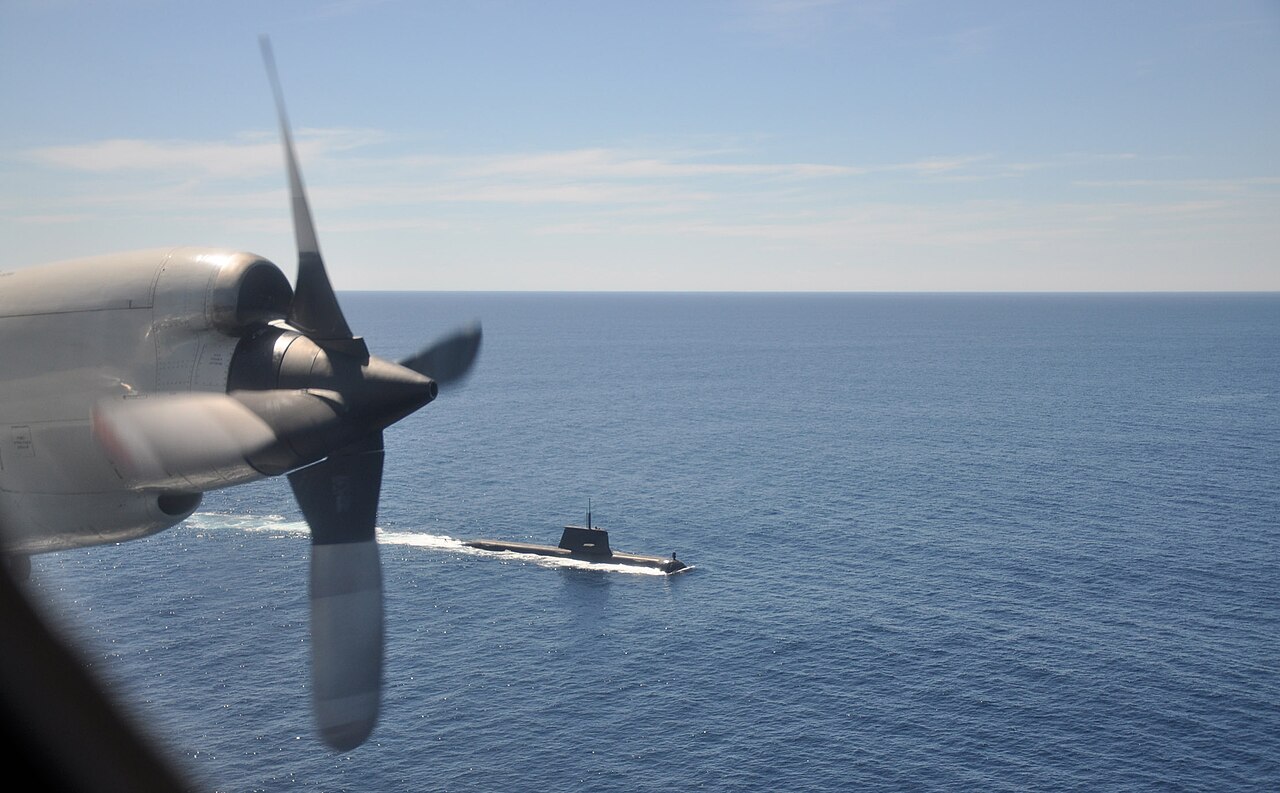
Australia · Defence· 11

What are the Aukus submarines actually for? It’s a question the government refuses to answer | Chris Barrie - The Guardian

GNews: AUKUS · 2026-11-04source ↗P6P7

The article flags a critical legitimacy gap in Australia's largest defence acquisition: strategic ambiguity about the AUKUS submarine program's operational role undermines public and parliamentary buy-in, creates vulnerability to political reversal or budget redirection, and signals potential wavering commitment from a US/UK alliance partner. Pillar 6 (Maritime Defence) and Pillar 7 (Alliance) both depend on sustained, unambiguous strategic clarity; this opacity raises the risk that AUKUS delivery—already on an extended timeline—slips further or is politically cancelled.

Aukus is ‘worst, riskiest and most costly’ Australian defence decision ever, public inquiry into submarine deal says - The Guardian

GNews: AUKUS · 2026-11-04source ↗P6P7

A major independent inquiry declaring AUKUS 'unachievable' and recommending its scrapping represents a critical threat to Australia's maritime defence modernisation and alliance credibility. If adopted, this would collapse the core pillar of Australia's submarine deterrent for 15+ years, leaving a gap in undersea capabilities precisely when China's PLA navy is expanding, and would signal fracture in the US–UK–Australia security partnership.

Former defence chief urges rethink of Australia’s relationship with China - SMH.com.au

GNews: China Australia · 2026-11-04source ↗P7P1

A former defence chief's call to rethink Australia's China relationship signals ongoing domestic strategic debate about the trajectory and tone of Australia's foreign policy posture. This reflects wider uncertainty within Australia's defence establishment about alliance balance and engagement strategy, but does not directly alter capabilities, commitments, or external actor behaviour.

Scandium mine approval takes critical mineral investment above $3b - AFR

GNews: AFR · 2026-11-03source ↗P1P3

Scandium is a high-value critical mineral essential for aerospace, defence electronics, and advanced alloys used in military platforms. Approval of a new mine that pushes cumulative critical-mineral investment above A$3bn signals Australia's progress toward Resource Sovereignty (Pillar 1) and reduces dependency on Chinese mineral processing, directly supporting decoupling (Pillar 5) and domestic Industrial Base (Pillar 3) resilience.

Australia preps Bluebottle USV for submarine-hunting role

Defense News · 2026-11-03source ↗P3P6

Australia is operationalizing unmanned surface and autonomous underwater vehicles specifically for submarine detection and maritime domain awareness, strengthening Industrial Base (Pillar 3) through indigenous platform procurement and Maritime Defence (Pillar 6) through persistent autonomous surveillance. This hedges against delays in AUKUS SSN delivery and demonstrates capability to contest Australian waters against subsurface threats without reliance solely on crewed platforms.

Defence launches leak probe after Nightly’s ADF cuts report - The Nightly

GNews: Australia defence · 2026-11-03source ↗P7

The leak indicates potential ADF personnel reductions, which directly affects Australia's military manning and deployability across all domains, including the submarine workforce critical to AUKUS and Indo-Pacific operations. Institutional friction over force structure decisions—signaled by a high-level leak—suggests internal misalignment on defence priorities, eroding strategic coherence at a critical juncture of capability acquisition.

Australia’s defence investment must build the industry to sustain a fight

ASPI The Strategist · 2026-11-03source ↗P3P6

The article identifies a critical gap in Australian defence strategy: capital investment in hardware is outpacing development of the industrial base needed to sustain operations during a prolonged crisis. Strengthening manufacturing, repair, and adaptation capacity directly addresses Pillar 3 (Industrial Base) and Pillar 6 (Maritime Defence) readiness, and reduces Australia's vulnerability to supply-chain shocks in a contested Indo-Pacific.

Australia pumps billions into defence bases - Islands Business

GNews: Australia defence · 2026-11-02source ↗P1P6

Australia is committing billions of dollars to upgrading and expanding defence bases, the physical foundation for dispersed operations, longer-range strike and hosting allied forces across the north and the wider region. Base infrastructure — fuel storage, hardened facilities, runways and wharves — is the binding constraint on how quickly and sustainably the ADF and partner forces can operate at distance, so funding here translates directly into posture rather than headline platform numbers. For Pacific audiences, the spending also signals where Canberra intends to concentrate its presence as competition with Beijing over access and basing intensifies.

Australia unveils secretive Ghost Shark underwater drone payloads

Defense News · 2026-11-02source ↗P3P6

Ghost Shark XLAUVs represent a meaningful increment to Australia's maritime strike and denial capability—particularly in chokepoint sealing and area denial roles critical to Indo-Pacific defence. The public unveiling of kinetic payloads signals operational maturity of Australian autonomous undersea platforms and strengthens the Industrial Base pillar through Anduril-RAN integration, reinforcing the credibility of Australian maritime deterrence in contested waters.

How prepared are Australia’s military bases for modern drone attacks? - Defence Connect

GNews: Australia defence · 2026-11-02source ↗P6P3

This article flags a potential capability gap in Australian military base air defence against emerging drone threats, which directly bears on Maritime Defence (Pillar 6) readiness and platform survivability. Identifying and remediating drone-defence vulnerabilities at key bases strengthens Australia's defensive posture and informs future Industrial Base (Pillar 3) procurement priorities for counter-drone systems.

China · Military· 4

China training Solomon Islands police to use water cannons under security pact

South China Morning Post · 2026-11-04source ↗P5P7P8

Solomon Islands' police-training partnership with China signals further Chinese security penetration into Australia's near-Pacific sphere, reducing Australia's relative influence and access in a strategically critical region. This type of incremental capability-transfer and institutional embedding is consistent with China's longer-term strategy to establish security dependencies among Pacific island nations, directly challenging Australia's historical strategic primacy in its maritime arc.

Amid official and uni discretion, Australia needs hubs that will critique China

ASPI The Strategist · 2026-11-03source ↗P5P7P8

The article calls for institutionalised, independent China-policy analysis capacity outside government and universities, addressing a strategic gap in Australian civil-society preparedness. This strengthens Australia's ability to understand and counter Chinese economic statecraft, influence operations, and regional ambitions — critical for Pillar 5 (Decoupling) and Alliance cohesion.

80 Chinese vessels spotted in WPS in October — AFP - GMA Network

GNews: PLA navy · 2026-11-03source ↗P5P6P7

The presence of 80 Chinese vessels in the West Philippine Sea signals sustained PLA-CCG operational posture in a critical Indo-Pacific chokepoint, reinforcing China's military presence near Taiwan and the Philippines—key allies of Australia's Quad and AUKUS networks. This reflects China's willingness to project power across sea lanes vital to Australia's regional security calculations and complicates the alliance landscape Australia depends on for Indo-Pacific balance.

China’s New Drone Carrier Launches, Recovers First Autonomous Combat Aircraft

USNI News · 2026-11-02source ↗P6P7

China's Type 076 amphibious assault ship Sichuan has launched and recovered the GJ-21 stealth strike drone, demonstrating that the vessel's electromagnetic catapult and recovery systems can support fixed-wing uncrewed combat aircraft at sea. This moves the PLA Navy toward fielding carrier-based uncrewed strike and reconnaissance at scale, extending the reach of Chinese surface groups into the South Pacific and Indian Ocean approaches at lower cost and risk than crewed aviation. For Australia, it sharpens requirements for maritime surveillance, counter-UAS defences on surface combatants, and the long-range strike and sensing assumptions underpinning AUKUS and the surface fleet review.

Trade· 1

How seven NT mining hubs aim to break China’s grip - NT News

GNews: critical minerals · 2026-11-03source ↗P1P3P5

The article reports Australia's strategic pivot to reduce China export concentration through Northern Territory mining diversification. This directly supports Pillar 5 (Decoupling) and Pillar 1 (Resource Sovereignty) by shifting commodity supply chains away from single-customer dependency and building domestic/alternative-market processing capacity.

China · Economy· 1

Darwin Port profit sinks as Chinese owner fights forced sale - The Australian

GNews: The Australian · 2026-11-02source ↗P1P5

Darwin Port is Australia's gateway to Asian trade and strategic logistics; Chinese ownership represented a vulnerability to coercion or dual-use control during regional crisis. Forced sale to Australian/allied hands restores sovereign control over critical northern infrastructure and reduces China's ability to weaponise port access during conflict or blockade scenarios. This reasserts Resource Sovereignty (Pillar 1) and Decoupling (Pillar 5) by removing a Chinese chokepoint on Australia's supply-chain resilience.

All editions