Big batteries soak up record amounts of energy as big solar floods the grid – but curtailment still bites
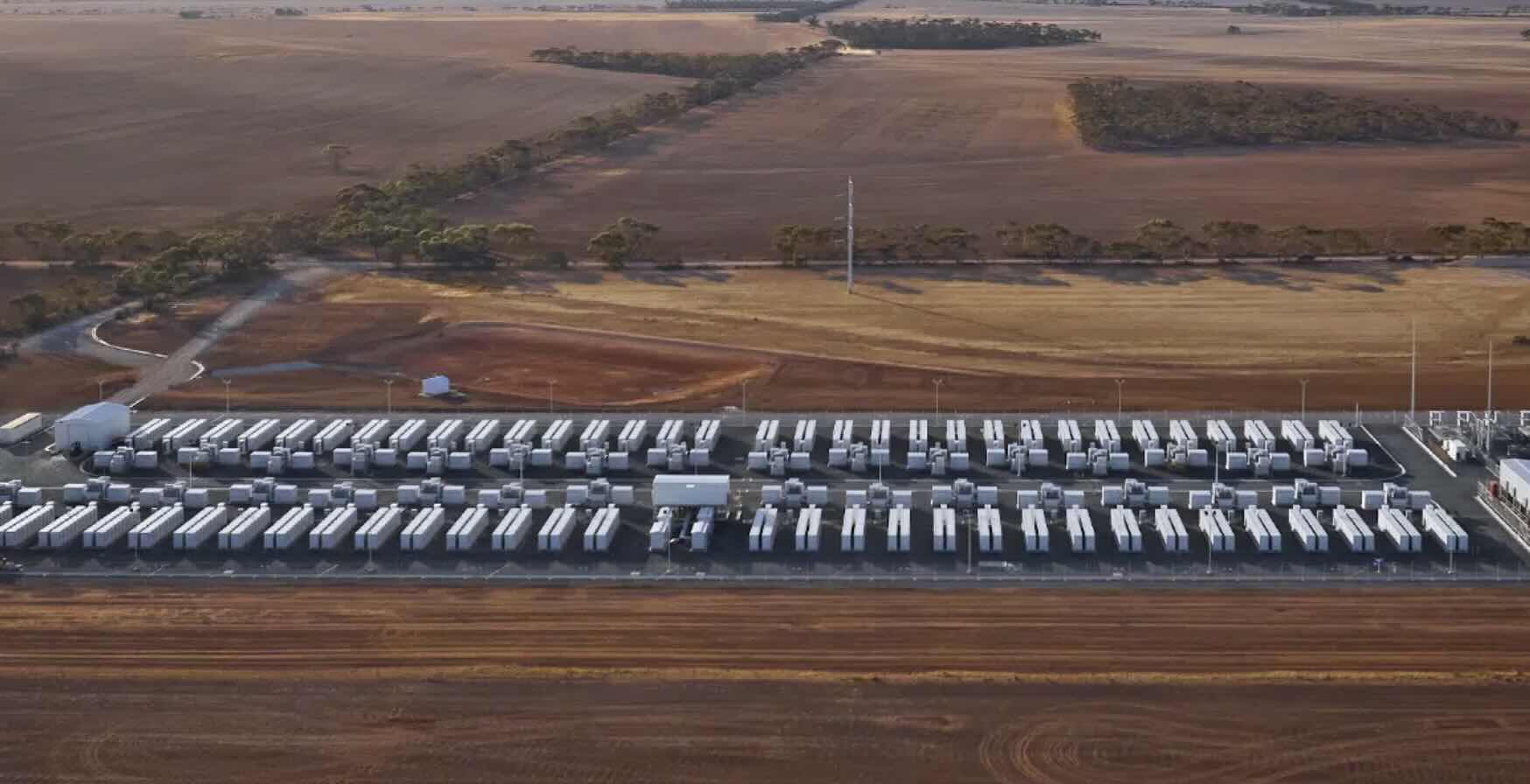
Battery storage in Australia's main grid hit a new record on Friday, holding 20.17 GWh of stored energy at 4:15 pm, triple the level recorded a year earlier. Utility-scale solar peaked at 10,561 MW the same day. Yet despite record battery deployment soaking up midday solar glut, curtailment remained severe: 41.36 GWh of generation was wasted across the day, including 26.67 GWh of solar. In New South Wales alone, 15.68 GWh of renewables was curtailed, mostly solar, even during periods when electricity prices were positive. The article notes that transmission constraints and local dispatch conditions, not just storage capacity, are driving the waste.
Where this fits
This is the reliability and cost pressure made visible. Tripling battery storage in a year is expensive. So is the overbuild of transmission needed to move solar and wind from where they're abundant to where they're needed. Curtailment, throwing away paid-for generation because the grid cannot absorb or move it, is the proof that firming capacity and wiring have fallen behind renewable build, not ahead of it. The whole-system cost of a weather-dependent grid includes the infrastructure you build and the generation you discard.
What it means
Australia is spending heavily on batteries and transmission to make solar work, yet still wastes tens of gigawatt-hours in a single day. This pattern will repeat and worsen as more solar and wind are added. A firm, non-weather-dependent source, nuclear is banned; gas fills the gap, would require no curtailment, no vast overbuild of storage and wires, and no strategic reliance on China's battery and inverter supply chains for the impossible task of firming weather.
By the numbers
at ~A$600–1000/kWh installed. Source: BNEF, CSIRO GenCost 2024-25. Indicative.
of average national (NEM) demand if fully dischargeable, then it needs recharging. Storage shifts power, it does not generate it.
lithium, graphite, nickel, copper and cobalt (~2017 t lithium content). Replaced roughly every 12 years. Source: IEA, Argonne GREET. Indicative.
~75% of cells are China-made. Source: IEA cell-manufacturing share.
enough for 7–19 TWh a year of firm, always-on power, generating for ~60 years. Source: CSIRO GenCost 2024-25 (A$8.5–13.2bn/GW), IAEA capacity factor.
Figures are indicative conversions from the article's stated quantity using published cost, material and capacity factors (CSIRO GenCost, BNEF, IEA, IAEA). Ranges, not precise forecasts.
at ~A$1100–1600/kW installed. Source: CSIRO GenCost 2024-25. Indicative.
at a ~24% capacity factor, and only when the sun shines, so it still needs firming.
~80% of modules are China-made. Source: IEA solar supply-chain data.
enough for 7–16 TWh a year of firm, always-on power, generating for ~60 years. Source: CSIRO GenCost 2024-25 (A$8.5–13.2bn/GW), IAEA capacity factor.
Figures are indicative conversions from the article's stated quantity using published cost, material and capacity factors (CSIRO GenCost, BNEF, IEA, IAEA). Ranges, not precise forecasts.
Go deeper on the numbers
The bigger picture
Energy security is national security. This connects to the wider case at Unprepared: Australia's dependence on a strategic rival, and how ready it is for the world that is coming.
Reported by RenewEconomy. Read the original report ↗
Related coverage
The Four-Hour Problem: Why HiTHIUM Is Betting on Eight-Hour Batteries for Australia’s Grid
Recurrent wins federal approval for NSW solar and battery project
Rare, state-owned wind farm clears one of “most complex” grid connection hurdles - Renew Economy
Home battery volumes on rise as rebate tally reaches 600,000
The numbers, as they move
A short, sourced brief when the figures shift: a transmission blow-out, a supply-chain move, a milestone.