The Four-Hour Problem: Why HiTHIUM Is Betting on Eight-Hour Batteries for Australia’s Grid
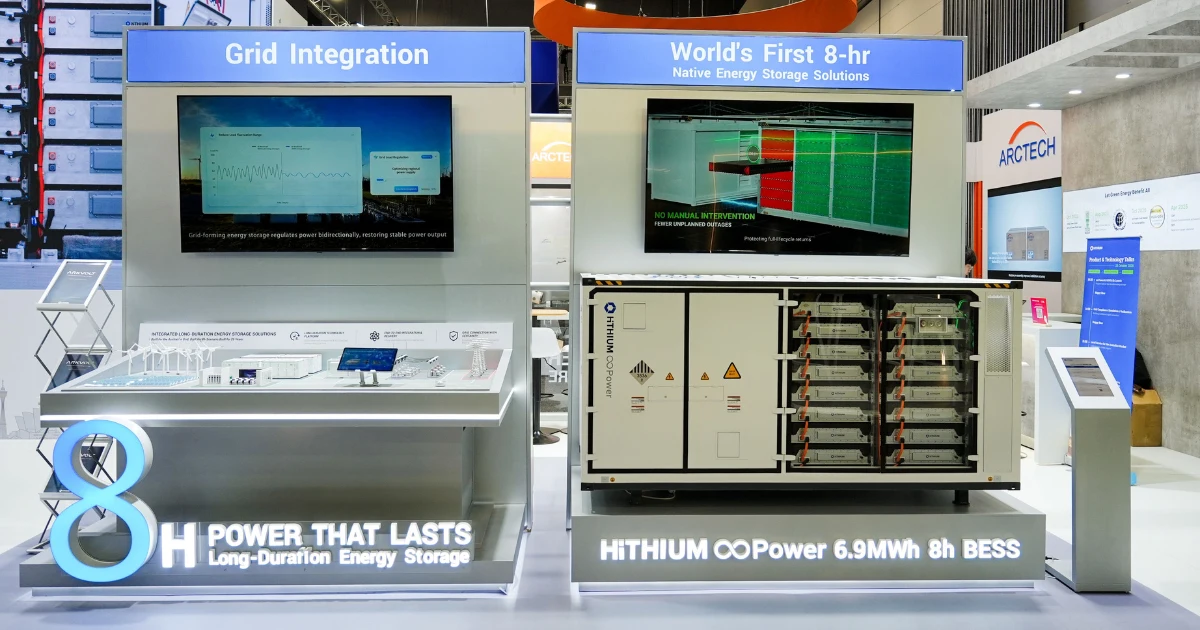
HiTHIUM, a battery storage vendor, is promoting an eight-hour battery product (∞Power 6.9 MWh) for Australian grid firming, targeting the gap left by Australia's current fleet of batteries, which average just over two hours of discharge. The longer duration is framed as a solution to the grid's evening peak demand, particularly on days when solar output has fallen and wind is low.
Where this fits
This announcement underscores a fundamental cost and reliability problem: a renewables-dependent grid requires ever-longer battery storage to bridge multi-hour shortfalls, but battery duration extension drives material and capital cost per megawatt-hour upward steeply. Eight-hour batteries use roughly four times the chemistry, minerals and manufacturing effort of two-hour units for the same power output. Australia is outsourcing this entire supply chain to China, which controls battery cell production, lithium processing, and the raw mineral refining. The longer the storage duration required, the harder the grid becomes to firm affordably and the deeper the China dependence grows.
What it means
Eight-hour batteries address a real problem, but they do so by accepting the premise that weather-dependent generation is the grid's spine. A grid built primarily on solar and wind must buy its way out of multi-hour shortfalls through chemistry and cost. A firm, dispatchable, low-material alternative such as nuclear would eliminate the duration problem entirely, require no battery duration ladder at all, and break the China supply-chain lock. Instead, Australia is building a system where longer firming times mean higher whole-system cost, tighter China dependence, and no end-of-life recycling sovereignty.
Go deeper on the numbers
The bigger picture
Energy security is national security. This connects to the wider case at Unprepared: Australia's dependence on a strategic rival, and how ready it is for the world that is coming.
Reported by Energy Matters. Read the original report ↗
Related coverage
Recurrent wins federal approval for NSW solar and battery project
Rare, state-owned wind farm clears one of “most complex” grid connection hurdles - Renew Economy
Big batteries soak up record amounts of energy as big solar floods the grid – but curtailment still bites
Home battery volumes on rise as rebate tally reaches 600,000
The numbers, as they move
A short, sourced brief when the figures shift: a transmission blow-out, a supply-chain move, a milestone.