Robotics and AI to have key roles in FTC Solar’s future in Australia: CEO
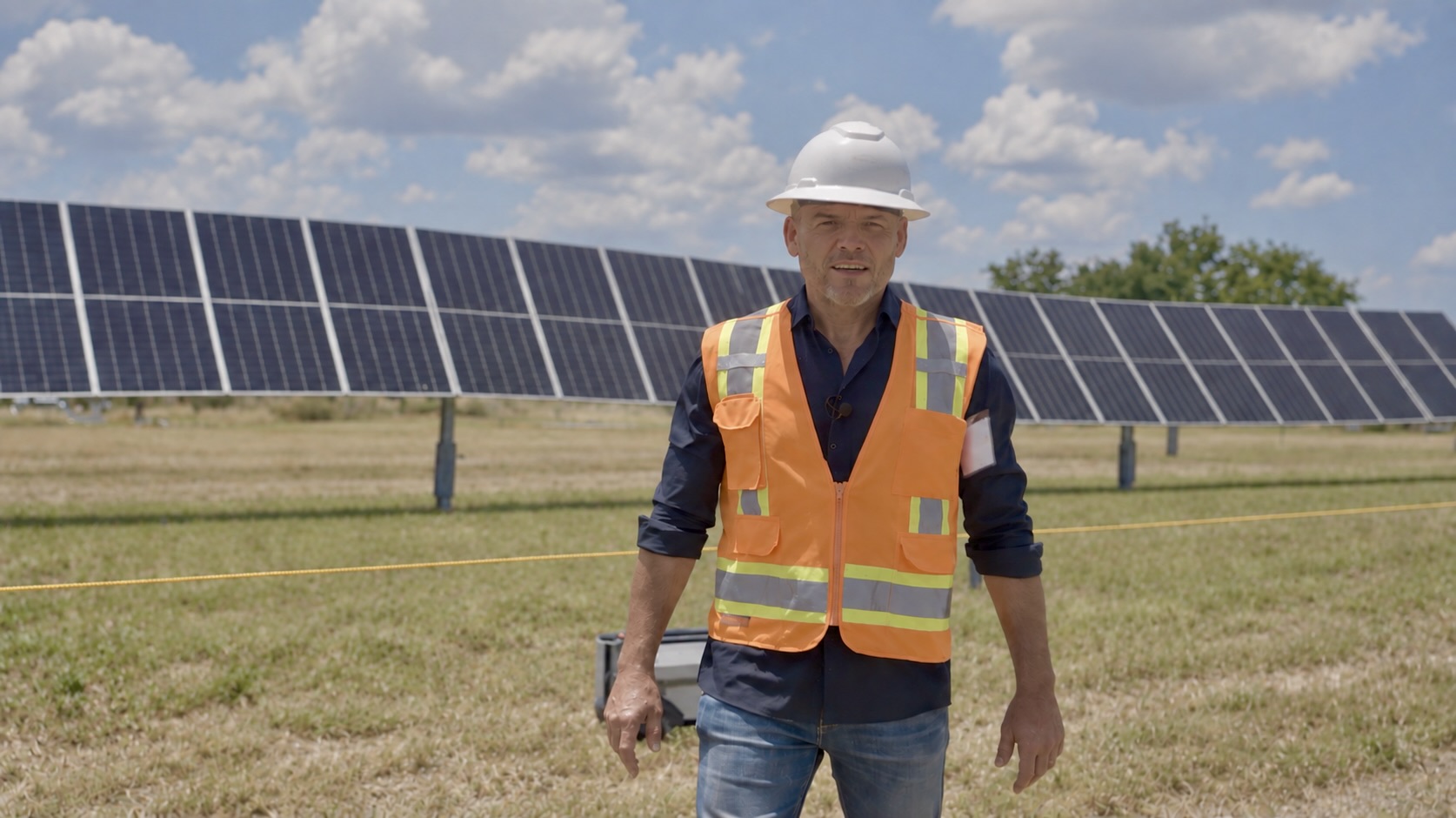
FTC Solar, a US-based manufacturer of solar tracking systems, is expanding operations in Australia. The company is supplying equipment to two Queensland projects: the Fraser Coast 330 MW solar farm with 180 MW battery storage, and the 82 MW Sybella Creek hybrid installation. FTC has already deployed more than 30 projects across Australia. The CEO cites the maturity of Australia's renewable market, the quality focus of local developers, and the presence of major global construction firms as reasons for the company's investment.
Where this fits
This is a cost story wearing a growth story. Solar tracker automation and AI optimisation are genuine efficiency gains, narrowing the per-megawatt-hour gap between renewable and dispatchable generation. But the headline obscures what Australia is actually building: weather-dependent capacity that requires firming. These Queensland projects, 512 MW of solar and 180 MW of battery storage combined, are engineering solutions to variability, not replacements for it. The real cost is the ensemble: panels, trackers, batteries, inverters, grid integration, and the gas plant still needed when the sun sets. FTC's presence reflects a global supply chain optimised for cost per component, not whole-system resilience or energy sovereignty.
What it means
Australia is contracting deeper into a solar-plus-battery stack dominated by imported equipment and foreign engineering. Every incremental efficiency in tracker motors or AI dispatch algorithms masks a structural dependence: the minerals, rare earths, and processing capacity remain concentrated in China. The projects announced here will work. They will also require firm generation, gas or coal, to function as a grid. The alternative firm source, nuclear, remains banned. Australia is buying American trackers and Chinese cells to solve a problem that firm, domestically-built nuclear would not create.
By the numbers
at ~A$1100–1600/kW installed. Source: CSIRO GenCost 2024-25. Indicative.
at a ~24% capacity factor, and only when the sun shines, so it still needs firming.
~80% of modules are China-made. Source: IEA solar supply-chain data.
enough for 0–0 TWh a year of firm, always-on power, generating for ~60 years. Source: CSIRO GenCost 2024-25 (A$8.5–13.2bn/GW), IAEA capacity factor.
Figures are indicative conversions from the article's stated quantity using published cost, material and capacity factors (CSIRO GenCost, BNEF, IEA, IAEA). Ranges, not precise forecasts.
at ~A$600–1000/kWh installed. Source: BNEF, CSIRO GenCost 2024-25. Indicative.
of average national (NEM) demand if fully dischargeable, then it needs recharging. Storage shifts power, it does not generate it.
lithium, graphite, nickel, copper and cobalt (~18 t lithium content). Replaced roughly every 12 years. Source: IEA, Argonne GREET. Indicative.
~75% of cells are China-made. Source: IEA cell-manufacturing share.
Figures are indicative conversions from the article's stated quantity using published cost, material and capacity factors (CSIRO GenCost, BNEF, IEA, IAEA). Ranges, not precise forecasts.
Go deeper on the numbers
The bigger picture
Energy security is national security. This connects to the wider case at Unprepared: Australia's dependence on a strategic rival, and how ready it is for the world that is coming.
Reported by PV Magazine Australia. Read the original report ↗
Related coverage
Australian hydrogen innovation set for commercial manufacturing boost with ARENA funding
Energy Insiders: The “impossible” wind project that broke the investment drought
BHP hits the brakes on electric trucks as it frets about charging times, but rival Fortescue says it’s missing the point
SA named Australia’s least affordable state for household energy - Glam Adelaide
The numbers, as they move
A short, sourced brief when the figures shift: a transmission blow-out, a supply-chain move, a milestone.