BHP hits the brakes on electric trucks as it frets about charging times, but rival Fortescue says it’s missing the point
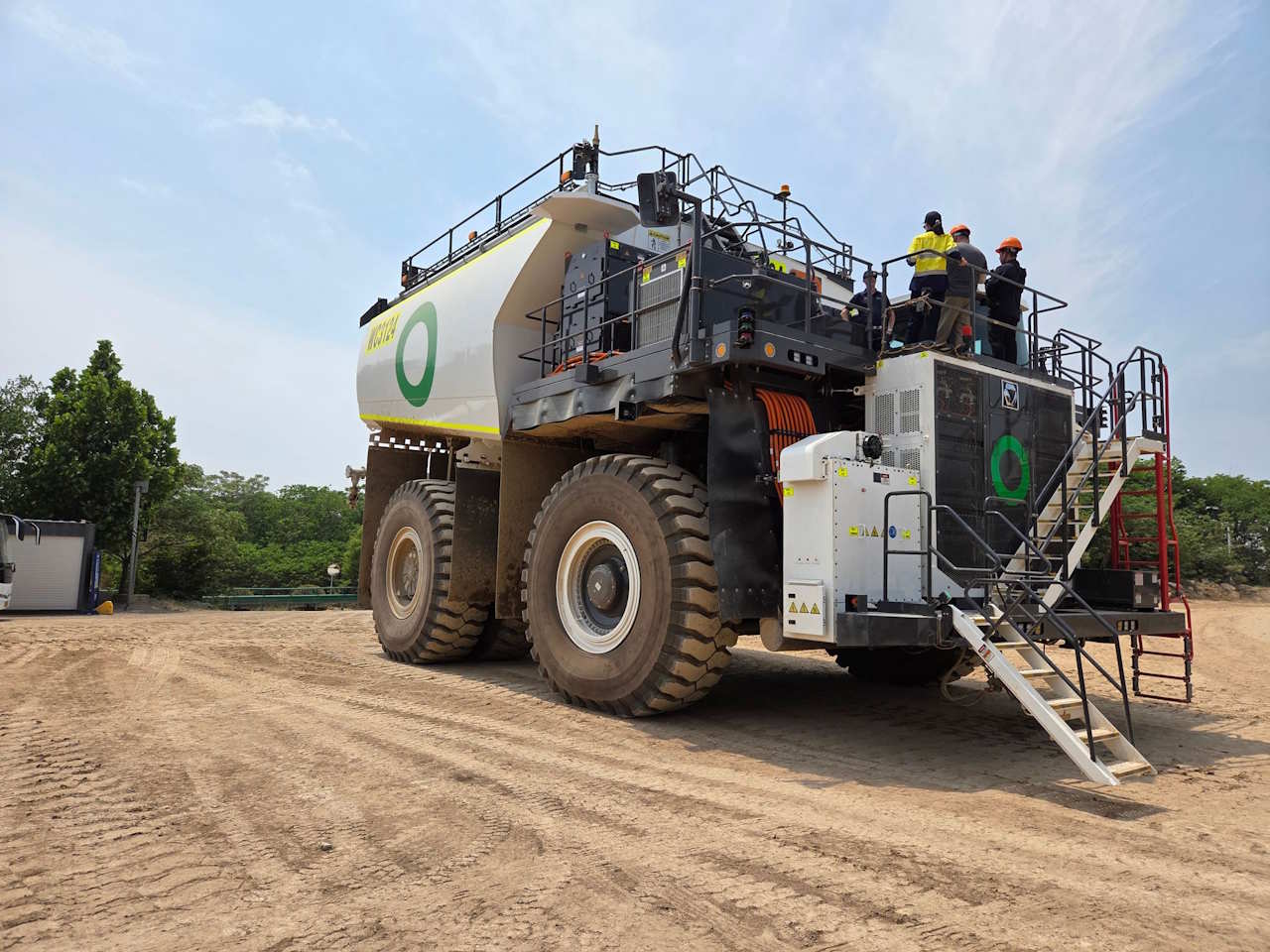
BHP has delayed its transition away from diesel trucks at its mining operations, citing charging times and other technical barriers. The company now expects its 2035 emissions to be a third higher than previously forecast, pushing net-zero targets to 2050. Fortescue, by contrast, is pressing ahead with 300 electric haul trucks as part of a $6 billion electrification programme across its Pilbara iron ore operations, betting that battery and charging technology will continue to improve and deliver lower total cost of ownership than diesel fleets.
Where this fits
This is a cost and reliability story that exposes a fault line in Australia's electrification strategy. BHP's hesitation reveals a hard constraint that renewables-heavy plans do not adequately price in: the intermittency and charging-time problem of battery systems scales with industrial demand. Fortescue's confidence rests on continued improvements in battery technology and falling costs. But the divergence between two of Australia's largest miners shows that electrification timelines and total-system costs are far less certain than energy transition planning assumes.
What it means
Australia's mining industry, which accounts for a large share of export revenue and energy consumption, is discovering that the gap between renewable electricity and firm industrial power is not trivial. If BHP's caution proves warranted as mining operations scale, the nation's ability to meet both climate commitments and production targets will hinge on whether battery and charging technology can solve a problem that is not primarily one of cost per megawatt-hour. The harder question is whether Australia can afford to wait for that proof while relying on a Chinese-dominated battery supply chain, or whether firmer generation sources might have delivered the same decarbonisation outcome sooner.
By the numbers
enough for 5–8 TWh a year of firm, always-on power, generating for ~60 years. Source: CSIRO GenCost 2024-25 (A$8.5–13.2bn/GW), IAEA capacity factor.
Figures are indicative conversions from the article's stated quantity using published cost, material and capacity factors (CSIRO GenCost, BNEF, IEA, IAEA). Ranges, not precise forecasts.
Go deeper on the numbers
The bigger picture
Energy security is national security. This connects to the wider case at Unprepared: Australia's dependence on a strategic rival, and how ready it is for the world that is coming.
Reported by The Driven. Read the original report ↗
Related coverage
Robotics and AI to have key roles in FTC Solar’s future in Australia: CEO
Australian hydrogen innovation set for commercial manufacturing boost with ARENA funding
Energy Insiders: The “impossible” wind project that broke the investment drought
SA named Australia’s least affordable state for household energy - Glam Adelaide
The numbers, as they move
A short, sourced brief when the figures shift: a transmission blow-out, a supply-chain move, a milestone.