Calogena awarded EU funding for SMR deployment
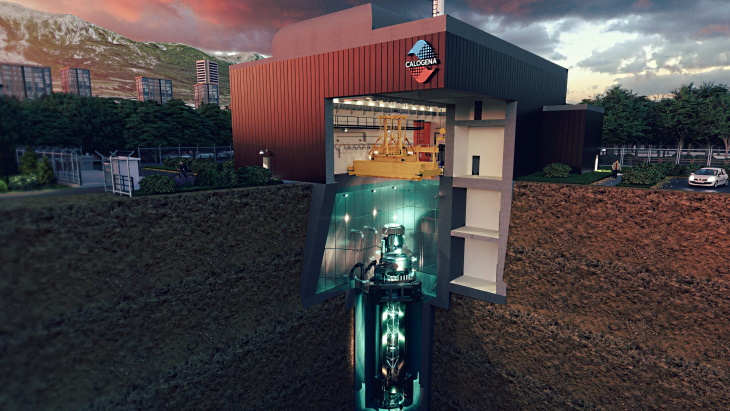
Calogena, a French SMR developer founded in 2021, has received EUR40 million from the European Commission's Innovation Fund to support construction of its first commercial reactor in Pierrelatte. The CAL30 is a 30 MW water-cooled pool-type SMR designed to supply district heating networks. The company aims to begin deployment by 2030 and says the reactor will heat approximately 20,000 homes. The Innovation Fund is backed by revenues from the EU Emissions Trading System and has an estimated EUR40 billion available between 2020 and 2030.
Where this fits
This is a data point in the firm-power alternative that Australia has chosen to forgo. While the EU scales SMR deployment for urban heating and industrial process heat, applications where weather-dependent renewable capacity cannot substitute, Australia remains locked out of nuclear by law. The EU is treating nuclear as essential firm infrastructure within its decarbonisation strategy; Australia is treating it as forbidden. This shapes not only the electricity supply mix but the trajectory of energy-dependent manufacturing and heating costs, and the grid's resilience to renewable scarcity events.
What it means
Australia's ban on nuclear leaves the country dependent on a renewables-plus-gas pathway whose costs are now visible across Europe: overbuild of transmission, standby gas capacity that sits idle most of the time, battery storage at scale still unproven, and supply chains anchored in China. The SMR case shows the technical and financial apparatus exists to firm grids without fossil fuel lock-in. Australia is choosing to pay the full cost of that firming through gas and transmission instead of exploring the firm, low-emission alternative that European policy has begun to mobilise.
Go deeper on the numbers
The bigger picture
Energy security is national security. This connects to the wider case at Unprepared: Australia's dependence on a strategic rival, and how ready it is for the world that is coming.

The Factory Floor
In 2024, China built over a thousand commercial vessels. The United States built eight. Part V of the Unprepared series.
Reported by World Nuclear News. Read the original report ↗
Related coverage
Rooppur nuclear plant feeds 350MW into national grid for the first time - The Daily Star
Energy crisis reinforces comeback of nuclear power, says IEA
Bangladesh 1st nuke power plant connects to national grid - Khmer Times
Nuclear Finance is Running Out of Excuses
The numbers, as they move
A short, sourced brief when the figures shift: a transmission blow-out, a supply-chain move, a milestone.