The Factory Floor
In 2024, China built over a thousand commercial vessels. The United States built eight. Part V of the Unprepared series.

The arsenal described in the previous part of this series is formidable on its own terms, but it is not the most strategically significant thing about China's military buildup. The most significant thing is the industrial base that produced it, because that base determines what China can produce tomorrow, next year, and for as long as a conflict lasts.
China accounts for twenty-eight per cent of global manufacturing output, approximately 4.7 trillion dollars in value added, more than the United States, Japan, and Germany combined. It has held the position of the world's largest manufacturer for fifteen consecutive years, and a United Nations Industrial Development Organisation study projects it will account for forty-five per cent of global industrial production by 2030, while the collective share of Western nations drops to eleven per cent. In the early 2000s, high-income countries still controlled roughly seventy-five per cent of global industrial output. That era is ending.
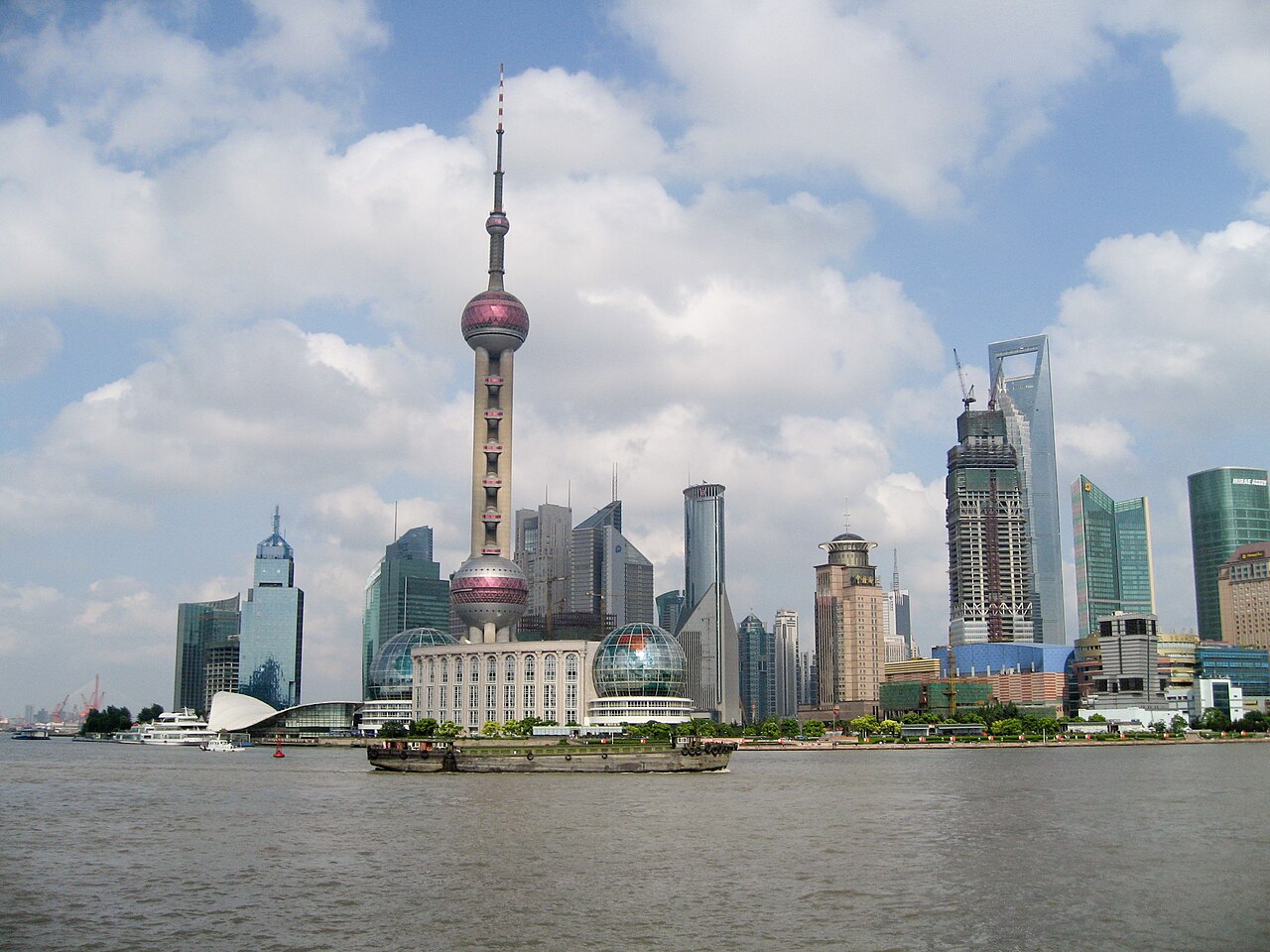
Shipbuilding shows the asymmetry most clearly. Chinese shipyards possess 232 times the tonnage capacity of American yards. That is not a misprint. A single Chinese shipyard, Jiangnan on Changxing Island in Shanghai, is estimated to have greater capacity than all American shipyards combined. In 2024, China built over a thousand commercial vessels. The United States built eight.
In 2024, China built over a thousand commercial vessels. The United States built eight.
This is what civil-military fusion looks like in practice. The same factories that produce consumer electronics produce military guidance systems. The same shipyards that build container ships build destroyers. China's military production capacity is not the output of a dedicated defence sector, as it is in Australia or the United States. It is the output of the largest industrial economy in human history, directed by a state that can redirect any fraction of it toward military purposes at any time without needing to seek parliamentary approval, satisfy environmental review, negotiate with unions, or survive a change of government.
The cost advantages are structural and likely permanent. Australia is paying approximately nine billion dollars per Hunter-class frigate for a platform that carries fewer weapons than a Chinese Type 055 cruiser-destroyer built at a fraction of the price on a hull assembled in months rather than years.
The side that can produce more ships, more missiles, more drones, more ammunition, and more replacement parts, and produce them faster and cheaper than the other side, holds a structural advantage that no amount of tactical brilliance can overcome. The lesson of Ukraine's fifth year of war is that industrial depth determines endurance and endurance determines outcomes. China produces J-20s at 100 to 120 per year. Australia's entire operational fleet of seventy-two F-35As, delivered over more than a decade, represents less than one year of Chinese fifth-generation fighter production. If losses were sustained in a conflict, China could replace its entire stealth fighter force within three years. Australia could not replace a single squadron within a decade.
Two clocks
Everything described here exists within a timeframe. China's population peaked in 2021 or 2022 at approximately 1.426 billion and is now declining at an accelerating rate. The total fertility rate has collapsed to approximately 1.09, half the replacement level and among the lowest on earth.
This demographic reality does not reduce the military threat. It amplifies it, because it creates a closing window of opportunity that Beijing's leadership understands with precision. If China intends to use force over Taiwan or to establish the regional primacy that its stated strategic objectives demand, the optimal period for doing so is before 2035 to 2040. After that window closes, China will be an ageing society with a shrinking workforce and diminishing capacity to sustain the kind of military buildup this series has described. CIA Director William Burns stated in February 2023 that Xi had instructed the PLA to be ready for a Taiwan operation by 2027. The 2027 PLA centennial, the 2035 modernisation target, and the 2049 centenary of the People's Republic are deadlines set by a leader who has consolidated more personal power than any Chinese ruler since Mao and who is running out of time to use it.
The other clock is ticking in the West, and it is ticking in the wrong direction. The United States, which built the arsenal of democracy that won the Second World War, now builds eight ships a year while China builds a thousand. Its artillery shell production had fallen so low by the mid-2010s that rebuilding it to meet the demands of a single allied war in Ukraine has taken years and remains incomplete. Australia's industrial base has been deliberately hollowed out over three decades of offshoring, outsourcing, and complacent reliance on imported manufactures.
There is a point at which China's capacity to project power and sustain a conflict will so far exceed the combined capacity of the Western nations and their Indo-Pacific allies that the balance becomes functionally unrecoverable. That point is not 2050. Based on current trajectories, it could arrive in the mid-2030s, which is precisely when China's own demographic window begins to close. The two clocks are synchronised, and both are approaching within the next ten to fifteen years.
Australia's own capability gap sits squarely within this convergence. The first Virginia-class boat will not arrive until 2032. Defence spending sits at 2.3 per cent of GDP against a strategic environment that Australia's own government has described as the most challenging since the Second World War.
China has executed the most consequential military transformation in modern history, from a peasant army that could not contest two American aircraft carriers in 1996 to the world's largest navy and leading hypersonic arsenal in 2026, backed by an industrial base that can outproduce any adversary indefinitely. It has done so within a demographic window that will not remain open, and the West's capacity to respond is diminishing at the same time.
Next in the series: A Lie Told in the Rose Garden.