Dome installed at Pakistan's Chashma unit 5
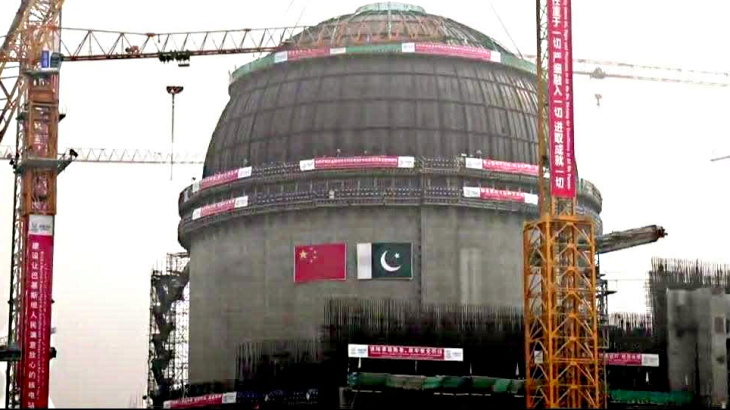
Pakistan's nuclear regulator issued a construction licence for Chashma 5 in December 2024, clearing the way for concrete pouring to begin on 30 December 2024. The 1,200 MWe reactor, based on China's Hualong One design, is the third unit of that type to be built in Pakistan and is Pakistan's largest nuclear plant by capacity. The project follows a USD4.8 billion deal signed in June 2023. The plant is targeted to start generating electricity in September 2030.
Where this fits
This milestone shows firm, low-emission power being added to grids beyond the anglophone democracies that have frozen their own nuclear programs. Pakistan is building dispatchable capacity with a 60-year design life on a schedule of roughly six years from licence to operation. Australia, by contrast, has legislated a ban on new nuclear plants while committing to weather-dependent renewables that require gas firming, overbuild of transmission, and massive battery stores. The Chashma project demonstrates that the Hualong One is a proven export product, reducing construction and licensing risk for any country willing to build it.
What it means
Australia is watching grid decarbonisation happen in Pakistan via firm nuclear baseload while remaining bound by law to follow a path of renewable intermittency and Chinese battery dependence. The strategic question is not whether Pakistan's choice is superior on paper. It is that Australia has voluntarily ceded the option to match it, leaving whole-system cost, grid reliability, and energy sovereignty to rest on supply chains and weather patterns beyond our control.
By the numbers
enough for 4–7 TWh a year of firm, always-on power, generating for ~60 years. Source: CSIRO GenCost 2024-25 (A$8.5–13.2bn/GW), IAEA capacity factor.
Figures are indicative conversions from the article's stated quantity using published cost, material and capacity factors (CSIRO GenCost, BNEF, IEA, IAEA). Ranges, not precise forecasts.
Go deeper on the numbers
The bigger picture
Energy security is national security. This connects to the wider case at Unprepared: Australia's dependence on a strategic rival, and how ready it is for the world that is coming.

The Factory Floor
In 2024, China built over a thousand commercial vessels. The United States built eight. Part V of the Unprepared series.
Reported by World Nuclear News. Read the original report ↗
Related coverage
Rooppur nuclear plant feeds 350MW into national grid for the first time - The Daily Star
Energy crisis reinforces comeback of nuclear power, says IEA
Bangladesh 1st nuke power plant connects to national grid - Khmer Times
Nuclear Finance is Running Out of Excuses
The numbers, as they move
A short, sourced brief when the figures shift: a transmission blow-out, a supply-chain move, a milestone.