Helen to assess environmental impacts of SMR in Helsinki
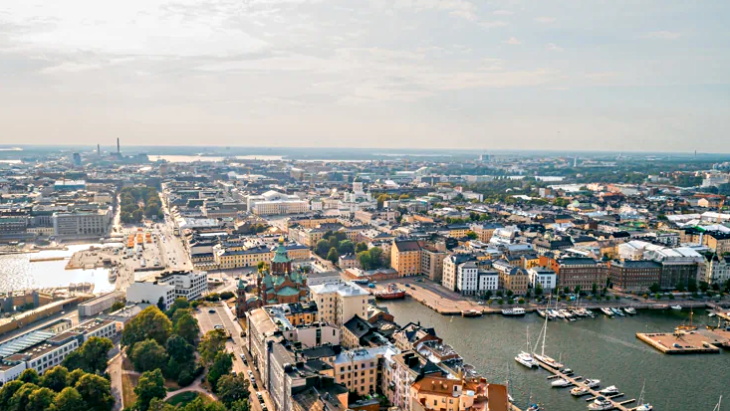
Helsinki's Helen has opened an Environmental Impact Assessment for a small modular reactor to supply heat and electricity to the city, targeting carbon-neutral energy by 2040. The company is evaluating SMR suppliers and potential sites across three locations in the capital. The statutory EIA process will assess environmental and social impacts and inform planning decisions. This marks an acceleration of Helen's nuclear programme, which began formal evaluation in September 2024.
Where this fits
Finland is moving small modular reactors from concept to site-specific environmental review. This is the opposite of Australia's path: a mature industrial economy is choosing firm, dispatchable nuclear heat for a major city, while Australia's energy law excludes nuclear entirely. SMRs address a constraint that renewables cannot solve alone, the need for firm baseload heat and power that works in winter and at night without gas firming or transmission overbuild. Helen's choice exposes the real cost of Australia's renewables-only transition: higher system-level bills for duplication, storage, and gas backup that Finland is choosing to avoid.
What it means
Australia's ban on nuclear forces dependence on weather-dependent generation and the gas plants needed to firm it, raising whole-system costs and locking in fossil fuel emissions for decades. Finland's move toward SMR heat supply for a major city demonstrates a lower-cost, lower-emissions alternative that Australia's law forbids. The strategic implication is stark: as peer economies decarbonise faster and cheaper using firm nuclear power, Australia's exclusion of the technology leaves it slower, more expensive, and more exposed to supply-chain leverage from China, whose factories dominate solar, battery, and inverter manufacturing.
Go deeper on the numbers
The bigger picture
Energy security is national security. This connects to the wider case at Unprepared: Australia's dependence on a strategic rival, and how ready it is for the world that is coming.

Xi Jinping and the Purge That Built an Army
The PLA that Xi Jinping inherited in 2012 was modernising, and the one he commands in 2026 is transformed. Part IV of the Unprepared series.
Reported by World Nuclear News. Read the original report ↗
Related coverage
Industry urges nuclear recognition in COP31's 35-by-35 pledge
ONR’s first-ever safeguards agreement strengthens UK-Australia nuclear cooperation - Office for Nuclear Regulation
Paladin targets 2031 uranium production with $525m raising - Australian Resources & Investment
$3.9b uranium player Paladin looks to raise $525m - AFR
The numbers, as they move
A short, sourced brief when the figures shift: a transmission blow-out, a supply-chain move, a milestone.