IHI to supply components for first Polish AP1000
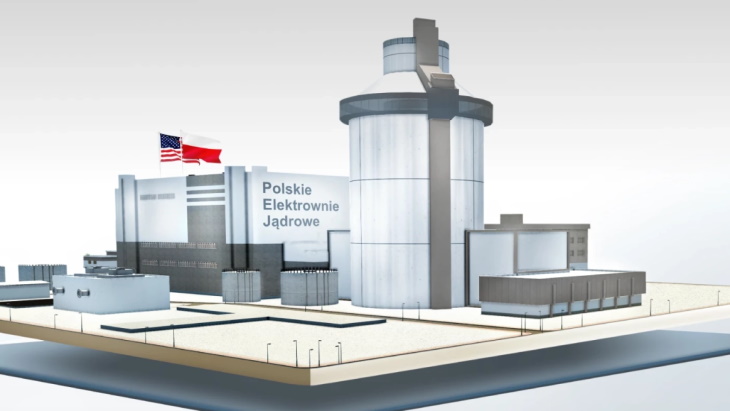
IHI Corporation has won a contract from Westinghouse to engineer and procure long-lead components for Poland's first nuclear power plant. The order covers the containment vessel and a 26-by-29-by-23-metre steel and concrete module that houses the reactor pressure vessel and steam generators. The plant, sited at Lubiatowo-Kopalino in Pomerania, will have three AP1000 reactors built using modular construction. Polish state nuclear utility PEJ gave Westinghouse the go-ahead last month to begin ordering components for the first unit.
Where this fits
This contract signals that firm, low-emission generation is moving into Europe's energy infrastructure, despite the continent's two-decade commitment to renewables-first policy. Poland's decision to pursue three AP1000 units, and to begin procurement now, reflects the hard reality that a weather-dependent grid cannot sustain an industrial economy. The modular design used here concentrates manufacturing expertise and quality control in factories; it cuts construction time and cost risk compared to traditional reactor builds. This is the path Australia has legally closed off.
What it means
Poland is securing dispatchable, zero-carbon baseload power on a supply chain that does not depend on China's consent or commodity dominance. Australia, by contrast, is betting the grid on solar and batteries whose core supply chain, panels, inverters, processed lithium and rare earths, is owned by a strategic rival and concentrated in a single country. While Poland's AP1000s will run for sixty years on uranium fuel, Australia's renewables fleet will depend on repeated cycles of Chinese-supplied hardware replacement, at costs and timelines subject to geopolitical leverage.
Go deeper on the numbers
The bigger picture
Energy security is national security. This connects to the wider case at Unprepared: Australia's dependence on a strategic rival, and how ready it is for the world that is coming.

Xi Jinping and the Purge That Built an Army
The PLA that Xi Jinping inherited in 2012 was modernising, and the one he commands in 2026 is transformed. Part IV of the Unprepared series.
Reported by World Nuclear News. Read the original report ↗
Related coverage
Industry urges nuclear recognition in COP31's 35-by-35 pledge
ONR’s first-ever safeguards agreement strengthens UK-Australia nuclear cooperation - Office for Nuclear Regulation
Paladin targets 2031 uranium production with $525m raising - Australian Resources & Investment
$3.9b uranium player Paladin looks to raise $525m - AFR
The numbers, as they move
A short, sourced brief when the figures shift: a transmission blow-out, a supply-chain move, a milestone.