OPG set to revise timeline and cost of first SMR unit
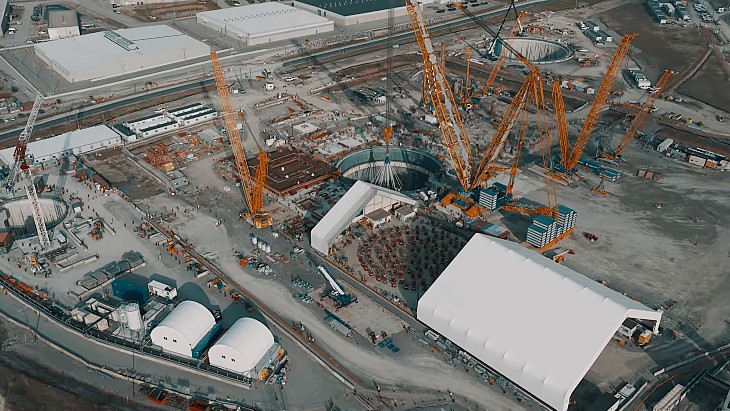
Ontario Power Generation has announced that its first small modular reactor at Darlington will miss the October 2030 completion target and will cost more than the previously disclosed CAD7.7 billion estimate. The company attributed the delay and cost overrun to ongoing engineering work on GE Vernova Hitachi's first-of-a-kind BWRX-300 design, which is affecting construction execution and supply chain performance. OPG said it is conducting a comprehensive reassessment of both timeline and cost, with results expected in due course.
Where this fits
This is a straightforward cost and schedule blow to the firm-power case for nuclear in North America. The delay matters because Australia's energy security argument for nuclear rests partly on the idea that modular reactors will deploy faster and cheaper than large units. When the first commercial SMR in a developed grid suffers significant schedule slip and cost growth on day one, it weakens that claim. It does not, however, alter the emissions or fuel-security profile of nuclear as a firm, dispatchable, low-material alternative to a renewables-and-gas system.
What it means
Australia should watch this closely. If SMRs prove slower and costlier to build than their proponents forecast, the case for a rapid nuclear build shrinks, and Australia remains locked into either a renewables-only grid (with its firming and transmission costs, weather dependence, and China supply-chain exposure) or continued gas. The honest takeaway is not that SMRs are unviable, but that first-of-a-kind projects slip. That is what happens when you build something new. Australia has time to learn from Ontario's experience before committing capital to its own fleet.
By the numbers
enough for 7–11 TWh a year of firm, always-on power, generating for ~60 years. Source: CSIRO GenCost 2024-25 (A$8.5–13.2bn/GW), IAEA capacity factor.
Figures are indicative conversions from the article's stated quantity using published cost, material and capacity factors (CSIRO GenCost, BNEF, IEA, IAEA). Ranges, not precise forecasts.
Go deeper on the numbers
The bigger picture
Energy security is national security. This connects to the wider case at Unprepared: Australia's dependence on a strategic rival, and how ready it is for the world that is coming.

The Factory Floor
In 2024, China built over a thousand commercial vessels. The United States built eight. Part V of the Unprepared series.
Reported by World Nuclear News. Read the original report ↗
Related coverage
Rooppur nuclear plant feeds 350MW into national grid for the first time - The Daily Star
Energy crisis reinforces comeback of nuclear power, says IEA
Bangladesh 1st nuke power plant connects to national grid - Khmer Times
Nuclear Finance is Running Out of Excuses
The numbers, as they move
A short, sourced brief when the figures shift: a transmission blow-out, a supply-chain move, a milestone.