Plug-In Solar Is One Step Closer to Legal in Australia, Here’s What Just Happened
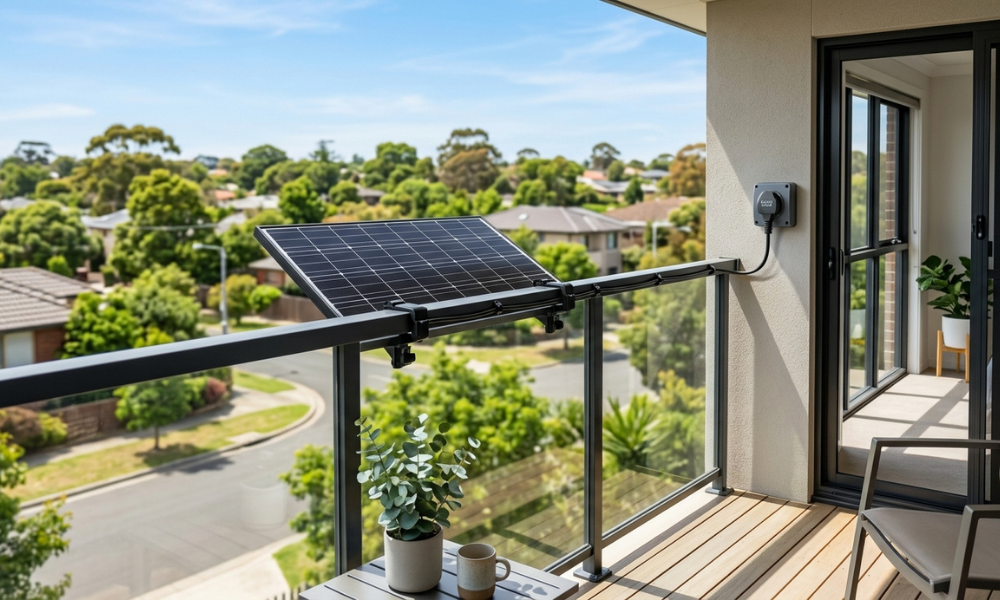
Ministers have agreed to explore legalising plug-in solar units in Australia. The move follows industry advocacy and ministerial discussion, though the article provides no detail on timeline, regulatory hurdles, or the scope of what "explore" will entail.
Where this fits
Plug-in solar sits at the margin of Australia's decentralised renewable build-out. It reduces grid demand at the point of use, which lowers peak load on networks already strained by weather-dependent supply. The genuine benefit is local consumption: a household's midday solar generation powering its own load avoids transmission loss and congestion. But legalisation will not address the core cost driver of the transition. Distributed solar still leaves the grid dependent on gas for firming when the sun does not shine, and adds no firm capacity. It is a load-smoothing measure, not a structural solution to the grid's need for dispatchable power.
What it means
Faster plug-in approval may trim marginal costs for consumers and reduce instantaneous grid stress on clear days. But it does not change the underlying economics: Australia is building a renewables-first grid that will require large, fast gas plants as backup and a transmission network oversized for weather variability. The real question is whether distributed solar, however convenient, delays investment in firm dispatchable capacity, whether nuclear, high-efficiency gas, or long-duration storage, that would lower whole-system cost and cut gas dependence. Plug-in solar is not a substitute for that choice. It is a supplement to it, and only valuable if the grid is also building the firm backbone the transition has so far under-costed.
Go deeper on the numbers
The bigger picture
Energy security is national security. This connects to the wider case at Unprepared: Australia's dependence on a strategic rival, and how ready it is for the world that is coming.

Xi Jinping and the Purge That Built an Army
The PLA that Xi Jinping inherited in 2012 was modernising, and the one he commands in 2026 is transformed. Part IV of the Unprepared series.
Reported by Energy Matters. Read the original report ↗
Related coverage
Rural Australian communities are hosting the clean energy boom. Are they getting a fair say? - The Conversation
One Nation pledges to tear down offshore gas bans - The Australian
Ausgrid releases energy mapping data to support solar and battery investment
Domestic Gas Reservation: Landmark Bill Secures Up to 20% of LNG - NewsCop
The numbers, as they move
A short, sourced brief when the figures shift: a transmission blow-out, a supply-chain move, a milestone.