Reactor components completed for El Dabaa 1
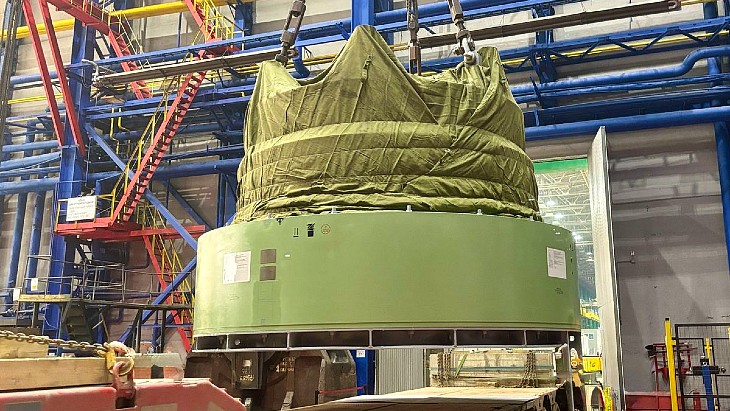
Rosatom has completed manufacturing of the reactor internals and pressure-vessel head for the first unit at Egypt's El Dabaa nuclear plant. The components, produced at the Russian state corporation's St Petersburg facility, weigh 340 tonnes and will be shipped to Egypt to join the already-installed 670-tonne reactor vessel. Installation of these internals is described as a "crucial step" enabling work on remaining reactor hall equipment and moving toward commissioning. The plant is being built as a four-unit station with Russian financing and technology.
Where this fits
El Dabaa is a working example of how nuclear construction proceeds in countries willing to build it. Egypt is moving toward firm, dispatchable power from a known technology while Australia remains legally barred from deploying the one generation source with the lowest lifecycle emissions and zero weather dependency. The project demonstrates that nuclear component manufacturing is concentrated in Russia and China. For Australia, that supply-chain reality mirrors the dependence on Chinese solar panels, batteries and inverters: energy infrastructure tied to strategic rivals.
What it means
Australia's energy-security gap is widening. While Egypt secures decades of stable, low-carbon firm power, Australia is committing to a renewables-and-gas grid dependent on weather, Chinese supply chains, and rising gas costs. That choice is not driven by emissions or cost alone. It is driven by law. The firm alternative remains banned, leaving Australia with a grid that will be both more expensive to operate and more vulnerable to supply shock from the countries that own its key inputs.
Go deeper on the numbers
The bigger picture
Energy security is national security. This connects to the wider case at Unprepared: Australia's dependence on a strategic rival, and how ready it is for the world that is coming.

The Factory Floor
In 2024, China built over a thousand commercial vessels. The United States built eight. Part V of the Unprepared series.
Reported by World Nuclear News. Read the original report ↗
Related coverage
Rooppur nuclear plant feeds 350MW into national grid for the first time - The Daily Star
Energy crisis reinforces comeback of nuclear power, says IEA
Bangladesh 1st nuke power plant connects to national grid - Khmer Times
Nuclear Finance is Running Out of Excuses
The numbers, as they move
A short, sourced brief when the figures shift: a transmission blow-out, a supply-chain move, a milestone.