All editions
The Dispatch·Weekly edition

24–30 August 2026

A curated edition of the week's classified intelligence — the stories that moved Australia's preparedness across the eight pillars, and why each mattered.

81 stories · classified & human-curated

Australia · Energy

Victoria is about to host Australia's first offshore wind auction. But what is it?

Australia's first offshore wind auction represents a concrete step toward energy sovereignty and grid resilience as coal retires, directly addressing Pillar 2 (Fiscal Engine via energy cost stability) and Pillar 5 (Decoupling from energy supply shocks). Sustained offshore wind deployment reduces exposure to fuel-supply disruptions and enhances industrial self-sufficiency in renewable-energy infrastructure, supporting long-term defence and economy readiness.

ABC News·2026-08-30P2P5Full story
Pacific
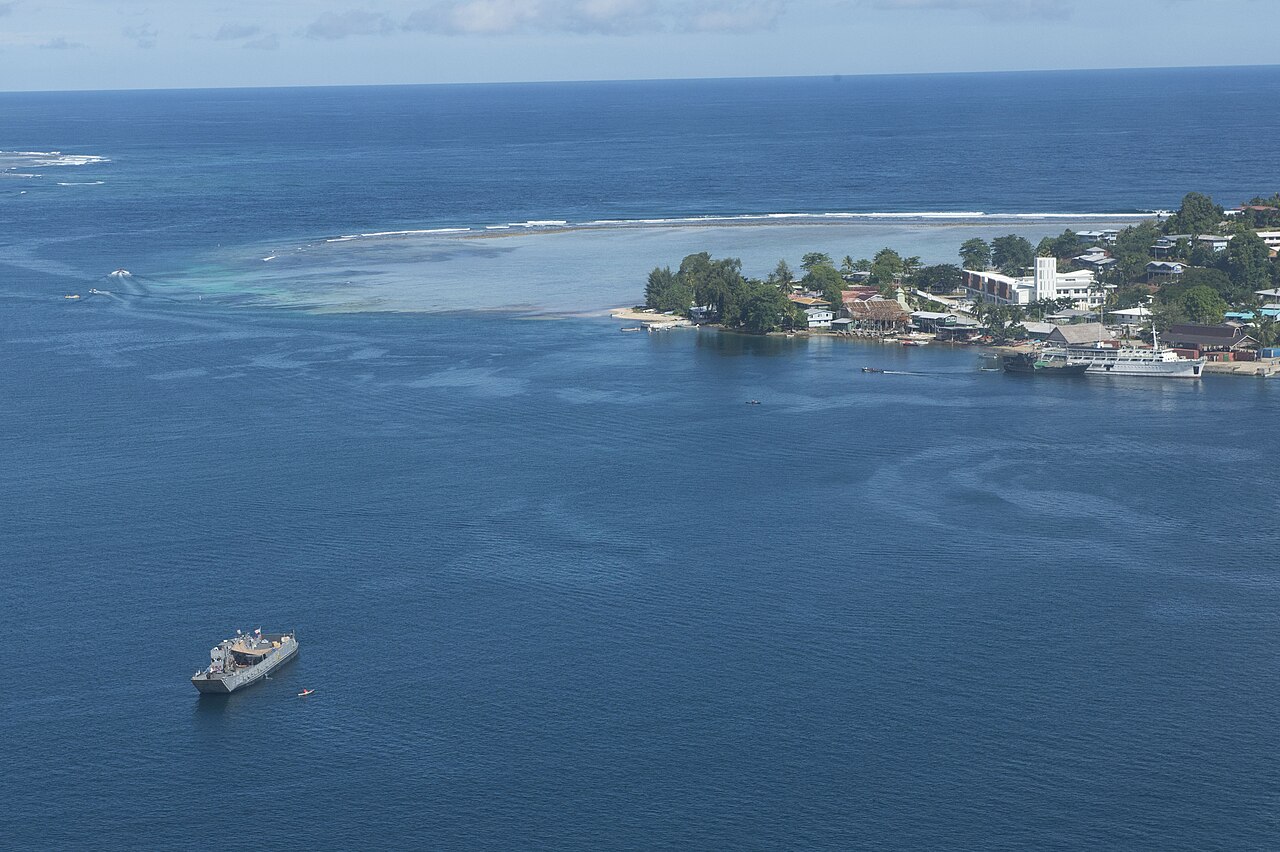
Jesmar / Wikimedia Commons (CC BY-SA 3.0)
Pacific

Sea-level rise, fuel shortages and missile tests top the agenda as Albanese heads to Palau for Pacific talks - The Conversation

Australia's high-level diplomatic engagement in Palau signals commitment to Pacific security and climate resilience, reinforcing regional alignment against Chinese strategic expansion. Fuel-security discussions at the bilateral level underscore Northern Arc vulnerabilities and the need for sovereign energy independence, relevant to Australia's resource-security posture.

GNews: The Conversation · 2026-08-30P1P5P7P8
Alliance
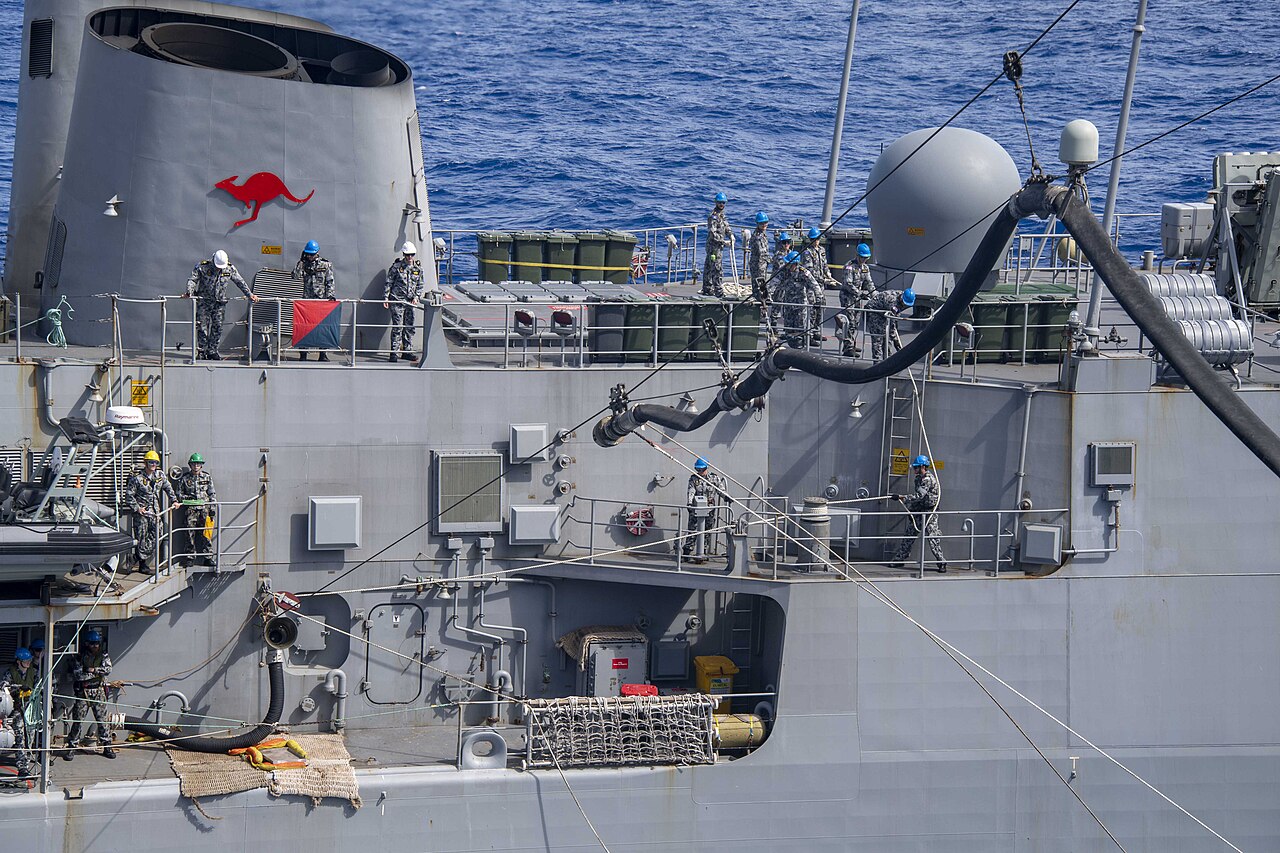
U.S. Navy / Lt. j.g. Ever Garay (public domain)
Alliance

AUKUS and our strategic independence - Pearls and Irritations

AUKUS and allied submarine capability are central to Australia's maritime defence posture (Pillar 6) and alliance credibility (Pillar 7). A Pearls and Irritations opinion piece on strategic independence in the AUKUS context contributes to public discourse but does not constitute a concrete policy shift, funding decision, or capability milestone unless the article reports specific government statements or programme changes.

GNews: AUKUS · 2026-08-30P6P7
Alliance
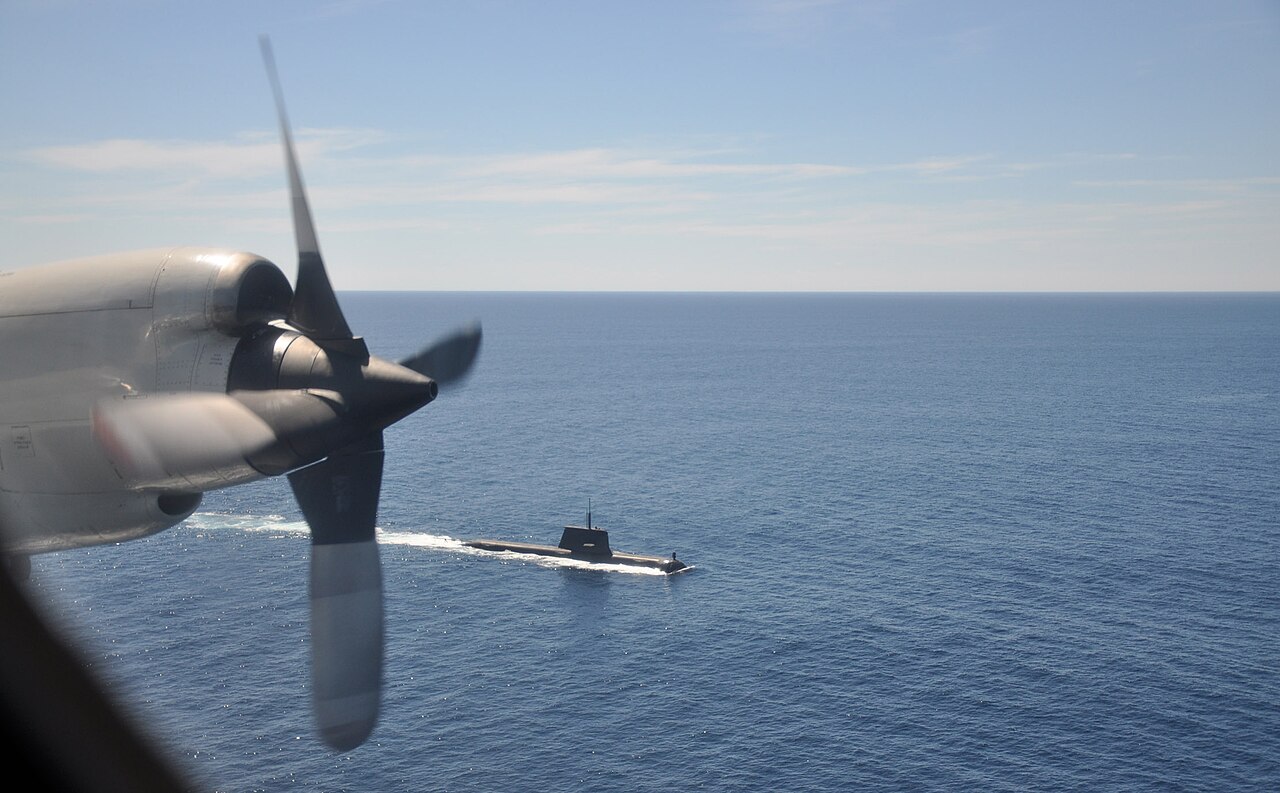
Sobarwiki / Wikimedia Commons (Public domain)
Alliance

The nuclear triangle in South Asia and Australia’s opening

Australia's participation in South Asian nuclear-policy architecture strengthens its diplomatic hand in the Indo-Pacific and signals a deepening alignment with India against Chinese regional dominance. Enhanced cooperation on uranium supply and nuclear governance reduces Australian dependence on Chinese supply chains in critical energy infrastructure and reinforces the Quad's institutional coherence.

Lowy Institute · 2026-08-30P1P5P7
Alliance
Alliance

Quad partners wary of China as Australians ‘soften’ to Beijing - The Australian

Public sentiment skepticism toward allies and openness to Beijing directly undermines pillar 7 (Alliance cohesion) by signaling to the US, Japan, and India that Australia's political support for Quad coordination and AUKUS commitments is in question. This erosion of perceived Australian commitment weakens the credibility of the Indo-Pacific coalition against Chinese coercion, particularly on Taiwan, and increases the risk that the US recalibrates its own regional strategy downward.

GNews: The Australian · 2026-08-30P7P5
Pacific
U.S. Navy / MC3 Samantha J. Webb (public domain)
Pacific

Postcard from PIF: Pacific leaders gather as China looms

The article highlights the Pacific Islands Forum's annual meeting and the ongoing challenge of Pacific nations balancing multiple suitors (including China, Australia, and the US) while pursuing economic development. Australia's strategic position in the Pacific depends on maintaining influence and preventing individual Pacific nations from shifting into Chinese security dependence, making regional cohesion and effective partnership delivery critical to Pillar 7 (Alliance) and Pillar 8 (Northern Arc) preparedness.

ASPI The Strategist · 2026-08-30P7P8
Australia · Defence
U.S. Navy / MC2 Michael Doan (public domain)
Australia · Defence

‘Bold and puzzling’: billionaire rues Defence axing 26-year contract - The Australian

Cancellation of a 26-year defence contract signals disruption to Australia's industrial base and supply-chain stability, eroding domestic defence manufacturing capacity at a time when allied industrial resilience is strategically critical. The decision reflects either fiscal pressure or capability reassessment, both of which weaken Pillar 3 (Industrial Base) and raise questions about continuity in defence-industrial partnerships.

GNews: The Australian · 2026-08-30P3P2
Alliance
U.S. Army / Wikimedia Commons (Public domain)
Alliance

Japan will soon test missiles in Australia, here's why - ABC News & Headlines – Australian Broadcasting Corporation

Japan's decision to conduct missile testing in Australia demonstrates deepening trilateral (Japan–Australia–US) defence integration and signals allied confidence in shared Indo-Pacific security arrangements. This reinforces Australia's role as a forward partner in the Quad and broader alliance posture, offsetting risks of great-power disengagement.

GNews: ABC News · 2026-08-29P6P7
The rest of the week
Alliance· 18

Sapped US firepower raises fears over ability to deter China, Russia - The Australian

GNews: The Australian · 2026-08-29source ↗P7P6

Deterioration in US military capacity directly undermines the credibility of the alliance guarantee that Australia depends on for deterrence and defence in the Indo-Pacific. This development raises the risk of both US strategic retrenchment (weakening AUKUS commitment and delivery) and Chinese miscalculation (emboldening kinetic moves on Taiwan), both of which would degrade Australia's strategic position.

How AUKUS could destroy Australia - The Saturday Paper

GNews: AUKUS · 2026-08-28source ↗P6P7P3

AUKUS is the centrepiece of Australia's maritime-defence modernisation and alliance lock-in with the US/UK. A high-profile critique of AUKUS viability in a nationally-read publication signals either emerging expert concern about programme delivery, cost-blow-out, or geopolitical sustainability—all of which would erode confidence in Pillar 6 (Maritime Defence) and Pillar 7 (Alliance) and potentially trigger political recalibration of defence priorities and spending. If credible risks to AUKUS are substantiated, Australia's submarine-capability timeline and Indo-Pacific deterrent posture face material threat.

15,000 operational days lost due to US submarine maintenance delays, GAO finds

Defense News · 2026-08-27source ↗P7P6

This article documents a systemic crisis in US military-industrial capacity—the core partner on which Australia relies for both AUKUS submarine delivery and Indo-Pacific deterrence. The scale of maintenance delays and operational losses reveals structural US Navy and shipyard constraints that directly threaten both the credibility and feasibility of AUKUS and US commitment to the region, raising material risk to Australia's Alliance pillar and maritime defence posture.

Submarine maintenance delays, ‘idle time’ cost $3.4 billion, GAO says

Breaking Defense · 2026-08-27source ↗P6P7

The GAO report reveals a structural crisis in US Navy submarine maintenance and shipyard capacity that directly jeopardises AUKUS delivery timelines and Australia's submarine-acquisition roadmap. US shipyard constraints, idle-time ballooning to 15 attack submarines and $3.1B+ in wasted operating costs (2026–2030), and decommissioning delays stretching to 45 months signal that the US industrial base cannot support both its own fleet modernisation and concurrent tech transfer to Australia without further slippage or downsizing.

AUKUS: the lessons of history - The Australian Naval Institute

GNews: AUKUS · 2026-08-27source ↗P6P7

The Australian Naval Institute's historical analysis of AUKUS provides strategic context for the submarine program but does not report new concrete developments, budget decisions, delivery timelines, or partner-commitment shifts that would directly alter Australia's capability posture. Historical lessons may inform internal policy debate but carry no direct bearing on whether AUKUS delivery accelerates, delays, or collapses.

Australia builds a Pacific alliance system to keep China out - economist.com

GNews: Australia defence · 2026-08-27source ↗P7P5

This article indicates Australia is actively constructing a diplomatic and alliance architecture in the Pacific to preempt Chinese military and security expansion in the region. Success in this strategy directly supports Pillar 7 (Alliance) and Pillar 5 (Decoupling) by tightening Western-aligned coalitions and reducing Beijing's bilateral leverage over vulnerable Pacific states.

Building on the Jakarta Treaty, Australia and Indonesia deepen cooperation

ASPI The Strategist · 2026-08-27source ↗P6P7

This article demonstrates concrete institutionalization of Australia's alliance relationship with Indonesia through treaty ratification and expanded practical cooperation across defence, maritime, cyber, and critical industries. Strengthening Indonesia's alignment with Australia's strategic posture directly reduces Beijing's opportunity to exploit the archipelago as a forward operating base or diplomatic wedge.

Western Australia prepares plan for accident involving an AUKUS nuclear vessel - UA.NEWS

GNews: nuclear submarine · 2026-08-26source ↗P6P7

Western Australia's preparation of emergency response protocols for AUKUS nuclear-powered submarine accidents demonstrates practical integration planning for the alliance's critical submarine-transfer program and reflects Australia's maritime defence infrastructure development. The article confirms Australia is operationalizing allied nuclear-submarine operations on home soil, reinforcing AUKUS commitment rather than signalling programme risk.

Perth prepares for 'one in 10 million' AUKUS nuclear disaster - ABC News & Headlines – Australian Broadcasting Corporation

GNews: AUKUS · 2026-08-26source ↗P6P7

This article indicates Australian authorities are actively preparing infrastructure and civil-defence protocols for AUKUS submarine basing in Perth, signalling operational confidence and institutional readiness for the programme's implementation. The framing of nuclear risk as manageable ('one in 10 million') reinforces political and public acceptance of the submarine transfer, lowering the risk of domestic political backlash that could derail AUKUS.

Japan minister joins surprise defence talks with Australia, Indonesia - The Australian

GNews: The Australian · 2026-08-26source ↗P6P7

The inclusion of Japan in defence talks with Australia and Indonesia strengthens the allied coalition against potential Chinese expansion in the Indo-Pacific and maritime security architecture. This deepens the Alliance pillar (7) and reinforces Maritime Defence (6) coordination among three critical regional powers, partly offsetting Chinese diplomatic gains and reducing space for Beijing to exploit bilateral vulnerabilities.

AUKUS dominates Hunter Defence Conference discussions - NBN News

GNews: AUKUS · 2026-08-26source ↗P6P7

AUKUS dominance at a major Australian defence conference signals sustained high-level political and industry attention to the submarine program and alliance architecture. However, the article provides no new concrete developments (funding, timelines, capability dates, or delivery changes) that would materially shift pillar metrics or scenario probabilities.

Henderson Defence Precinct marks major AUKUS infrastructure milestone - Australian Submarine Agency

GNews: AUKUS · 2026-08-26source ↗P3P6P7

Henderson Defence Precinct infrastructure milestones are direct evidence that AUKUS submarine operations (Pillar 6: Maritime Defence; Pillar 7: Alliance) are progressing toward operational capability. This strengthens Australian alliance credibility with US/UK partners and advances the critical SSN(A) submarine acquisition essential to Indo-Pacific deterrence and Australia's independent strike capability.

US Navy appoints industrial base chief as AUKUS partners confront shipbuilding challenge - defenceconnect.com.au

GNews: AUKUS · 2026-08-25source ↗P3P7

The article reports a direct US Navy response to acknowledged AUKUS shipbuilding challenges, signalling structured commitment to solving industrial-base constraints that threaten submarine delivery timelines to Australia. This administrative action, while not itself delivering capability, reduces the probability of AUKUS collapse by demonstrating partner resolve to work through the bottleneck rather than defer or cancel.

CALL OUT: We want your AUKUS inquiry questions for Peter Garrett and Rex Patrick - Crikey

GNews: AUKUS · 2026-08-25source ↗P6P7

AUKUS is critical to Australian maritime defence and alliance positioning (Pillar 6, 7). Parliamentary inquiry into the submarine program reflects domestic political engagement with the scheme, but the article is a call for questions to be submitted rather than a concrete policy decision, funding allocation, capability delivery, or partner signal — and thus does not yet move AUKUS probability materially.

Aussie industry called to support Virginia Class submarine sustainment in WA - defenceconnect.com.au

GNews: nuclear submarine · 2026-08-25source ↗P3P6P7

This signals AUKUS operationalisation beyond platform delivery: Australia is standing up domestic industrial sustainment for Virginia-class submarines, anchoring long-term alliance presence in WA and reducing supply-chain vulnerability. It demonstrates Australian manufacturing capacity and political commitment to support advanced US submarine operations on Australian soil, strengthening Pillar 6 (Maritime Defence) and Pillar 7 (Alliance) resilience.

Australia identifies future defense precinct site for AUKUS sub sustainment - Breaking Defense

GNews: AUKUS · 2026-08-24source ↗P3P6P7

Site selection for a dedicated defence precinct to sustain AUKUS submarines signals Australian institutional readiness and long-term programmatic commitment to the attack-submarine transfer. This advances Pillar 3 (Industrial Base) and Pillar 6 (Maritime Defence) by anchoring the operational and maintenance infrastructure necessary for the program to reach FOC and sustain deterrence across the decades ahead.

'Significant' AUKUS submarines milestone revealed - The Canberra Times

GNews: AUKUS · 2026-08-24source ↗P6P7

AUKUS submarine acquisition is critical to Australia's maritime defence posture and Indo-Pacific deterrence against China. A confirmed milestone de-risks the programme schedule and signals sustained US and UK commitment to Australian defence, directly supporting Pillar 6 (Maritime Defence) and Pillar 7 (Alliance) readiness.

China · Military· 13

Massive Expansion At China’s ‘Area 51’

The War Zone · 2026-08-28source ↗P6P7

China's accelerating expansion of Lop Nur as a flight-test center for experimental and next-generation combat aircraft directly advances PLA air power and AI-enabled systems, eroding Australia's relative maritime and air-defence posture in the Indo-Pacific. The facility's scale and pace of buildout signal a sustained Chinese investment in military innovation that will compress Australia's window to close capability gaps through AUKUS and allied modernisation.

On islands key to Taiwan's defense, troops prepare for a Chinese first strike - Reuters

GNews: Taiwan conflict · 2026-08-28source ↗P6P7P8

Taiwan's heightened military readiness on key defensive islands directly signals PLA threat elevation and kinetic-invasion risk, which cascades into Australia's Indo-Pacific security calculation, alliance dependency (US commitment), and maritime-defence posture requirements. Australia's deterrence credibility and force-modernisation priorities (SSN acquisition, surface-warfare capability) hinge on Taiwan not falling to kinetic coercion; active Taiwan defence preparations underscore the urgency of AUKUS delivery and Northern Arc capability.

Australia's Pacific rivalry with China heats up after Beijing's ICBM test

Nikkei Asia · 2026-08-28source ↗P6P7P8

China's ICBM test in the Pacific demonstrates an escalatory posture and extended strike capability that directly threatens Australia's northern approaches and allies. The timing—before the Pacific Island Forum meeting—signals Beijing's intent to project power and intimidate the Pacific region, complicating Australia's efforts to maintain influence and deepen security partnerships in the contested Indo-Pacific.

With many Taiwanese embassies closed, China shifts target to representative offices

ASPI The Strategist · 2026-08-26source ↗P5P7P8

China's shift to closing Taiwan's representative offices—particularly in the strategically critical South Pacific—directly erodes Taiwan's diplomatic isolation resistance and creates space for Beijing to deepen influence over Pacific island nations that Australia depends on for regional security and alliance cohesion. This represents a methodical campaign to sever Taiwan's last informal ties to non-recognising governments, weakening the alliance architecture Australia relies on to counter Chinese expansion in the Indo-Pacific.

Chinese warships shadow PH, US, Australian vessels in exercises over WPS - The Manila Times

GNews: PLA navy · 2026-08-26source ↗P6P7

Chinese naval shadowing of Australian–US–Philippine exercises in the West Philippine Sea signals PLA intent to monitor and constrain coalition naval activity in a strategically critical zone. This reflects tactical PLA assertiveness but does not alter the fundamental commitment of US or Australian forces to the region; however, it underscores the operational complexity Australian maritime forces face in contested waters and the need for robust alliance coordination.

What the Latest ‘2+2’ Dialogue Tells Us About China-Indonesia Relations

The Diplomat · 2026-08-25source ↗P5P6P7

China's institutionalisation of military ties with Indonesia—the region's largest archipelago and a blocking power for the South China Sea—reduces Australia's strategic depth and complicates the Indo-Pacific balance. Joint munitions production and intensified exercises signal strategic alignment that narrows space for Australian or Western influence and increases risk of Chinese military presence in Indonesia's waters.

Beijing Adds New Island To Its Largest Military Buildup In South China Sea - NDTV

GNews: China military · 2026-08-25source ↗P6P7P8

The PLA's sustained military island expansion in the South China Sea directly hardens Chinese power projection against Taiwan and tightens control over sea lanes critical to Australian trade and energy imports. Australia's defence posture and alliance relationships depend on open Indo-Pacific sea control; China's militarisation of disputed territory raises the operational threshold for Australian and allied maritime operations and signals Beijing's intent to exclude external powers from the region.

New installations emerge on islet as China accelerates South China Sea build-up - reuters.com

GNews: China military · 2026-08-25source ↗P5P6P7

China's continued SCS military build-up directly reduces Australia's strategic depth and complicates allied sea-control assumptions in the Indo-Pacific, narrowing options for AUKUS-force posture and freedom of navigation. The acceleration signal indicates Beijing is not constrained by diplomatic pushback, reinforcing the urgency of Australia's decoupling and maritime-defence investment.

‘Asia enforcer’: China’s new ambassador lands in Canberra - The Nightly

GNews: China Australia · 2026-08-25source ↗P7P5

China's appointment of a hardline ambassador signals intensified diplomatic pressure on Australia, likely including coercive messaging on Taiwan, trade leverage, and strategic competition. The framing as an 'enforcer' suggests China intends to pursue more confrontational engagement with Australia, which may harden Australian policy alignment with the US-led alliance but does not directly alter the probability of specific kinetic or economic scenarios.

China’s new ambassador urges Australia to respect ‘core interests’ - AFR

GNews: China Australia · 2026-08-25source ↗P5P7

A new Chinese ambassador's public demand that Australia respect Beijing's 'core interests' (a euphemism for Taiwan, South China Sea claims, and domestic governance) represents a deliberate diplomatic pressure campaign to weaken Australia's alignment with the US-led Indo-Pacific coalition and constrain Australian support for Taiwan deterrence. This signals Beijing's preference for coercive rather than kinetic resolution of the Taiwan question, and tests Australia's willingness to stand firm against economic and political pressure.

China’s new ambassador arrives in Australia – and immediately gets to work

ASPI The Strategist · 2026-08-25source ↗P7P5

China's new ambassador explicitly foregrounds United Front activism and demands Australian deference to Beijing's 'core interests' without reciprocal constraints, signalling intensified political-influence operations and diplomatic asymmetry. This reflects China's willingness to leverage civil-society proxies and coercive diplomatic framing to erode Australian sovereignty and alliance cohesion, a core decoupling and alliance-resilience challenge.

Mainland China’s ship activity near Taiwan hits record for third month in a row

South China Morning Post · 2026-08-24source ↗P6P7P8

China is executing a sustained campaign to establish maritime dominance around Taiwan through law-enforcement and survey vessels, signalling resolve to contest the status quo and raising the risk of either kinetic escalation or successful coercion. This directly affects Australia's security calculus: Taiwan's fall—by kinetic or coercive means—would decisively shift Indo-Pacific balance, threaten critical shipping lanes and semiconductor supply chains, and force a strategic choice between US alliance commitment and Chinese regional hegemony.

New Chinese envoy urges Canberra to respect ‘core interests’ - The Australian

GNews: The Australian · 2026-08-24source ↗P5P7

A new Chinese envoy's statement on 'core interests' signals Beijing's diplomatic stance toward Australia and reinforces pressure on decoupling and alliance posture. This reflects an ongoing pattern of Chinese strategic communication aimed at constraining Australian policy space, particularly on Taiwan, technology, and regional alignment—without itself making kinetic escalation more likely.

Australia · Defence· 12

Australia’s two “Wunderwaffen” can’t both be magical: Hunter frigates and AUKUS subs - Strategic Analysis Australia

GNews: AUKUS · 2026-08-29source ↗P3P6P7

The article identifies a hard budgetary/resource constraint: Australia cannot simultaneously acquire Hunter frigates at planned scale and deliver AUKUS SSN(G) boats on schedule without major reallocation or cost overruns. This directly threatens the credibility of a cornerstone alliance commitment (AUKUS) and undermines Maritime Defence pillar capability growth. Delays or reductions to either platform weaken Australia's Indo-Pacific posture and alliance trust at a time of rising PLA capability.

Navy’s new Hunter frigates a public policy monstrosity - The Australian

GNews: The Australian · 2026-08-28source ↗P3P6

The Hunter frigate programme represents a core pillar of Australian naval modernisation and industrial-base development. If the platform is experiencing public-policy dysfunction in flagship surface-ship acquisition, it signals systemic procurement, cost-control, and capability-delivery vulnerabilities that directly threaten AUKUS submarine execution and broader defence-industrial confidence.

Australia should watch drone development to its north

ASPI The Strategist · 2026-08-28source ↗P3P6P7

The article outlines a concrete ADF strategy to establish the Northern Territory as a sustainment and testing hub for unmanned autonomous systems, directly supporting Pillar 3 (Industrial Base) capability integration and Pillar 6 (Maritime Defence) posture in Australia's strategic north. This forward-positioning of next-generation systems and trusted-partner interoperability strengthens Australia's ability to operate effectively in the Indo-Pacific amid rapid drone-warfare evolution.

The US Army lost against Ukraine but would Australia do any better?

Lowy Institute · 2026-08-27source ↗P3P6

The article highlights a doctrinal gap: the ADF has been slow to operationalise lessons from the Ukraine war (dispersed operations, drone integration, attrition resilience, and peer-conflict demand). This directly bears on Australia's Industrial Base and Maritime Defence posture—the armed forces must adapt procurement, training, and force structure to survive high-intensity conflict against a peer rival, especially if AUKUS submarine delays extend the vulnerability window.

ADF trials Viper telescope to strengthen Australia’s space surveillance - defenceconnect.com.au

GNews: ADF capabilities · 2026-08-27source ↗P6P7

The Viper telescope trial represents a concrete ADF capability advancement in space-based surveillance, which directly supports maritime domain awareness and early-warning systems critical to Australia's Indo-Pacific defence posture. Enhanced Australian space surveillance reduces reliance on allied intelligence sharing and strengthens the ADF's independent operational picture, particularly relevant to Pillar 6 (Maritime Defence) and alliance interoperability.

Emergency plan for AUKUS nuclear submarine accident released - Nine.com.au

GNews: nuclear submarine · 2026-08-27source ↗P6P7

The AUKUS submarine program is critical to Australian Indo-Pacific deterrence and alliance credibility (Pillar 7). Publication of an emergency protocol for nuclear submarine incidents signals mature contingency planning and institutional preparedness, reducing political/operational risk to the program's delivery timeline. Conversely, if the protocol reveals gaps or vulnerabilities, it could undermine confidence in Australia's ability to safely operate nuclear-powered vessels, threatening program viability.

‘Shifted our whole mentality’: Army long-range EW system to go into production in 2027

Breaking Defense · 2026-08-26source ↗P3P6

This represents concrete progress in Australian defence industrial capability and domestic EW/collection system production, shifting from concept to manufacturing phase by 2027. It strengthens Pillar 3 (Industrial Base) by embedding specialist defence manufacturing and supports Pillar 6 (Maritime Defence) through operational EW capability, reducing reliance on allied systems and improving Australia's autonomous operational resilience.

New group of workers targeted by Australian Defence Force in 'cyber reserves' recruitment drive - Yahoo News Australia

GNews: Australia defence · 2026-08-26source ↗P3P7

The ADF's deliberate expansion of cyber-reserve personnel directly strengthens Australia's defensive posture against state-sponsored cyber threats, a critical vulnerability in the Indo-Pacific. This development signals sustained commitment to building the cyber workforce needed for operational resilience and force-multiplier effects in a contested region.

Ocius Selects ThayerMahan and Thales Australia Thin-line Arrays for Bluebottle Fleets

Naval News · 2026-08-25source ↗P3P6

Ocius's procurement of integrated thin-line sonar from ThayerMahan and Thales Australia demonstrates Australia's growing capacity to design, manufacture, and deploy autonomous maritime ISR platforms with world-class sensor systems—a key gap in persistent regional awareness. This strengthens Pillar 3 (Industrial Base) and Pillar 6 (Maritime Defence) by embedding advanced surveillance capability into a scalable, domestically-produced fleet, reducing platform vulnerability to supply-chain disruption and enhancing Indo-Pacific domain awareness without kinetic escalation.

Australia Selects Site Layout for Henderson Defence Precinct - navalnews.com

GNews: AUKUS · 2026-08-24source ↗P3P6

Henderson precinct is the planned home port for AUKUS-delivered attack submarines in Western Australia. Site-layout selection is a concrete step toward readying Australian facilities to receive and operate these platforms, directly supporting Pillar 6 (Maritime Defence) and the industrial base required for their crewing, maintenance, and supply-chain integration.

Marles blames Coalition for warship weight problems - The Australian

GNews: The Australian · 2026-08-24source ↗P3P2

Weight and schedule overruns on Australia's Hunter-class frigate program signal manufacturing execution risk and defence-industrial capability gaps that directly undermine Pillar 3 (Industrial Base). Cost blowouts and delivery delays erode the fiscal headroom (Pillar 2) needed to sustain broader defence modernisation, including AUKUS-related submarines and other surface combatants.

Australia Lays Keel for First Hunter-class Anti-Submarine Frigate

Naval News · 2026-08-24source ↗P3P6

The keel-laying marks the concrete beginning of Australia's Hunter-class frigate program, a cornerstone of RAN modernisation and a major industrial-base commitment. This validates Australia's naval-shipbuilding strategy and provides a tangible asset against Indo-Pacific coercion, directly strengthening Pillar 3 (Industrial Base) and Pillar 6 (Maritime Defence) as the nation builds independent frigate capability.

Australia · Energy· 10

Iran takes step toward fees for Hormuz passage, seeing Turkey as model

Nikkei Asia · 2026-08-26source ↗P1P5

Iran's explicit step toward monetising Hormuz passage—modelled on Turkey's precedent—represents a concrete escalation in strait-disruption risk, directly threatening Australia's seaborne fuel imports (diesel and jet fuel reserves). A sustained toll regime or closure would force Australia to accelerate alternative supply chains, strategic reserves drawdown, and energy-grid vulnerability, striking at Pillars 1 (Resource Sovereignty) and 5 (Decoupling from contested chokepoints).

US magnesium squeeze puts LMG in spotlight - The Australian

GNews: The Australian · 2026-08-26source ↗P1P5

Magnesium is a critical input for aerospace, defence, and automotive manufacturing. A US supply squeeze that elevates Lynas Rare Earths (LMG) as an alternative supplier strengthens Australia's strategic leverage in resource sovereignty and reduces dependence on concentrated foreign sources, particularly relevant to defence industrial base resilience. This development supports Australia's decoupling agenda and positions domestic rare-earth capacity as a geopolitical asset in allied supply chains.

Lynas Rare Earths profit jumps 27-fold after prices hit record - AFR

GNews: AFR · 2026-08-26source ↗P1P3P5

Lynas Rare Earths is Australia's sole significant rare-earth producer and a linchpin of Pillar 1 (Resource Sovereignty) and Pillar 5 (Decoupling from China). Record prices and a 27-fold profit surge indicate strong commercial viability and global demand for non-Chinese rare-earth supply, strengthening Australia's ability to supply allied nations and reduce their dependence on Chinese processing monopoly.

Australia’s Critical Minerals Crossroads - InvestorNews

GNews: critical minerals · 2026-08-25source ↗P1P3P5

Critical minerals are foundational to Pillar 1 (Resource Sovereignty) and Pillar 5 (Decoupling). Australia's ability to capture and process critical minerals—rather than exporting raw ore—directly strengthens fiscal resilience and reduces vulnerability to Chinese supply-chain coercion, which is a core preparedness objective. Strategic decisions at this crossroads will determine whether Australia can build indigenous rare-earth, battery, and advanced-manufacturing capacity or remains exposed to downstream dependency.

Australian Defence Force, RAAF roll out low carbon fuel blends nationwide - AeroTime

GNews: Australia defence · 2026-08-25source ↗P2P3P5

RAAF adoption of low-carbon fuel blends is a concrete step toward reducing Australia's exposure to fossil-fuel supply-chain disruption and enhancing operational energy sovereignty. This supports Pillar 1 (Resource Sovereignty) and Pillar 5 (Decoupling) by incrementally reducing reliance on volatile global energy markets, particularly the Hormuz chokepoint, and signals ADF operational modernisation within fiscal constraints.

Australia: A critical minerals cornerstone - Metal Tech News

GNews: critical minerals · 2026-08-24source ↗P1P5

Australia's role as a critical-minerals cornerstone underpins Pillar 1 (Resource Sovereignty) and Pillar 5 (Decoupling). Securing and diversifying downstream processing of critical minerals—rather than exporting raw ore—strengthens industrial autonomy and reduces dependency on Chinese refining, directly supporting strategic decoupling and sovereign wealth accumulation.

Grim signs the globe is about to run short of food

ABC News · 2026-08-24source ↗P1P2P5

Australia is a major food exporter facing real-time input-cost inflation, climate stress (El Niño), and fuel-price pressures that erode margins and export competitiveness. Rising global food scarcity may trigger migration, regional instability, and further supply-chain fragmentation that Australia cannot fully hedge without deeper resource sovereignty and strategic reserves.

Flagship renewable energy scheme becalmed as wind woes deepen

ABC News · 2026-08-24source ↗P2P8

Australia's failure to meet the 82% renewable electricity target by 2030 leaves the grid dependent on ageing thermal and imported gas generation during a period of rising electrification demand (EV adoption, hydrogen, NDIS load). A delayed energy transition undermines energy sovereignty and leaves critical defence-sector facilities, supply chains, and civilian infrastructure vulnerable to cascading blackouts—a direct hit to Fiscal Engine and Northern Arc preparedness during a potential Indo-Pacific crisis.

Australia prepares to compete with China with new rare earth refineries - Le Monde.fr

GNews: critical minerals · 2026-08-24source ↗P1P3P5

Rare-earth refining is a foundational strategic-decoupling initiative directly addressing Australia's vulnerability to Chinese export controls on critical minerals essential for defence systems, renewables, and electronics. Building sovereign processing capacity strengthens Resource Sovereignty (Pillar 1) and Industrial Base resilience (Pillar 3) by moving Australia up the value chain and reducing dependence on Chinese processing monopolies.

Technology· 5

Will Australia be locked out of top research by shunning Chinese universities? - South China Morning Post

GNews: China Australia · 2026-08-28source ↗P3P5

Strategic decoupling from Chinese academic and research networks (Pillar 5) constrains Australia's access to frontier science, talent, and collaborative innovation in AI, advanced materials, and defence technology — creating a medium-term industrial-base vulnerability (Pillar 3). The trade-off between national security (blocking espionage/IP theft) and innovation speed is acute; over-decoupling risks capability atrophy if Australia cannot substitute partnerships with Five-Eyes or other allies fast enough.

The world needs to take the AI bull by the horns – and fast

ASPI The Strategist · 2026-08-27source ↗P3P5P8

Australia's National Cabinet AI data-centre standards agreement and pursuit of AI-infrastructure investment directly addresses Industrial Base (pillar 3) capacity and Decoupling (pillar 5) resilience by building sovereign AI capability and reducing reliance on foreign platforms. Embedding Australia in global AI governance frameworks also strengthens Alliance (pillar 8) positioning, though the article does not report specific military AI procurement or capability advances.

Australian universities linked to Chinese warfare research - The West Australian

GNews: Australia defence · 2026-08-26source ↗P3P5

Australian academic collaboration with Chinese military research suggests institutional vulnerability in the Industrial Base (Pillar 3) and Decoupling (Pillar 5), reflecting a gap in technology-security screening and dual-use export controls. This reveals leakage of defence-adjacent knowledge to a strategic adversary at a time when Australia must isolate its critical-technology base from Chinese military modernisation.

Foreign AI is unavoidable. Australia’s challenge is in application

ASPI The Strategist · 2026-08-26source ↗P3P5

The article reframes Australia's AI strategy away from the costly and possibly unattainable goal of frontier model sovereignty toward 'AI readiness'—developing the workforce skills, regulatory expertise, and integration capability to adopt and govern foreign AI systems effectively. This pragmatic approach strengthens Pillar 3 (Industrial Base) and Pillar 5 (Decoupling) by emphasizing operational resilience and expert capability over autarky, reducing vulnerability to supply-chain disruption of frontier models while maintaining strategic autonomy in deployment and governance.

Internal emails expose scale of Anthropic's Australian AI plans

ABC News · 2026-08-25source ↗P2P3P8

Anthropic's 5GW data centre proposal in NSW signals deep US tech-sector confidence in Australia as an AI hub and energy infrastructure host, strengthening the US-Australia technological alliance and industrial base. The scale (three times current Australian data-centre capacity) requires substantial energy grid expansion and sovereign capability in AI compute, directly supporting Australia's fiscal engine (tens of billions foreign investment), industrial base, and alliance resilience against decoupling.

Pacific· 5

Kiribati to consider bill that could prevent switching diplomatic recognition between China and Taiwan - ABC News & Headlines – Australian Broadcasting Corporation

GNews: ABC News · 2026-08-26source ↗P7P8

Kiribati's move to legislatively constrain diplomatic recognition switching signals Pacific island resistance to China's zero-sum diplomatic coercion model, narrowing the space for Beijing to acquire new comprehensive security pacts in the region. This directly benefits Australia's Alliance pillar (Pillar 7) and Northern Arc stability (Pillar 8) by reducing Beijing's leverage over a strategically positioned atoll nation.

Pacific Islands Forum 2026: What Lowy’s Pacific team will be watching

Lowy Institute · 2026-08-26source ↗P5P7P8

The Lowy Institute's framing of PIF 2026 priorities—China challenge, climate, Taiwan, West Papua—signals Australia's strategic focus on Pacific cohesion and preventing Chinese inroads into the region. Australia's ability to coordinate with Pacific nations on Taiwan and security is central to Pillar 7 (Alliance) and Pillar 8 (Northern Arc) preparedness, but this article is preliminary agenda-setting with no new Australian policy, capability, or commitment announced.

Australia, Solomons push security reset to sideline China - The Australian

GNews: The Australian · 2026-08-26source ↗P5P7P8

Australia's proactive security reset with Solomon Islands represents a concrete alliance-consolidation effort in the critical Northern Arc and Pacific region, directly countering Chinese military foothold-building. This reinforces Pillar 7 (Alliance) and Pillar 5 (Decoupling) by locking in a key Indo-Pacific partner and reducing China's room for maneuver in the Pacific.

Pacific island nation considers bill to cement ties with China - ABC News & Headlines – Australian Broadcasting Corporation

GNews: ABC News · 2026-08-26source ↗P5P7P8

A Pacific island nation formally cementing ties with China through legislation signals China's advancing diplomatic/security penetration of the region, directly tightening the Northern Arc encirclement around Australia and reducing allied presence in the South Pacific. This erodes Australia's diplomatic buffer and alliance depth in a critical strategic zone where China has systematically competed for influence via economic and security coercion.

Australia’s Pacific energy pledges need a new approach

Lowy Institute · 2026-08-24source ↗P1P5P7

Australia's underperformance in Pacific energy commitments creates a strategic vacuum that Chinese economic and infrastructure initiatives can exploit for influence over PNG and smaller island nations. Failure to deliver on energy pledges weakens Australia's soft-power position in the Indo-Pacific and risks ceding critical relationships to Beijing's belt-and-road style engagement.

China · Economy· 3

Myanmar Shows War Doesn’t Stop Mining

Foreign Policy · 2026-08-27source ↗P1P5

Australia's strategic decoupling from China depends partly on securing alternative rare-earth supplies and reducing Beijing's monopoly control. This article shows China is deepening access to Myanmar rare earths despite state collapse, proving that fragmented conflict zones can still service Beijing's supply chains, undercutting Australia's assumption that unstable partners will deny China resources. This erodes Pillar 5 (Decoupling) and resource sovereignty (Pillar 1) by demonstrating the resilience of China-centric extraction networks and the limits of Australia's leverage through traditional statecraft.

Australia can’t contain China’s rise, it should instead embrace it - ucanews.com

GNews: China Australia · 2026-08-25source ↗P5P7

The article presents a policy argument for strategic decoupling from the US-led containment framework and accommodation of Chinese dominance—a direct challenge to Australia's core alliance and decoupling strategy. If such reasoning gains traction in Australian policy circles, it would erode political support for AUKUS, defence spending, and the Indo-Pacific coalition Australia has been building.

Will China Rewrite the Rules of Global Supply Chains?

The Diplomat · 2026-08-24source ↗P3P5

China is systematically replacing Western-led corporate responsibility and supply-chain standards with its own frameworks, weakening the ability of Australia and allied nations to enforce labour, environmental, and ethical standards on Chinese suppliers and mineral processors. This deepens Australia's reliance on Chinese-mediated supply chains for critical minerals (cobalt, tantalum, tin, tungsten) and reduces Australia's leverage to decouple from China-dependent production networks, undermining Pillar 5 (Decoupling) and Pillar 3 (Industrial Base) resilience.

Trade· 3

US critical minerals proposals to Brazil go unanswered as China looms

South China Morning Post · 2026-08-26source ↗P1P5

Brazil's non-response to US critical-minerals proposals signals Western difficulty in building alternative rare-earth and mineral supply chains outside China's control. For Australia, this undermines the decoupling strategy (Pillar 5) and resource sovereignty (Pillar 1) by leaving China's processing stranglehold uncontested in a key non-Chinese source region, limiting Australia's own leverage in mineral exports.

Geopolitics puts Australia’s rare earths in focus - Mining.com.au

GNews: critical minerals · 2026-08-26source ↗P1P5

Rare earths are critical to defence electronics, renewable energy, and advanced manufacturing—core to Australia's Resource Sovereignty (Pillar 1) and Decoupling (Pillar 5) strategy. Geopolitical focus on Australia's rare-earths position strengthens the case for domestic processing capacity and reduces reliance on Chinese refining, directly supporting strategic decoupling and industrial-base resilience.

Australia: A critical minerals cornerstone - Metal Tech News

GNews: critical minerals · 2026-08-24source ↗P1P5

Australia's designation as a critical minerals cornerstone directly strengthens Resource Sovereignty (Pillar 1) and strategic Decoupling (Pillar 5) by consolidating Australia's role in non-China supply chains for materials essential to defence, energy, and allied industrial bases. This reduces Australia's exposure to Chinese economic coercion and increases its strategic leverage with allied partners seeking secure mineral supply.

Australia · Fiscal· 3

‘Defence blowout’ appears to be a recurring feature - The Australian

GNews: The Australian · 2026-08-24source ↗P2P3

Recurring defence cost overruns signal systemic procurement and project-management weakness in Australia's industrial base and fiscal engine, directly threatening AUKUS submarine-programme timelines and capability-delivery goals. Erosion of budgetary discipline undermines confidence in Australia's capacity to execute long-duration strategic acquisitions in a constrained fiscal environment.

AUKUS money would be better spent on public education, housing, skills crisis - NSW Teachers Federation

GNews: AUKUS · 2026-08-24source ↗P2P3P7

This represents domestic political headwind against AUKUS spending, arguing public funds would be better directed to social investment. While a union position statement alone does not shift policy, it signals a vulnerability in the political coalition sustaining AUKUS, and if consolidated across labour and progressive constituencies, could create pressure to reprioritise or defer spending, threatening the 2045 delivery schedule.

All editions