All editions
The Dispatch·Weekly edition

31 August – 6 September 2026

A curated edition of the week's classified intelligence — the stories that moved Australia's preparedness across the eight pillars, and why each mattered.

101 stories · classified & human-curated

MajorAustralia · Energy

US launches new barrage of strikes on Iran around Strait of Hormuz

Australia · Energy
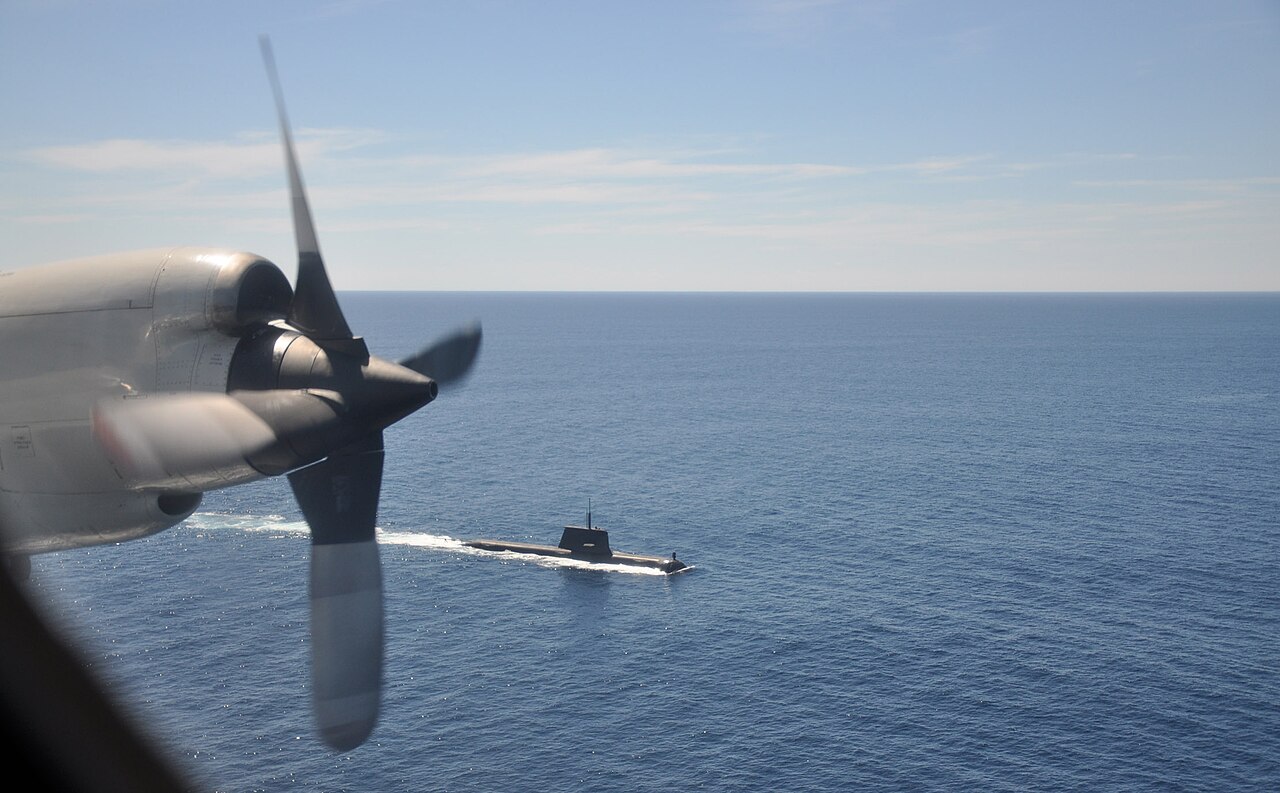
DVIDSHUB / Wikimedia Commons (CC BY 2.0)

US Central Command has resumed strikes on IRGC targets around the Strait of Hormuz after Iranian attacks on shipping and US bases in Jordan, with Tehran vowing to block Gulf oil exports and Brent climbing sharply. Australia holds only weeks of domestic liquid fuel stocks and imports most refined product through Asian refineries fed by Gulf crude, so a sustained closure would test fuel resilience faster than any Indo-Pacific contingency. A protracted Middle East campaign also draws US carrier, munitions and ISR capacity away from the Western Pacific, weakening the deterrence assumptions underpinning Australian planning against Chinese coercion.

Defense News·2026-09-01P1P2P7Full story
Alliance
U.S. Coast Guard photo by Chief Warrant Officer Sara Muir / Wikimedia Commons (Public domain)
Alliance

Postcard from PIF: Hardly divided, leaders took a stand on China test

Australia's A$600 million pledge and deepening Pacific engagement at the PIF—coupled with successful regional coalition-building against Chinese disruption—strengthens Australia's Alliance pillar (7) and Decoupling strategy (5), demonstrating that Pacific Island nations are maintaining strategic alignment with Australia and the West rather than accommodating Chinese leverage. This outcome reduces the space for Beijing to exploit divisiveness or extract bilateral security concessions in the region, directly supporting Australia's Indo-Pacific statecraft and the containment of scenarios (e.g. Chinese military basing via Pacific accommodation) that would degrade Australian strategic depth.

ASPI The Strategist · 2026-09-06P7P5
Alliance
U.S. Navy / Lt. j.g. Ever Garay (public domain)
Alliance

Does the public really support AUKUS? Or are we asking the wrong questions? - Crikey

AUKUS depends critically on sustained domestic political consensus in Australia. An article challenging whether public support is genuinely solid—rather than an artefact of polling design—raises the spectre of voter backlash, cost-shock, or electoral change that could derail the program. This directly bears on Pillar 7 (Alliance) and the probability of AUKUS collapse.

GNews: AUKUS · 2026-09-06P7
Alliance
M. LONGFELLOW / Wikimedia Commons (Public domain)
Alliance

US has access to 110 defense facilities in Australia — The Guardian World - UA.NEWS

The scale of US facility access (110 sites) demonstrates substantive alliance infrastructure and operational posture that underpins Australia's maritime defence and alliance architecture. This deep institutional embedding reduces risk of alliance abandonment and supports sustained Indo-Pacific deterrence against China.

GNews: Australia defence · 2026-09-06P6P7
Alliance
Nick Dowling / Wikimedia Commons (Public domain)
Alliance

The US now has access to more than half Australia’s military bases – could it drag the country unwillingly into war? - The Guardian

The article examines Australia's strategic entanglement with the US via military base access and the risk that Australian territory could draw the country into a Taiwan conflict. This bears directly on Alliance (Pillar 7) dynamics and Australia's ability to preserve strategic autonomy, but the piece does not report new capability deployments, AUKUS milestones, or shifts in US/Chinese posture—only frames existing exposure.

GNews: Australia defence · 2026-09-06P6P7
China · Military
Rjruiziii / Wikimedia Commons (CC BY-SA 3.0)
China · Military

A new claim on the Batanes, from an old Chinese playbook

China's use of manufactured territorial claims and cognitive warfare to normalize military presence in the First Island Chain and pressure US allies (Japan, Philippines, Taiwan) directly threatens the Indo-Pacific balance on which Australian security depends. This playbook—scholar assertion, media amplification, eventual normalisation of military presence—demonstrates Beijing's long-term strategy to consolidate control of critical sea lanes and chokepoints, eroding allied cohesion and Australia's freedom of navigation in allied operations.

ASPI The Strategist · 2026-09-06P5P6P7
China · Economy
Danny Gaida Tera ELgar / Wikimedia Commons (CC BY-SA 4.0)
China · Economy

Under Prabowo, Indonesia is more active than ever – but less free

Indonesia's shift toward China dependence under Prabowo directly undermines Australia's strategic position in the Indo-Pacific. A less autonomous Indonesia is more likely to accommodate Chinese military basing, naval logistics, or surveillance in the archipelago, degrading Australia's northern maritime security posture and fracturing the alliance architecture (Pillar 7) that Australia relies on to counter Chinese power projection.

Lowy Institute · 2026-09-06P5P7
Alliance
Earth Science and Remote Sensing Unit, Lyndon B. Johnson Space Center / Wikimedia Commons (Public domain)
Alliance

Significant US-Aust military planning going on ‘beneath surface’ for possible Taiwan invasion - The Australian

Deep US-Australian contingency planning for Taiwan invasion indicates both allies view kinetic Taiwan conflict as a material strategic risk requiring operational-level preparation. This drives Australian defence capability investment (Pillar 6: Maritime Defence) and deepens the US-Australia alliance commitment (Pillar 7), strengthening deterrence posture but also signalling that current deterrence margins are perceived as narrower than public messaging suggests.

GNews: The Australian · 2026-09-06P6P7
Alliance
U.S. Department of State / Wikimedia Commons (Public domain)
Alliance

Free and Open Indo-Pacific: A Pillar of Deeper Regional Cooperation

Australia's alliance pillar depends on sustained US commitment to the Indo-Pacific and Quad cohesion. This July 2026 meeting demonstrates ongoing US-Japan-India-Australia diplomatic coordination around FOIP, reinforcing the alliance architecture that underpins Australian strategic confidence and regional order resistance to Chinese hegemony.

The Diplomat · 2026-09-06P7P5
The rest of the week
Alliance· 42

A Message to China from Japan’s Takaichi Administration

The Diplomat · 2026-09-05source ↗P5P6P7P8

Japan's public commitment to Taiwan-Strait collective self-defence and China's sharp military and economic retaliation signal hardening positions on both sides, raising kinetic escalation risk in the first island chain and validating Australia's pivot to deterrence-focused alliances and Indo-Pacific posture. The article demonstrates that China is willing to weaponise economic coercion (rare earths, tourism bans, corporate restrictions) against advanced allies, underscoring Australia's critical need for decoupling (Pillar 5) and alliance depth (Pillar 7) to withstand similar pressure.

US Unpredictability Is Giving Its Asian Allies New Reasons to Cooperate

The Diplomat · 2026-09-04source ↗P7P3

The article documents a real strategic shift: Trump-era unpredictability is causing Australia's closest partners (Japan) and critical regional allies (South Korea) to invest in independent defence-industrial ties and European linkages, reducing exclusive reliance on the US security umbrella. For Australia, this signals both opportunity (closer Japan partnership) and risk: if the US becomes an unreliable alliance hub, AUKUS submarine timelines, Pillar II industrial coordination, and Indo-Pacific forward positioning all face execution risk.

‘Not about numbers’: Marles on US defence deal - The Australian

GNews: The Australian · 2026-09-04source ↗P7P6

Marles' framing of the US defence deal as emphasizing depth and quality over raw spending levels reassures that US commitment to AUKUS remains robust despite domestic budget pressures. The statement bolsters confidence in the partnership's delivery timeline and reduces risk of unilateral US retreat from Indo-Pacific commitments.

Australia Should Work With China, Not Try to Contain It - The Diplomat – Asia-Pacific Current Affairs Magazine

GNews: China Australia · 2026-09-04source ↗P7P5

This opinion piece advocates a fundamental strategic reorientation away from the containment consensus underpinning AUKUS, Quad coordination, and alliance cohesion in the Indo-Pacific. If such a pivot were adopted, it would erode Australia's Alliance pillar (7) and decouple Australia from Decoupling (5) — the coordinated effort to reduce economic and security exposure to China.

Top US admiral flies in as Pentagon concerns over AUKUS grow - The Nightly

GNews: AUKUS · 2026-09-04source ↗P6P7

Pentagon concerns about AUKUS signal potential weakening of US commitment to Australia's submarine capability roadmap, directly threatening Pillar 6 (Maritime Defence) and Pillar 7 (Alliance). Any US-led delay, cost blow-out, or deprioritisation of the AUKUS submarine transfer undermines Australia's ability to field operational SSNs on the timeline required to match PLA submarine expansion.

AUKUS: abandon case not made out - The Australian Naval Institute

GNews: AUKUS · 2026-09-04source ↗P6P7

The Australian Naval Institute's rebuttal of calls to abandon AUKUS reinforces institutional support for the strategic submarine investment, which is critical to Australian maritime deterrence and alliance cohesion with the US/UK. A collapse of AUKUS would remove Australia's only credible pathway to continuous attack-submarine capability and severely degrade Pillar 6 (Maritime Defence) and Pillar 7 (Alliance) preparedness.

AUKUS deal expands US bases for war on China - solidarity.net.au

GNews: AUKUS · 2026-09-04source ↗P6P7

US base expansion in the Indo-Pacific directly supports AUKUS logistics and operational readiness, reinforcing the alliance architecture on which Australia's submarine and defence integration depend. Concrete infrastructure commitments reduce political reversibility of the partnership, lowering the risk of American withdrawal or AUKUS collapse.

India, Australia discuss deepening defence ties as Ambassador Singh meets Army Chief Coyle - connectedtoindia.com

GNews: Australia defence · 2026-09-04source ↗P7P5

India–Australia defence cooperation reinforces the Quad's Indo-Pacific posture and deepens Australia's alliance network beyond AUKUS, reducing China's diplomatic and military manoeuvre space in the region. This supports Pillar 7 (Alliance) and Pillar 5 (Decoupling) by embedding Australia in a coalition resistant to Chinese strategic influence.

Australia's future submarine construction yard takes shape - Australian Submarine Agency

GNews: nuclear submarine · 2026-09-04source ↗P3P6P7

Physical establishment of Australia's submarine construction yard is a concrete milestone in AUKUS Pillar II delivery, strengthening Australia's Maritime Defence pillar and Industrial Base capability. Reducing the risk of AUKUS collapse directly supports Australia's Indo-Pacific alliance posture and long-term sovereign submarine production capacity.

US ‘very blunt’ about Australia’s role in China war despite Canberra’s euphemisms - theaustralian.com.au

GNews: The Australian · 2026-09-04source ↗P7P3

The article signals alignment between US and Australian strategic thinking on China contingency planning, despite rhetorical differences. This reinforces the Alliance pillar and suggests Australian defence posture is shifting toward explicit Taiwan-contingency readiness, which supports industrial base and procurement decisions downstream.

UK talks up AUKUS – but won’t commit to funding it - Herald Sun

GNews: AUKUS · 2026-09-03source ↗P7P6

The UK's refusal to commit dedicated funding to AUKUS—despite rhetorical support—directly undermines the political credibility and financial viability of the tripartite submarine program. This signals fracturing resolve among core allies at a critical juncture when Australia is betting its Indo-Pacific deterrent posture on sustained UK-US-Australia cooperation.

RNZAF and Australian Defence Force endorse shared space vision - Australian Aviation

GNews: Australia defence · 2026-09-03source ↗P7P8

RNZAF–ADF space-vision endorsement reinforces alliance integration in an increasingly contested domain, supporting Australia's ability to operate independently and in concert with New Zealand and Five Eyes partners. Space capabilities underpin early warning, targeting, communications, and maritime surveillance across the Indo-Pacific, directly enabling Australia's Northern Arc and Alliance pillars.

Officials back more military presence by the US in Australia - Taipei Times

GNews: Australia defence · 2026-09-03source ↗P6P7

Australia's strategic position depends critically on sustained US commitment to the Indo-Pacific and to AUKUS. Official US backing for expanded military presence signals reinforcement of Pillar 7 (Alliance) and Pillar 6 (Maritime Defence), strengthening Australia's deterrent posture against Chinese coercion and supporting the credibility of US security guarantees.

Extra funds push Taiwan’s defence spending past NT$1 trillion for the first time

South China Morning Post · 2026-09-03source ↗P6P7

Taiwan's record defence spending signals sustained commitment to military modernisation and raises the threshold for successful Chinese kinetic action, which reshapes the immediate security environment Australia operates within. This indirectly bolsters the Indo-Pacific deterrent posture and supports AUKUS alliance cohesion by demonstrating a key regional partner is actively raising capability and resolve.

US, Australia to boost defense ties amid China's influence - dw.com

GNews: China military · 2026-09-03source ↗P7P6

Deepening US–Australia defence ties strengthen Alliance pillar and reinforce regional deterrence posture against Chinese military expansion. A robust partnership signals credibility of AUKUS commitments and reduces risks of strategic hedging or abandonment in a crisis.

US declares it will accelerate military presence in Australia - ABC News & Headlines – Australian Broadcasting Corporation

GNews: Australia defence · 2026-09-03source ↗P6P7

US acceleration of military presence in Australia strengthens the Alliance pillar (Pillar 7) and Maritime Defence (Pillar 6) by confirming sustained US commitment to Indo-Pacific forward deployment and reducing strategic uncertainty about partner-nation durability. This directly counters the american_withdrawal scenario and provides concrete capability backing for AUKUS and regional deterrence.

Defense chiefs back boosting U.S. military presence in Australia - Japan Today

GNews: Australia defence · 2026-09-03source ↗P6P7

This article signals institutional US defence leadership support for deepening military integration with Australia, reinforcing the Alliance pillar and countering risks of US Indo-Pacific retrenchment. Sustained US presence forms the deterrent backbone of Australia's maritime defence posture and AUKUS credibility.

Marles, Hegseth flag US military ramp-up on Australian soil - AFR

GNews: Australia defence · 2026-09-03source ↗P6P7

The article signals a strategic commitment by the incoming US Secretary of Defense to expand the US military footprint in Australia, directly underpinning Pillar 7 (Alliance) and Pillar 6 (Maritime Defence). This contradicts withdrawal scenarios and reinforces the credibility of the AUKUS partnership, which is central to Australian submarine capability and Indo-Pacific deterrence posture.

Australia, US to boost defence ties as China's Pacific influence grows - reuters.com

GNews: Australia defence · 2026-09-03source ↗P6P7

The announcement reinforces the alliance pillar (Pillar 7) and signals sustained US commitment to the Indo-Pacific balance, critical for Australia's strategic deterrence against Chinese coercion. It counters China's bilateral island outreach and reduces the risk of strategic abandonment, a core vulnerability in Australian preparedness.

‘Force posture’: Marles, Hegseth back expanded US military presence in Australia - SMH.com.au

GNews: Australia defence · 2026-09-02source ↗P6P7

A joint statement from US and Australian defence ministers backing expanded US military presence represents concrete alliance affirmation and signals sustained US commitment to the Indo-Pacific, directly supporting Pillar 7 (Alliance) and Pillar 6 (Maritime Defence). This reinforces US willingness to invest in Australia-based force posture, strengthening deterrence against China and reducing near-term risks of US retrenchment or AUKUS collapse.

Live: Hegseth thanks Australia for 'matched' defence capabilities

ABC News · 2026-09-02source ↗P6P7

This meeting signals continuity and reinforcement of US–Australia defence alignment under the Trump administration, with explicit framing around capability matching and partnership strengthening. Such high-level bilateral engagement on defence modernisation and interoperability directly supports AUKUS execution and undermines scenarios premised on US strategic retreat from the Indo-Pacific.

The Trump Administration’s Pivot Away from the Indo-Pacific - The National Interest

GNews: Indo-Pacific · 2026-09-02source ↗P7P6

A Trump pivot away from the Indo-Pacific would directly undermine Australia's primary security alliance and AUKUS submarine program, forcing Australia to accelerate independent capability development and potentially accelerate re-armament spending. This directly threatens Pillar 7 (Alliance) and Pillar 6 (Maritime Defence) preparedness, shifting Australia toward strategic self-reliance in an era of rising Chinese power.

AUKUS makes Australia a nuclear target, top experts warn - SMH.com.au

GNews: AUKUS · 2026-09-02source ↗P6P7

Expert warnings about AUKUS elevating Australia's nuclear risk profile bear directly on alliance credibility (Pillar 7) and maritime defence strategy (Pillar 6). However, the article appears to be opinion/analysis rather than a concrete policy, capability, or alliance-commitment shift, so it signals strategic debate but not an immediate programme change.

AUKUS submarine plan ‘flawed and undeliverable’, inquiry hears - thepoint.com.au

GNews: AUKUS · 2026-09-02source ↗P3P6P7

An inquiry hearing testimony that the AUKUS submarine program is fundamentally flawed and undeliverable directly undermines Australia's most critical pillar-6 (Maritime Defence) capability and pillar-7 (Alliance) commitment. This signals rising political and technical headwinds to the UK/US submarine transfer, the linchpin of Australia's surface-denial strategy and deterrent credibility through 2035+.

UK’s defence minister loud and clear on AUKUS as a China deterrent - AFR

GNews: AFR · 2026-09-02source ↗P6P7

Public endorsement by a senior UK defence official of AUKUS as a core China deterrent reinforces alliance credibility and political commitment to the submarine-transfer program. This reduces the risk of partner withdrawal or program delay, which is material to Australia's Indo-Pacific deterrent posture and alliance architecture.

The Alliance | If the US and China go to war, whose side are we on? Kevin Rudd answers - ABC News & Headlines – Australian Broadcasting Corporation

GNews: ABC News · 2026-09-02source ↗P7P8

Kevin Rudd's public statement on Australian alignment in a hypothetical US-China conflict is a high-profile political signal on Alliance (Pillar 7) commitment, reinforcing Australia's strategic position alongside the US and Taiwan. However, the article reports a statement of existing policy rather than a concrete change in capability, posture, procurement, or partner commitment that would move preparedness metrics.

1 in 3 Australians doubt US would defend them if China attacks - Politico

GNews: AUKUS · 2026-09-01source ↗P7

Public doubt in the US security guarantee directly undermines Pillar 7 (Alliance). A 33% scepticism threshold signals weakening domestic consensus on AUKUS commitment and Indo-Pacific deterrence, which may constrain Australian defence spending, capability acquisition, and forward deployment in any Taiwan crisis. This perception gap—whether or not factually grounded—reshapes Australia's strategic calculus and alliance resilience at a critical moment.

GAO Report on Attack Submarine Maintenance Challenges

USNI News · 2026-09-01source ↗P6P7

The GAO report documents a systemic US naval maintenance crisis directly relevant to AUKUS delivery: US shipyard capacity constraints now jeopardise the Virginia-class submarine transfer timeline to Australia and future SSGN variants. This is not a policy debate but a hard operational fact that undermines Australia's primary maritime defence modernisation pathway and signals that the US alliance partner faces capacity limits in its Indo-Pacific posture.

‘Inviting everyone’: Indonesia hosts US and woos China - The Australian

GNews: The Australian · 2026-09-01source ↗P5P7P8

Indonesia's strategic positioning as a hub balancing US and Chinese interests is critical to Australia's northern arc security and alliance architecture. Any shift toward accommodation of Chinese military presence or exclusion of US/allied forces would directly threaten Australia's ability to operate, communicate, and project power in the Northern Arc and South China Sea approaches.

New Zealand, Australian Militaries Move To Formalise Defence Collaboration On Space - auckland.scoop.co.nz

GNews: Australia defence · 2026-09-01source ↗P6P7

Australia–NZ space-defence collaboration operationalises a critical Allied capability gap in ISR and communications resilience across the Indo-Pacific, directly supporting Pillar 7 (Alliance) cohesion and Pillar 6 (Maritime Defence) situational awareness. Formalisation signals commitment to deepening Five Eyes integration and reduces single-point-of-failure dependency on US space assets.

ANZUS at 75: Defence Guidelines could strengthen Australia’s deterrence

ASPI The Strategist · 2026-09-01source ↗P7P6

The article proposes formalising Australia–US deterrence coordination through Defence Guidelines, which would strengthen credibility of the ANZUS alliance by clarifying roles, missions, and crisis coordination across self-reliant, regional collective, and extended-deterrence dimensions. This reinforces Pillar 7 (Alliance) and Pillar 6 (Maritime Defence) by articulating force integration and capability development that bind Australia and the US strategically, reducing ambiguity and improving readiness during crisis.

Indonesia, United States Kick Off Annual Multinational Military Exercises

The Diplomat · 2026-09-01source ↗P6P7

Australia participates in a major Southeast Asian deterrence exercise that reinforces the alliance architecture underpinning Indo-Pacific stability and directly counters the strategic space China would exploit through Indonesian accommodation. The exercise's expansion to include more nations (13 participants, India as first-time observer) and focus on interoperability strengthens the multilateral security posture that constrains Chinese options in the region.

AUKUS is a $368 billion gamble Australia does not need to take - Pearls and Irritations

GNews: AUKUS · 2026-09-01source ↗P2P6P7

AUKUS represents Australia's primary pathway to modern submarine capability and strategic autonomy in the Indo-Pacific. Sustained political and fiscal challenge to the program—especially framed as economically unjustifiable—directly threatens delivery timelines and Australia's capacity to close the submarine gap during a period of heightened Chinese PLA modernisation.

The other ANZUS at 75: Australia-NZ alliance is too important to overlook

ASPI The Strategist · 2026-08-31source ↗P7P8

The reinstatement of ANZUS as the centrepiece of Australia-New Zealand defence ties after 40 years of de facto bilateralism with the US strengthens institutional depth of the Australia-led regional alliance architecture. This directly supports Australia's ability to coordinate Pacific deterrence against China and reduces the likelihood of US strategic retrenchment by institutionalising the trans-Tasman commitment.

Hitting a High Point: The Australia-Indonesia 2+2

The Diplomat · 2026-08-31source ↗P6P7

Australia has elevated Indonesia to a central pillar of Indo-Pacific strategy; this 2+2 confirms sustained high-level engagement and practical defence integration (maritime domain awareness, Coast Guard capability) that strengthens Australia's northern arc security architecture. By consolidating the Australia-Indonesia relationship and demonstrating mutual commitment to operationalizing the Jakarta Treaty, Australia reduces the likelihood of Indonesian strategic accommodation with China.

New Zealand ground forces drill to dock onto larger armies

Defense News · 2026-08-31source ↗P7

Plan ANZAC renewal and Exercise Hill 60 signal deepening Australia–New Zealand army integration, improving allied burden-sharing and interoperability in the Indo-Pacific. This strengthens the Pillar 7 alliance layer and reduces Australia's solo-dependency on US guarantees, supporting strategic autonomy in a contested region.

Indonesia, Australia defence chiefs meet to boost military ties and infrastructure - Indonesia Business Post

GNews: Australia defence · 2026-08-31source ↗P6P7

Australia–Indonesia military-to-military engagement directly reinforces the Northern Arc pillar and maritime defence posture by anchoring a critical Indo-Pacific partner. Strengthened infrastructure and operational ties with Indonesia insulate Australia's position against Chinese efforts to establish foothold in the Indonesian archipelago, a gateway to the Indian Ocean and critical chokepoints.

PNG, Aust forces complete joint training - The National | Your Number One Daily!

GNews: ADF capabilities · 2026-08-31source ↗P6P7

PNG is a critical Pacific strategic partner and potential vulnerability to Chinese basing or security accommodation; sustained joint training with Australia consolidates PNG's institutional ties to the Western alliance and raises the cost of Chinese overtures. This exercise demonstrates operational interoperability and signals Australia's commitment to regional defence partnerships, strengthening Pillar 7 (Alliance) cohesion.

The Alliance | Does Australia Still Need America? John Howard on Trump, ANZUS and AUKUS - ABC News & Headlines – Australian Broadcasting Corporation

GNews: ABC News · 2026-08-31source ↗P7P6

John Howard's public commentary on US commitment to ANZUS and AUKUS under potential Trump administration reflects elite anxiety about alliance durability and Australian strategic dependence on US force posture. Such high-profile questioning of alliance reliability—even when framed defensively—can influence domestic political appetite for independent defence spending and industrial investment, but does not itself shift US or Chinese behaviour, partner funding, or capability delivery.

China · Military· 14

China doesn’t need a military base to wield power in the Pacific - AFR

GNews: AFR · 2026-09-06source ↗P5P7P8

The article signals that China's Indo-Pacific strategy is shifting toward non-kinetic, economically-driven influence, reducing the salience of traditional military deterrence and making Australia's hard-power posture (submarines, bases) potentially less pivotal in preventing Beijing's regional consolidation. This undermines Pillar 7 (Alliance cohesion) by highlighting a asymmetric competition in which Beijing's preferred tools—finance, supply-chain leverage, diplomatic pressure—fall outside the AUKUS/5-Eyes domain.

ANALYSIS China defense mobilization law signals preparations for full-scale conflict: Analysts - focustaiwan.tw

GNews: Taiwan conflict · 2026-09-05source ↗P6P7P8

China's defence mobilization law institutionalizes wartime economic and military coordination, reducing bureaucratic friction for rapid force projection and supply-chain mobilization against Taiwan. This shifts the strategic balance against Australia's allies and increases the risk of a kinetic Taiwan scenario that would directly threaten Australian security, the AUKUS partnership, and Indo-Pacific stability.

Pacific Islands Forum leaders criticise China over missile test - ABC News & Headlines – Australian Broadcasting Corporation

GNews: ABC News · 2026-09-04source ↗P5P7P8

China's aggressive missile tests in or near Pacific waters provoke a unified critical response from the Pacific Islands Forum, signalling erosion of Beijing's soft-power influence and regional diplomatic standing. This outcome strengthens Australia's hand in maintaining Pacific island alignment with Western/allied security frameworks and reduces the likelihood of Beijing securing strategic footholds in the region.

Chinese AI poses high risk: Hastie - theaustralian.com.au

GNews: The Australian · 2026-09-04source ↗P3P5P7

Chinese AI advancement in military applications directly threatens the utility of Australia's conventional force modernisation (submarines, surface fleet, air assets) if AI-enabled targeting/autonomy accelerates platform obsolescence. Hastie's warning, if credible and widely heeded in Defence, may trigger accelerated pivot to AI-resilient doctrine, force mix, and procurement — a preparedness signal but also an acknowledgement of vulnerability.

Annexing Taiwan? China revises defence law to seize assets, tech & enforce military service; Tightens Exit-entry rules - organiser.org

GNews: Taiwan conflict · 2026-09-03source ↗P6P7P8

China's legal and institutional repositioning for Taiwan annexation directly elevates the military and political risk in the Indo-Pacific, the strategic theatre on which Australia's alliance structure, maritime defence posture, and regional stability depend. This hardening of China's statutory intent and enforcement capacity increases the probability of both kinetic and coercive unification scenarios, narrowing the window for peaceful resolution and raising contingency planning urgency for Australia and partners.

Australia pushes for condemnation of China’s missile test - ABC News & Headlines – Australian Broadcasting Corporation

GNews: ABC News · 2026-09-03source ↗P6P7

Australia's public condemnation of a Chinese missile test signals coalition diplomacy and alliance solidarity, reinforcing the Quad/Western posture against PLA capability demonstrations. However, a public statement alone does not materially shift Australian defence preparedness, procurement timelines, or the likelihood of China executing a kinetic Taiwan invasion—it reflects concern about PLA escalation but does not alter the triggering conditions for that scenario.

Turning the tide: China seeks to set the rules at sea - Brookings

GNews: PLA navy · 2026-09-02source ↗P6P7P5

China's drive to establish regional maritime dominance and set rules at sea directly challenges Australia's freedom of navigation, alliance interoperability, and Indo-Pacific strategic balance. This capability gap threatens AUKUS naval coordination, Pillar 6 (Maritime Defence) and Pillar 7 (Alliance) effectiveness, and raises the likelihood of a cross-strait kinetic event if China perceives sufficient military superiority.

How a middling Chinese guided-missile frigate unnerves Japan, Taiwan and the US

Defense News · 2026-09-02source ↗P6P7

The 054A frigate represents a qualitative step in PLA maritime power projection—the first Chinese frigate class with sustained blue-water capability—directly eroding the operational margin Australia and its allies have relied upon in the Indo-Pacific. This capability gap narrows Taiwan's strategic depth and increases pressure on allied force posture in the region, including AUKUS submarine operations and Australian maritime defence planning.

Mainland China stepping up preparations for Taiwan blockade, report says

South China Morning Post · 2026-09-01source ↗P6P7

Taiwan faces demonstrable PLA force-posture shifts toward blockade and amphibious operations, directly threatening the security of a critical Indo-Pacific democracy and a major Australian trading partner. This raises the immediate risk of crisis escalation in the Taiwan Strait, which would severely strain AUKUS cohesion, disrupt Australian trade and energy routes, and force Australia into a strategic choice that could undermine regional stability and allied solidarity.

China-Taiwan tensions overshadow Pacific Island Forum - ABC News & Headlines – Australian Broadcasting Corporation

GNews: ABC News · 2026-09-01source ↗P5P7P8

China-Taiwan tensions at the Pacific Island Forum signal ongoing PLA pressure on Taiwan and potential Chinese diplomatic competition for Pacific island allegiance, both of which bear on Australia's alliance cohesion (Pillar 7) and Northern Arc security (Pillar 8). However, the headline alone provides no concrete information on Australian defence posture, AUKUS, or a specific diplomatic or military outcome that would shift Australia's preparedness metrics or partner commitment.

US-China conflict over Taiwan: Why markets may be unprepared for the next big shock - Business Today

GNews: Taiwan conflict · 2026-08-31source ↗P5P7

This article frames Taiwan conflict as a market-shock risk rather than a driver of imminent kinetic action. While it signals financial-system vulnerability to Taiwan escalation, it does not report new military deployments, PLA capability advances, or diplomatic breakdowns that would make actual kinetic invasion more likely—only that markets are unprepared for the economic fallout IF such a conflict occurs. For Australia, this highlights the indirect economic damage of Taiwan crisis (commodity pricing, trade disruption, financial contagion) which impacts fiscal resilience and decoupling strategy, but does not materially alter the probability of the triggering event itself.

China warns Pacific leaders over Taiwan’s role in summit - The Australian

GNews: The Australian · 2026-08-31source ↗P7P8

China's explicit warnings to Pacific leaders about Taiwan's participation in regional summits reflect Beijing's strategy to diplomatically isolate Taiwan and undermine its soft power in the Indo-Pacific—a core Australian strategic concern. This dynamic directly affects Australia's ability to build and maintain Pacific Island alliances, which depend on inclusive, China-resistant regional institutions; if China successfully coerces island nations to exclude Taiwan, it signals growing Chinese influence leverage and weakens the coalition Australia needs to maintain.

China threatens ‘consequences’ as Taiwan attends Pacific summit - AFR

GNews: AFR · 2026-08-31source ↗P7P8

China's public threats against Taiwan's Pacific engagement demonstrate escalating coercive tactics in the Indo-Pacific, which directly affects Australia's alliance partnerships and regional stability. However, the article reports Taiwan's participation (not a shift toward China) and rhetorical Chinese pressure (not a material capacity change or Australian policy response), so it signals regional tension rather than a concrete shift in Australian preparedness or alliance commitment.

China warns Pacific nations of 'consequences' for Taiwan forum invite - ABC News & Headlines – Australian Broadcasting Corporation

GNews: ABC News · 2026-08-31source ↗P5P7P8

China's explicit use of threats against Pacific Island nations to punish Taiwan engagement directly undermines Australia's alliance strategy in the Indo-Pacific and weakens the broader anti-China coalition Australia relies on for regional stability. This coercive posture hardens Pacific nations' perception of China as a threat, potentially closing diplomatic space China might otherwise exploit and strengthening Australia's decoupling and alliance pillars.

Technology· 7

Full list of 2026 China university collaborations - theaustralian.com.au

GNews: The Australian · 2026-09-04source ↗P5P3

University–China partnerships expose Australian research institutions to intellectual-property leakage, counterintelligence risk, and blurred boundaries between civilian and military research—particularly in dual-use fields (AI, materials, quantum, semiconductors). This undermines strategic decoupling (Pillar 5) and Australia's control over critical-technology development (Pillar 3), while creating operational vulnerabilities to Chinese state espionage.

Taxpayers fund academic who worked with PLA scientists - The Australian

GNews: The Australian · 2026-09-04source ↗P3P5

The article reports taxpayer-funded Australian academic collaboration with PLA scientists, exposing a potential espionage/IP-leakage vector and weakening Australia's industrial-base security posture and decoupling strategy. This reflects persistent gaps in research-security enforcement that erode Pillar 3 (Industrial Base) resilience and Pillar 5 (Decoupling) progress, though it is a disclosure of past practice rather than a new capability loss or policy shift.

Australia invests in web of subsea cables amid Chinese tracking fears - AFR

GNews: AFR · 2026-09-04source ↗P5P7

Australia's proactive investment in alternative subsea cable infrastructure signals strategic decoupling from Chinese-controlled or monitored telecommunications routes, reducing exposure to surveillance and single points of failure in critical national communications. This strengthens digital resilience and aligns with Pillar 5 (Decoupling) and Pillar 7 (Alliance) objectives by enabling trusted, distributed connectivity with regional partners.

Australia needs to pick a side in global AI race, Hastie says - AFR

GNews: AFR · 2026-09-04source ↗P3P5P7

Hastie's call for Australia to align strategically in AI development signals a deliberate decoupling from potential Chinese AI dominance and reinforces the technology pillar of AUKUS Pillar II. This frames AI capability as a core alliance asset and industrial-base imperative, directly supporting Australian defence modernisation and reducing technology vulnerability in future conflicts.

Australia to step up artificial intelligence integration across military, energy - defenceconnect.com.au

GNews: Australia defence · 2026-09-03source ↗P3P6P8

Australia is advancing technological integration across two critical pillars—defence (submarine autonomy, platform coordination) and energy resilience—that directly underpin industrial-base modernisation and Northern Arc capability. This move reduces technological lag against near-peer competitors and strengthens operational redundancy in grid and maritime systems.

Not just payments: the economy depends on digital systems

ASPI The Strategist · 2026-09-01source ↗P3P8

The article exposes systemic cyber-resilience gaps across Australia's economic exchange systems—beyond payments to logistics, food supply, and critical services. This reveals material vulnerability in Pillar 3 (Industrial Base) and Pillar 8 (Northern Arc) continuity, showing that commodity supply chains and rural-agricultural integration depend on digital infrastructure that has no documented hardening or national-level redundancy standard.

US funds Alcoa gallium plant in Australia to cut China reliance - Mining.com

GNews: critical minerals · 2026-09-01source ↗P1P5P3

Gallium is a critical semiconductor input for military radar, communications, and autonomous systems. US co-investment in Australian processing capacity directly strengthens Pillar 1 (Resource Sovereignty) and Pillar 5 (Decoupling), reducing China's leverage over Australian defence-industrial supply chains and accelerating critical-mineral self-sufficiency.

Pacific· 7

'Reasonable' Naoero didn't endorse criticism of China's missile test, Bowen says - ABC News & Headlines – Australian Broadcasting Corporation

GNews: ABC News · 2026-09-03source ↗P7P8

Nauru's public refusal to criticise China's missile test, described as 'reasonable' by Australian Foreign Minister Bowen, indicates a Pacific island state declining to join Western criticism of Chinese military aggression. This demonstrates China's growing diplomatic leverage in the Pacific and erosion of the allied consensus needed to counter Chinese strategic expansion in Australia's near region.

China undermines Pacific forum in fightback against Australian influence - The Australian

GNews: The Australian · 2026-09-02source ↗P5P7

China's deliberate undermining of Australian leadership in Pacific multilateral forums erodes Australia's soft-power advantage and alliance-building capacity in the Indo-Pacific. Loss of diplomatic influence in the Pacific Islands region directly weakens Australia's ability to prevent Chinese security pacts and economic leverage, reducing strategic decoupling and alliance cohesion.

Postcard from PIF: China backs down from threat after Pacific leaders react

ASPI The Strategist · 2026-09-02source ↗P7P8

This article demonstrates effective Pacific Islands coalition resistance to Chinese diplomatic pressure, strengthening the anti-China consensus among PIF members and reinforcing Australia's alliance position in the region. A demonstrated willingness by Pacific leaders to stand together against Chinese coercion reduces Beijing's ability to peel off individual nations through security pacts, directly supporting Australia's strategic interest in maintaining a cohesive regional balance.

China Wants to Push Taiwan out of the Pacific

The Diplomat · 2026-09-01source ↗P7P8

The article documents China's systematic diplomatic pressure to constrain Taiwan's international space in the Pacific, including rhetorical delegitimization and institutional exclusion—tactics that erode Taiwan's resilience and international standing, weakening the anti-China coalition Australia depends on. However, no Pacific nation has switched recognition to China in 2026 despite Beijing's intensified campaign, suggesting limits to Chinese coercive diplomacy; Australia's alliance architecture and support for Taiwan's diplomatic presence remain intact in this reporting.

Leaders missing and China ‘furious’: the Pacific Islands forum off to a decidedly shaky start - The Conversation

GNews: The Conversation · 2026-09-01source ↗P5P7P8

The article indicates that Australia and Western allies retain sufficient diplomatic influence to convene a major Pacific regional forum while excluding China—a signal of coalition cohesion in the Indo-Pacific. However, China's reported anger and the 'shaky' start raise medium-term risks of Chinese diplomatic retaliation or side-deals with smaller island states, requiring sustained Australian diplomatic and development effort in the Northern Arc.

Pacific Islands summit opens in shadow of China-Taiwan tensions - The Australian

GNews: The Australian · 2026-08-31source ↗P7P8

Pacific Islands summits are venues where China actively competes for diplomatic and security influence; Australia's ability to maintain or expand regional partnerships directly affects its strategic depth and early-warning capability in the Indo-Pacific. The headline's reference to China-Taiwan tensions suggests the regional strategic environment is tightening, but without details on outcomes, pledges, or Australian role, the concrete bearing on Australian preparedness remains unclear.

Another Pacific leader pulls out of summit amid China tensions - AFR

GNews: AFR · 2026-08-31source ↗P7P8

Pacific leadership fracture over China tensions indicates diplomatic instability in Australia's strategic arc, but withdrawal from a summit does not directly signal a shift toward Chinese security alignment or away from it—it reflects existing tensions without resolving them. The article's vagueness on which leader and which summit limits assessment of concrete impact on Australia's alliance position or China's regional gains.

Australia · Energy· 7

AI data centres are booming in Australia - but at what cost?

BBC Asia · 2026-09-03source ↗P2P5P8

Australia's emergence as a global AI data centre hub strengthens fiscal capacity and digital sovereignty (Pillars 2, 5) and positions it as a technology pole in the Indo-Pacific (Pillar 8). However, the massive energy concentration—including a 1GW facility—creates critical infrastructure vulnerabilities and supply-chain bottlenecks that could undermine grid resilience during crisis or conflict.

The economics of economic security

Lowy Institute · 2026-09-03source ↗P1P3P5

The article frames Australia's aluminium-smelting capacity as a strategic asset beyond comparative advantage, embedding it in geoeconomic competition. Retention of domestic smelting capability strengthens Australian industrial sovereignty and reduces dependence on Chinese processing of critical advanced-manufacturing inputs, directly supporting Pillar 3 (Industrial Base) and Pillar 5 (Decoupling).

2 Filipino sailors killed in Iran’s attack on vessel, Saudi Arabia says

South China Morning Post · 2026-09-02source ↗P1P5

This article documents Iranian kinetic action against commercial shipping in the Strait of Hormuz, a critical chokepoint for ~20% of global oil and LNG trade. For Australia, which imports ~50% of refined fuel and relies on Hormuz-transiting LNG, an escalation toward sustained closure would directly threaten fuel reserves and industrial continuity, undermining Resource Sovereignty and Decoupling pillars.

Before deciding how to power data centres, decide where to build them

ASPI The Strategist · 2026-09-02source ↗P2P5P8

Data-centre infrastructure is critical to Australia's digital-economy resilience and strategic autonomy in an era of AI-driven competition and China's deepening tech dominance. A A$150B investment pipeline coupled with renewable-energy mandates strengthens energy sovereignty (Pillar 5) and reduces future grid vulnerability, but delays in regulatory clarity (legislation expected only in 2027) create competitive risk and may push investment offshore.

US Funds Alcoa Gallium Plant in Australia to Cut China Reliance - Bloomberg.com

GNews: critical minerals · 2026-08-31source ↗P1P3P5

Gallium is a critical input for semiconductor and defence electronics (radar, hypersonics, missile guidance). Establishing US-backed processing in Australia directly strengthens Resource Sovereignty (Pillar 1) and strategic decoupling (Pillar 5) from China's current near-monopoly on refined gallium. This reduces a key vulnerability in Australia's defence industrial base and signals allied commitment to embedding critical-mineral resilience in the Indo-Pacific.

Fracked gas from Beetaloo Basin will flow to NT power grid from today

ABC News · 2026-08-31source ↗P1P2

The Beetaloo Basin project operationalizes domestic energy sovereignty in Australia's strategic north, reducing dependence on imported fuel and improving grid resilience in a region critical to continental defence and Indo-Pacific positioning. Pilot deployment of onshore gas production—historically constrained by environmental and state-level regulation—signals progress on resource sovereignty and energy autarky, which shore up fiscal and logistics headroom during crisis or sustained geopolitical tension.

5 key questions the Army is still working out for its nuclear microreactor plan

Breaking Defense · 2026-08-31source ↗P2P3P5

The Australian Army's active exploration of nuclear microreactors directly supports strategic decoupling from fossil-fuel dependency and strengthens industrial/energy sovereignty for defence operations. This represents a concrete capability pathway that, if realised, would enhance Australia's energy independence and operational resilience during extended grid stress or supply disruption.

Australia · Defence· 6

From the ANI Archives: The RAN Needs SSNs - The Australian Naval Institute

GNews: nuclear submarine · 2026-09-04source ↗P6P3

The article reinforces that Australia's maritime defence posture—critical to Pillar 6 (Maritime Defence) and Pillar 3 (Industrial Base)—depends on timely attack-class submarine deployment. Advocacy from the Australian Naval Institute for SSN acquisition underscores the operational gap and rationale underpinning AUKUS Pillar I submarine commitments, which are already at risk of schedule slip.

Henderson Precinct To Support Australia's Naval Shipbuilding And AUKUS Submarines - Ocean News & Technology

GNews: AUKUS · 2026-09-01source ↗P3P6P7

Henderson Precinct's designation as a dedicated hub for AUKUS submarine and naval shipbuilding demonstrates tangible progress on Australia's largest defence procurement—the attack-class submarine programme critical to Pillar 6 (Maritime Defence) and industrial base resilience. This commitment to shore-based industrial capacity directly supports AUKUS delivery timelines and signals continuity of UK/US partnership backing, mitigating existential AUKUS programme risk.

China · Economy· 6

Indonesia’s Emerging China Dependencies

The Diplomat · 2026-09-04source ↗P5P7

Indonesia's drift into Chinese economic dependency directly threatens Australia's strategic autonomy and alliance network. A functionally China-aligned Indonesia—the region's largest economy, a G20 member controlling critical maritime chokepoints—would degrade Australia's room to maneuver in the Indo-Pacific, weaken AUKUS strategic depth, and enable Chinese power projection across the archipelago, undermining the northern arc of Australian defence.

Inside the Chinese factory where Australian mining is being reimagined - AFR

GNews: AFR · 2026-09-03source ↗P1P3P5

The article documents Australian mining companies relocating advanced processing and manufacturing to China, deepening Australia's upstream-commodity dependence and ceding downstream value capture to Beijing. This erodes Resource Sovereignty (Pillar 1), reduces Australia's Industrial Base (Pillar 3) and Decoupling capacity (Pillar 5), and increases structural economic linkage to China precisely when strategic autonomy is most critical.

Lithium traders on edge after China’s biggest mine closes (again) - AFR

GNews: AFR · 2026-09-03source ↗P1P5

China's largest lithium mine closure tightens global battery-material supply, raising costs for Australian EV adoption, renewable energy storage, and defence technology integration. Lithium is a critical mineral for decoupling strategy; Chinese supply disruption accelerates Australia's need to accelerate domestic extraction and processing to reduce reliance on Chinese intermediates.

Preserving freedom to govern in the face of economic coercion

ASPI The Strategist · 2026-09-03source ↗P1P5P7

The article identifies a critical vulnerability in Australia's and the region's strategic autonomy: the success of Chinese economic coercion in shaping policy decisions across Indo-Pacific governments. This directly undermines Australia's ability to maintain resource sovereignty and alliance coordination (Pillars 1, 5, 7) if the lesson learned by the region is accommodation rather than resistance.

US Drugmakers Are Dependent on Chinese Supply Chains

The Diplomat · 2026-09-02source ↗P1P5

Australia faces analogous pharmaceutical and critical-input dependencies on China. The article documents Beijing's proven pattern of supply-chain coercion against allies (Australia specifically mentioned for barley/wine restrictions) and demonstrates that US allies cannot assume uninterrupted access to Chinese-sourced essential goods during strategic crisis. This reinforces the case for Australian sovereign/diversified supply chains in defence-critical medicines, medical devices, and precursors.

China's Rare Earths Duopoly

China Talk · 2026-09-01source ↗P1P5P3

China's consolidated rare-earths duopoly under state-owned giants blocks Australia's ability to achieve resource sovereignty and critical-mineral independence. Without domestic or allied rare-earths processing capacity, Australia's manufacturing base and defence-industrial autonomy remain vulnerable to Beijing's supply weaponisation.

Trade· 2

Malaysia draws global critical minerals interest as China curbs loom - Nikkei Asia

GNews: critical minerals · 2026-09-03source ↗P1P5

Malaysia's emergence as an alternative critical-minerals supplier reduces Australia's vulnerability to Chinese export controls on rare earths and advanced materials essential for defence and industrial production. This diversification of global sourcing patterns weakens China's leverage over allied supply chains and supports Australia's decoupling strategy, though Australia's own mineral export capacity remains the primary lever for resource sovereignty.

I drove Fortescue’s giant electric mining machines in China - AFR

GNews: AFR · 2026-08-31source ↗P1P5P3

Fortescue's operation of electric mining equipment in China demonstrates continued commercial integration between a major Australian resources firm and the Chinese market, despite broader strategic decoupling rhetoric. This illustrates the structural tension between Australia's defence/security interests (decoupling from China) and economic dependence on Chinese demand and market access for resources exports.

Australia · Fiscal· 1

Defence tech entrepreneur fears CGT overhaul-induced ‘wasteland’ - The Australian

GNews: The Australian · 2026-08-31source ↗P3P5

Australia's defence-tech industrial base depends on venture capital and entrepreneurial innovation. A capital-gains tax overhaul that deters investment in defence startups directly undermines Pillar 3 (Industrial Base) and Pillar 5 (Decoupling), weakening sovereign capability development and AUKUS readiness. Tax policy that erodes the venture ecosystem for critical defence technology is a fiscal headwind to strategic autonomy.

All editions