Rangebank battery boosts Victoria’s energy storage
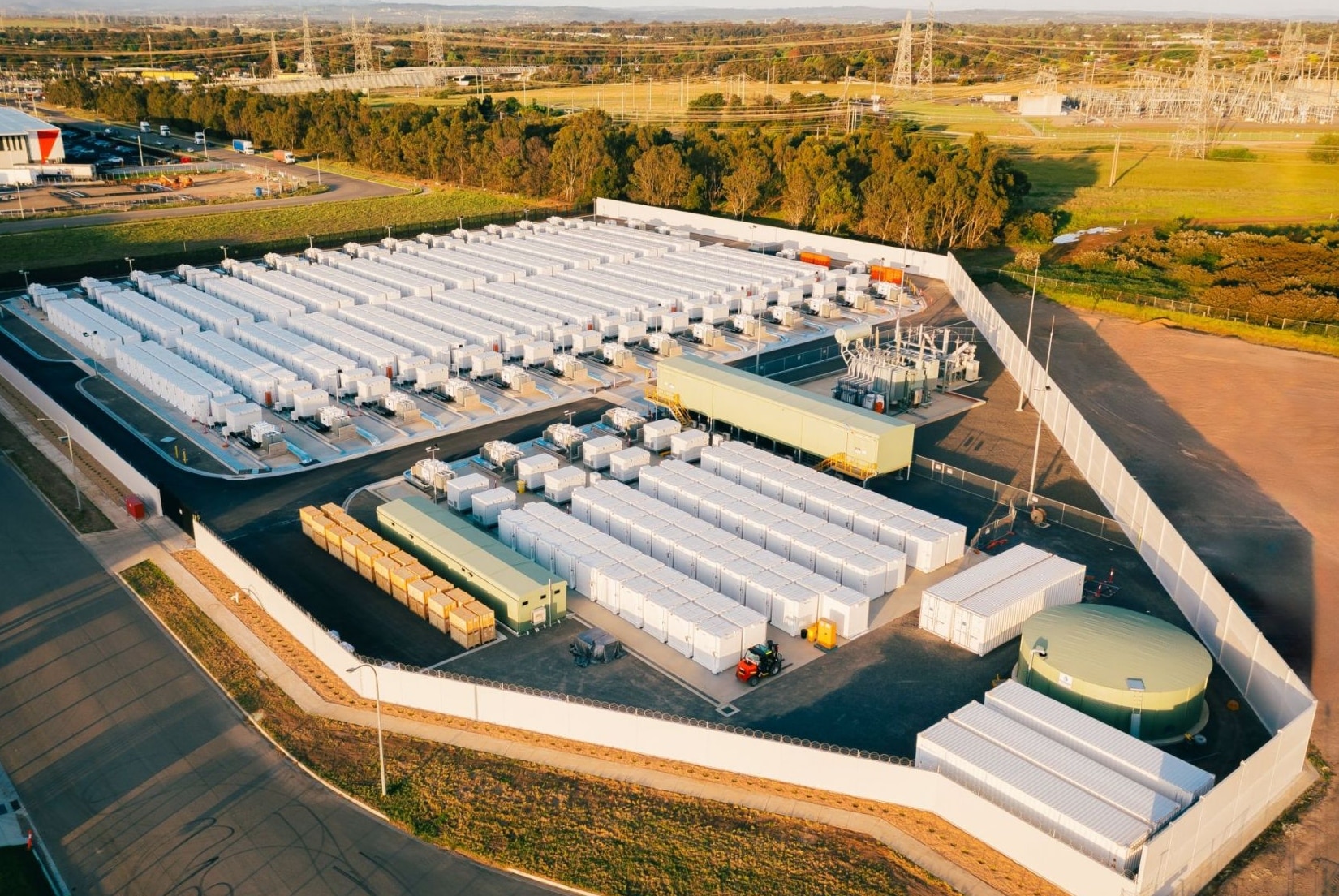
Victoria has commissioned a 200MW, 400MWh battery storage facility at Cranbourne, developed by Eku Energy. The system can supply power equivalent to 80,000 homes for one hour during peak demand. The project adds to Australia's growing portfolio of grid-scale batteries, which are being deployed alongside renewables to manage output volatility.
Where this fits
This battery addresses a real problem: solar and wind output does not match demand. Without storage or gas backup, a grid dependent on weather-driven generation cannot hold frequency or meet peak load. A single 400MWh battery lasting one hour is a firming tool, not a solution. Australia is building a parallel system of batteries and gas plants to compensate for the intermittency of renewables. The minerals, manufacturing and capital cost of that firming infrastructure are rarely bundled into the headline cost of "cheap solar." Firm, dispatchable power, whether gas or nuclear, would not require this layered, capital-intensive backup. The alternative, a generation fleet anchored on nuclear baseload with its stable output and low lifecycle emissions, would eliminate the need for hour-scale storage altogether.
What it means
One battery holding four hours of national peak demand illustrates the scale of the storage problem. Scaling this across a fully renewable grid would require thousands of similar facilities, or equivalent investment in interconnection and gas plants, all to manage weather variation that a firm grid source would not face. Australia is dependent on China for 80 per cent of battery cell manufacturing and for processed battery materials. Each megawatt-hour of storage built domestically is capital deployed offshore. The grid is becoming more resilient to generation outages but less sovereign, and more exposed to supply-chain disruption.
By the numbers
at ~A$600–1000/kWh installed. Source: BNEF, CSIRO GenCost 2024-25. Indicative.
of average national (NEM) demand if fully dischargeable, then it needs recharging. Storage shifts power, it does not generate it.
lithium, graphite, nickel, copper and cobalt (~40 t lithium content). Replaced roughly every 12 years. Source: IEA, Argonne GREET. Indicative.
~75% of cells are China-made. Source: IEA cell-manufacturing share.
Figures are indicative conversions from the article's stated quantity using published cost, material and capacity factors (CSIRO GenCost, BNEF, IEA, IAEA). Ranges, not precise forecasts.
Go deeper on the numbers
The bigger picture
Energy security is national security. This connects to the wider case at Unprepared: Australia's dependence on a strategic rival, and how ready it is for the world that is coming.
Reported by Utility Magazine. Read the original report ↗
Related coverage
The Four-Hour Problem: Why HiTHIUM Is Betting on Eight-Hour Batteries for Australia’s Grid
Recurrent wins federal approval for NSW solar and battery project
Rare, state-owned wind farm clears one of “most complex” grid connection hurdles - Renew Economy
Big batteries soak up record amounts of energy as big solar floods the grid – but curtailment still bites
The numbers, as they move
A short, sourced brief when the figures shift: a transmission blow-out, a supply-chain move, a milestone.