Fortescue’s 250MWh battery withstands 95MW power station outage
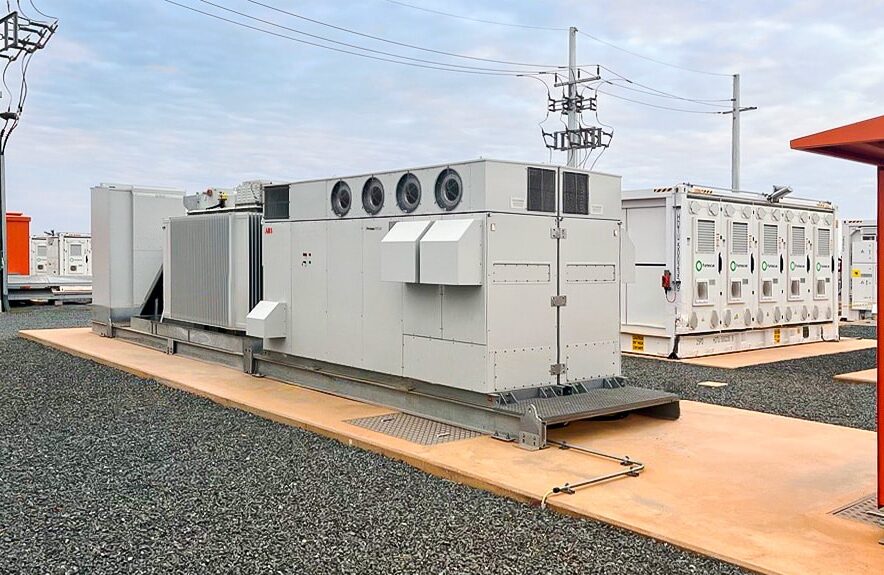
Fortescue's 250MWh battery energy storage system at North Star Junction responded to an unplanned 95MW power station outage. The battery system held supply during the outage window. The article offers no detail on response time, duration of support, or whether the battery was fully charged at the time of the event.
Where this fits
This is a reliability story, and it sits at the core of Australia's energy transition wager: that batteries can substitute for firm power. A 250MWh battery weathering a 95MW outage is a data point, not a proof. It shows what battery-plus-timing can do in a single, bounded event. It does not show what happens when multiple generators trip, when the battery is partly discharged, or when outages cluster across multiple days, the firming problem that renewables-only grids must solve repeatedly, not once. The real cost and reliability case turns on whole-system resilience, not isolated rescue events.
What it means
Batteries are fast responders and they have their place in a reliable grid. But fast response is not the same as firm supply. Australia is building a grid where batteries must plug gaps that firm dispatchable power, gas, coal, or nuclear, would have closed without additional infrastructure or expense. Each battery installation is proof that renewable output needs continuous backstopping. That backstopping, repeated across the country, adds to the hidden cost of the renewable transition. A firm, energy-dense alternative like nuclear would eliminate the need for this constant grid-level firefighting, but Australia's legal ban on nuclear means battery and gas are the only options left on the table.
By the numbers
at ~A$600–1000/kWh installed. Source: BNEF, CSIRO GenCost 2024-25. Indicative.
of average national (NEM) demand if fully dischargeable, then it needs recharging. Storage shifts power, it does not generate it.
lithium, graphite, nickel, copper and cobalt (~25 t lithium content). Replaced roughly every 12 years. Source: IEA, Argonne GREET. Indicative.
~75% of cells are China-made. Source: IEA cell-manufacturing share.
Figures are indicative conversions from the article's stated quantity using published cost, material and capacity factors (CSIRO GenCost, BNEF, IEA, IAEA). Ranges, not precise forecasts.
Go deeper on the numbers
The bigger picture
Energy security is national security. This connects to the wider case at Unprepared: Australia's dependence on a strategic rival, and how ready it is for the world that is coming.
Reported by Energy Magazine. Read the original report ↗
Related coverage
The Four-Hour Problem: Why HiTHIUM Is Betting on Eight-Hour Batteries for Australia’s Grid
Recurrent wins federal approval for NSW solar and battery project
Rare, state-owned wind farm clears one of “most complex” grid connection hurdles - Renew Economy
Big batteries soak up record amounts of energy as big solar floods the grid – but curtailment still bites
The numbers, as they move
A short, sourced brief when the figures shift: a transmission blow-out, a supply-chain move, a milestone.