Renewables in line for a super boost, as Chalmers moves to unlock $90 billion in “emerging asset” investment
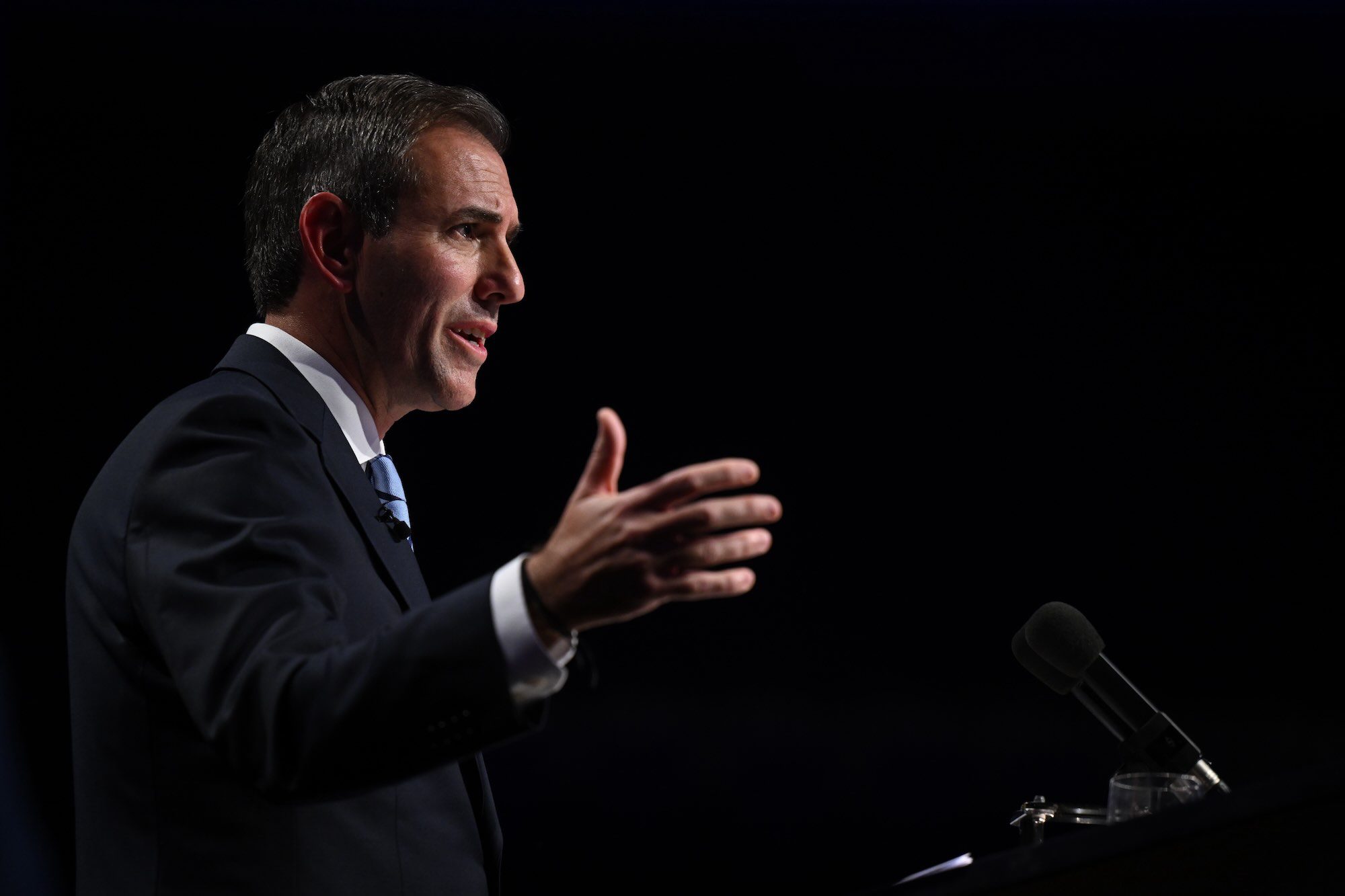
Treasurer Jim Chalmers has signalled intent to redirect superannuation capital into renewable energy by relaxing the performance test that governs fund managers. The change removes benchmarking constraints that discourage investment in assets not well represented in standard indices. Chalmers told the Association of Superannuation Funds of Australia that the new voluntary scheme has potential to unlock up to $90 billion in capital for renewable energy, housing and start-ups.
Where this fits
This is a cost story disguised as a capital-access story. Chalmers is using the superannuation system to funnel $90 billion into projects the private capital markets have not chosen to fund at scale. That gap between what markets will fund and what policy must force suggests the whole-system economics of a renewables transition remain uncompetitive without subsidy and regulatory steering. The move also entrenches Australia's dependence on the supply chain for solar panels, batteries and inverters that China dominates, locking in long-term material and strategic exposure.
What it means
Superannuation is retirement savings. Directing $90 billion of it into emerging renewable assets transfers investment risk from developers to ordinary workers' nest eggs, all to accelerate a transition that competitive markets have not fully adopted. Australia is betting workers' retirement capital on the speed and cost trajectory of renewable technology, while still needing gas-fired firming plants to cover weather-dependent output gaps. The core issue remains: a firm, dispatchable, low-material alternative, nuclear power, is banned by law, leaving policy with no choice but to subsidise and mandate the high-system-cost renewable path.
By the numbers
enough for 54–83 TWh a year of firm, always-on power, generating for ~60 years. Source: CSIRO GenCost 2024-25 (A$8.5–13.2bn/GW), IAEA capacity factor.
Figures are indicative conversions from the article's stated quantity using published cost, material and capacity factors (CSIRO GenCost, BNEF, IEA, IAEA). Ranges, not precise forecasts.
Go deeper on the numbers
The bigger picture
Energy security is national security. This connects to the wider case at Unprepared: Australia's dependence on a strategic rival, and how ready it is for the world that is coming.

The Factory Floor
In 2024, China built over a thousand commercial vessels. The United States built eight. Part V of the Unprepared series.
Reported by RenewEconomy. Read the original report ↗
Related coverage
Cutting home battery subsidy shapes as false economics
Chalmers promises no big cuts to “responsible cost-of-living relief,” in sign home battery rebate might be safe
Muswellbrook coal mine makes way for 176MW solar farm
30,000 police escorts and a 278km detour: Inside the wind farm crunch - AFR
The numbers, as they move
A short, sourced brief when the figures shift: a transmission blow-out, a supply-chain move, a milestone.